| Table of Contents | 1. Overview 2. Performance Indices 3. Comparison by Performance Indices ……. 3-1. Elasticity Indices ……. 3-2. Vibration Indices 4. Summary |
The decrease in speed caused by the change of table tennis rule such as speed glue ban and the introduction of poly-ball has made the blades with special material to become the mainstream of table tennis blades. Here, when we think of special material or artificial material, we tend to think of carbon fiber, and some people even categorize table tennis blades into two groups – carbon blades and wood blades. However, not all fiber blades are carbon blades. ‘Carbon fiber’ is no more than one kind of various artificial fibers. And, in addition to carbon fiber, a variety of special materials such as arylate fiber, Kevlar, PBO fiber, glass fiber, Texalium and so on are used for table tennis blades. Those materials have lower elasticity than carbon fiber, but are still much more elastic than pure wood, and are often used because there is an advantage that those materials provide softer feel than carbon fiber. In most cases, those materials are woven together with carbon fiber when used for table tennis blades – for example ALC (Arylate Carbon) or ZLC (PBO Carbon). But, for table tennis blades, those materials are also used singly without carbon fiber. In that case, we will not be able to call those blades as ‘Carbon blades’ because carbon fiber isn’t used for those blades. What we will observe in this article are that kind of blades. In this article TTGearLab will analyze and compare five ‘Non-Carbon’ fiber blades by Performance Indices.

1. Overview
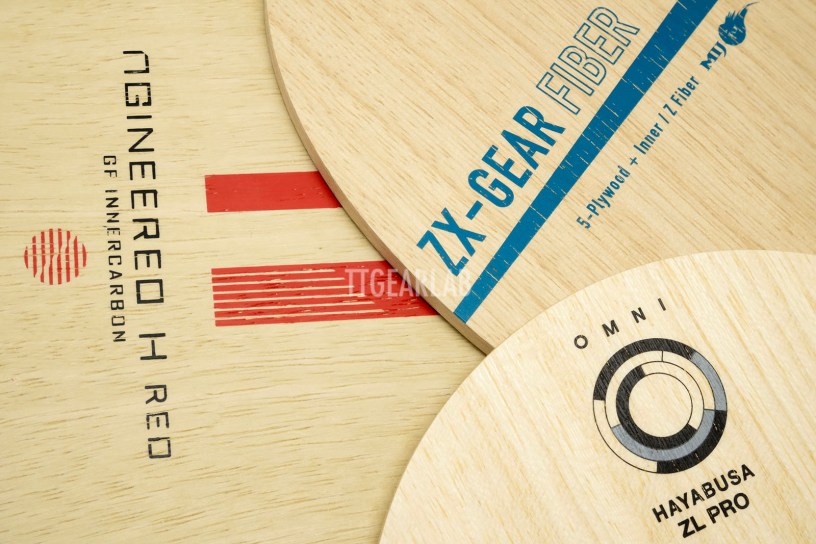
TTGearLab selected five non-carbon fiber blades those are currently available in the market. Two are the blades with inner construction, and the other three are the blades with outer construction. (The terms ‘inner fiber’ and ‘outer fiber’ will be used only for Butterfly products. ‘Inner/Outer construction’ or just ‘inner/outer’ will be used for the blades from other manufacturers.) Followings are the basic features of five models.
1-1. Butterfly Timo Boll ZLF
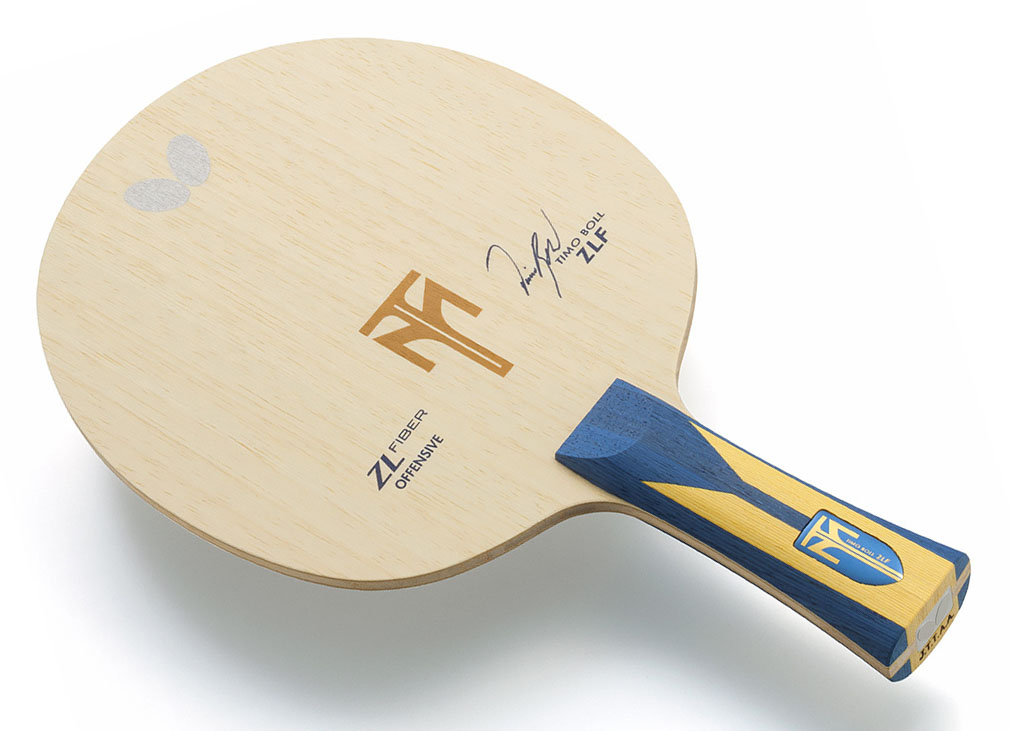
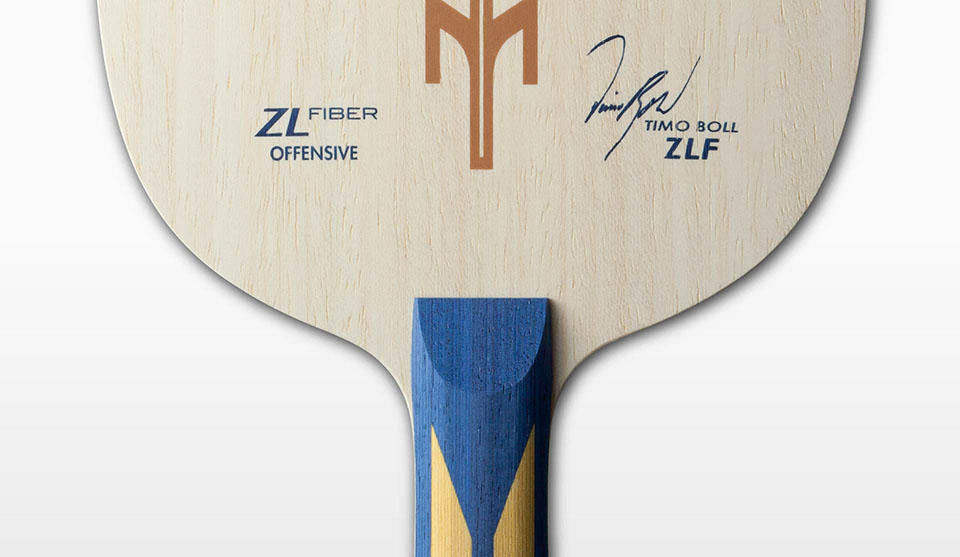
Butterfly ‘Timo Boll ZLF’ is the blade that provides highest stability among four fiber blades in ‘Timo Boll’ series. It is less elastic than ‘Timo Boll ALC’, ‘Timo Boll ZLC’ and ‘Timo Boll T5000’ those includes carbon fiber in their constructions. But, it is softer and more controllable than three models including carbon fiber.
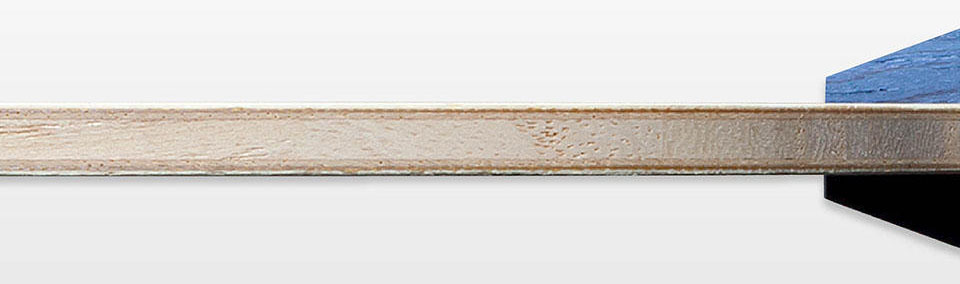
The construction of ‘Timo Boll ZLF’ is based on the outer-fiber construction of ‘Timo Boll ALC’, but a bit thinner and the Arylate Carbon is replaced by Zylon fiber. The top layer is Koto, the middle layer is Ayous, and the center layer is Kiri. ZLF (= Zylon Fiber) is placed directly under the top layer. The overall thickness is around 5.4~5.5mm (while the thickness of ‘Timo Boll ALC’ is around 5.7~5.8mm.)
1-2. Xiom Hugo HAL
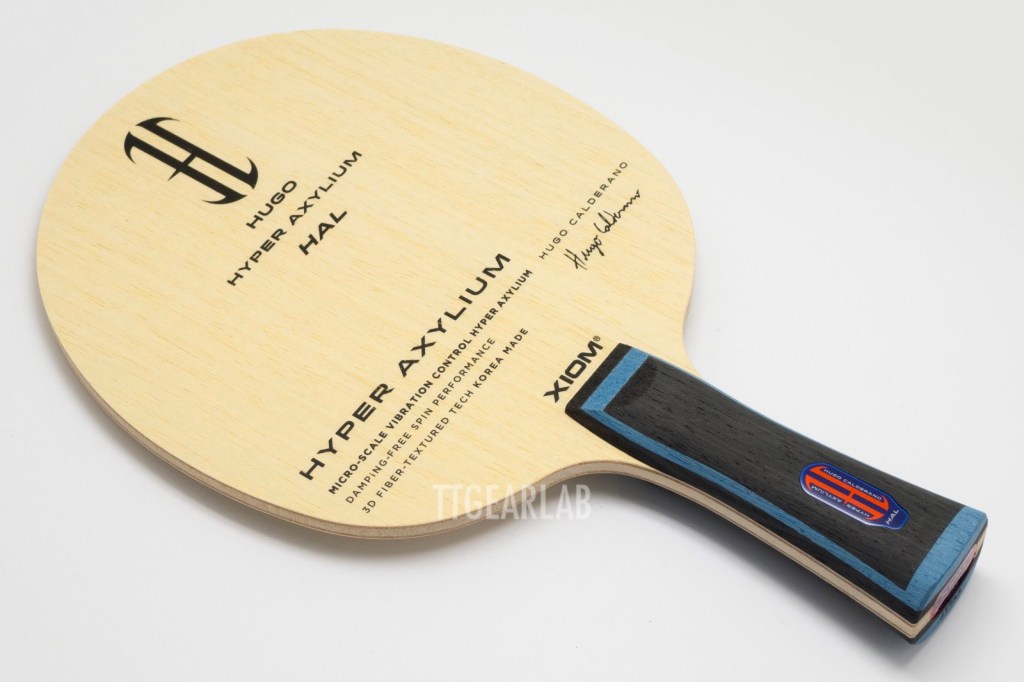
Xiom ‘Hugo HAL’ is an outer-type blade which is famous as the weapon of Hugo Calderano who is the top layer of Brazilian Men’s National Team. It is also the current representative of Xiom blades.
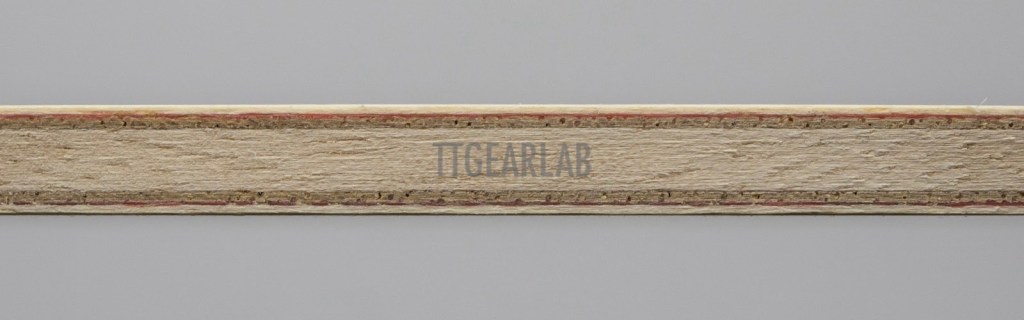
The construction of ‘Hugo HAL’ is based on common outer construction with Koto top layer. The middle layer is Ayous and the center layer is Kiri. But, the most important difference from many blades with outer construction is that its artificial material doesn’t include carbon fiber. Its artificial material is Hyper Axylium which is woven Arylate fiber. Overall thickness is around 5.8mm.
1-3. T-Mount KTS Ngineered H
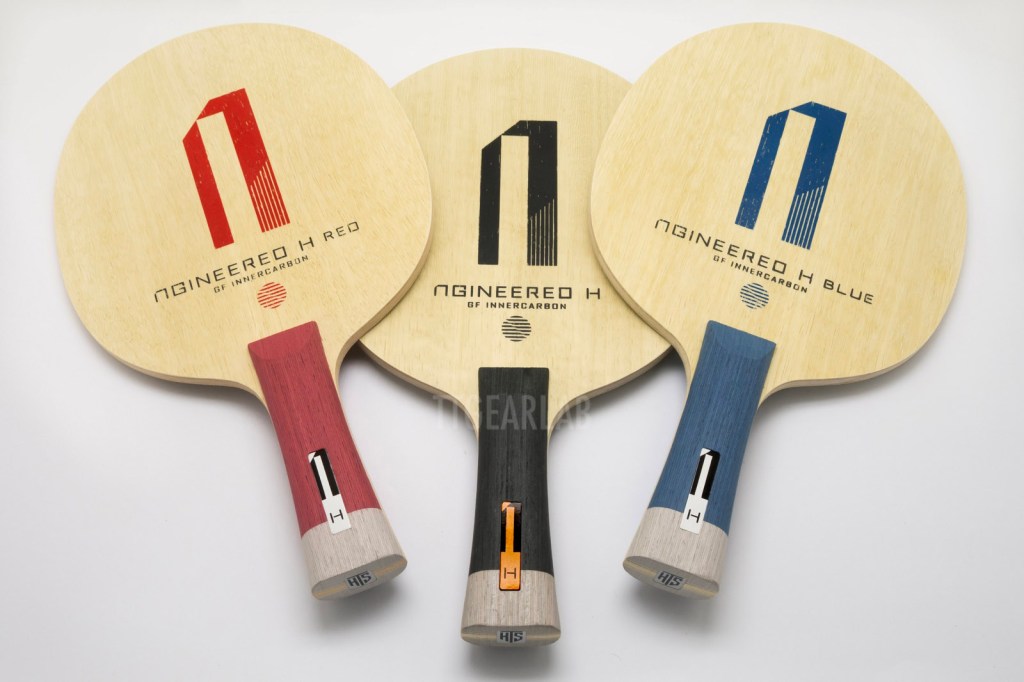
T-Mount KTS ‘Ngineered H’ is an inner-type blade whose artificial material is Glass Fiber. One interesting feature of this blade is that it is available in three colors – Red, Blue and Black.
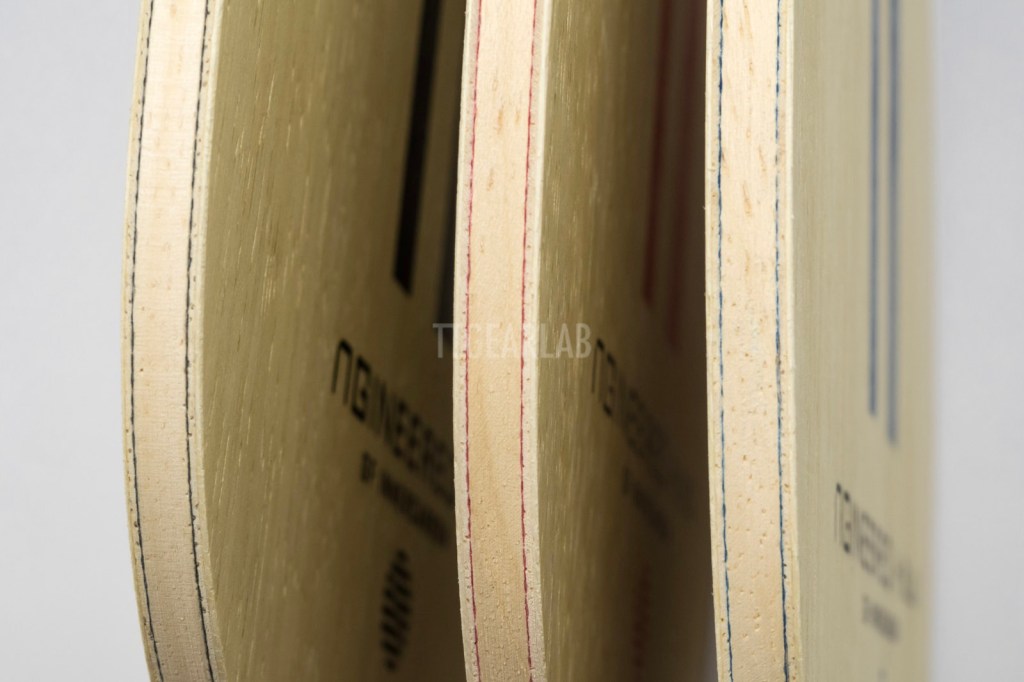
The construction of ‘Ngineered H’ is based on common inner-type construction with Limba top layer, but its artificial material doesn’t include carbon, and it is thicker than most of inner-type blades. The middle layer and the center layer are Ayous, and the Glass Fiber is inserted between the middle layer and the center layer. Overall thickness is around 6.2mm. Glass Fiber is less elastic than Arylate or Zylon, but instead it provides much more natural feeling than the other fibers. The reduction of elasticity due to less elastic material is compensated by thickened construction.
1-4. Victas ZX-Gear Fiber
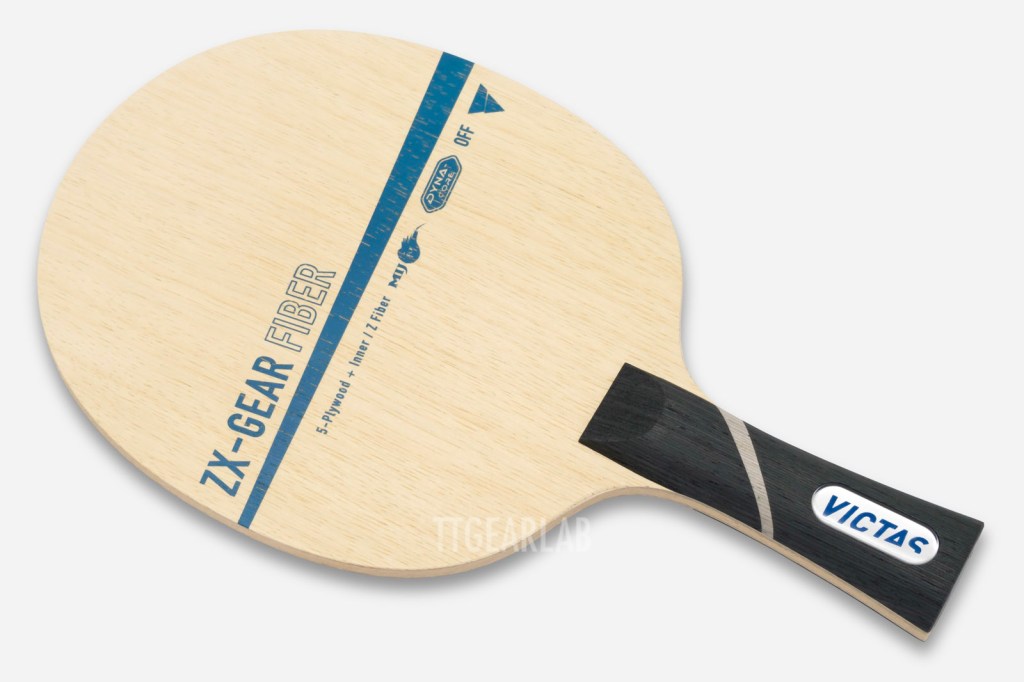
Victas ‘ZX-Gear Fiber’ is an inner-type blade whose artificial material is Z Fiber (= Zxion Fiber). Zxion Fiber is a kind of Arylate fiber. (It isn’t Zylon fiber although its initial is Z.) Victas is also using Zxion Carbon which is woven with Zxion fiber and Carbon fiber to the other models in ‘ZX-Gear’ series. But, carbon fiber isn’t included in the artificial material of ‘ZX-Gear Fiber’.
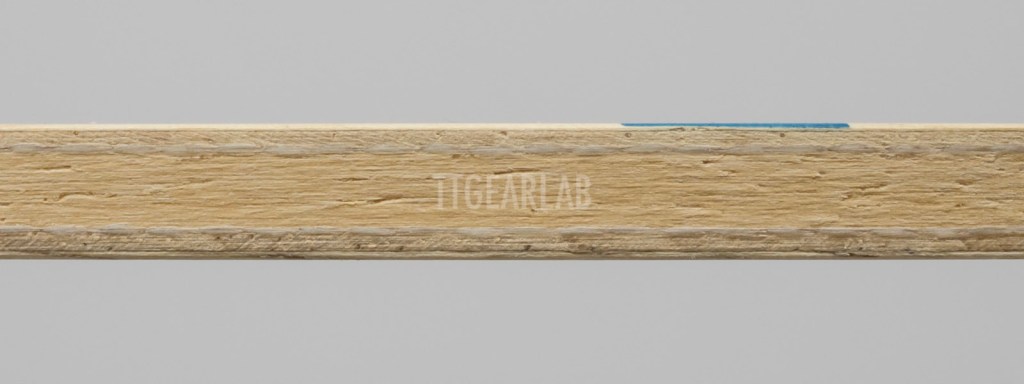
The construction of ‘ZX-Gear Fiber’ is based on common inner-type construction with Limba top layer. The middle layer and the center layer are Ayous, and Z Fiber is inserted between the middle layer and the center layer. Pverall thickness is around 5.7mm. This construction is quite similar to that of Butterfly ‘InnerForce Layer AL’ which is currently discontinued.
1-5. Xiom Hayabusa ZL Pro
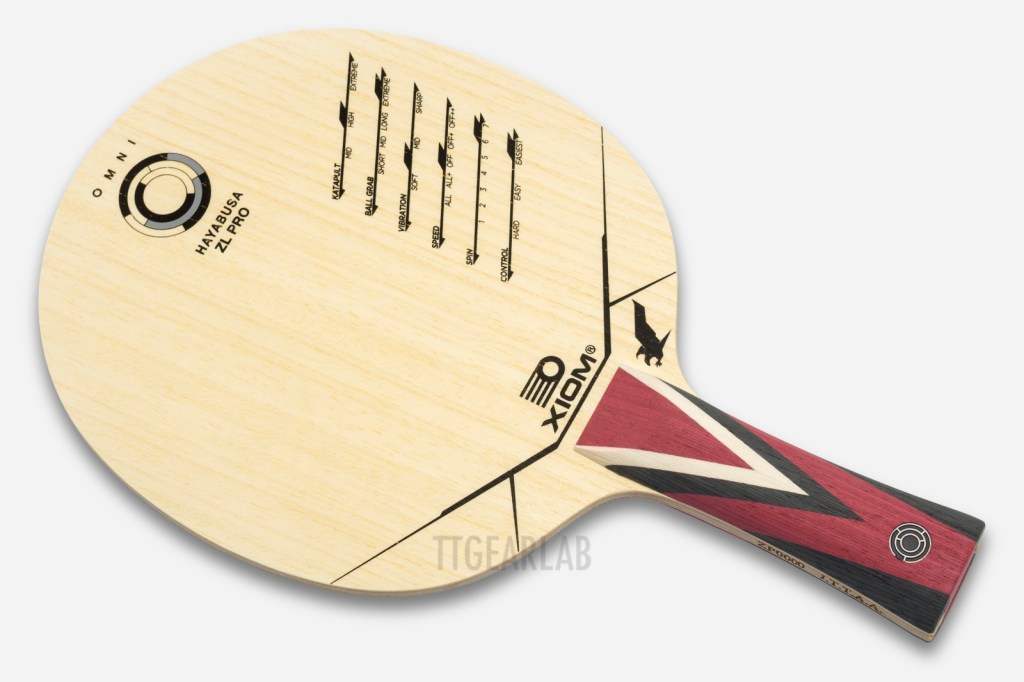
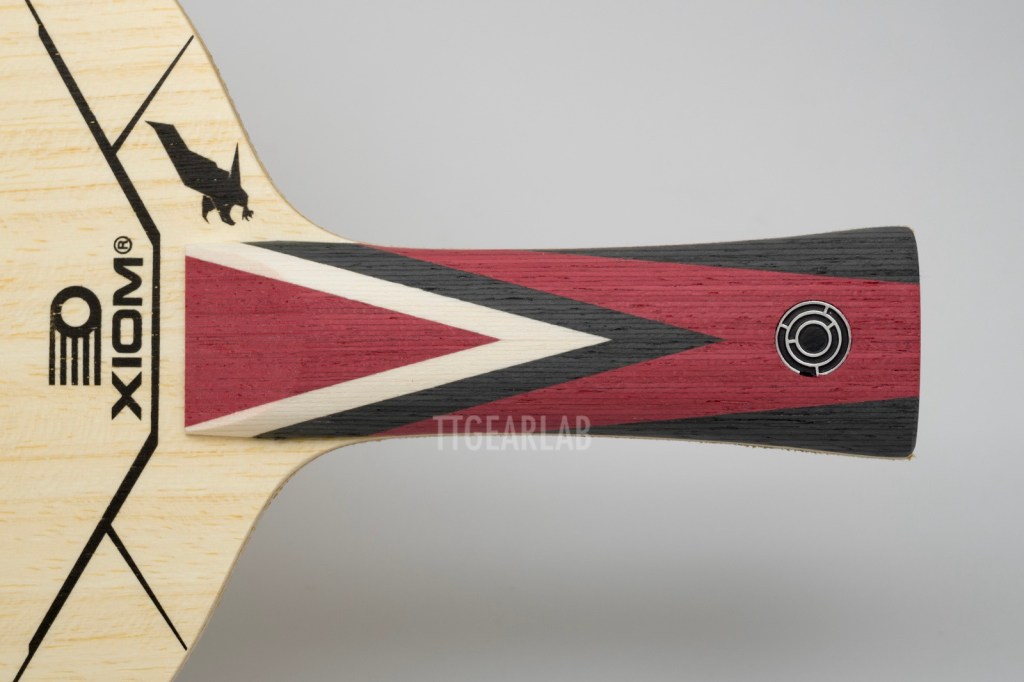
Xiom ‘Hayabusa ZL Pro’ is an inner-type blade whose artificial material is Zephylium Fiber (= Zylon Fiber). This is the only one inner-type blade in new ‘Hayabusa’ series launched in 2024. When compared with the other fiber blades in ‘Hayabusa’ series , it is less elastic but provides softer, more stable and more natural feeling.
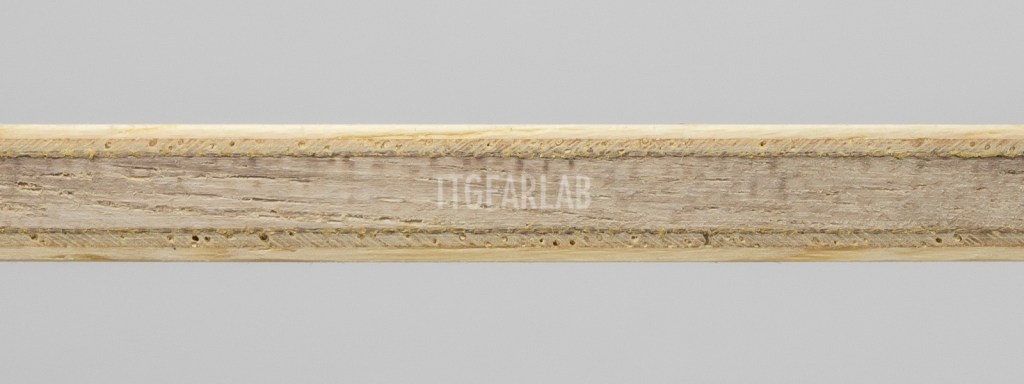
The construction of ‘Hayabusa ZL Pro’ is an inner-type construction. But, differently from most of inner-type blades, its top layer isn’t Limba but Koto, and its center layer isn’t Ayous but Kiri. The middle layer is Ayous which is commonly used for fiber blades. Zephylium Fiber (= Zylon Fiber) is inserted between the middle layer and the center layer. Overall thickness is around 5.7mm. This construction looks like the ‘inner version’ of ‘Timo Boll ZLF’.
Then let’s check the characteristics of Non-carbon fiber blades by Performance Indices and then compare with some existing blades.
Please click here to return to top (table of contents)
2. Performance Indices
Performance Indices are measured objective values to represent the characteristics of table tennis gears. Concerning the detail of four performance indices, please refer to following articles in ‘About TTGearLab’ section :
- Performance indices : the way to evaluate blade by measurement
- The example of comparison by performance indices
The performance indices of five blades in this comparison are as follows:
| Name | Avg.Wt (g) | Ep | Ec | Ec/Ep | Vp | Vl | Vl/Vp |
| Butterfly Timo Boll ZLF | 84.7 | 1.63 | 1.47 | 0.90 | 1.19 | 1.34 | 1.13 |
| Xiom Hugo HAL | 88.0 | 1.62 | 1.52 | 0.94 | 1.17 | 1.18 | 1.01 |
| T-Mount KTS Ngineered H | 85.2 | 1.67 | 1.64 | 0.98 | 1.24 | 1.21 | 0.98 |
| Victas ZX-Gear Fiber | 83.7 | 1.31 | 1.17 | 0.89 | 1.06 | 1.19 | 1.13 |
| Xiom Hayabusa ZL Pro | 86.2 | 1.67 | 1.46 | 0.88 | 1.16 | 1.16 | 1.00 |
2-1. Butterfly Timo Boll ZLF
| Name | Avg.Wt (g) | Ep | Ec | Ec/Ep | Vp | Vl | Vl/Vp |
| Butterfly Timo Boll ZLF | 84.7 | 1.63 | 1.47 | 0.90 | 1.19 | 1.34 | 1.13 |
The primary elasticity index (Ep) of ‘Timo Boll ZLF’ is 1.63. It is close to the values of many inner-ALC blade, and is quite low as the value of an outer-fiber blade. And, because Ec/Ep is 0.90 ‘Timo Boll ZLF’ hugs the ball moderately when the player hits the ball very strongly.
Vp (Primary Vibration Index) is 1.19. It is higher than those of many inner-type blades, but is much lower than the values of many outer-type blades. The players who have been accustomed to typical outer-type blades will feel that ‘Timo Boll ZLF’ is quite soft. But, because the Vl/Vp (= 1.13) is quite high, the feeling transmitted to the index finger is noticeably sharper than the primary feeling transferred to palm. The players who are sensitive to the feeling at index finger will feel that ‘Timo Boll ZLF’ is a very sharp blade.
2-2. Xiom Hugo HAL
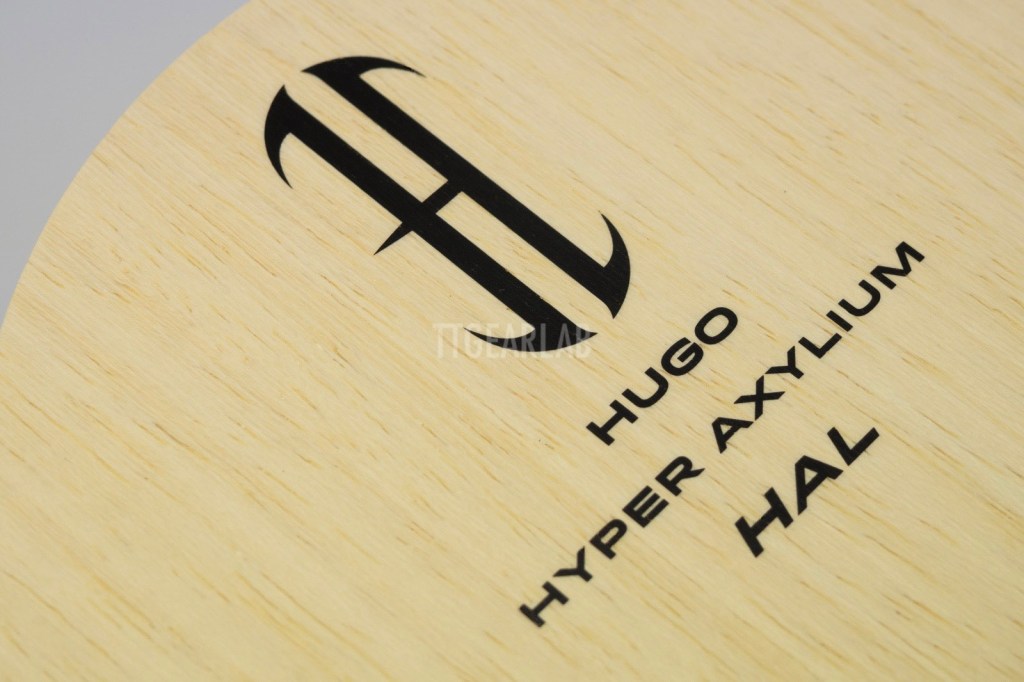
| Name | Avg.Wt (g) | Ep | Ec | Ec/Ep | Vp | Vl | Vl/Vp |
| Xiom Hugo HAL | 88.0 | 1.62 | 1.52 | 0.94 | 1.17 | 1.18 | 1.01 |
The primary elasticity index (Ep) of ‘Hugo HAL’ is 1.62, and it is quite low value as the primary elasticity of an outer-type blade. And, because the Ec/Ep is lower than 1.0 but higher than 0.9, we can expect that ‘Hugo HAL’ will hug the ball a bit when the player hits the ball very strongly.
Vp (Primary Vibration Index) is 1.17. It is a very low value at that of an outer-type blade. So ‘Hugo HAL’ is a quite soft blade as an outer-type blade. And, differently from ‘Timo Boll ZLF’, the relative feeling transmitted to index finger isn’t especially sharp because the Vl/Vp is close to 1.0. The feeling is almost uniform across the blade.
2-3. T-Mount KTS Ngineered H
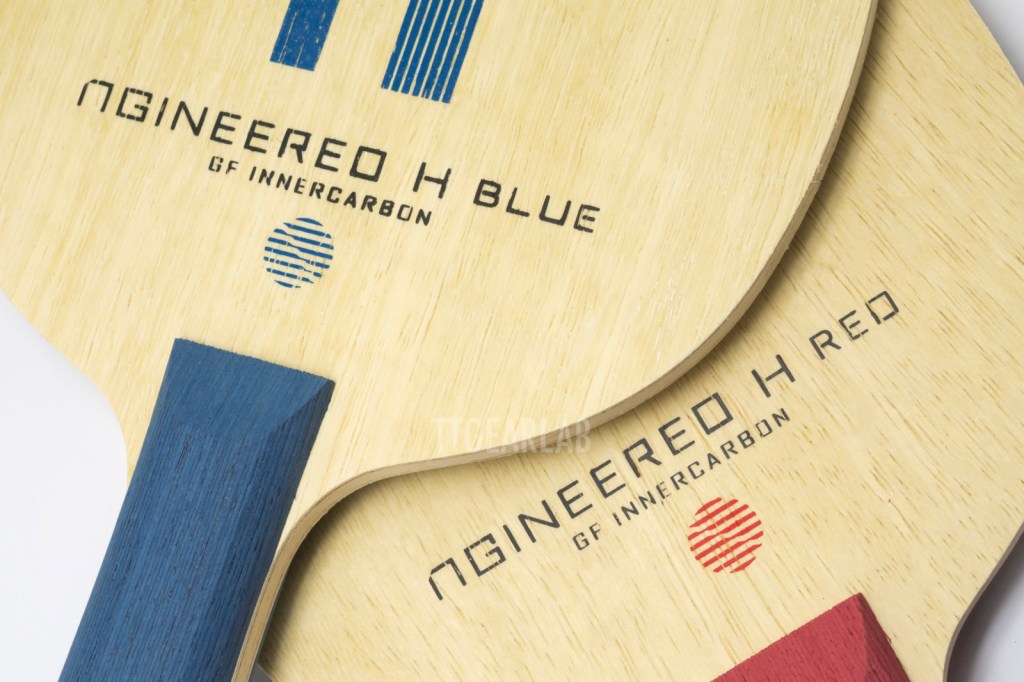
| Name | Avg.Wt (g) | Ep | Ec | Ec/Ep | Vp | Vl | Vl/Vp |
| T-Mount KTS Ngineered H | 85.2 | 1.67 | 1.64 | 0.98 | 1.24 | 1.21 | 0.98 |
The primary elasticity index (Ep) of ‘Ngineered H’ is 1.67. It isn’t much different from the values of many inner-ALC blades. Although it doesn’t include carbon fiber, ‘Ngineered H’ isn’t slower than many inner-ALC blades. That is probably because its construction is thicker. By the way, the Ec/Ep of ‘Ngineered H'(= 0.98) is very close to 1.0. So, it doesn’t hug the ball as deeply as many know inner-ALC blades whose Ec/Ep’s are much lower. Because of higher Ec/Ep, it is expected that ‘Ngineered H’ will provide more kick than those inner-ALC blades.
Vp (Primary Vibration Index) is 1.24. It is higher than the values of two outer-type blades – ‘Timo Boll ZLF’ and ‘Hugo HAL’. However, it is much lower value than those of most of outer-ALC blades. The Vl/Vp (= 0.98) is close to 1.0. So the feeling is almost uniform across the blade. The players who are sensitive to the feeling transmitted to index finger will feel that ‘Ngineered H’ is a very soft and comfortable blade.
2-4. Victas ZX-Gear Fiber
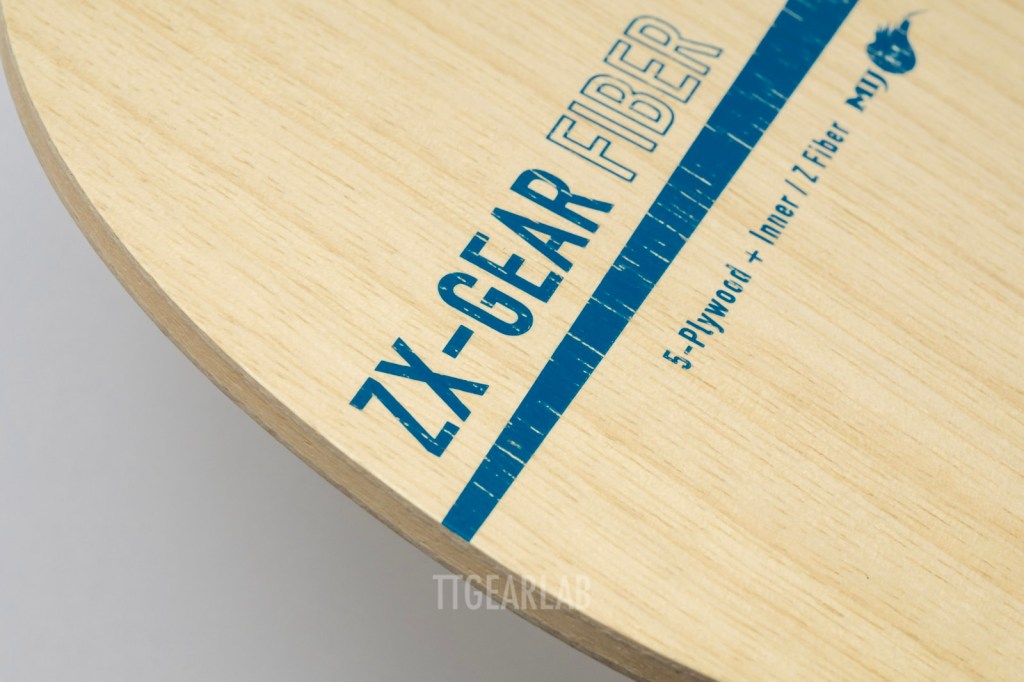
| Name | Avg.Wt (g) | Ep | Ec | Ec/Ep | Vp | Vl | Vl/Vp |
| Victas ZX-Gear Fiber | 83.7 | 1.31 | 1.17 | 0.89 | 1.06 | 1.19 | 1.13 |
The primary elasticity index (Ep) of ‘ZX Gear Fiber’ is around 1.31. It is much lower than the Ep’s of inner ALC blades, and is close to the values of 5-ply wood blades with moderate elasticity. The lateral elasticity index (Ec) is even lower (= 1.17), and the Ec/Ep is 0.89. ‘ZX Gear Fiber’ hugs the ball deeply when the impact strength is high, and it may make the players feel this blade even slower.
Vp (Primary Vibration Index) is 1.06. It is comparable with the values of soft 5-ply wood blades. But, because its Vl (= 1.19) is much higher than its Vp, the Vl/Vp (= 1.13) is quite high. The feeling transmitted to index finger is sharper than the primary feeling transmitted to palm.
2-5. Xiom Hayabusa ZL Pro
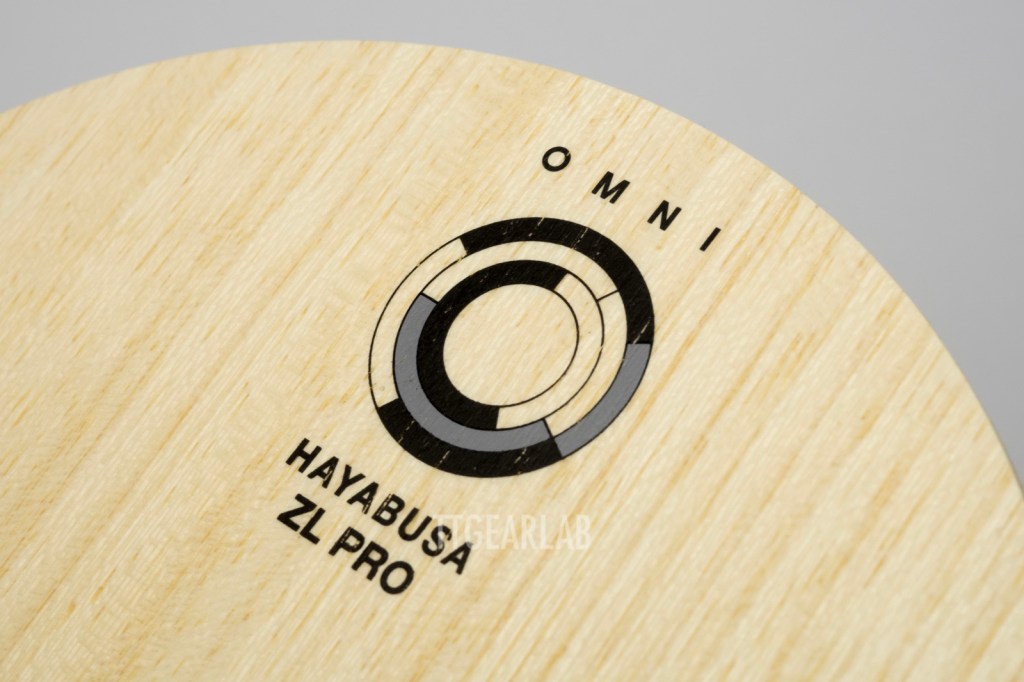
| Name | Avg.Wt (g) | Ep | Ec | Ec/Ep | Vp | Vl | Vl/Vp |
| Xiom Hayabusa ZL Pro | 86.2 | 1.67 | 1.46 | 0.88 | 1.16 | 1.16 | 1.00 |
The primary elasticity index (Ep) of ‘Hayabusa ZL Pro’ is 1.67. It is close to the values of many inner-ALC blades. The Ec/Ep is quite low because the Ec (= 1.46) is much lower than the Ep. It means that ‘Hayabusa ZL Pro’ hugs the ball very deeply when the player hits the ball very strongly. But, not as deeply as many 5-ply wood blades whose Ec/Ep is under 0.85.
Vp (Primary Vibration Index) is 1.16. It is close to the values of many typical 5-ply wood blades. ‘Hayabusa ZL Pro’ is a quite soft as a fiber blade. The Vl/Vp is close to 1.0. The feeling is almost uniform across the blade. The values except for Vl (= 1.16) are close to those of ‘Timo Boll ZLF’. We may be able to deal with ‘Hayabusa ZL Pro’ as the inner version of ‘Timo Boll ZLF’.
Please click here to return to top (table of contents)
3. Comparison by Performance Indices
Then we can compare five non-carbon fiber blades with some other blades. Following is the list of the blades to be compared :
Fiber blades whose fibers include carbon fiber
| Name | Average Weight | Feature |
| Butterfly Viscaria | 87.1g | Standard outer ALC blade with Koto top layer. |
| Butterfly InnerForce Layer ALC | 91.2g | Butterfly’s representative inner ALC blade. |
| DHS Hurricane Long 5 | 88.1g | The representative of inner ALC blades. |
| Victas ZX-Gear In | 88.0g | Inner Z-Carbon(Zxion Carbon) blade. |
| Butterfly SK Carbon | 80.6g | Woven carbon fiber blade in thin 3+2 ply construction. |
| Yasaka Ma Lin Carbon | 88.6g | Inner fleece carbon blade with Limba top layer. |
Discontinued non-carbon fiber blades
| Name | Average Weight | Feature |
| Butterfly InnerForce Layer AL | 84.5g | Inner Arylate fiber blade. Limba top layer. |
| Butterfly Timo Boll Spark | 90.1g | Outer Arylate fiber blade. Limba top layer. |
5-ply wood blades (including reference blade)
| Name | Average Weight | Feature |
| Butterfy Korbel | 88.7g | The representative of 5-ply wood offensive blade. |
| Butterfy Primorac (JP) | 88.1g | 5-ply wood blade for continuous topspin. |
| Stiga Allround Classic (Reference) | 84.3g | The representative of 5-ply wood allround blade. |
3-1. Elasticity Indices
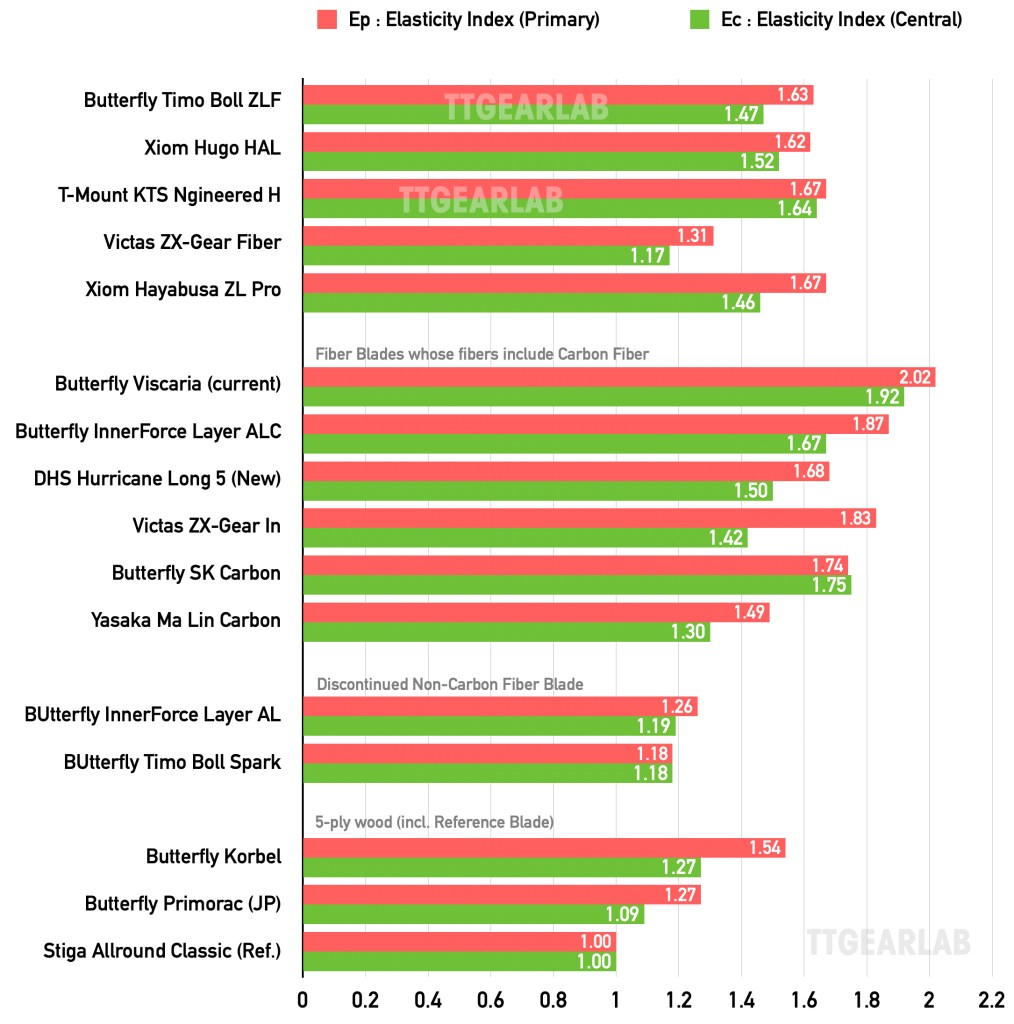
Fig.16 shows the comparison graph of Elasticity Indices.
Ep (Primary Elasticity Index) is directly concerned with the rebound speed of blade. Ec (Central Elasticity Index) is concerned with additional ‘kick’ (Ec > Ep) or ‘hug’ (Ec < Ep) when player hits the ball very strongly.
When we compare the five ‘non-carbon’ fiber blades, we can see that the elasticity levels of ‘ZX-Gear Fiber’ is significantly lower than those of the other four models in this comparison. The Ep’s of the other four models – ‘Timo Boll ZLF’, ‘Hugo HAL’, ‘Ngineered H’ and ‘Hayabusa ZL Pro’ – are higher than 1.6 and lower than 1.7. It seems to be the result of the trial by makers to find the ‘optimum’ elasticity level during the development of these blades. (Probably Victas aims at different goal when they developed ‘ZX-Gear Fiber’.)
Regarding Ec, we can observe that the Ec of ‘Nginereed H’ is noticeably higher than the Ec’s of the other models. So we can expect that ‘Ngineered H’ will show somewhat different response than the other models when the player hits the ball very strongly.
Then we can compare other blades with these five non-carbon fiber blades.
[Fiber Blades whose fibers ‘include’ Carbon Fiber]
Differently from the five ‘non-carbon’ fiber blades, the blades in this group contain carbon fiber. This can be considered as more common or ordinary form of fiber blades in table tennis. But, there are many different ways in which carbon fiber is applied – composite material woven with other fiber (= Arylate fiber in most cases), woven carbon fiber that doesn’t contain other fiber, carbon fiber arranged only in single direction, spread carbon fiber and so on. For the six models in this group, we can observe:
- Butterfly ‘Viscaria’ which is the representative of outer ALC blade is much more elastic than five non-carbon fiber blades. And, Butterfly ‘InnerForce Layer ALC’ which can be currently considered as ‘fast inner ALC’ model is also noticeably more elastic than five non-carbon fiber blades.
- DHS ‘Hurricane Long 5’ which is the representative of inner ALC blades shows similar elasticity level as five non-carbon fiber blades. So, we can guess that TT makers adjusted the elasticity levels of non-carbon fiber blades (except for one) to the elasticity of inner ALC blades.
- The Ep of Victas ‘ZX-Gear In’ is much higher than the Ep’s of non-carbon fiber blades. But, its Ec isn’t. The extreme difference between Ep and Ec makes ‘ZX-Gear In’ very unique blade. It will be difficult for us to directly compare non-carbon fiber blades in this comparison with ‘ZX-Gear In’.
- Butterfly ‘SK Carbon’ is also more elastic than non-carbon fiber blades. The difference is noticeable but not significant. Because the difference between Ep and Ec is very small, its graph shape is comparable with that of a bit less elastic ‘Ngineered H’.
- Yasaka ‘Ma Lin Carbon’ is more elastic than ‘ZX-Gear Fiber’. But, it is less elastic than the other four non-carbon fiber blades.
[Discontinued Non-Carbon Fiber Blades]
Various non-carbon fiber blades have been produced by many companies, and most of those models had already been discontinued. Those blades can be compared with five ‘currently available’ non-carbon fiber blades.
- Both of ‘InnerForce Layer AL’ and ‘Timo Boll Spark’ are as elastic as ‘ZX-Gear Fiber’. But, those are much less elastic than the other four non-carbon fiber blades.
- Especially the values of ‘InnerForce Layer AL’ are comparable with those of ‘ZX-Gear Fiber’. So, we can guess that the concept of ‘ZX-Gear Fiber’ is almost same as the concept of ‘InnerForce Layer AL’.
- ‘Timo Boll Spark’ is less elastic than ‘InnerForce Layer AL’ although it is an outer fiber blade. That is because thickness also affects the elasticity of blades significantly.
[5-ply wood incl. Reference Blade]
5-ply wood blades can be compared with non-carbon fiber blades. The results are:
- The elasticity level of ‘Korbel’ is higher than that of ‘ZX-Gear Fiber’, but is lower than the elasticity levels of the other four non-carbon fiber blades. Especially the Ec of ‘Korbel’ is significantly lower than the Ec’s of non-carbon fiber blades except for ‘ZX-Gear Fiber’.
- The elasticity level of ‘Primorac’ is very close to that of ‘ZX-Gear Fiber’.
- ‘Allround Classic’ is less elastic than all the blades in this comparison. But, its graph shape looks similar to those of ‘Timo Boll Spark’, ‘SK Carbon’ and ‘Ngineered H’ although there are differences in the level of elasticity.
Examining Ec/Ep is also an easier way to understand the characteristics of blade concerned with elasticity. Fig.17 shows the relationship between Ec/Ep and Ep.
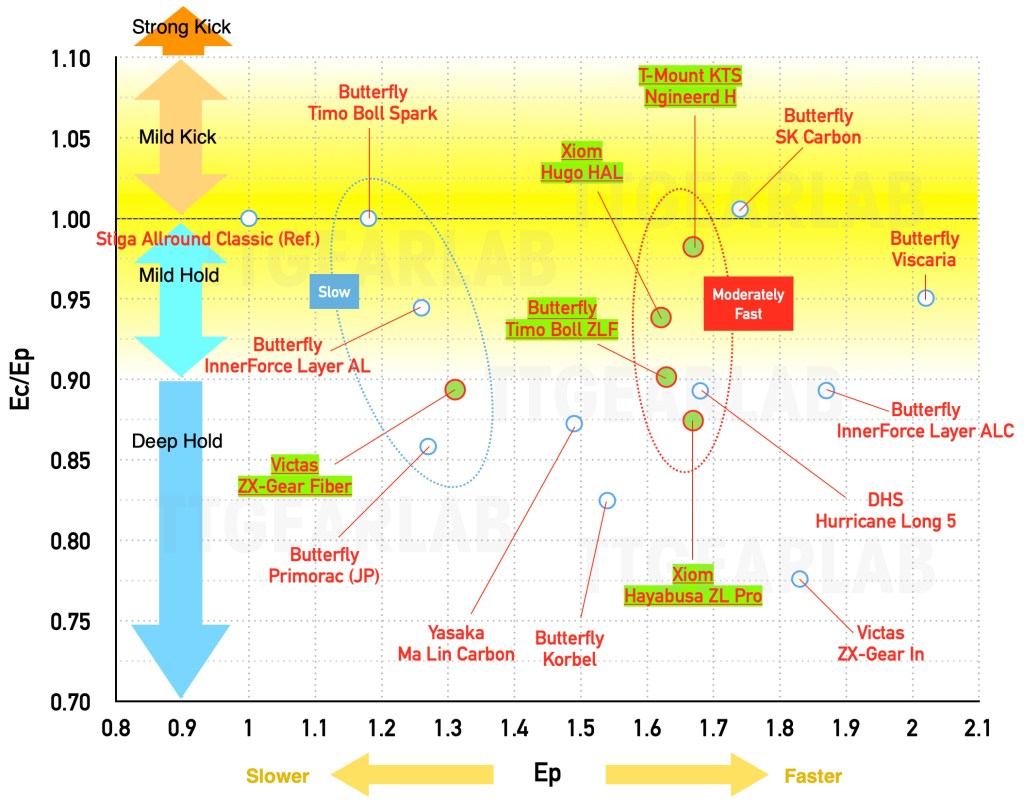
Ec/Ep expresses the ‘tendency’ of the elasticity of blade. By examining Ec/Ep and Ep at the same time, we can easily understand the behavior of blades.
On the graph, all blades except for three models including reference blade are located in ‘Hold’ range (Ec/Ep < 1.0). Within that ‘Hold’ range, blades are widely distributed up, down, left and right.
When we observe five non-carbon fiber blades, we can see that four among five are clustered in a narrow area (1.6 < Ep < 1.7). We can group the four blades into ‘Moderately Fast’ group indicated in red dotted line. And, from the graph we can notice that the area of this group includes ‘Hurricane Long 5’ which is a typical inner ALC blade. So, we can guess that TT makers have set the basic performance of four non-carbo fiber blades – ‘Timo Boll ZLF’, ‘Hugo HAL’, ‘Ngineered H’ and ‘Hayabusa ZL Pro’ – to the performance level of inner ALC blades. But, of course the elasticity characteristics of four models are not all identical to each other because the four blades are distributed up and down in this area. The model with the lowest Ec/Ep is ‘Hayabusa ZL Pro’ which is in ‘Deep Hold’ range, and the model with the highest Ec/Ep is ‘Ngineered H’ which is located very closed to neutral line (Ec/Ep = 1.0). If the player hits the ball very strongly, ‘Ngineered H’ will not hug the ball as deeply as ‘Hayabusa ZL Pro’, and instead it will give much more additional kick to the ball. We may be able to compare ‘Hayabusa ZL Pro’ with typical 5-ply wood blades while ‘Ngineered H’ with some 7-ply wood blades. Among four models, two blades – ‘Hayabusa ZL Pro’ and ‘Timo Boll ZLF’ are located very close to ‘Hurricane Long 5’. We can expect that those two models will anyway provide very similar elasticity characteristics as ‘Hurricane Long 5’ although those two will give us different feeling. The Ec/Ep’s of these two models are also close to those of ‘InnerForce Layer ALC’ and ‘Ma Lin Carbon’ although there are differences in Ep.
‘ZX-Gear Fiber’ can be dealt as totally different one from other four. Its Ep is noticeably lower than the other four models those are grouped as ‘Moderately Fast’. On the graph, ‘ZX-Gear Fiber’ is placed close to ‘Primorac’ which is a 5-ply blade with moderate elasticity. We can group ‘ZX-Gear Fiber’ together with ‘Primorac’ and two discontinued non-carbon fiber blades – ‘InnerForce Layer AL’ and ‘Timo Boll Spark’. We can also think that ‘ZX-Gear Fiber’ is close to ‘InnerForce Layer AL’.
If a player who has used 5-ply wood offensive blade such as ‘Korbel’ is considering to change the blade for the upgrade of speed but doesn’t want to use the blade including carbon fiber, four non-carbon fiber blades in ‘Moderately Fast’ group those are located to upper right of ‘Korbel’ will be seriously considerable. ‘Hayabusa ZL Pro’ or ‘Timo Boll ZLF’ will be the first consideration, and the one at even upper side such as ‘Ngineered H’ or ‘Hugo HAL’ will be the solution if the player requires more kick for the additional power of smash or mid-distance shots. Because its overall elasticity level is low, ‘ZX-Gear Fiber’ will not be suitable for the upgrade of speed from typical 5-ply wood offensive blades such as ‘Korbel’. ‘ZX-Gear Fiber’ can be considered as the first fiber blade for entry players. It is a very slow one as a fiber blade, but instead it will provide higher controllability.
Then next, let’s compare Vibration Indices.
Please click here to return to top (table of contents)
3-2. Vibration Indices
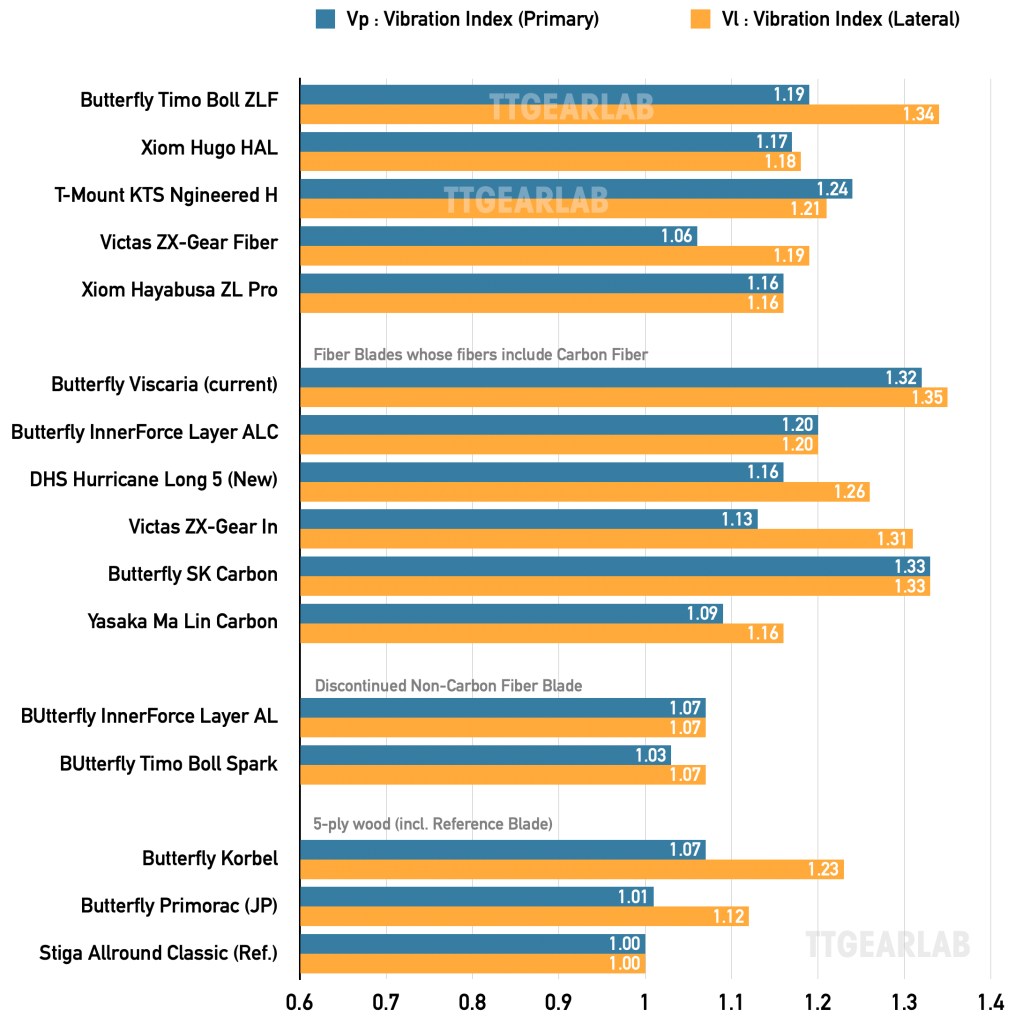
Fig.18 shows the comparison graph of Vibration Indices. Vibration Indices are concerned with feeling. Vp indicates primary feeling which is transferred to player’s palm. And, Vl is the feeling at the edge of the wing – the lower side of blade head. It is felt by player’s index finger or middle finger.
When we compare the vibration characteristics of five ‘non-carbon’ fiber blades, we can see more difference among five models than what we observed in elasticity characteristics. The Vp’s of four ‘Moderately Fast’ models (= four models except for ‘ZX-Gear Fiber’) are around 1.20 which can be dealt as the value that indicates neutral feeling. So those four blades are not especially hard or soft. The players who have been accustomed to harder blades will feel that these blades are soft. And, with much lower Vp, ‘ZX-Gear Fiber’ is even softer. The result of the observation of Vl’s is somewhat different. The Vl of ‘Timo Boll ZLF’ is significantly higher than the Vl’s of the other four models. ‘Timo Boll ZLF’ transmits much harder or sharper feeling in lateral direction, mostly to the index finger of player. So players who are sensitive to the feeling in lateral direction will feel that ‘Timo Boll ZLF’ is much sharper than the other four non-carbon fiber blades. And, we can also notice that the Vl of ‘ZX-Gear Fiber’ isn’t as low as its Vp. Because of this feeling, the player who are sensitive to lateral feeling may be astonished by its unexpectedly low elasticity. Another interesting result is the comparison between ‘Hugo HAL’ and ‘Hayabusa ZL Pro’. Despite the significant difference in construction, the vibration characters of those two Xiom blades are close to each other. And, the players who compare ‘Timo Boll ZLF’ and ‘Hayabusa ZL Pro’ may think that the difference in Vl’s of two models (1.34 vs. 1.16) is the good example of difference between outer fiber and inner fiber.
Then we can compare other blades with these five non-carbon fiber blades.
[Fiber Blades whose fibers ‘include’ Carbon Fiber]
The six blades in this group contain carbon fiber, unlike the five models those are the main subject of this article. Following is what we can observe from the values of those six models :
- The Vp of Butterfly ‘Viscaria’ which is an outer ALC blade is significantly higher than the Vp’s of non-carbon fiber blades. However, its Vl isn’t much different from that of ‘Timo Boll ZLF’. So the players who are sensitive to the lateral feeling may feel that there isn’t much difference between the feeling of ‘Timo Boll ZLF’ and the feeling of ‘Viscaria’. The Vl of ‘Viscaria’ is much higher than the Vp’s of the other four non-carbon fiber blades.
- Butterfly ‘InnerForce Layer ALC’ shows moderate values for both of Vp and Vl. And, those values are just a bit higher than the values of ‘Hugo HAL’ and ‘Hayabusa ZL Pro’, and a bit lower than the vaues of ‘Ngineered H’. The values around 1.20 can be dealt as ‘moderate’ value that indicates that the feeling isn’t hard or soft. And, those three blades show very small or no gap between Vp and Vl. We can think that the feelings of those blades are almost uniform.
- DHS ‘Hurricane Long 5’ also shows the values around 1.20. But, Vp is noticeably lower, and Vl is noticeably higher. Therefore there is significant different between its Vp and its Vl, differently from ‘InnerForce Layer ALC’, ‘Hugo HAL’ and ‘Hayabusa ZL Pro’ whose Vp’s are identical or close to Vl’s. And, the graph shape of ‘ZX-Gear In’ shows more extreme form. Its Vl is much higher than its Vp. As the result, the graphs shape of ‘ZX-Gear In’ looks similar to those of ‘Timo Boll ZLF’ and ‘ZX-Gear Fiber’. For those blades, the lateral feeling transmitted to index finger is much sharper or harder than the primary feeling transmitted to palm.
- Butterfly ‘SK Carbon’ shows very high values for both of Vp and Vl. But, its graph shape looks similar to those of ‘InnerForce Layer ALC’, ‘Hugo HAL’, ‘Hayabusa ZL Pro’ and ‘Ngineered H’. The change among these ‘uniform’ blades will not be difficult for players although there is differences in the level of feeling.
- Yasaka ‘Ma Lin Carbon’ shows noticeably lower values than the other blades in this group. From the graph, we can see that the values of ‘Ma Lin Carbon’ can be comparable with the values of ‘ZX-Gear Fiber’.
[Discontinued Non-Carbon Fiber Blades]
Various non-carbon fiber blades have been produced by many companies, and most of those models had already been discontinued. Those blades can be compared with five ‘currently available’ non-carbon fiber blades.
- Both of ‘InnerForce Layer AL’ and ‘Timo Boll Spark’ are as soft as ‘ZX-Gear Fiber’ in primary feeling. And, those are much softer than the other four non-carbon fiber blades.
- The graph shape of ‘InnerForce Layer AL’ is different from that of ‘ZX-Gear Fiber’. ‘InnerForce Layer AL’ is more comparable with ‘Hugo HAL’, ‘Hayabusa ZL Pro’ and ‘Ngineered H’ although it is much softer.
- ‘Timo Boll Spark’ is even softer than ‘InnerForce Layer AL’ in primary feeling although it is an outer fiber blade. That is because thickness also affects the feeling of blades significantly.
[5-ply wood incl. Reference Blade]
5-ply wood blades can be compared with non-carbon fiber blades. The results are:
- The Vp of ‘Korbel’ is comparable with that of ‘ZX-Gear Fiber’ and two discontinued non-carbon fiber blades. The Vp’s of the other four non-carbon fiber blades are much higher than that of ‘Korbel’. Differently speaking, the four non-carbon fiber blades are much harder than ‘Korbel’ in primary feeling. But, the Vl of ‘Korbel’ is very high, and is even higher than the Vl’s of four non-carbon fiber blades. The players who are sensitive to lateral feeling will think that the four non-carbon fiber blades (excluding ‘Timo Boll ZLF’) are a bit softer than ‘Korbel’.
- ‘Primorac’ is softer than ‘Korbel’ in both of Vp and Vl. It is softer than all non-carbon fiber blades in this comparison. But, we can see that the graph shape of ‘Primorac’ looks similar to that of ‘ZX-Gear Fiber’.
- ‘Allround Classic’ shows the lowest values in this comparison. But, its graph shape looks similar to those many blades those can be considered as ‘uniform’ blades, for example ‘Hayabusa ZL Pro’.
Examining Vl/Vp is easier way for the comparison of the tendency of feeling. Fig.19 shows the relationship between Vl/Vp and Vp for easier comparison.
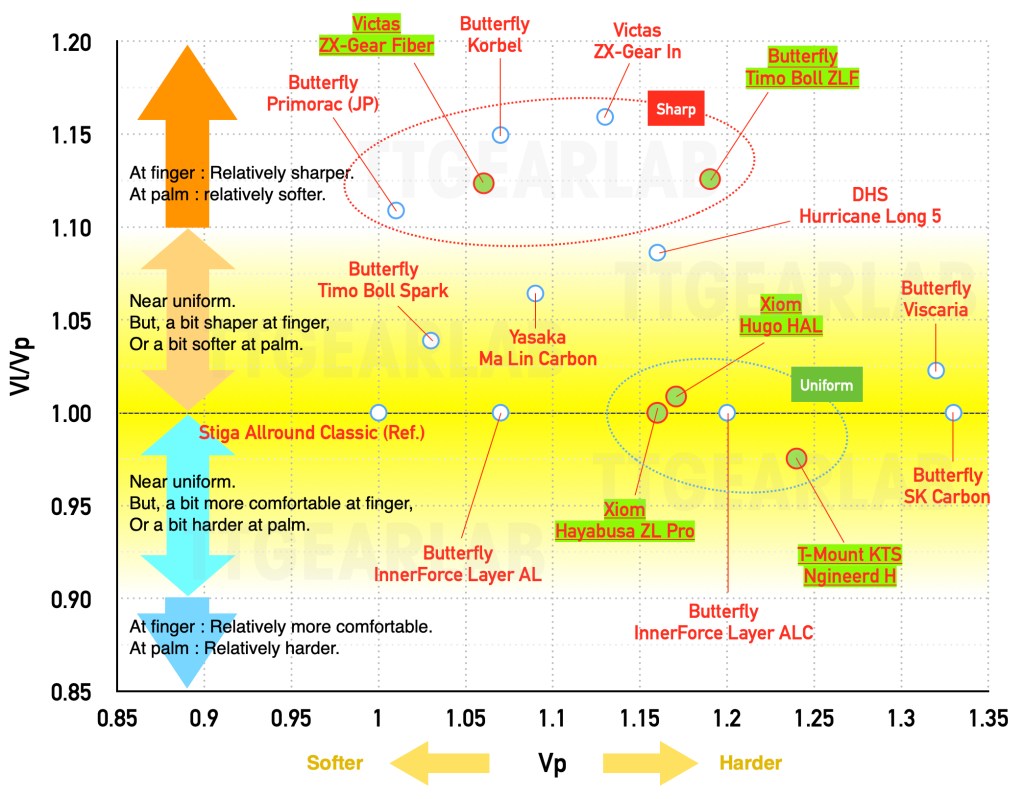
On the graph, most of blades in this comparison (except for four blades) are placed in upper part of the graph – ‘Relatively sharper at finger’ range (Vl/Vp > 1.0). But, there are also five blades those are placed on the ‘Uniform’ line (Vl/Vp = 1.0), and one in the upper part is placed very close to that line. And, one blade is placed in lower part of the graph – ‘Relatively more comfortable at finger’ range (Vl/Vp < 1.0).
Among five non-carbon fiber blades in this comparison, we can find three models at the area close to ‘InnerForce Layer ALC’. Those are close to or on the ‘Uniform’ like (Vl/Vp = 1.0). So we can categorize those three blades into ‘Uniform’ group indicated in green dotted line. Although there are small difference in primary feeling, we can consider that the three non-carbon blades in this group provide the feeling which is very similar to the feeling of ‘InnerForce Layer ALC’.
On the other hand, two models among five non-carbon fiber blades are placed at much higher area – Vl/Vp > 1.10. The blades in this area gives much sharper feeling to index finger when compared with the primary feeling transmitted to palm. So the blades in this area can be categorized into ‘Sharp’ group indicated in red dotted line. The fiber blades in this group can be compared with many 5-ply wood offensive blades for example ‘Korbel’ or ‘Primorac’ when we observe feeling. The player who isn’t satisfied with somewhat mild feeling that the blades in ‘Uniform’ group provide and wants sharper and more exciting feeling like 5-ply wood blades will like the blades in this group. Victas ‘ZX-Gear In’ may be a good solution for that kind of players. (It isn’t a non-carbon fiber blade.) If the player wants harder primary feeling, ‘Timo Boll ZLF’ will be the solution. And, ‘ZX-Gear Fiber’ will be recommended for the players who like softer primary feeling.
If the player doesn’t like sharp or exciting feeling transmitted to index finger, the blades in ‘Uniform’ group will be the solution. The mild relative feeling of the blades in this group can be the advantage especially in case the rubber with very hard sponge is attached. Maybe that is one reason why the Vl/Vp’s of ‘Viscaria’ and ‘InnerForce Layer ALC’ are close to 1.00. DHS ‘Hurricane Long 5’ and Yasaka ‘Ma Lin Carbon’ are located between ‘Uniform’ group and ‘Sharp’ group. Probably those two will give us quit a lot of freedom in choosing rubber. Another interesting comparison is the comparison between ‘ZX-Gear Fiber’ and ‘InnerForce Layer AL’. The constructions of those two blades are similar to each other. However, from the graph we can know that the characteristics of those two are significantly different. ‘InnerForce Layer AL’ gives relatively mild feeling to the index finger of player, while ‘ZX-Gear Fiber’ gives much sharper feeling. So ‘InnerForce Layer AL’ can be compared with ‘Allround Classic’, while ‘ZX-Gear Fiber can be compared with ‘Primorac’. And, ‘InnerForce Layer AL’ can be dealt as the non-carbon version of ‘InnerForce Layer ALC’, while ‘ZX-Gear Fiber’ can be dealt as the non-carbon version of ‘ZX-Gear In’. We can see the clear difference between Butterfly inner-type blades and Victas inner-type blades.
Please click here to return to top (table of contents)
4. Summary
We have compared five non-carbon fiber through Performance Indices. The characteristics of each model can be summarized as follows:
4-1. Butterfly Timo Boll ZLF
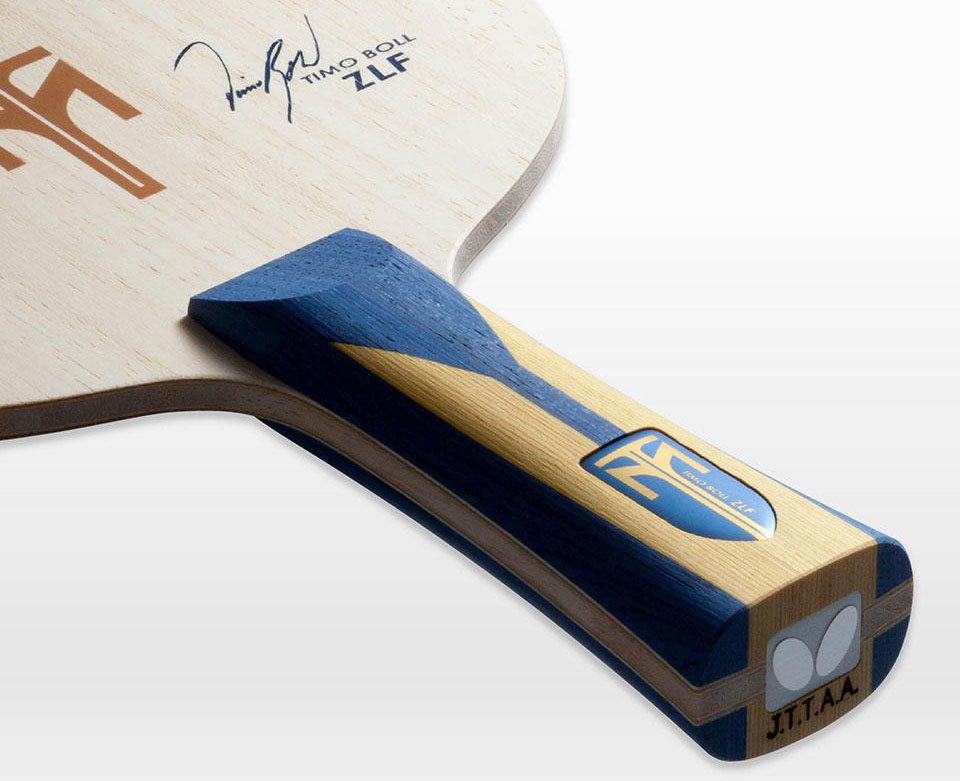
- The elasticity characteristics of ‘Timo Boll ZLF’ can be directly compared with those of typical inner ALC blades such as ‘Hurricane Long 5’. Because its primary elasticity is moderately high and it hugs ball deeply but not extremely deeply when the player hits the ball very strongly, it is expected to be suitable for continuous topspin.
- Regarding vibration characteristics, the primary feeling of ‘Timo Boll ZLF’ is moderate. It is noticeably harder than 5-ply wood blades. But, ‘Timo Boll ZLF’ can be compared with 5-ply wood blades because it transmits much sharper feeling to the player’s index finger as 5-ply wood blades do.
- It is expected that ‘Timo Boll ZLF’ will be very good replacement of 5-ply wood offensive blades if the player wants to increase speed while keeping the exciting feeling transmitted to the finger.
4-2 . Xiom Hugo HAL
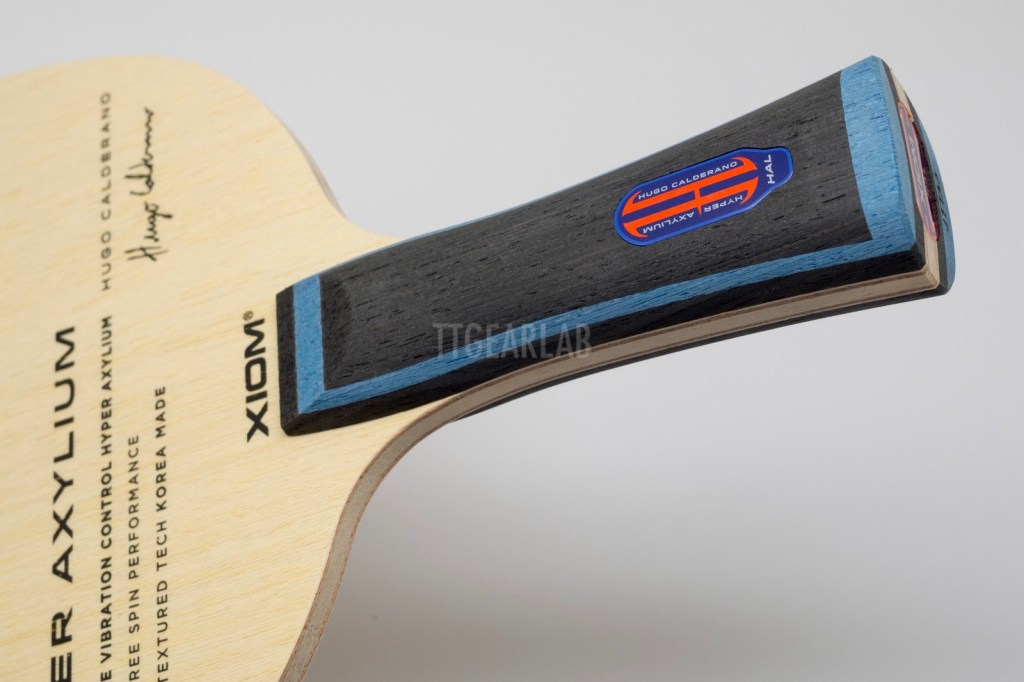
- The primary elasticity of ‘Hugo HAL’ can be also compared with that of typical inner ALC blades such as ‘Hurricane Long 5’. But, ‘Hugo HAL’ hugs the ball less deeply than ‘Hurricane Long 5’ or ‘Timo Boll ZLF’ when the player hits the ball very strongly. It is expected that ‘Hugo HAL’ will provide higher speed than ‘Timo Boll ZLF’ when the player plays at mid-distance area or performs hard smash.
- The primary feeling of ‘Hugo HAL’ is as soft as that of typical inner ALC blades such as ‘Hurricane Long 5’. (And, ‘Hugo HAL’ is softer than ‘InnerForce Layer ALC’ in primary feeling.) But, the feeling transmitted by ‘Hugo HAL’ to the player’s index finger isn’t as sharp as ‘Hurricane Long 5’ or ‘Timo Boll ZLF’. Players will feel that ‘Hugo HAL’ is much more comfortable than ‘Timo Boll ZLF’.
- When compared with ‘Timo Boll ZLF’, ‘Hugo HAL’ can be recommended for less aggressive player who prefer softer and more comfortable feeling. All-round players may prefer ‘Hugo HAL’ to ‘Timo Boll ZLF’.
4-3. T-Mount KTS Ngineered H
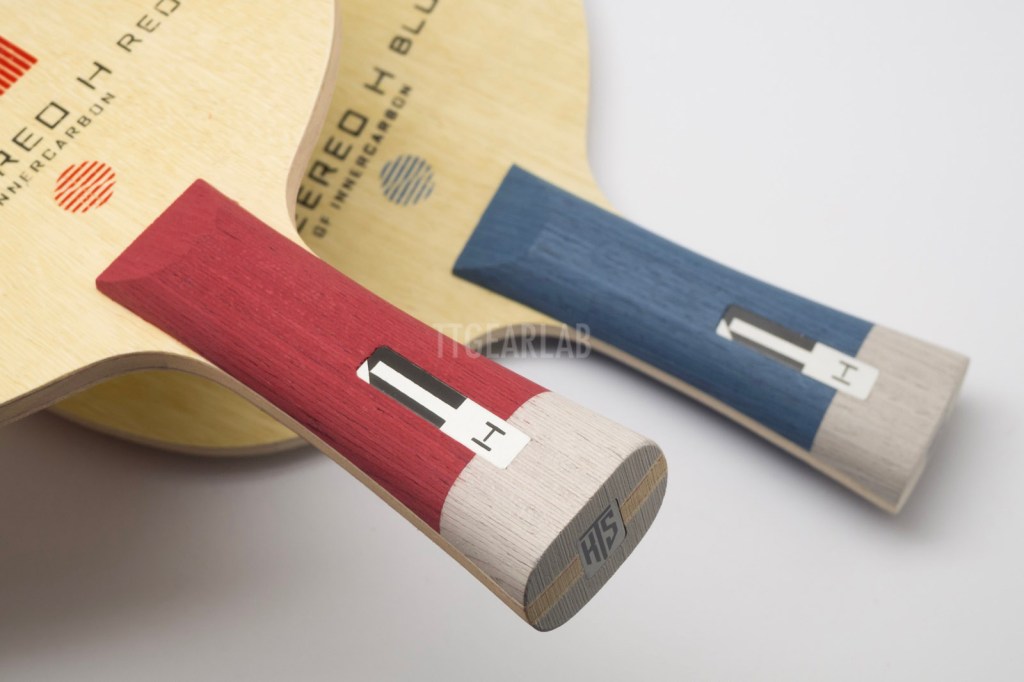
- ‘Ngineered H’ also provides the same level of primary elasticity as typical inner ALC blades such as ‘Hurricane Long 5’. But, ‘Ngineered H’ hugs the ball much less deeply than ‘Hurricane Long 5’ or ‘Timo Boll ZLF’. ‘Ngineered H’ gives much more additional kick when the player hits the ball very strongly. The overall elasticity characteristics of ‘Ngineered H’ are close to those of ‘SK Carbon’. Power all-round players or the players who have used 7-ply wood blades will like the elasticity characteristics of ‘Ngineered H’.
- The primary feeling of ‘Ngineered H’ is harder than that of ‘InnerForce Layer ALC’. But, because ‘Ngineered H’ transmits softer feeling in lateral direction when compared with primary (= vertical) direction, the players may feel that ‘Ngineered H’ gives soft and comfortable feeling.
- ‘Ngineered H’ can be recommended for the players who requires more comfortable feeling and more additional kick at the same time. It is expected that the players who have used 7-ply wood blades will also like ‘Ngineered H’.
4-4. Victas ZX-Gear Fiber
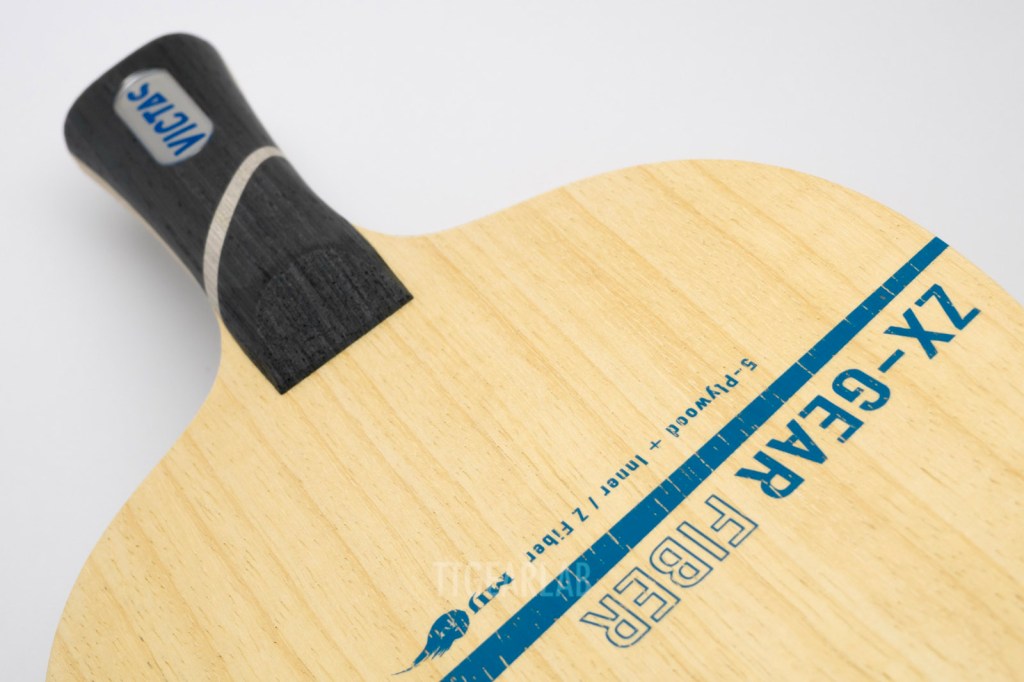
- ‘ZX-Gear Fiber’ is quite slow as fiber blade. The elasticity characteristics of ‘ZX-Gear Fiber’ can be compared with those of ‘Primorac (Japanese version)’ which is a 5-ply wood offensive blade slower than ‘Korbel’. Its level of hugging ball when the player hits the ball very strongly Is close to those of ‘Hurricane Long 5’, ‘Timo Boll ZLF’ and ‘InnerForce Layer ALC’. So, ‘ZX-Gear Fiber’ can be considered as slow version of those blades.
- The vibration characteristics of ‘ZX-Gear Fiber’ can be compared with those of ‘Korbel’ or ‘Primorac’ those are 5-ply wood blades. ‘ZX-Gear Fiber’ is a very soft blade that gives relatively sharp feeling to index finger.
- If the player has expected the power of fiber blade, ‘ZX-Gear Fiber’ will not be satisfactory. But, if the player pursues extreme safety and controllability, ‘ZX-Gear Fiber’ is worth considering.
4-5. Xiom Hayabusa ZL Pro
- ‘Hayabusa ZL Pro’ provides same level of primary elasticity as ‘Timo Boll ZLF’, ‘ Hugo HAL’ or ‘Hurricane Long 5’. But, it hugs the ball more deeply than those blades when the player hits the ball very strongly. So we can expect that ‘Hayabusa ZL Pro’ will be suitable for close-to-table topspin that aims at early timing of bounce.
- The vibration characteristics of ‘Hayabusa ZL Pro’ are close to those of ‘Hugo HAL’. ‘Hayabusa ZL Pro’ is as soft as ‘Hurricane Long 5’ in primary feeling, and the feeling transmitted to the index finger isn’t sharper and more comfortable than the primary feeling. Because of its uniform feeling characteristics, players may feel that ‘Hayabusa ZL Pro’ is much softer than ‘Hurricane Long 5’. And, it is apparently softer in all aspects than its outer version – ‘Timo Boll ZLF’.
- ‘Hayabusa ZL Pro’ can be recommended for the players who like the elasticity characteristics of ‘Timo Boll ZLF’ but don’t like its very sharp/exciting feeling transmitted to finger. Those players will be satisfied with the comfortable feeling of ‘Hayabusa ZL Pro’.
Please click here to return to top (table of contents)
 TTGearLab
Hey there. May I ask you a question?
I am playing with XIOM Hugo Hal, using
JEKYLL & HYDE V47,5 – for forehand
XIOM VEGA KOREA – for backhand
I’d like to try something a bit faster, know I am hesitating between
Butterfly Franziska Innerforce ZLC and Butterfly Tiago Apolonia ZLC
What do you think fits better or maybe any alternatives?
LikeLike
Please, correct Ec for Hugo HAL in the tables of chapters 2 and 2-2.
LikeLike
Just now corrected. Thank you a lot!!!!!!!! 🙂
LikeLike
Thanks for this article. To late for me 🙂 with this information I had never bought the Victas zx-gear fiber. The feeling of zx-gear fiber is for me slow and, as I would describe it, “dump”. And I normally play 5ply off all wood blades.
LikeLike
Thank you for comment. I think that ZX-Gear Fiber is a blade specially made for Japanese market. Most of players will feel that it is a quite slow blade.
LikeLike
Hello there. Thanks for the review, great work!
May I ask you about XIOM HUGO HAL vs XIOM Hayabusa ZL PRO? I am currently playing Hugo Hal, but would like to try ZL PRO, what advantages and disadvantages you can point out, thanks in advance.
LikeLiked by 1 person
In most cases Hayabusa ZL Pro will provide higher speed than Hugo HAL. But, I’m not sure whether you will be able to notice clear difference in speed or not. Regarding feeling, there are some factors those can’t be expressed by current Performanc e Indices. You’ll feel that Hayabusa ZL Pro is more natural than Hugo HAL. Differently speacking Hayabusa ZL Pro is closer to natural wood. I personally prefer the feeling of Hayabusa ZL Pro to that of Hugo HAL. But, this can be both of advantage and disadvantage. That differs by player.
And, if you like the FL handle shape of Hugo HAL, the FL handle of Hayabusa ZL Pro will not give you good impression. Handle shape is sometimes more important than the performance when we select blade, and we have to note that the FL handles of two blades are totally different from each other. If the handle of Hayabusa ZL Pro doesn’t fit for you, it will be great disadvantage that is more important than the small differences in elasticity and feeling.
LikeLike
Thanks for the review! It would be interesting to look at the characteristics of the Butterfly’s inner fiber, such as Liu Shiwen and Ai Fukuhara pro zlf.
LikeLike
Thank you for comment.
Those two are based on discontinued InnerForce ZLF (which is different from InnerForce Layer ZLF). The values of InnerForce ZLF is as follows :
avg.weight 89.1g
Ep = 1.73
Ec = 1.61 (Ec/Ep = 0.93)
Vp = 1.20
Vl = 1.13 (Vl/Vp = 0.94)
LikeLike
Thank you very much for the data!
It’s a bit strange that TB ZLF is slower with the top layer is koto and external zlf.
LikeLiked by 1 person
We have to consider all features when we observe blades. The kind of material and the placement of artificial fiber are not all those affect the elasticity of blade. There are two other important factors – thickness and weight. The avg. weight of IF ZLF is noticeably higher than that of TB ZLF. And, there is another factor – center layer. The center layer of IF ZLF is harder than that of TB ZLF.
So, the heavier weight and the harder center layer of IF ZLF make it more elastic than TB ZLF.
However, because of softer feeling that transmitted to finger, probably many players will ‘feel’ that IF ZLF is softer and slower than TB ZLF.
LikeLike
great info thank you on this very interesting blade category for club players.
for close to table LP ox on the BH which blade characteristics should one look for? Should Vi. Be higher than VP to give better touch?
I have an 80gm Xiom Diva, how would you expect a same weight ZL pro to compare with the same 45° tensor and OX LP as the construction is similar except for the inner fibre layer. I would mention that I have cut away wood on the Diva around the throat and from the straight handle which has added some flex and improved feel quite a bit.
LikeLike
Thank you for comment. Without concerning the side (forehand or backhand), for agressive topspin at close-to-table area you’d better select the blade with low Ec/Ep. And, in many cases the blade with high Vl/Vp gives more exciting ball feeling. (But, ‘ball touch’ may be a different story. It is more subjective word, and is somewhat difficult to express by measured data.)
It is good to hear that you have Diva. Diva is a blade which was developed by me, and I personally like it very much.
Hayabusa ZL Pro with same weight will be a bit faster than Diva. BTW, I didn’t consider long pimper rubber at all when I developed Diva. I’m not sure whether Diva will make good combination with LP or not. 🙂
LikeLiked by 1 person
Hi,
I’m choosing between the Hugo HAL and the ZL Pro. Returning to the game after long hiatus. Good ball feeling and pretty allround player. Right now playing two gifted blades, a Persson Power Play (5ply) and a Smirnov Inner Carbon. The Smirnov is nice and I can handle it, but still looking for something in between, with less hard speed and more touch and control.
Your review of HAL leaves almost nothing to be wished for when you call it perfectly balanced in all aspects, and suitable for advanced and even beginner. However you do not compare to ZL Pro specifically, since that article came later.
Is the ZL Pro as balanced in all aspects? In a comment I see you prefer the feel of the ZL Pro – would you care to elaborate on this? And is the HAL still feeling like an inner, as I believe you mentioned?
Just want the best blade for learning, advancing and hopefully living with for some years to come. Thanks in advance!
LikeLike
Both of those two gives very good balance. The basic criteria of selection between two will be the construction. Although Hugo HAL is a very controllable blade, it is an outer-type blade. For that reason the players who prefer inner-type blades or all-wood blades may dislike its feeling. For those players Hayabusa ZL Pro will be a good solution.
One thing you have to check it the shape of handle. Hugo HAL has the FL handle of semi-wide type which is similar to that of Viscaria FL. However, Hayabusa ZL Pro has somewhat narrower FL handle which is close to the Master handle of Stiga.
LikeLike
Your blog has been a blessing for me, since I restarted tabletennis after quite some time.
Not knowing anything about recent blades I started with my old Donic Opticon RS, a Tenergay 80fx and a MSP Spinfire.
I learned that Balsa is quite a special wood and I want to switch.
How would you compare the stiffnes of a Balsa blade with the ZL Pro, because i tried a Person Powerblade an it felt quite wobbly (and I didn’t liked that).
LikeLike
Thank you for comment!
In general, the blades with Balsa center are quite unique blades, and the purpose of those blades is limited to fast attack at close-to-table area, and in many cases with long pimples rubber on one side.
Because Balsa is a very lightweight wood, the blade with Balsa is also very light. We can easily find the blades whose weight is 6X g or 7Xg. That light weight is good for raising swing speed. But, it is difficult for those blades to make the ball with heavy spin, even though total stiffness is not low.
If you want to play with very unique playing style, Balsa blade is considerable. But, if not, I recommend you to select more normal blade such as ZL Pro.
LikeLike
Im currently loving the Hayabusa ZL Pro (Rakza Z on Forehand and Vega X on Backhand) and has been the best blade ive used ever. I love the feeling but i know sooner or later ill need an upgrade because i would like more speed. What blade would you recommend me upgrading to while keeping the feel and safety of the blade? Or should i upgrade rubbers and go from there? I was either thinking of upgrading the blade to the Timo Boll ZLF/ Hugo Hal/ Hayabusa ZLX (Any other suggestion would be much appreciated!). Or if i go on the path of upgrading rubbers, maybe dignics 09c and dignics 05. Please help!
LikeLike
I recommend you to try faster rubbers first, if you like Hayabusa ZL Pro very much. Blade is directly concerned with the player’s characteristics, and it is difficult to change blade. Speed and spin are more related with rubber than with blade.
LikeLike
I agree with the comment above. I also like the ZL Pro and used it with Vega X FH and Vega Japan BH rubbers. Over time, I started to feel like I lacked speed when playing forehand. I feel like my balls are at their limit. And when I hit hard, there’s a lot of vibration, as if the racket is broken, even though it isn’t. I’ve also started thinking about upgrading my racket, as I think the soft blade is the problem and am considering switching to a HAL/ZLX. What do you think? I really want to maintain the feel of the ZL Pro. For some reason, I expect the ZLX to be more responsive. I’m really looking forward to your feedback.
LikeLike
When you want to upgrade speed from ZL Pro, one thing to be considered is the type of blade construction. Because Hayabusa ZL Pro is an inner-type fiber blade, the feeling of Hayabusa ZLX may be somewhat worse because it is an outer-type blade. Please once consider whether it will be all right for you or not.
Further, the vibration as if the racket is broken is due to the unique characteristics of PBO fiber (= ZL fiber). You may feel similar vibration from Hayabusa ZLX. (I’m not sure.)
In my recommendation, faster inner-type blade such as Donic Lind Hexa Carbon may be better choice becuase it is also an inner-type blade and its top layer is identical to that of ZL Pro.
LikeLike