Yasaka ‘Falck’ series is the Swedish blade family named after Mattias Falck – the member of Swedish Men’s National Team. It is a product line that continues the tradition of ‘Gatien’ series and ‘Ma Lin’ series those are made in Sweden. It consists of two models – ‘Falck Carbon’ and ‘Falck W7’. ‘Falck Carbon’ is an inner-fiber blade developed of Mattias Falck, and ‘Falck W7’ is a 7-ply wood blade for the players who like the natural feeling of pure wood blade.
The construction of ‘Falck W7’ is different from 7-ply wood construction of ‘Clipper’ type although it also follows traditional Swedish wood processing method. Differently from ‘Clipper’ type which has three moderately thick layers at the center, it has one thick core layer and three thinner outer layers at both sides. One important advantage of ‘Falck W7’ is that it provides very stable weight around 85 grams thanks to individual hand selection of the veneers. The overall characteristics of ‘Falck W7’ is close to that of standard inner-ALC blades rather than that of 7-ply wood blade of ‘Clipper’ type.
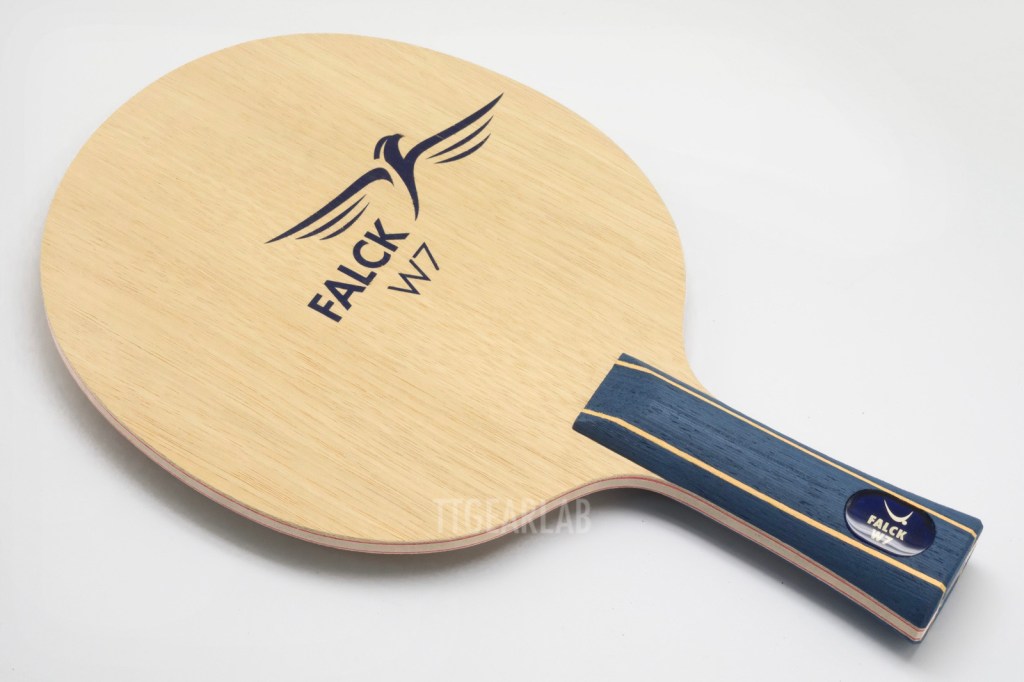
‘Falck W7’ is one of the Swedish blades in the blade range of Yasaka. Its overall graphic design continues that of existing Yasaka Swedish blade product lines – ‘Gatien’ series and ‘Ma Lin’ series, but graphic of handle and head is simplified. It is characterized by two yellow lines those remind us the yellow color of Swedish national flag.
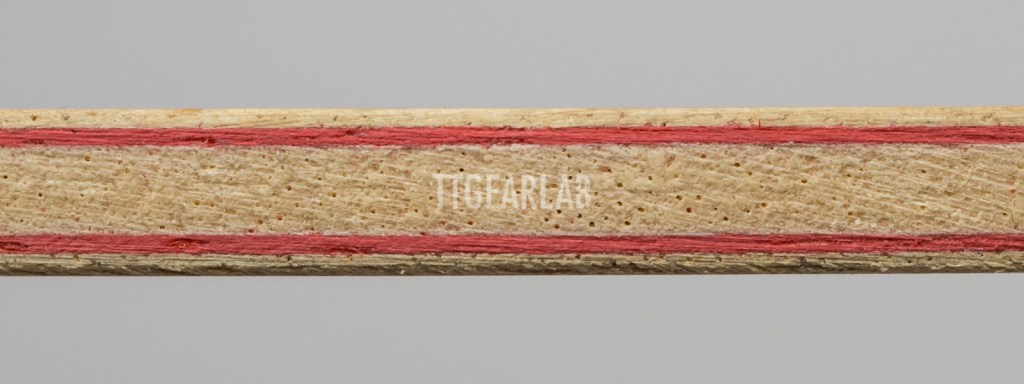
‘Falck W7’ is a 7-ply wood blade. Differently from ‘Clipper’ type which has three moderately thick layers at the center, it has one thick core layer and three thinner outer layers at both sides. Top layer is Limba. The second layer under layer is assumed to be Limba, and the dyed layer below it is assumed to be Ayous. The center layer is Ayous. Overall thickness is around 6.3mm. Average weight is around 85 gram.
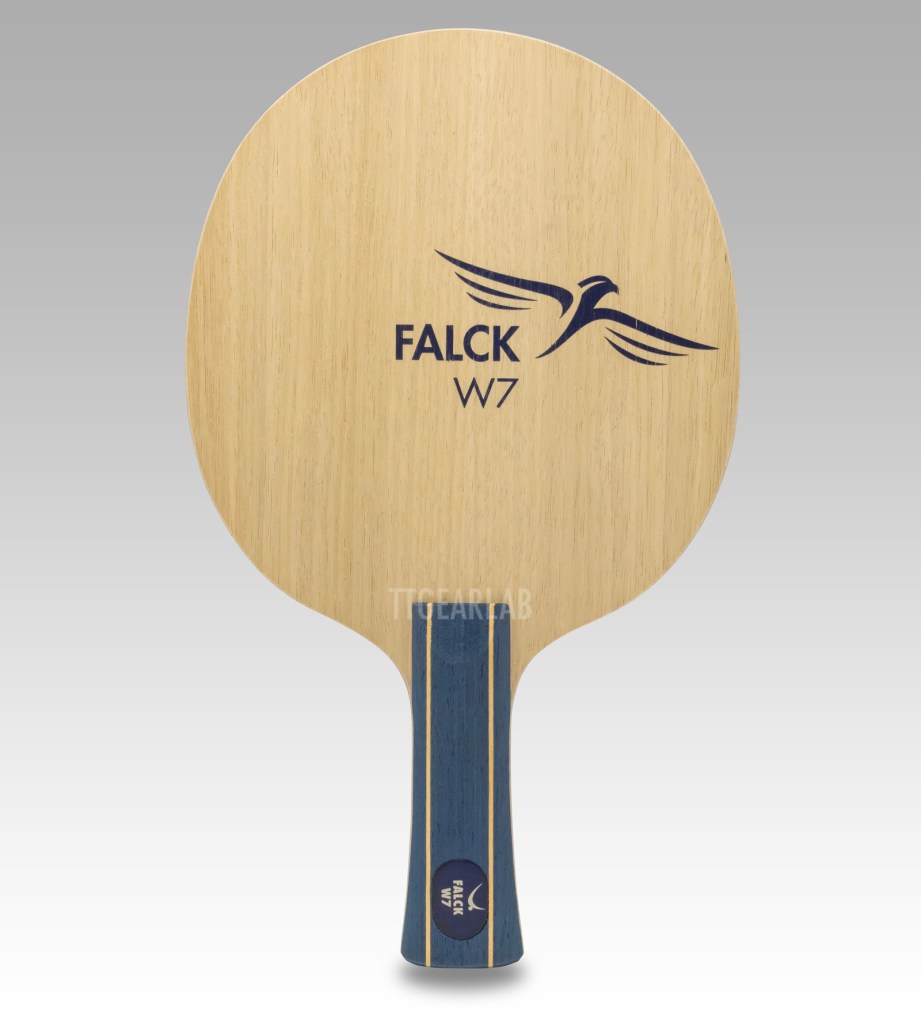
The head size is around 157mm x 151mm.
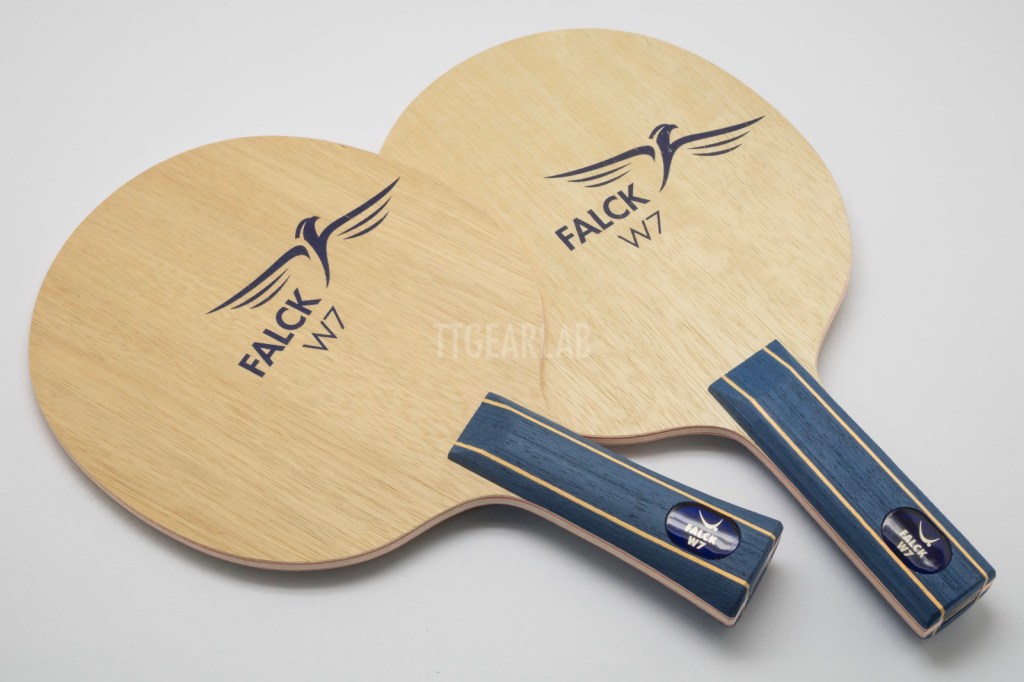
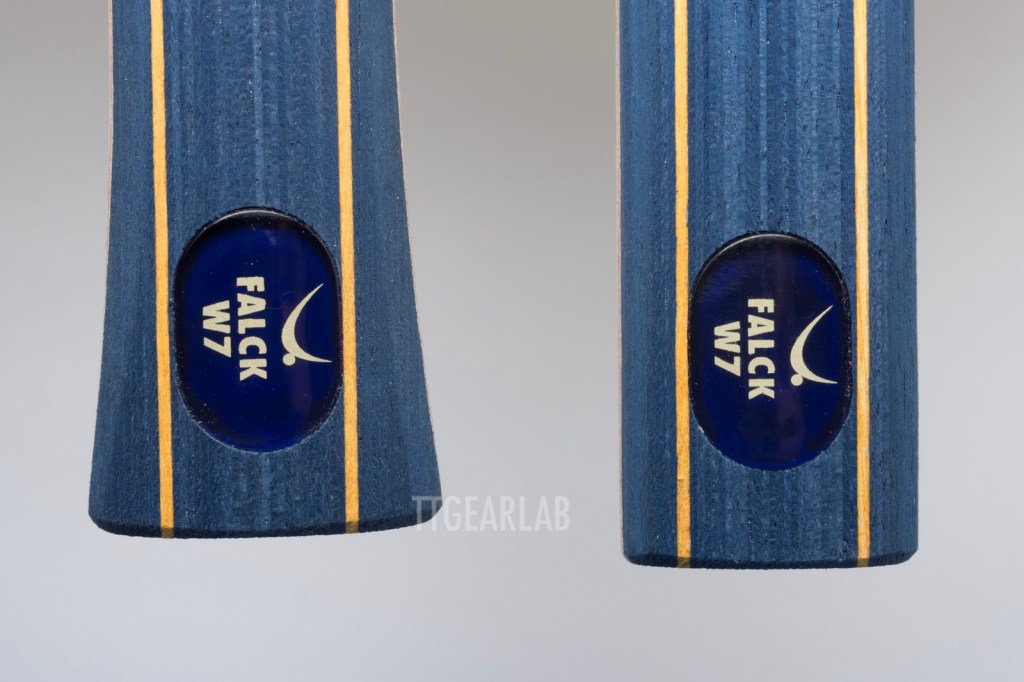
Left is FL (flared) handle version, and right is ST (straight) handle version.

The width of FL (flared) handle is around 26.5mm (at head side) ~ 27.5mm (at the middle of handle) ~ 35mm (at the end), and the thickness of FL handle is round 23mm (at thumb) ~ 25.5mm (at the end).
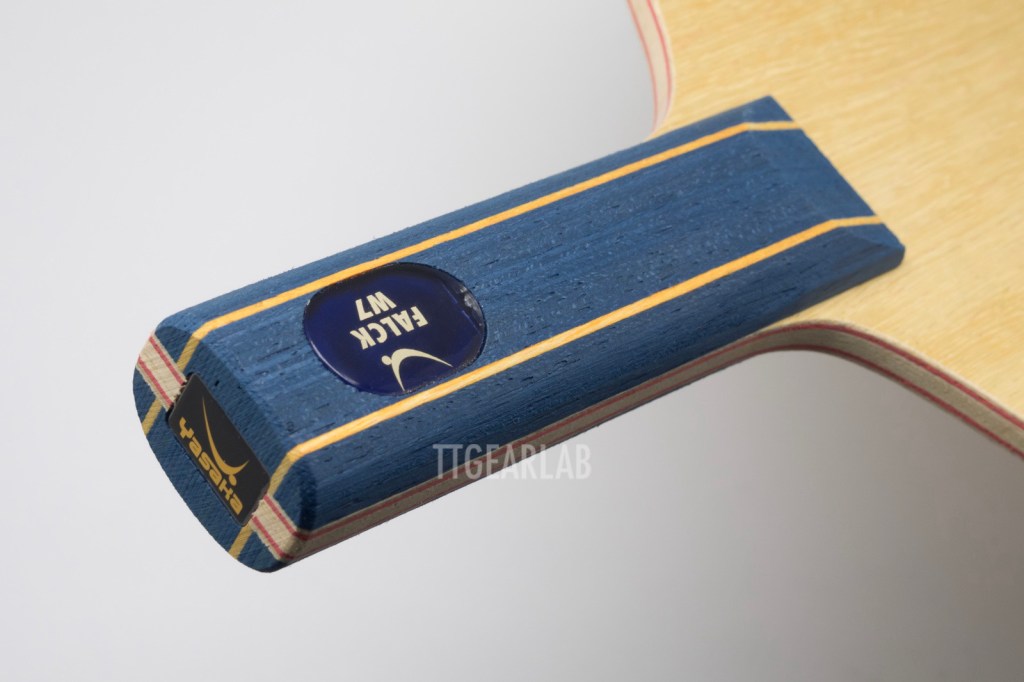
The size of ST (straight) handle which isn’t shown in the picture is around 29.5mm (width) x around 22.5mm (thickness). It is a very wide handle. But, because it isn’t thick the handle fits into palm without problem. The top and the bottom of handle is almost flat. (Not perfectly flat.) So it feels like squared handle.
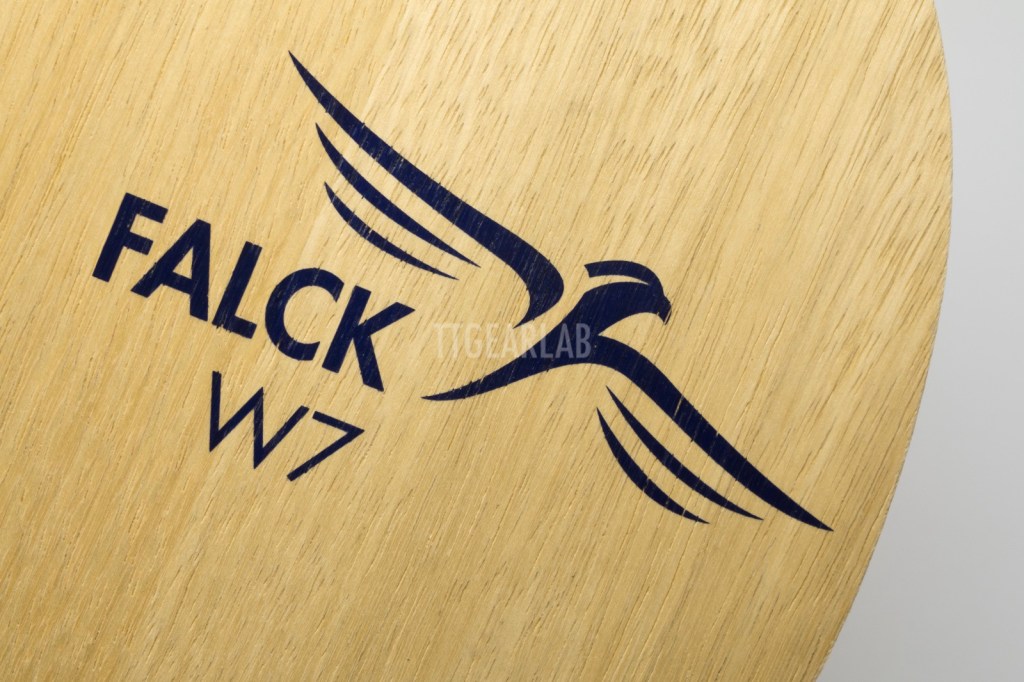
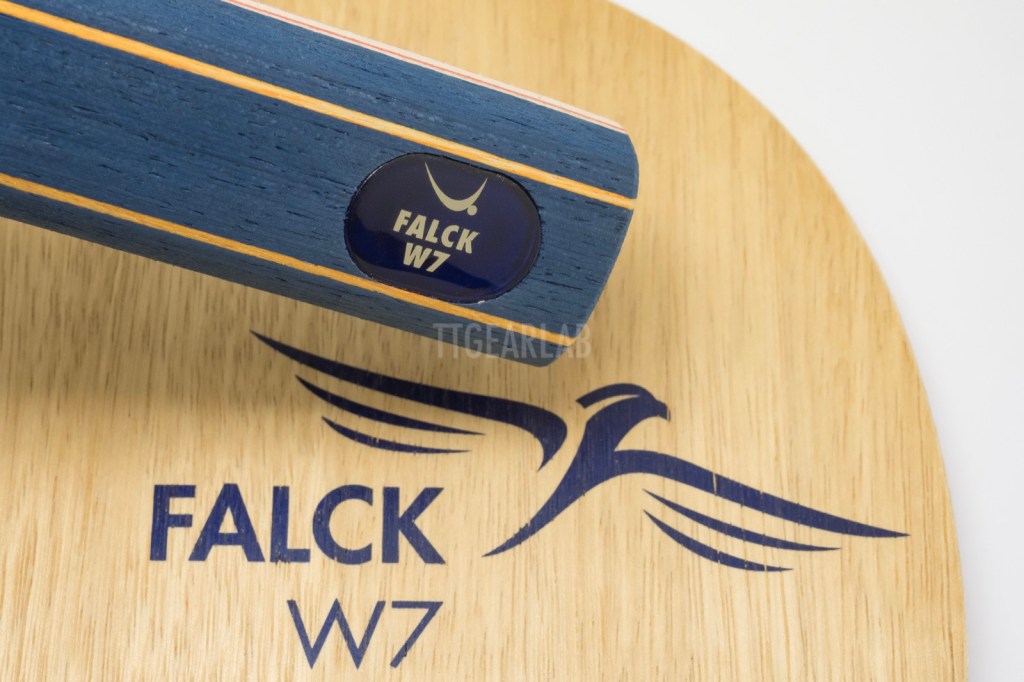
Across the center and the right side of the head, there is simple printing that includes product name and logo graphic. Speed symbol such as OFF or OFF+ isn’t included in the head printing.

There isn’t printing on the backside of head. But, on the backside of handle, there is the plastic lens whose size is same as that of the foreside lens.

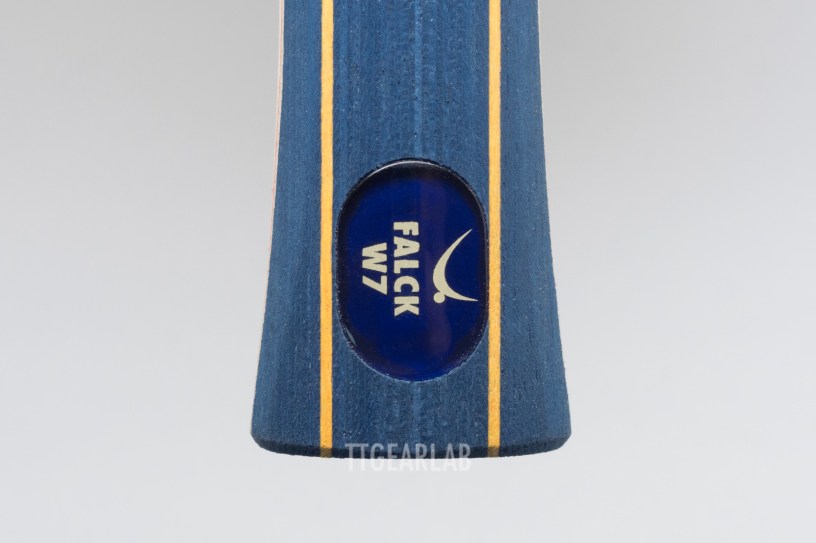
The name of blade – ‘Falck W7’ – and the logo graphic of Yasaka are printed at the foreside lens.
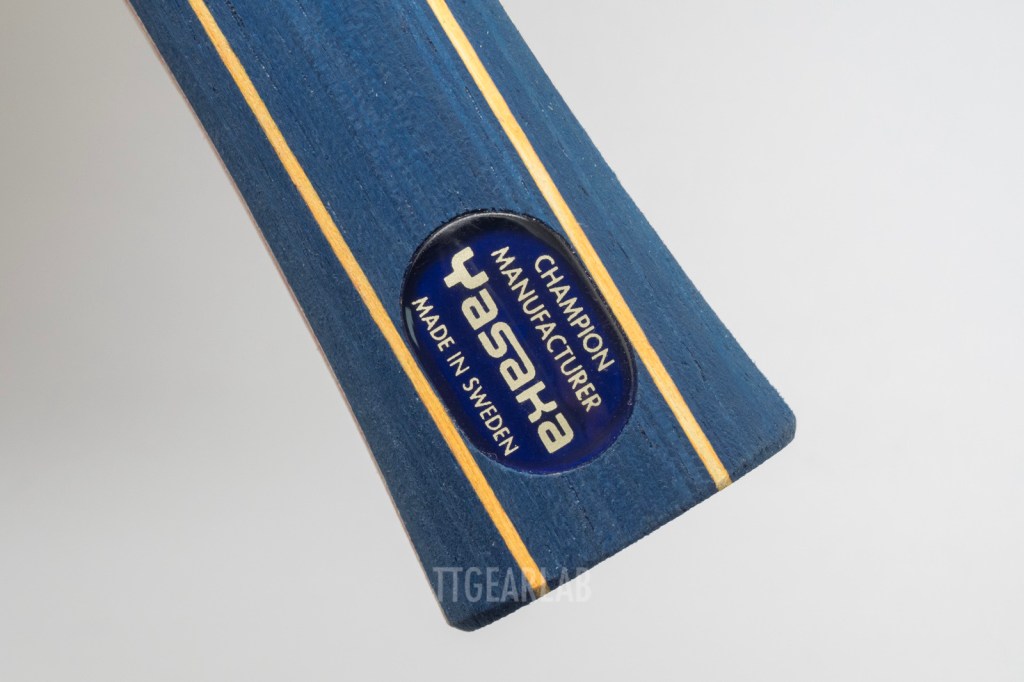
The backside lens is same as that of ‘Ma Lin Carbon’. The design of backside lens is also same as that of old ‘Gatien’ series. (Currently the products of ‘Gatien’ series are being sold without the name of Gatien.)
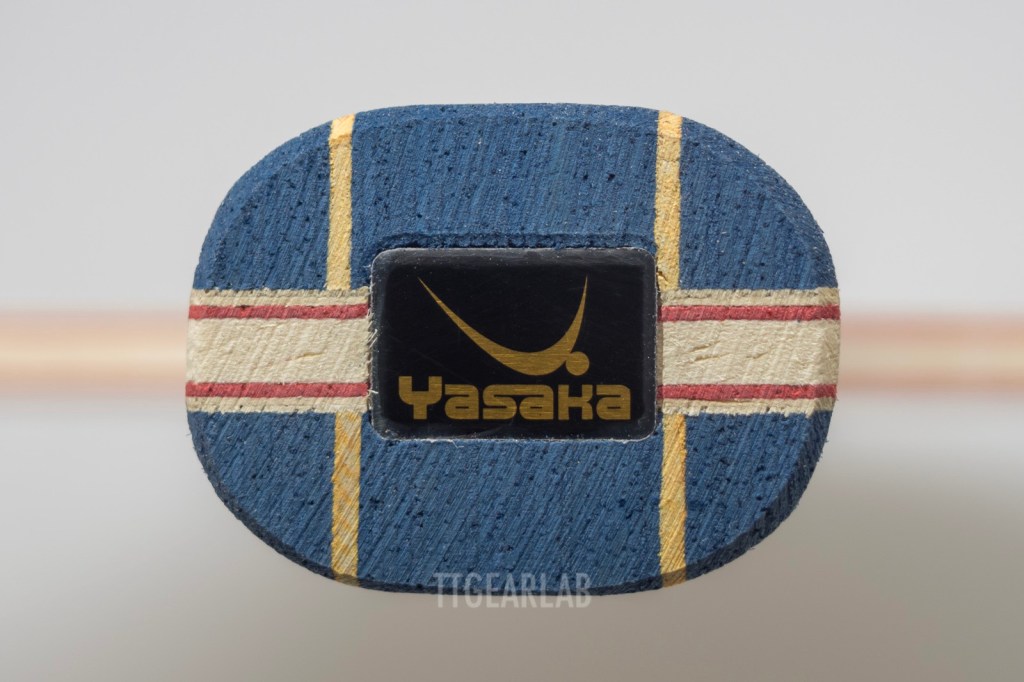
Recent Yasaka blades have squared plastic lens at the end of handle, instead of old metal sticker. The logo of Yasaka is printed in gold color on the black background.


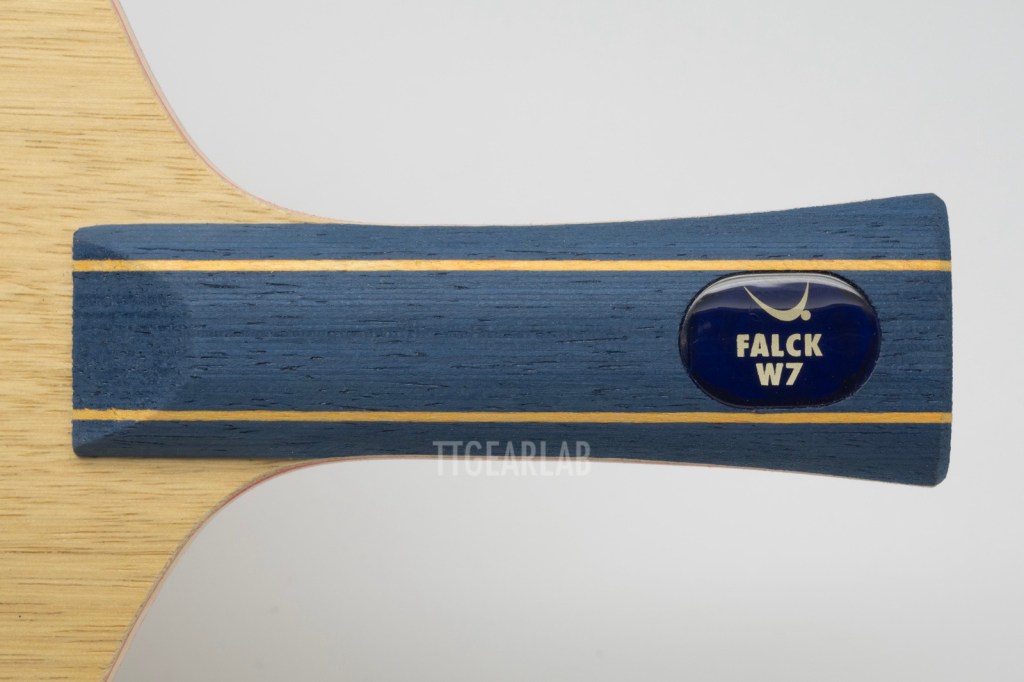
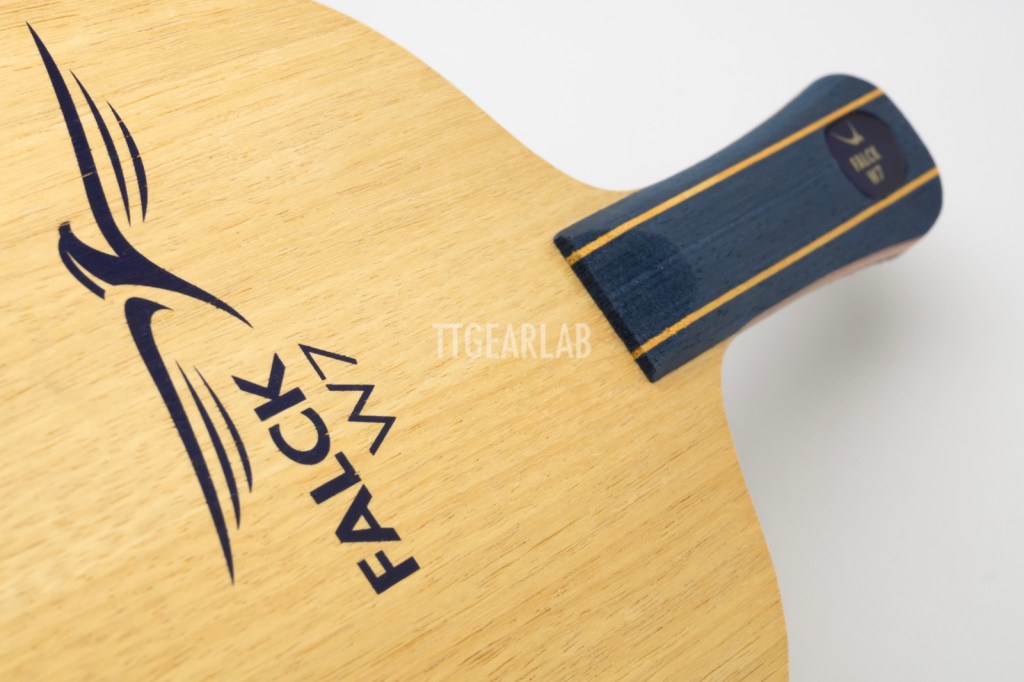

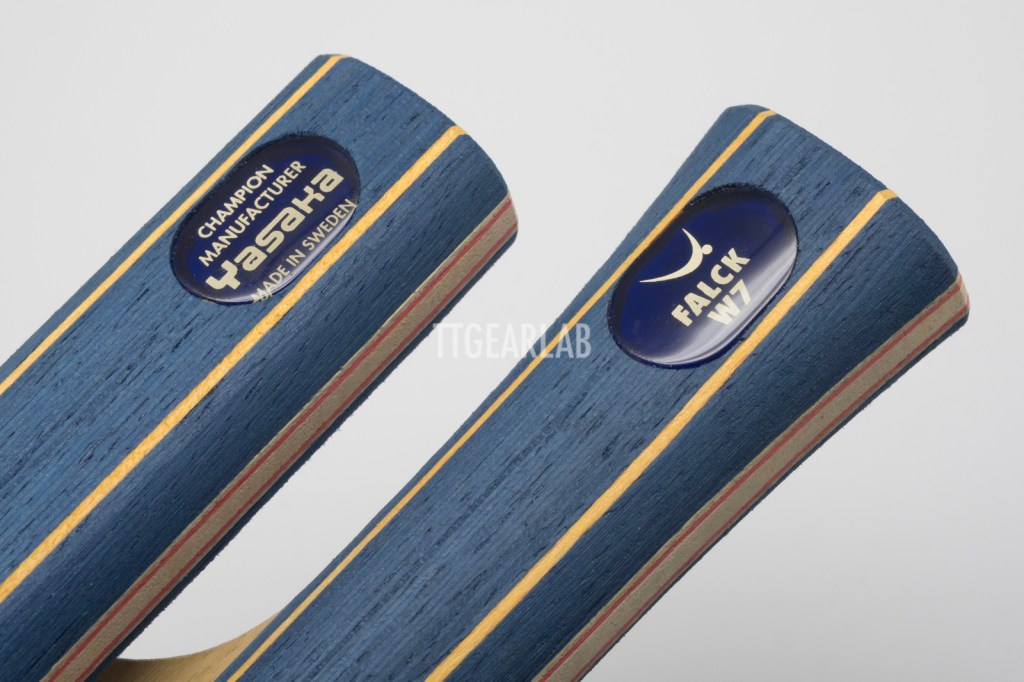


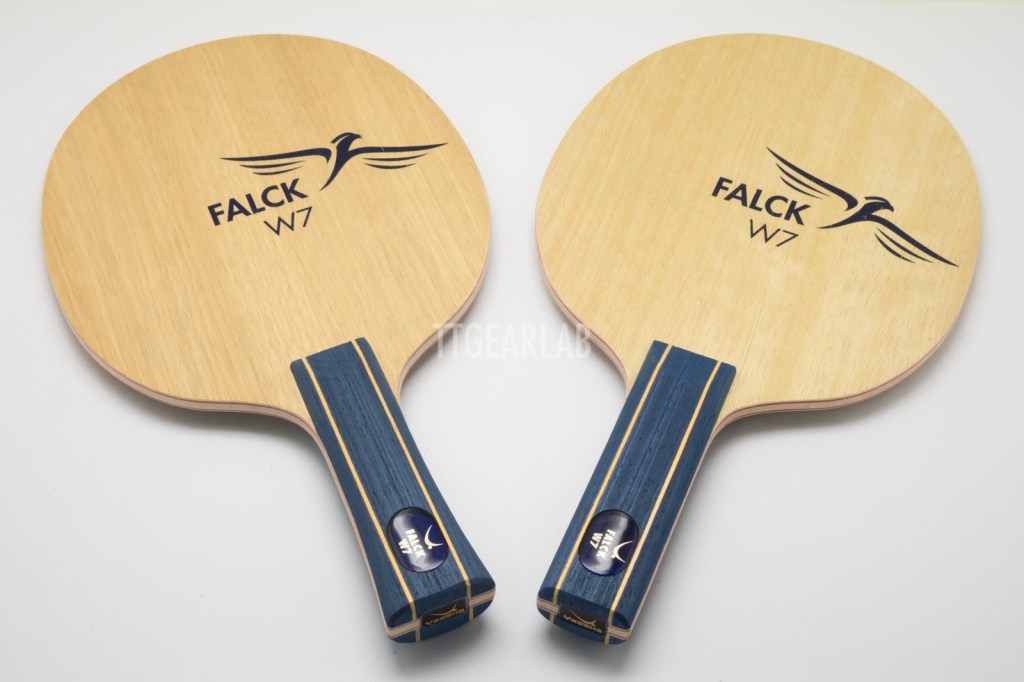
Left is FL (flared) handle version, and right is ST (straight) handle version.
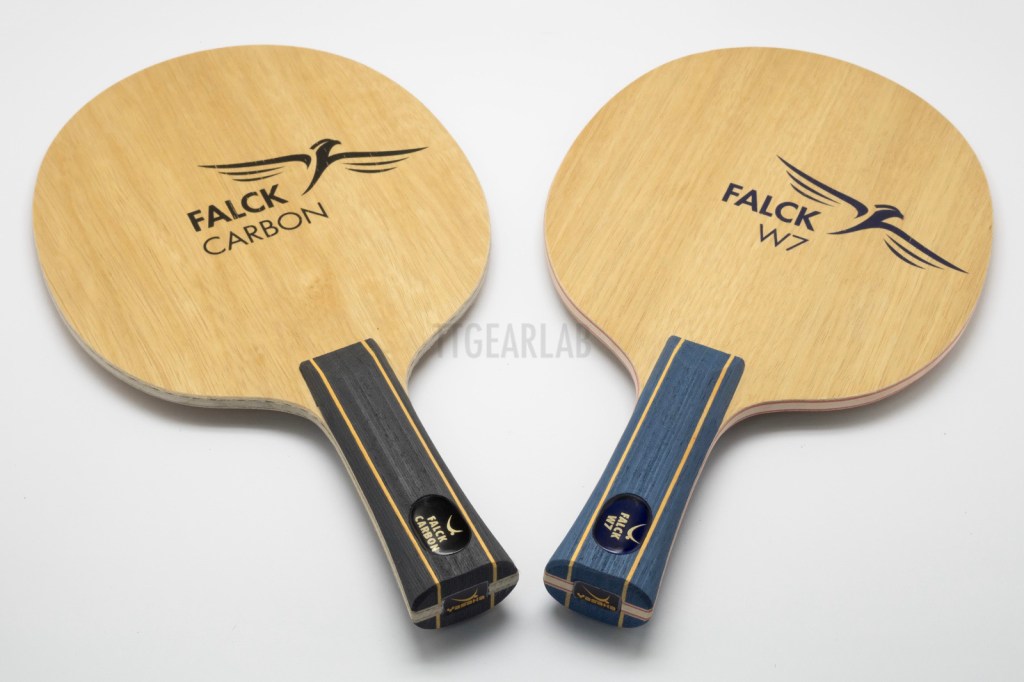
Left is ‘Falck Carbon’, and right is ‘Falck W7’. ‘Falck’ series continues the tradition of Yasaka’s Swedish blade families.
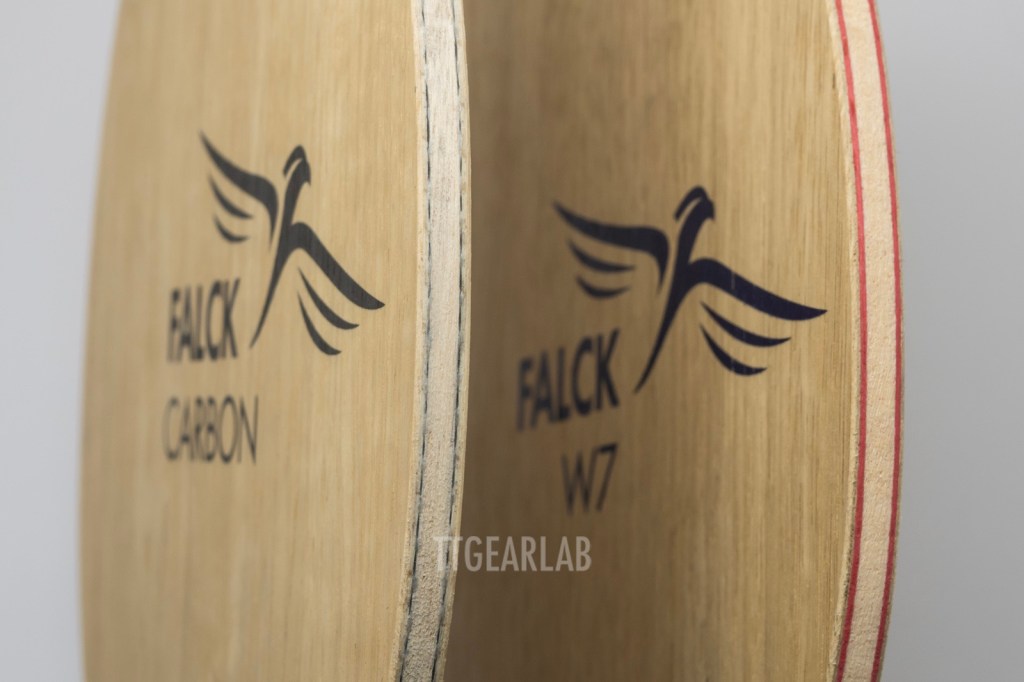
Left is ‘Falck Carbon’, and right is ‘Falck W7’. ‘Falck Carbon’ is a fiber blade, and ‘Falck W7’ is a pure wood blade.
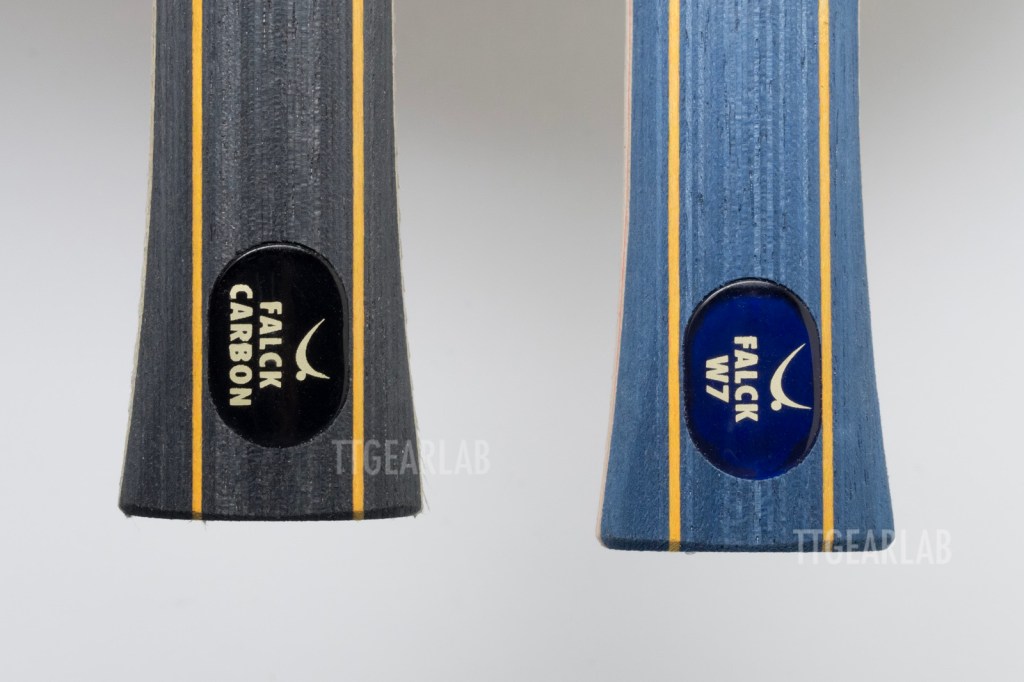
Left is ‘Falck Carbon’, and right is ‘Falck W7’. Two models share the basic theme of graphic, but are distinguished by theme color of handle – black for ‘Falck Carbon’ and dark blue for ‘Falck W7’.
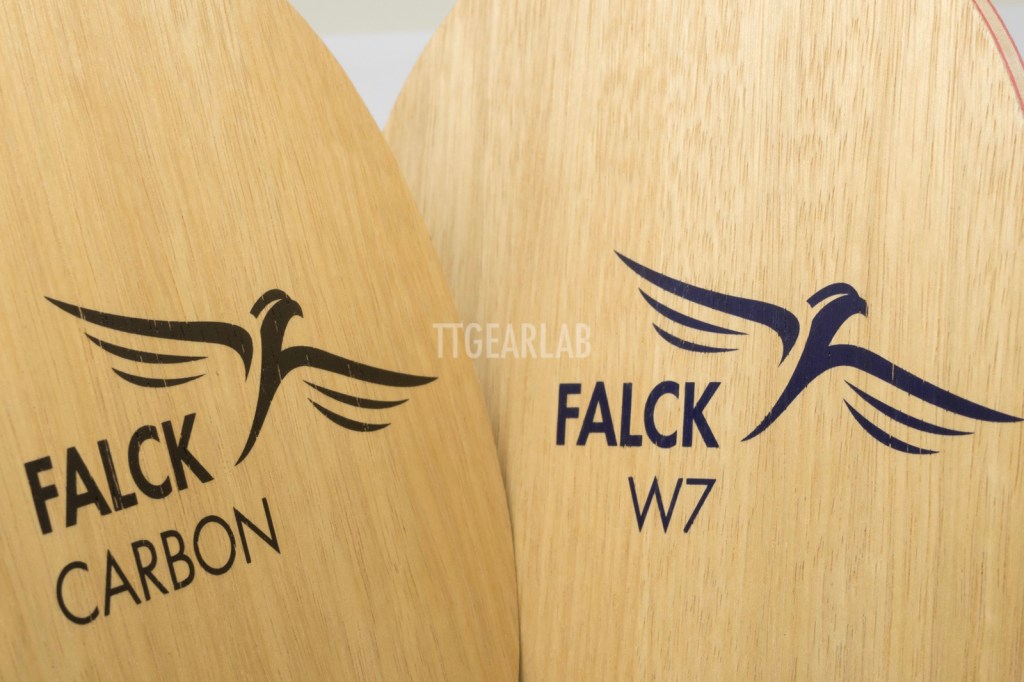
Left is ‘Falck Carbon’, and right is ‘Falck W7’. Both Swedish blades share the characteristic of excellent balance and superb feeling.

‘Falck W7’ is a modern 7-ply wood blade that can compete with inner-ALC blades. And, one important advantage of ‘Falck W7’ when compared with many 7-ply wood blades in the market is its low and stable weight. ‘Falck Carbon’ is recommended for the players who want to play with safe continuous topspin.
Following are the performance indices of Yasaka Falck W7 (avg.weight = 85.3g) :
– Ep = 1.65
– Ec = 1.34 (Ec/Ep = 0.81)
– Vp = 1.13
– Vl = 1.33 (Vl/Vp = 1.17)
Please note that above are average values and can be updated by further measurement.
You can buy Yasaka Falck Carbon & Falck W7 at megaspin.net. If you buy the products through following links, a part of profit is shared by TTGearLab. So it becomes a donation to TTGearLab.


Unauthorized use and/or duplication of this material without express and written permission from this website’s author and/or owner is strictly prohibited. Excerpts and links may be used, provided that full and clear credit is given to TTGearLab with appropriate and specific direction to the original content.
 TTGearLab
hello
really interesting that in spite of the thickness, the speed is moderate!
how does the FL handle compare with a Butterfly Innerforce FL handle (or with a Xiom 36,5 ALXi which is the same)?
thank you in advance!
LikeLike
This FL handle feels more rounded, thinner and wider than the FL of InnerForce series.
But, I think that the concept of shape of this handle is totally different from that of Butterfly standard FL.
LikeLike
Thank you for another insightful report. Given the similar construction to the Nittaku Adelie, why are they so very different in terms of response?
LikeLike
Falck has 2x limba top veneers so maybe not so similar!
LikeLike
Right. As you mentioned Falck W7 is totally different from Adelie. Especially the difference in Ec/Ep is significant.
If you frequently use smash, Adelie will be better. But, if you frequently use counter topspin, Falck W7 will be better in my opinion.
LikeLike
the double limba really seems to help the dwell. its kinda like a slightly speedy 5 ply
LikeLike
Yes. This blade feels like 5-ply wood offensive blade. It is totally different from many 7-ply blades whose construction is categorized as ‘Clipper’ type.
(BTW, dwell time is always same if we use the same ball. Dwell time doesn’t differ by blade or rubber. What we feel as the ball dwells on the surface of racket is the residual vibration which remains after the ball has already left the surface.)
LikeLike
I assumed Falck W7 will have high Ec/Ep because he plays short pimple,but on the contraty it’s still a topspin blade. How about Falck W7 compare to Nittaku Ludeack Power?
LikeLike
In fact, Falck Carbon which is the blade of Mattias Falck has quite high Ec/Ep.
BTW, I haven’t measured Ludeack Power yet. If I can get the sample of Ludeack Power I will soon measure it and post the article on it.
LikeLike
Your reviews are consistently excellent, and I greatly appreciate your attention to detail. It would be even more beneficial if you could incorporate the balance point of each blade into your assessments. Balance is a crucial factor that is often overlooked, and I was pleased to see it mentioned in your review.
LikeLike
Thank you for comment. I’m considering to add it to test report.
LikeLike
Hello,
Have you measured dwell time with a high speed camera or other technique? How do you know this statement below to be true? This surprised me and am quite curious what you think.
(BTW, dwell time is always same if we use the same ball. Dwell time doesn’t differ by blade or rubber. What we feel as the ball dwells on the surface of racket is the residual vibration which remains after the ball has already left the surface.)
What is your preferred ep, ec and ec/ep and why?
Is there a range of ec/ep values that you would consider to be good for the following:
Smashing
Driving
Looping
One value that you would consider to be the best balance point between driving and looping?
LikeLike
The information about dwell time is not from me but from the rubber specialist who live in Germany. And, of course that is the result by measurement. That is because of very strange behavior of table tennis ball. Table tennis ball is much different from the balls for other sports, and that cause very unique way of deformation at the moment of impact.
Most of all, the dwelling time is around 1/1,000 second. It is a very short time when compared with the time required for the transfer of feeling through our neuron from hand to brain, the ball has already left the rubber surface at the moment our brain received the information by neuron. And, the contact time we feel is always much longer than 1/1,000 second. That is because we feel the residual vibration as the feeling of contact.
There isn’t any ‘preferred’ value of paramenters when we just think about four paramers. But, I personally like the Ec/Ep around 0.9 and Vl/Vp around 1.1.
For smashing, the Ec/Ep over 1.0 is good in my opinion. But, all the other things just differ by the preference of player.
LikeLiked by 1 person
Falck W7 has basically the same numbers for Ec and Ep as Stiga Rosewood, but costs a lot less! Am I missing something or those blades actually perform in a very very similar way, being almost identical?!
LikeLike
Because the overall thickness of those two are close to each other, the differences in elasiticy can be very small. And, there is just small room for the possiblitity that those two behaves noticeably different. However, the meaning of Rosewood is in its special top layer. That makes the Rosewood distinguished.
LikeLike