| Table of Contents | 1. Overview 2. Performance Indices 3. Comparison by Performance Indices ……. 3-1. Elasticity Indices ……. 3-2. Vibration Indices 4. Summary |
‘Fire Fall’ series is a product line of inner-fiber blades that was announced in late 2012 which isn’t long after the Victas brand was born. At the end of 2012, Victas announced three models of ‘Fire Fall’ series – ‘Fire Fall AC’, ‘Fire Fall FC’ and ‘Fire Fall SC’. And, one year after the ‘Fire Fall’ series consisting of five models was completed by the addition of ‘Fire Fall VC’ and ‘Fire Fall LC’, and began to compete with Butterfly’s ‘InnerForce’ series. The appearance of ‘Fire Fall’ series was renewed in 2017 when the new C.I. of Victas was introduced. Still ‘Fire Fall’ series is one of very strong rivals of ‘InnerForce Layer’ series especially in Japanese market.
In this article, TTGearLab will analyze two most important models – ‘Fire Fall VC and ‘Fire Fall LC’ by Performance Indices, and for further understanding compare those two with some other blades in the market.
1. Overview
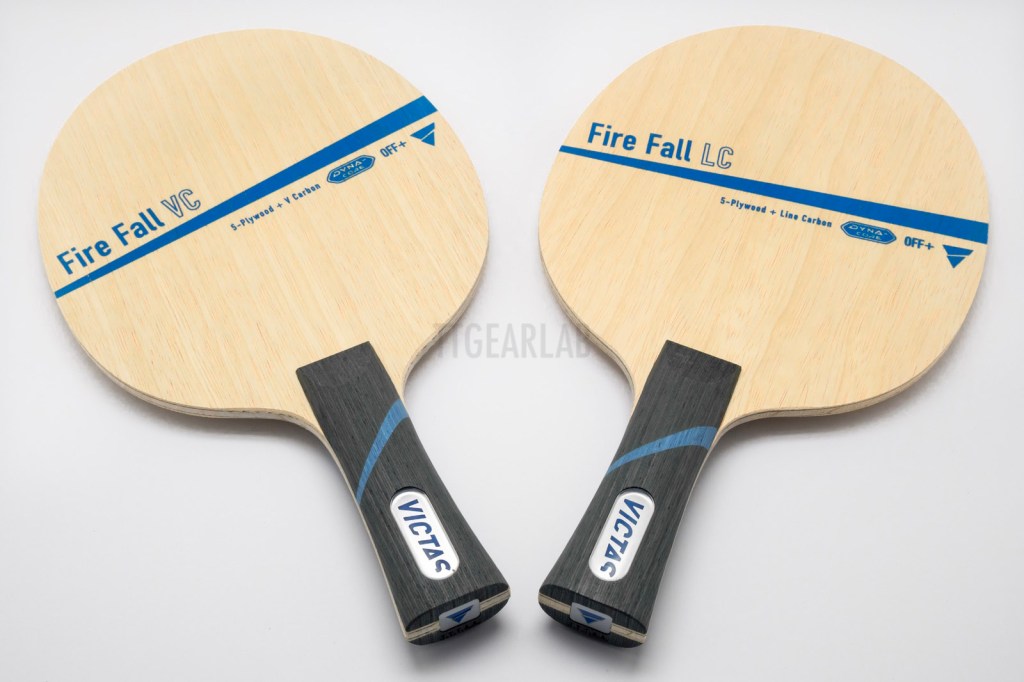
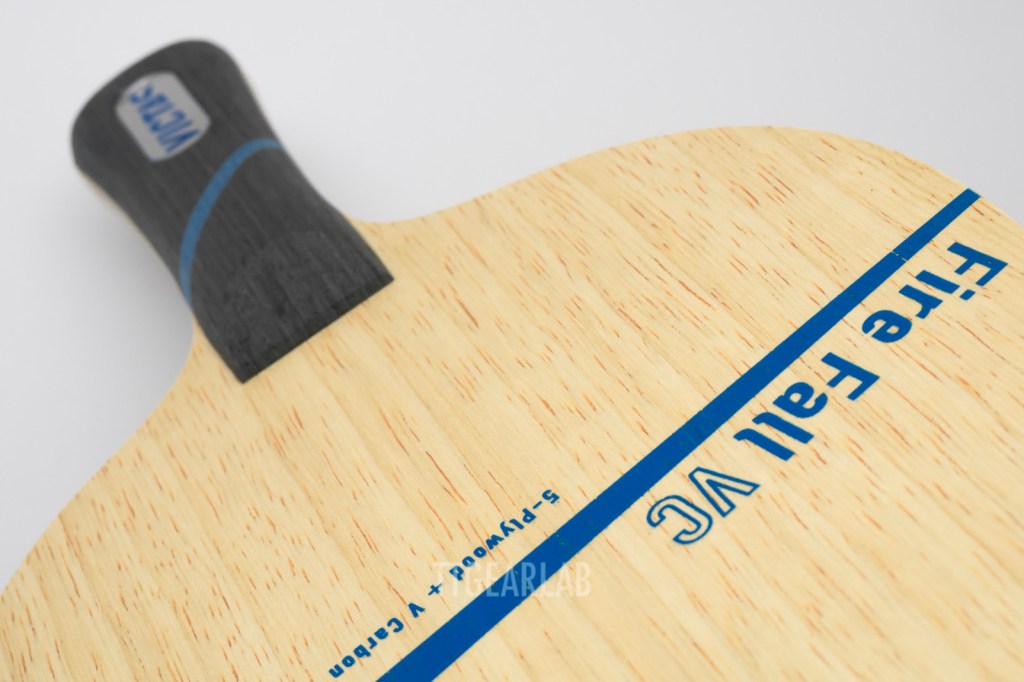
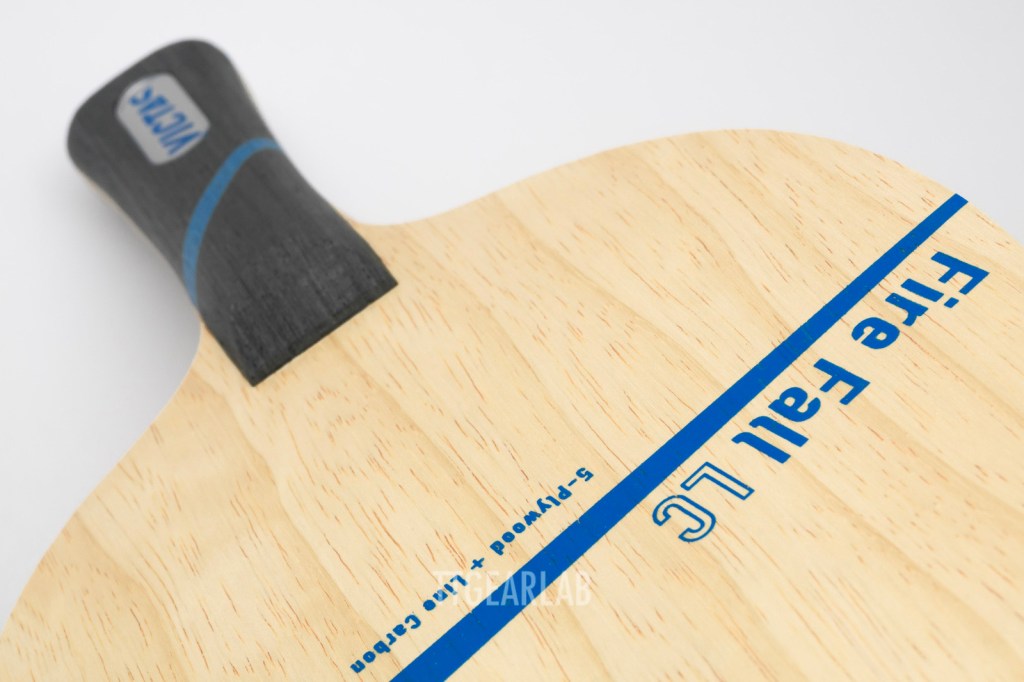
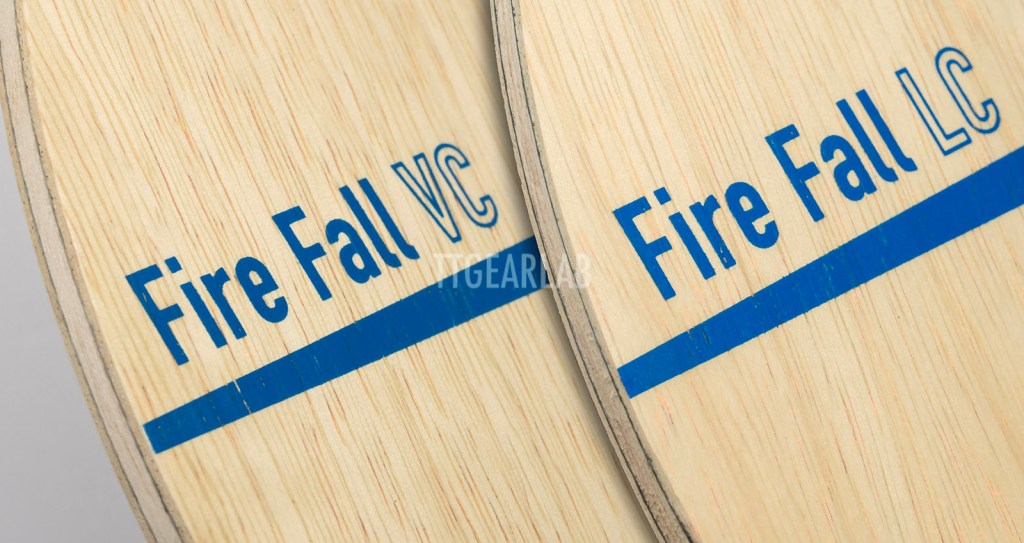
Above picture shows ‘Fire Fall VC’ and ‘Fire Fall LC’ whose artificial fibers are Vectran Carbon and Line Carbon respectively. Both of those two are inner-type fiber blades. (All models in ‘Fire Fall’ series are inner-type fiber blades.) Except for information such as the product name and the name of artificial material, the designs of the two blades are 100% identical, so it is difficult to distinguish between two blades at a glance. The foreside lens with Victas logo and the ‘splitting’ character line on the foreside of head are common graphic elements those have been applied for most of Victas blades from the time of C.I. change.
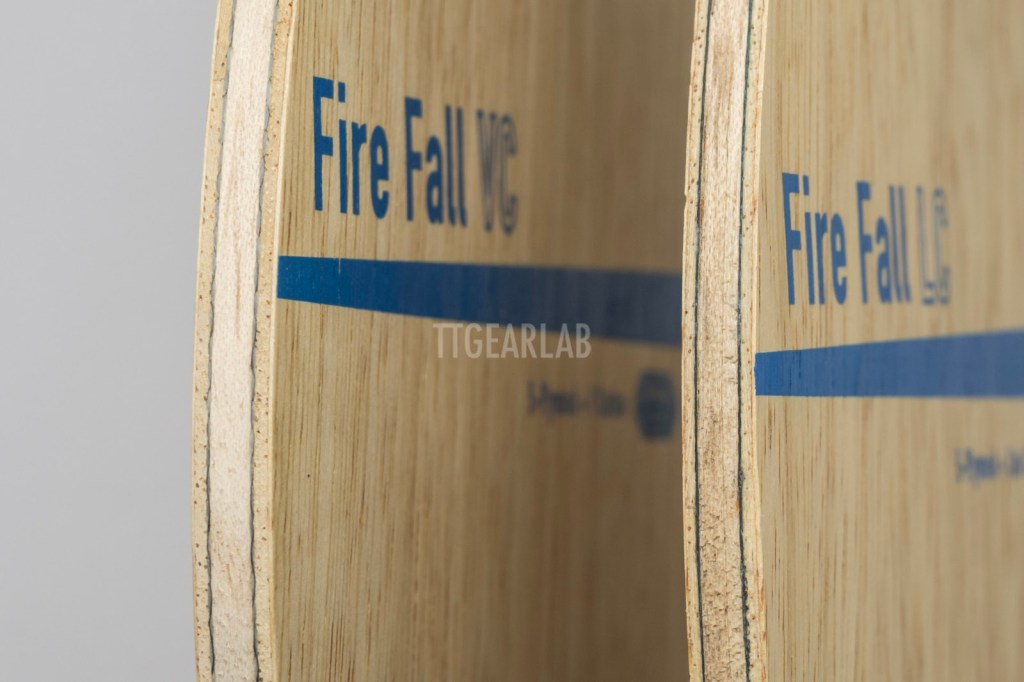
‘Fire Fall VC’ (left) and ‘Fire Fall LC’ (right) are inner blades those have something in common in that the center layers of both of two are not Ayous but Kiri. But, ‘Fire Fall VC’ is much thicker than ‘Fire Fall LC’ due to its thick middle layers.
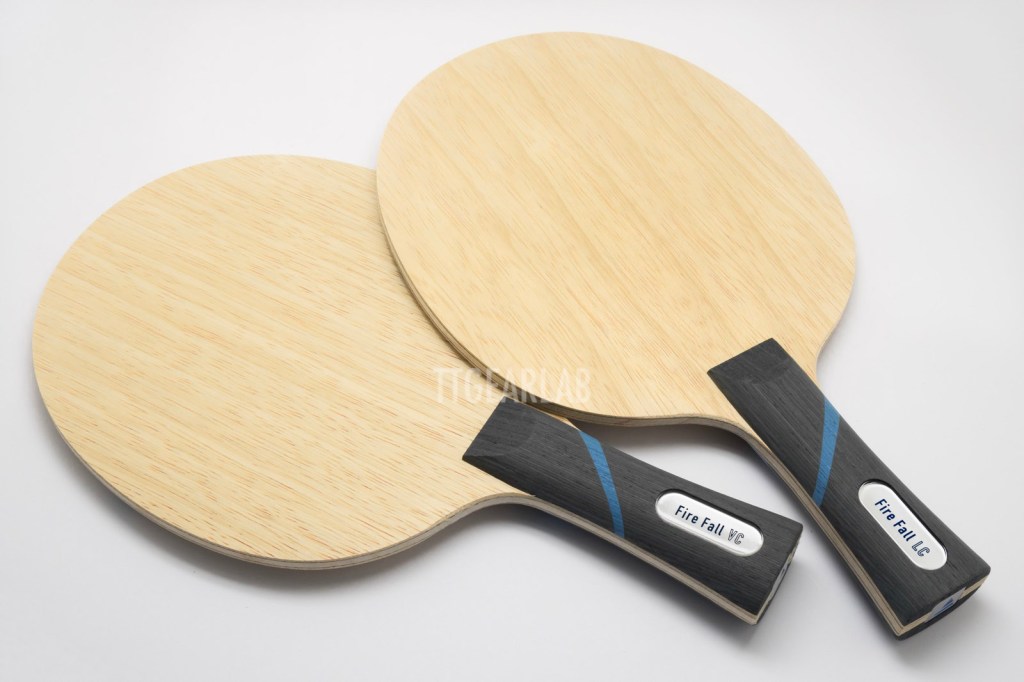
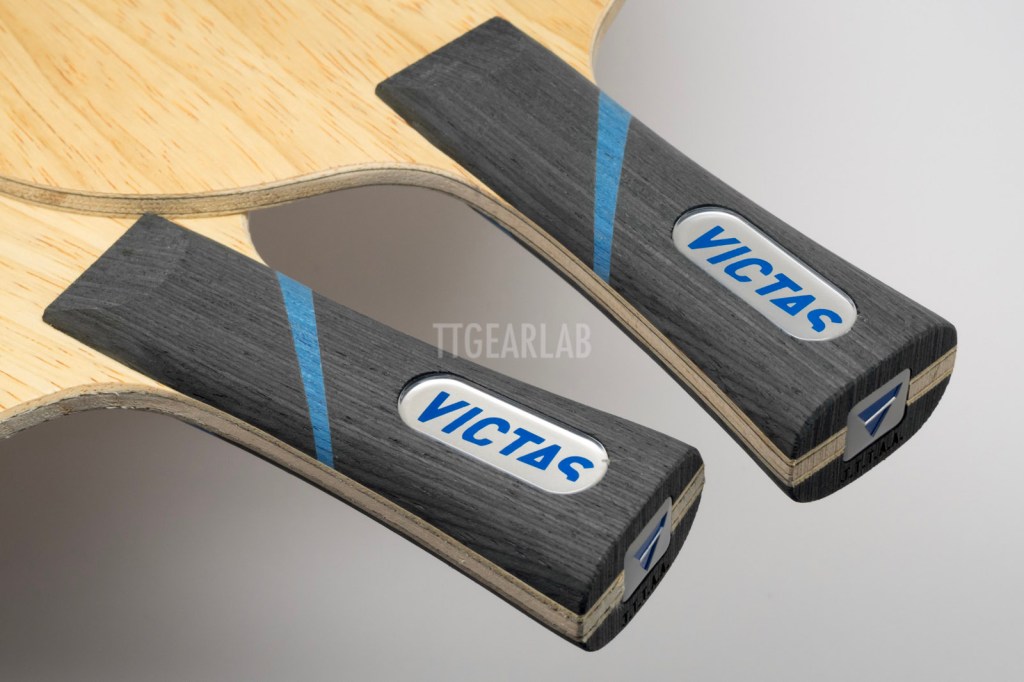
Nothing is printed on the backside of head. But, on the backside of handle there is a transparent plastic lens that indicates the name of blade. Applying lenses at both sides of handle and inserting product name in the backside lens is the common design concept of Victas.
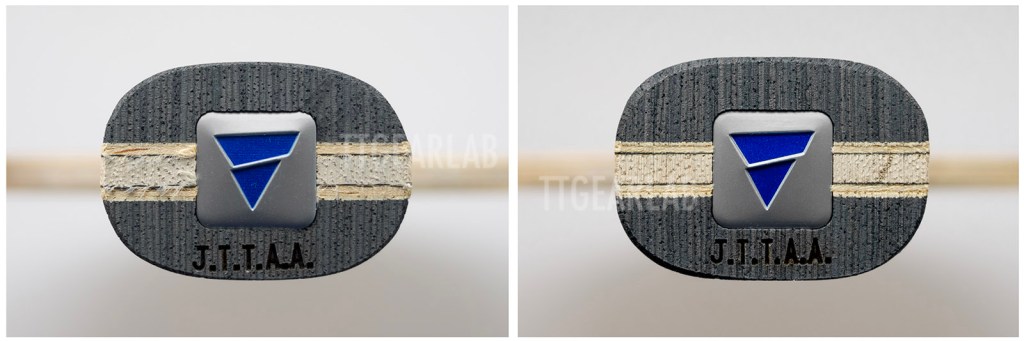
Small aluminum plate that includes engraved Victas logo mark is applied at the end of handle. This logo mark symbolizes the image of splitting V.
1-1. Fire Fall VC (inner Vectran Carbon)
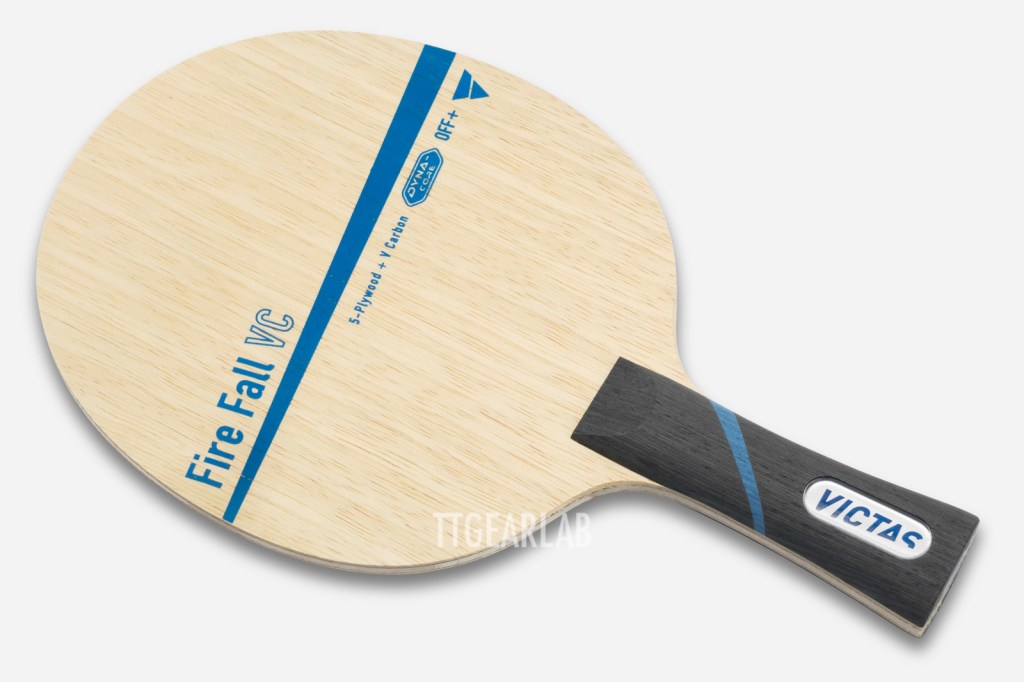
‘Fire Fall VC’ is a product added to the series in late 2013, and ‘VC’ stands for ‘Vectra Carbon’ which is also called as Arylate Carbon. Victas is using two kinds of ALC (arylate carbon) for its blades. One is ‘VC’ which is using Vectran – the arylate fiber produces by Cralay, and the other is ‘ZC’ which is using Zxion – the arylate fiber produced by KB Seiren. (The ALC of Butterfly blades is Vectran Carbon.) From the kind of artificial material you may imagine that ‘Fire Fall VC’ is similar to typical inner ALC blades such as Butterfly ‘InnerForce Layer ALC’. However, the construction of ‘Fire Fall VC’ is much thicker than ordinary inner ALC construction, and that makes the unique characteristics of ‘Fire Fall VC’. Because it is easy to use the power of the opponent’s ball, it is expected that the players who have used thick 7-ply wood blades can seamlessly move to ‘Fire Fall VC’. ‘Fire Fall VC’ is also well known as the blade used by Miyuu Kihara who won two titles at the 2022 World Youth Championships.
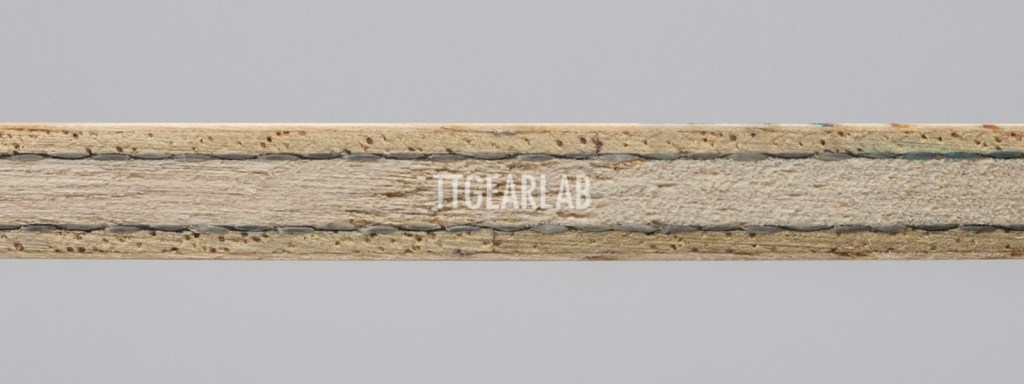
Above picture shows the plywood construction of ‘Fire Fall VC’. ‘Fire Fall VC’ is an inner ALC blade. V Carbon(= Vectran Carbon) is placed between the middle layer and the center layer. The top layer is Limba. The middle layer is Ayous, and the center layer are Kiri. Overall thickness is around 6.3mm. We can see that the middle layer is much thicker than those of typical inner fiber blades. ‘Fire Fall VC’ is much thicker than ordinary inner ALC blades. But, the gap between two artificial fiber layers isn’t especially wide because most of the increase in thickness is due to the thickness of the middle layers.
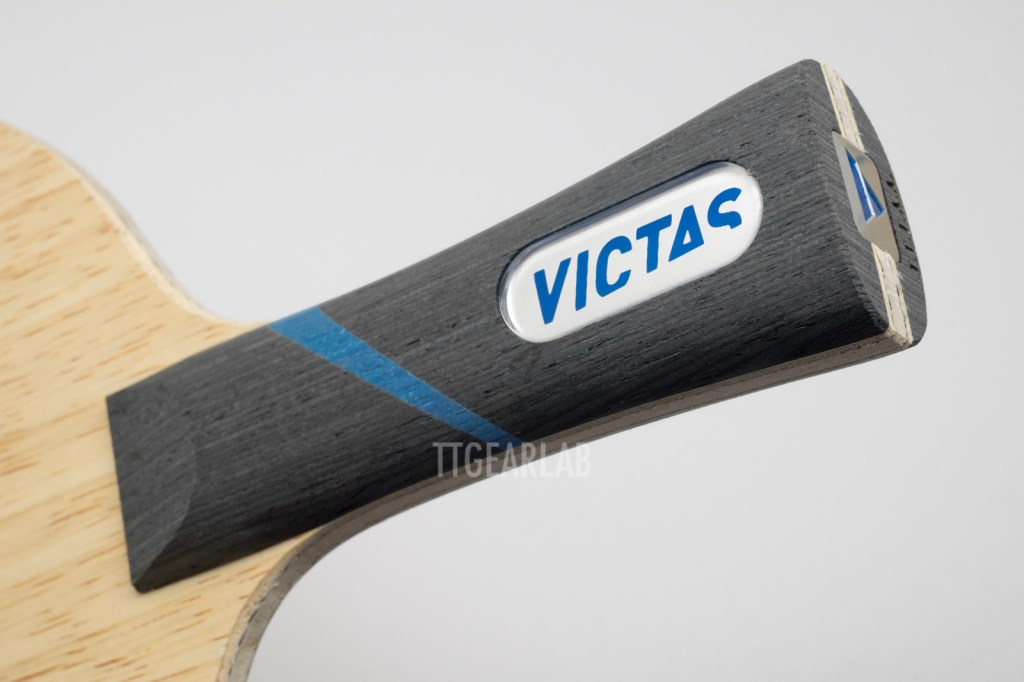
The width of FL (flared) handle is around 26mm (at head side) ~ 27mm (at bulge) ~ 26mm (at narrowest point) ~ 34mm (at the end). And, the thickness of FL handle is around 22.5mm (at thumb) ~ 24mm (at the end). The FL handle isn’t a wide handle, and it is somewhat thinner than ordinary FL handles. But, the stability of grip is good because the surfaces are relatively flat.
The size of ST (straight) handle is around 28mm (width) x 22mm (thickness). It is a squared handle whose foreside/backside surfaces are completely flat, like the ST handles of ‘Swat’ series.
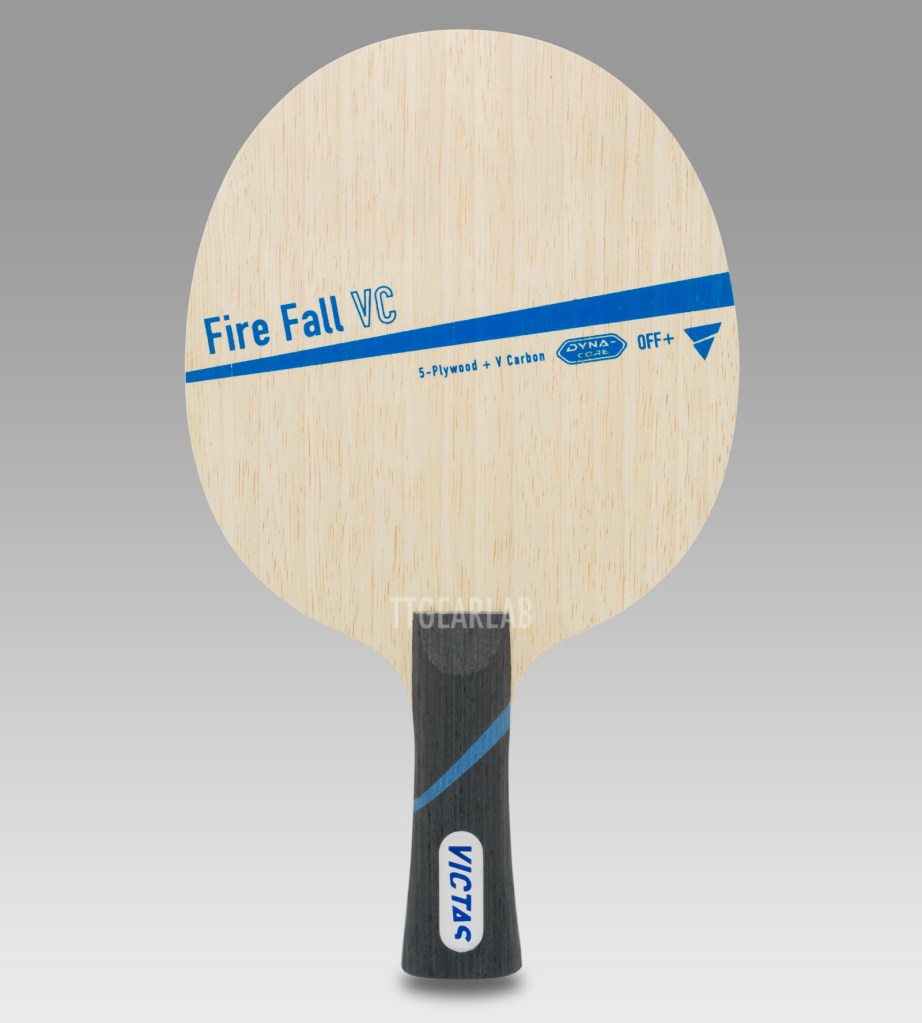
The official size of head is around 157mm x 150mm. Measured size is not much different from the official size.
1-2. Fire Fall LC (inner Line Carbon)
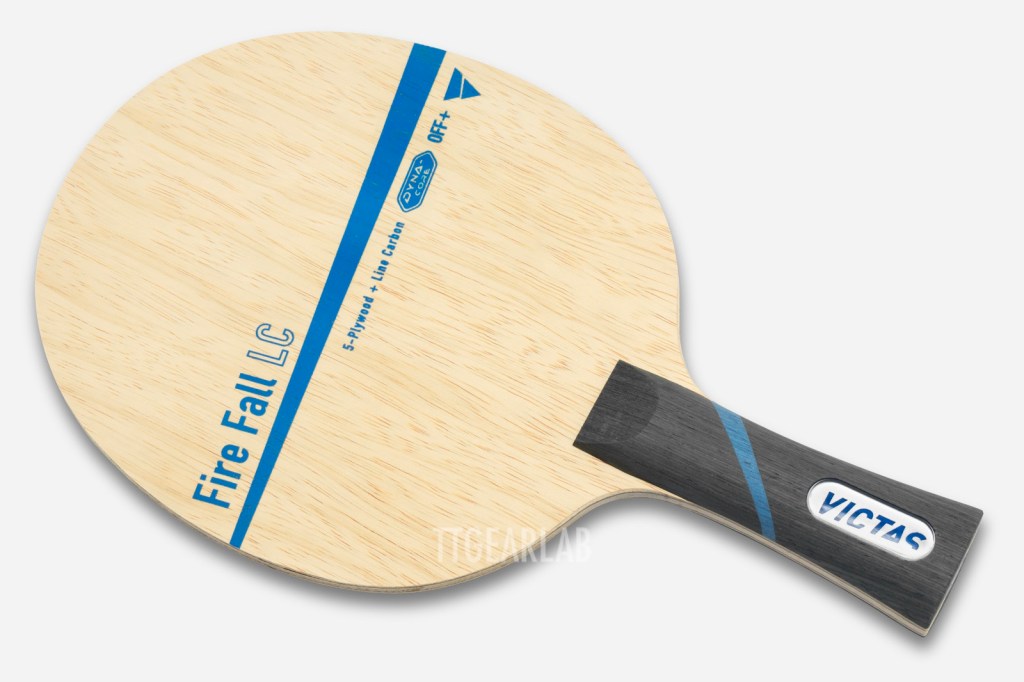
‘Fire Fall LC’ is a product added to the series in late 2013, and ‘LC’ stands for ‘Line Carbon’ which is also called as Uniaxial Carbon (ULC) or Unidirectional Carbon (UD Carbon). Butterfly is calling this material as ULC. But, the characteristics of ‘Fire Fall LC’ is somewhat different from those of Butterfly’s ULC blades. Victas adjusted ‘Fire Fall LC’ to give the feeling close to 5-ply wood offensive blade while keeping the high elasticity as a carbon blade. ‘Fire Fall LC’ gives unexpectedly soft feeling at light hitting, and hugs the ball very deeply when the player hits the ball very strongly. However, ‘Fire Fall LC’ shoot the ball with very high speed at next moment, thanks to the high energy efficiency of carbon fiber. ‘Fire Fall LC’ is recommended for the players who have used 5-ply offensive blade but want to replace the blade with fiber blade.
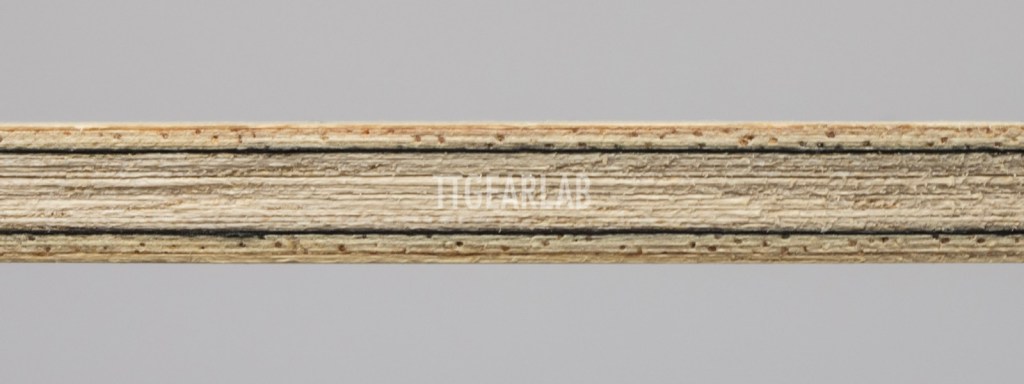
Above picture shows the plywood construction of ‘Fire Fall LC’. ‘Fire Fall LC’ is an inner ULC blade. Line Carbon(= Uniaxial Carbon) is placed between the middle layer and the center layer. The top layer is Limba. The middle layer is Ayous, and the center layer are Kiri. Overall thickness is around 5.9mm. This blade construction is reminiscent of currently discontinued adidas, and although the materials are same, the details of specification are slightly different.
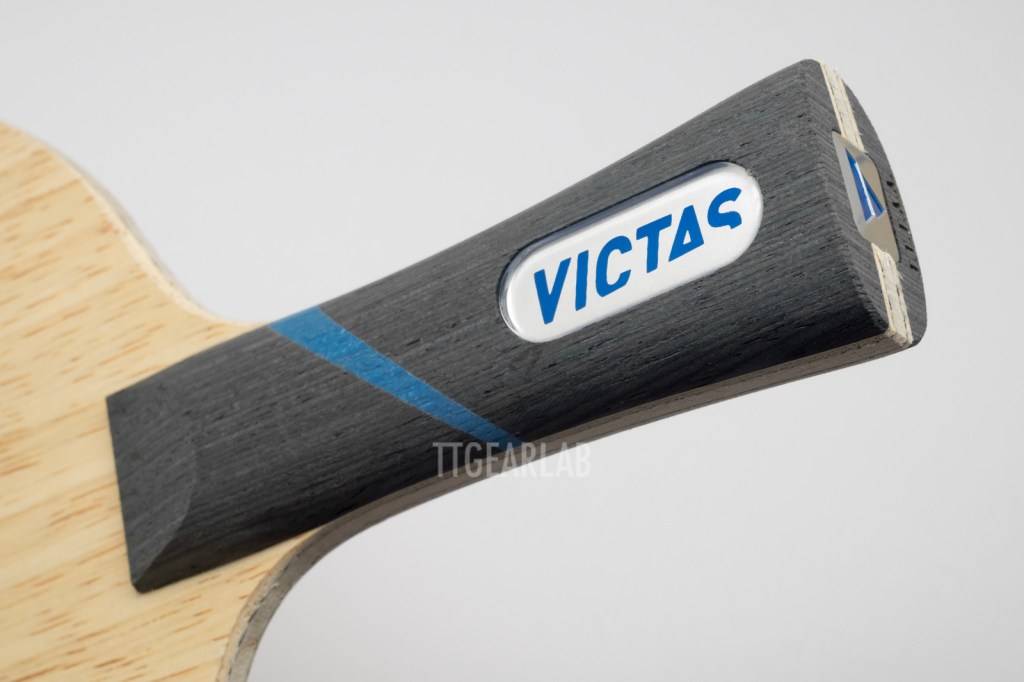
The width of FL (flared) handle is around 26mm (at head side) ~ 27mm (at bulge) ~ 26mm (at narrowest point) ~ 34mm (at the end). And, the thickness of FL handle is around 22.5mm (at thumb) ~ 24mm (at the end). The FL handle isn’t a wide handle, and it is somewhat thinner than ordinary FL handles. But, the stability of grip is good because the surfaces are relatively flat.
The size of ST (straight) handle is around 28mm (width) x 22mm (thickness). It is a squared handle whose foreside/backside surfaces are completely flat, like the ST handles of ‘Swat’ series
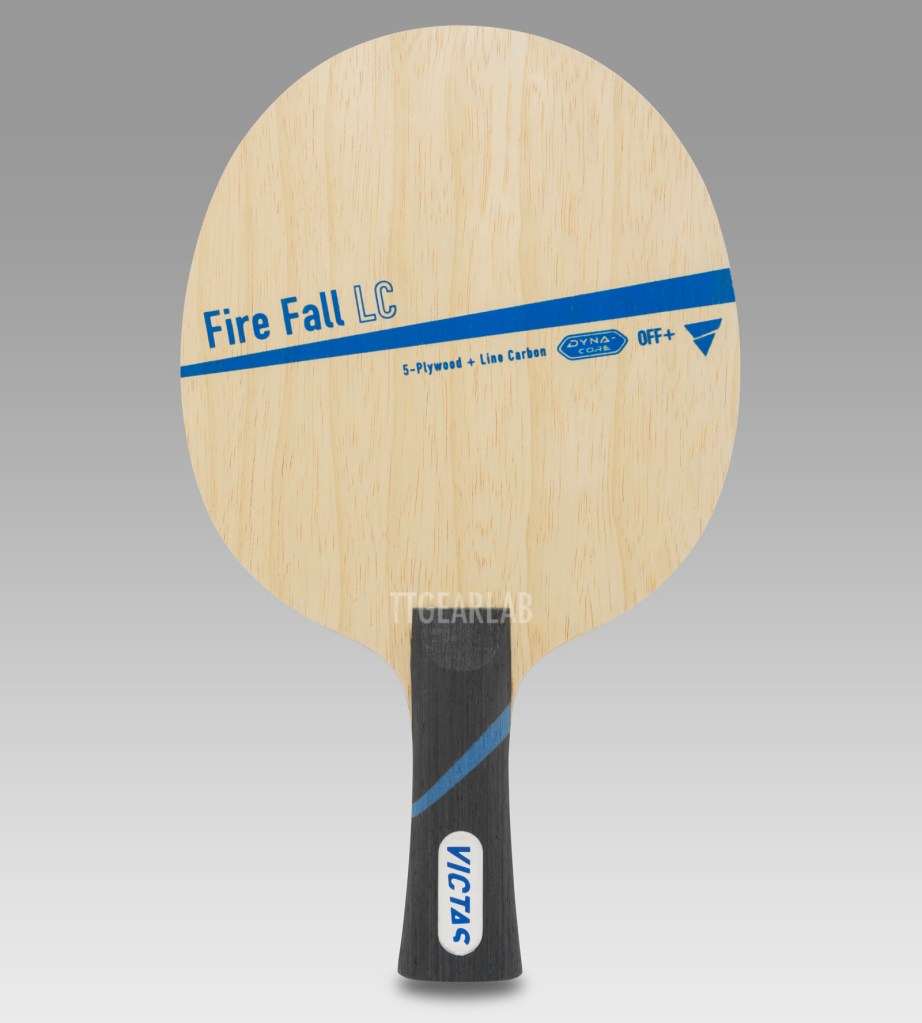
The head size of ‘Fire Fall LC’ is around 157mm x 150mm. Actually measured size is a bit wider (= 157mm x 151mm) than the official size.
Then let’s check the characteristics of ‘Fire Fall VC’ and ‘Fire Fall LC’ by Performance Indices and then compare with some existing blades.
Please click here to return to top (table of contents)
2. Performance Indices
Performance Indices are measured objective values to represent the characteristics of table tennis gears. Concerning the detail of four performance indices, please refer to following articles in ‘About TTGearLab’ section :
- Performance indices : the way to evaluate blade by measurement
- The example of comparison by performance indices
The performance indices of ‘Fire Fall VC’ and ‘Fire Fall LC’ are as follows:
Victas Fire Fall VC (average weight = 81.8g)
Ep = 1.74
Ec = 1.68 (Ec/Ep = 0.97)
Vp = 1.29
Vl = 1.44 (Vl/Vp = 1.12)
Victas Fire Fall LC (average weight = 85.1g)
Ep = 1.87
Ec = 1.29 (Ec/Ep = 0.69)
Vp = 1.10
Vl = 1.39 (Vl/Vp = 1.26)
‘Fire Fall VC’ is a kind of inner ALC blade. Its Ep (= 1.74) is a bit higher than what we can expect from an inner ALC blade. But, its Ec (= 1.68) is a quite high value as that of an inner ALC blade. As the result the ratio – Ec/Ep is 0.97 is close to 1.0. ‘Fire Fall VC’ hugs the ball a bit but not deeply when the player hits the ball very strongly. It is expected that the player will feel that ‘Fire Fall VC’ doesn’t hug the ball or give additional kick.
Regarding Vibration Indices, the Vp of ‘Fire Fall VC’ is also higher than what we can expect form an inner ALC blade. So we can think that the feeling of ‘Fire Fall VC’ is stiffer than that of general inner ALC blades. Its Vl (= 1.44) is even higher than the values of outer ALC blades (= around 1.30~1.35). So the Vl/Vp (= 1.12) exceeds 1.10. It means that the feeling transferred to the player’s index finger is much sharper than the primary feeling.
The values of ‘Fire Fall VC’ may look somewhat unique as those of an inner ALC blade. But, recently this kind of inner ALC blades are increasing, and we may have to deal with that kind of characteristics as one of the new trends of inner ALC blades. Then probably we’d better divide inner ALC blades again into two or more groups.
‘Fire Fall LC’ is also an inner-type fiber blade, but its artificial material is pure carbon fiber arranged only in vertical orientation. Because the tensile modulus of carbon fiber is very high, the Ep of ‘Fire Fall LC’ (= 1.87) is quite high as that of an inner-type blade. But, its Ec (= 1.29) is significantly lower than its Ep. As the result, the ratio Ec/Ep is extremely low (= 0.69). It is expected that ‘Fire Fall LC’ hugs ball very deeply when the player hits the ball very strongly.
Regarding Vibration Indices, the Vp of ‘Fire Fall LC’ is 1.10. It is lower value than those of ordinary inner ALC blades. But, its Vl (= 1.39) is not lower than the values of inner ALC blades. As the result, its Vl/Vp (= 1.26) is very high. It means that the feeling transferred to the player’s index finger is significantly sharper than the primary feeling.
Differently from the values of ‘Fire Fall VC’, the relative values (Ec/Ep and Vl/Vp) of ‘Fire Fall LC’ remind us of those of some 5-ply wood blades and some Stiga fiber blades.
From the Performance Indices, we can see that ‘Fire Fall VC’ and ‘Fire Fall LC’ are clearly distinguished from each other. ‘Fire Fall VC’ seems to fit for modern all-round play rather than continuous topspin. On the contrary ‘Fire Fall LC’ seems to fit for continuous topspin. Those two blades will be compared with some existing inner-type blades and all-wood blades by graphs in next Chapter.
Please click here to return to top (table of contents)
3. Comparison by Performance Indices
Then we can compare ‘Fire Fall VC’ and ‘Fire Fall LC’ with some other blades. Because both of those two are inner-type blades, most of blades selected for comparison are inner-type blades.
Following is the list of the blades to be compared :
Inner ALC (or similar) blades :
- Butterfly ‘InnerForce Layer ALC’ (avg. weight = 91.2g) : Limba top layer + ALC. The standard of inner-ALC blades. (Current version measured in 2023.)
- DHS ‘Hurricane Long 5’ (avg. weight = 88.1g) : Limba top layer + ALC. Current representative of inner-ALC blades. (2022 version.)
- andro Synteliac VCI OFF (avg. weight = 88.6g) : Limba top layer + ALC. Extremely similar to ‘InnerForce Layer ALC’.
- KTS Problade Core ALC (avg. weight = 84.5g) : Limba top layer + ALC. (New ‘made in Japan’ version introduced in October 2024.)
- Victas ‘ZX-Gear In’ (avg. weight = 88.0g) : Limba top layer + Zxion Carbon. Zxion Carbon a bit different from Vectran Carbon (ALC of Butterfly), but it is also a kind of ALC.
- andro Treiber CI OFF (avg. weight = 84.0g) : Limba top layer + Kevlar Carbon. Kevlar Carbon a bit different from Arylate Carbon.
- Butterfly ‘Ovtcharov InnerForce ALC’ (avg. weight = 89.2g) : Limba top layer + ALC. Thicker, bigger and faster than ‘InnerForce Layer ALC’.
Inner Carbon blades :
- Stiga ‘Inspira CCF’ (avg. weight = 87.3g) : Koto top layer + Woven Carbon fiber. Very fast inner-type blade.
- KTS ‘Problade Forge 3K’ (avg. weight = 84.4g) : Limba top layer + Woven Carbon fiber.
- adidas ‘C500’ (avg. weight = 90.1g) : Limba top layer + Unidirectional Carbon fiber. (Discontinued model.)
Inner ZLC (or similar) blades :
- Butterfly ‘InnerForce Layer ZLC’ (avg. weight = 89.8g) : Limba top layer + ZLC. The standard of inner-ZLC blades.
- andro Synteliac ZCI OFF (avg. weight = 84.9g) : Limba top layer + ZLC. Extremely similar to ‘InnerForce Layer ZLC’.
- Butterfly ‘Harimoto Tomokazu InnerForce Super ZLC’ (= for short ‘Harimoto Super ZLC’) (avg. weight = 86.3g) : Limba top layer + Super ZLC. A bit thicker, but the center layer is softer Kiri.
- Xiom ‘An Jaehyun TMXi’ (avg. weight = 86.4g) : Limba top layer + Trimetrix (Carbon and Arylate in vertical orientation + Carbon and Zylon in lataral orientation.)
All-wood blades :
- Stiga ‘Clipper CR’ (avg. weight = 81.7g) : The classic of 7-ply wood blade. (Lightweight version whose thickness is 6.5mm.)
- Tibhar ‘E.Lebesson’ (avg. weight = 83.2g) : The 5-ply wood offensive blade with very unique construction. Good for modern all-round play.
- Butterfly ‘Korbel’ (avg. weight = 88.7g) : The standard of 5-ply wood offensive blades.
- Stiga ‘Allround Classic’ (avg. weight = 84.3g) : The standard of 5-ply wood all-round blades. Reference of Performance Indices whose all indices are 1.0.
3-1. Elasticity Indices
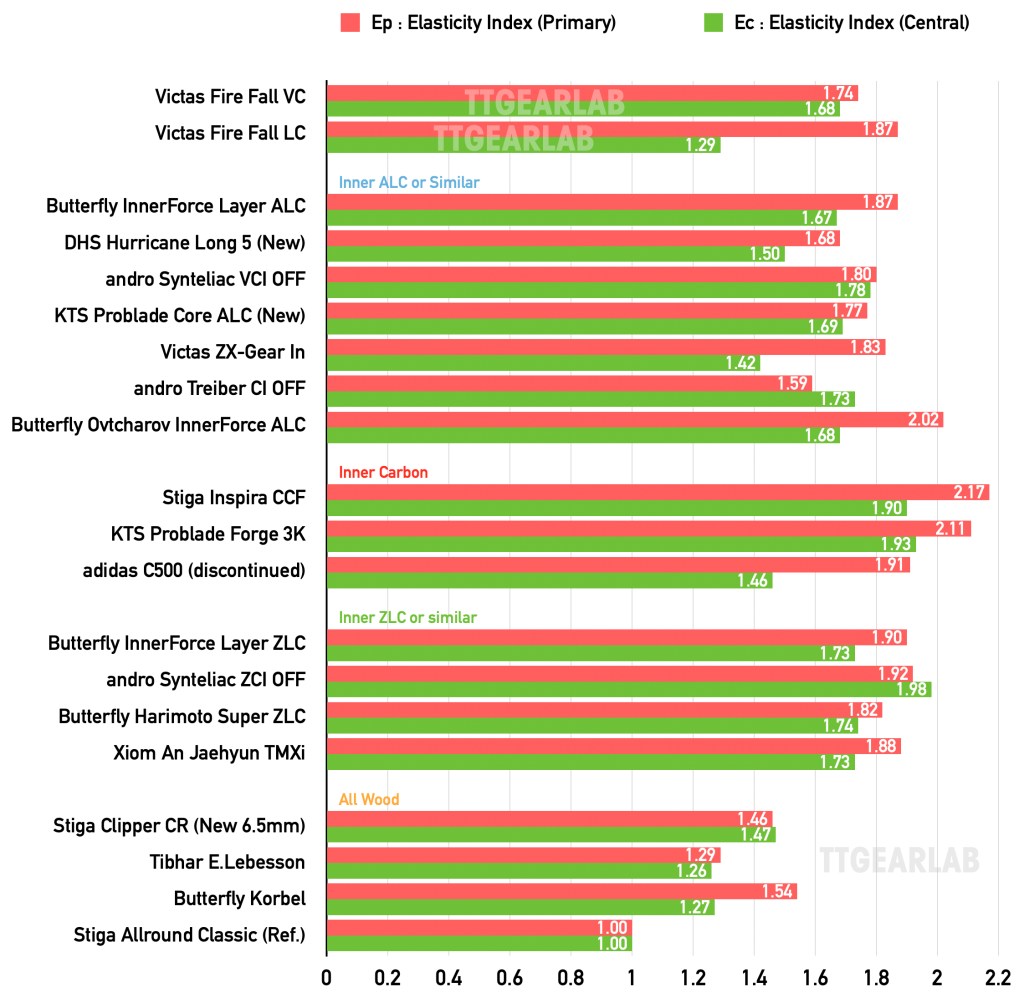
Fig.16 shows the comparison graph of Elasticity Indices.
Ep (Primary Elasticity Index) is directly concerned with the rebound speed of blade. Ec (Central Elasticity Index) is concerned with additional ‘kick’ when player hits ball very strongly.
[Inner ALC or similar]
‘Fire Fall VC’ is an inner ALC blade, and it can be compared with the other inner ALC blades or the inner-type blades whose artificial materials are similar to ALC. The result of comparison can be summarized as follows:
- ‘InnerForce Layer ALC’ is more elastic in primary elasticity, but its central elasticity is almost same as that of ‘Fire Fall VC’. Although there isn’t noticeable difference in central elasticity, the players who are sensitive to the relationship between Ec and Ep will feel that ‘InnerForce Layer ALC’ hugs the ball more deeply while ‘Fire Fall VC’ gives more additional kick when the player hits the ball very strongly.
- ‘Hurricane Long 5’ is less elastic than ‘InnerForce Layer ALC’ although the graph shapes of those two are similar to each other. The primary elasticity of ‘Hurricane Long 5’ is a bit lower than that of ‘Fire Fall VC’. But, the central elasticity of ‘Hurricane Long 5’ is much lower than that of ‘Fire Fall VC”.
- ‘Synteliac VCI OFF’ is a bit more elastic than ‘Fire Fall VC’. The difference in primary elasticity is very small, but the differences in central elasticity is noticeable. Players will feel that these ‘Synteliac VCI OFF’ gives more additional kick than ‘Fire Fall VC’ when the player hits the ball very strongly.
- Among all blades in this group, ‘Problade Core ALC’ is the closest to ‘Fire Fall VC’. The overall elasticity characteristics of ‘Problade Core ALC’ are not much different from those of ‘Fire Fall VC’.
- ‘ZX-Gear In’ and ‘Ovtcharov InnerForce ALC’ show graph shapes whose Ec’s are much lower than Ep’s. So those two hugs the ball very deeply when the player hits the ball very strongly. So those two are closer to ‘Fire Fall LC’ than ‘Fire Fall VC’. But, when compared to ‘Fire Fall LC’, the differences between Ec and Ep of those two are less dramatic.
[Inner Carbon]
‘Fire Fall LC’ is an inner uniaxial carbon blade. Because its artificial fiber is pure carbon fiber It can be compared with some inner-type blades whose artificial materials are pure carbon fiber (woven or uniaxial). The result of comparison can be summarized as follows:
- Like ‘Fire Fall LC’, the Ec of each model in this group is much lower than the Ep of that model. However, the graph shape of no model in this group looks as extreme as that of ‘Fire Fall LC’.
- ‘Inspira CCF’ is more elastic than ‘Fire Fall LC’ in both of primary elasticity and central elasticity. Especially there is significant difference in central elasticity. The Ec of ‘Inspira CCF’ is even higher than the Ep of ‘Fire Fall LC’. And, we can see the same result from the comparison between ‘Problade Forge 3K’ and ‘Fire Fall LC’.
- Differently from ‘Inspira CCF’ or ‘Problade Forge 3K’, ‘C500’ shows the graph shape that is quite similar to that of ‘Fire Fall LC’. Like ‘Fire Fall LC’, its Ec is much lower than its Ep.
- The relatively low Ec’s of ‘Fire Fall LC’ and ‘C500’ are probably because of the kind of fiber. The artificial materials of both of ‘Fire Fall LC’ and ‘C500’ are unidirectional (= uniaxial) carbon fiber while the artificial materials of ‘Inspira CCF’ and ‘Problade Forge 3K’ are woven carbon fiber. So, we may be able to think that the uniaxial carbon fiber makes the Ec of blade low if the other conditions are equal or similar. (Note : The uniaxial carbon fiber doesn’t always make the Ec low. For example, Butterfly Kreanga Carbon whose arficial material is also uniaxial carbon shows very high Ec. Its Ec is 2.78 while its Ep is 1.74. That high Ec is because the overall construction of Kreanga Carbon is different from those of inner-type blades dealt in this article.)
[Inner ZLC or similar]
Inner ZLC (or similar) blades can also be compared with ‘Fire Fall VC’ and ‘Fire Fall LC’.
- The blades in this group are more elastic than ‘Fire Fall VC’. And, the graph shapes of ‘InnerForce Layer ZLC’, ‘Harimoto Super ZLC’ and ‘An Jaehyun TMXi’ look somewhat similar to that of ‘Fire Fall VC’.
- Because of very low Ec of ‘Fire Fall LC’, none of the graphs of the blades in this group look similar to that of ‘Fire Fall LC’.
[All wood]
We can also compare various all-wood fiber blades with ‘Fire Fall VC’ and ‘Fire Fall LC’. The result of comparison can be summarized as follows:
- The graph shapes of ‘Clipper CR’, ‘E.Lebesson’ and ‘Allround Classic’ are somewhat similar to that of ‘Fire Fall VC’. (Ec is not much different from Ep.) However, the overall elasticity level of those three are much lower than that of ‘Fire Fall VC’. The players who have used those three will be able to consider ‘Fire Fall VC’ as the faster replacement of current blade in case the increase of overall power is required.
- ‘Korbel’ is closer to ‘Fire Fall LC’. Its Ec is a bit lower than the Ec of ‘Fire Fall LC’. But, its Ep is significantly lower than the Ep of ‘Fire Fall LC’. Because only Ep is meaningfully increased when the blade is changed from ‘Korbel’ to ‘Fire Fall LC’, the players may feel that ‘Fire Fall LC’ hugs the ball much more deeply than ‘Korbel’ when they hit the ball very strongly. Or the players may feel that the center of ‘Fire Fall LC’ is softer than that of ‘Korbel’.
Examining Ec/Ep is also a easier way to understand the characteristics of blade concerned with elasticity. Fig.17 shows the relationship between Ec/Ep and Ep.
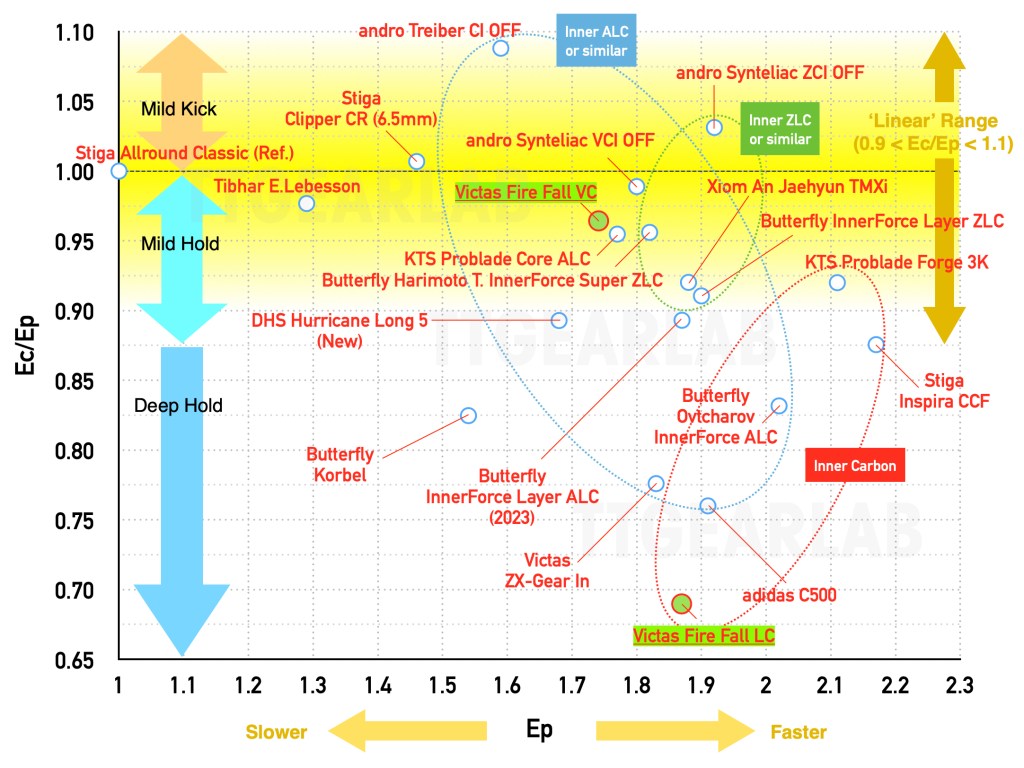
Ec/Ep expresses the ‘tendency’ of the elasticity of blade. By examining Ec/Ep and Ep at the same time, we can easily understand the behavior of blades.
On the graph, most of blades in this comparison are in ‘Hold’ range (Ec/Ep < 1.0). ‘Fire Fall VC’ and ‘Fire Fall LC’ are also in ‘Hold’ range. And, in ‘Hold’ range, the blades are widely distributed up, down, left and right within that range. The result of the comparison can be summarized as follows:
[‘Fire Fall VC’ in ‘Inner ALC or similar’ group]
- ‘Inner ALC or similar’ group including ‘Fire Fall VC’ is located at the center of the graph. And, the blades in this group are widely distributed vertically within the graph. We can see that the blades in this group are generally less elastic than ‘Inner Carbon’ blades and generally more elastic than all-wood blades in primary elasticity. The blades in this group are generally less elastic than the blades in ‘Inner ZLC or similar’ group.
- ‘Fire Fall VC’ is in ‘Mild Hold’ range (0.9 < Ec/Ep < 1.0), and is located close to the ‘Linear’ line (Ec/Ep = 1.0). Some players will feel that ‘Fire Fall VC’ doesn’t meaningfully hold the ball when the impact strength is high.
- We can consider ‘InnerForce Layer ALC’ and ‘Hurricane Long 5’ as the classic or the standard inner-ALC blades. Those two are located close to the border between ‘Mild Hold’ range and ‘Deep Hold’ range. Four blades in other groups – ‘InnerForce Layer ZLC’, ‘An Jaehyun TMXi’, ‘Problade Forge 3K’ and ‘Inspira CCF’ – are also located close this border line. On the contrary ‘Synteliac VCI OFF’ and ‘Problade Core ALC’ in this group are located close to ‘Linear’ line which is the border between ‘Hold’ range and ‘Kick’ range.
- Although it is from the same ‘Victas’ brand, ‘ZX-Gear In’ is significantly different from ‘Fire Fall VC’ in elasticity characteristics. ‘ZX-Gear In’ hugs the ball much more deeply than ‘Fire Fall VC’ when the player hits the ball very strongly. That is not because of the difference in artificial fiber but because of the difference in construction.
- Some blades in other groups – ‘Allround Classic’, ‘E.Lebesson’, ‘Clipper CR’ and ‘Harimoto Super ZLC’ – are also located near the ‘Linear’ line. Because the reaction of those blades to the impact input is almost linear, players can control the ball very precisely with those blades without concerning primary elasticity. Therefore, those blades fit for the playing style that uses a variety of technics. ‘Fire Fall VC’ is also one of that kind of blades.
[‘Fire Fall LC’ in ‘Inner Carbon’ group]
- ‘Inner Carbon’ group including ‘Fire Fall LC’ is located to lower right of ‘Inner ALC or similar’ group. It means that the blades In this group are generally more elastic than inner ALC blades in primary elasticity and hugs the ball more deeply when the player hits the ball very strongly. However, in fact this group can be divided again into two subgroups – Inner Woven Carbon and Inner UD Carbon.
- ‘Fire Fall LC’ is an inner UD Carbon blade. It is located at the bottom of the graph. It is located in ‘Deep Hold’ range (Ec/Ep < 0.9), and that low location is an extreme case. The blade closest to ‘Fire Fall LC’ is ‘C500’ which is also an inner UD Carbon blade. Those two blade are just a bit more elastic than inner ALC blades, and hug the ball much more deeply than most of inner ALC blades. Among inner ALC blades, two models – ‘Ovtcharov InnerForce ALC’ and ‘ZX-Gear In’ are close to these two inner UD Carbon blades.
- On the other hand, two Inner Woven Carbon blades – ‘Inspira CCF’ and ‘Problade Forge 3K’ – are noticeably more elastic than inner ALC blades in primary elasticity. But, the Ec/Ep’s of those two are not much different from those of standard inner ALC blades such as ‘InnerForce Layer ALC’ and ‘Hurricane Long 5’.
- Inner Woven Carbon blades – ‘Inspira CCF’ and ‘Problade Forge 3K’ – can be considered as faster replacement of inner ALC blades. On the contrary, inner UD Carbon blades – ‘Fire Fall LC’ and ‘C500’ – can be considered as ‘extreme hug’ version of inner-type blades with regular elasticity level.
- The location of ‘Fire Fall LC’ is even lower than that of ‘Korbel’ which is the 5-ply wood blade with deep hold characteristics. Because the gap is big, the players who replaced from ‘Korbel’ to ‘Fire Fall LC’ may feel that ‘Fire Fall LC’ isn’t much faster than ‘Korbel’. That is the case especially when those players use smash frequently. However, the players whose main weapon is close-to-table topspin will feel that ‘Fire Fall LC’ provides high level of stability at the same time with enhanced speed from 5-ply wood offensive blades.
Then next, let’s compare Vibration Indices.
Please click here to return to top (table of contents)
3-2. Vibration Indices
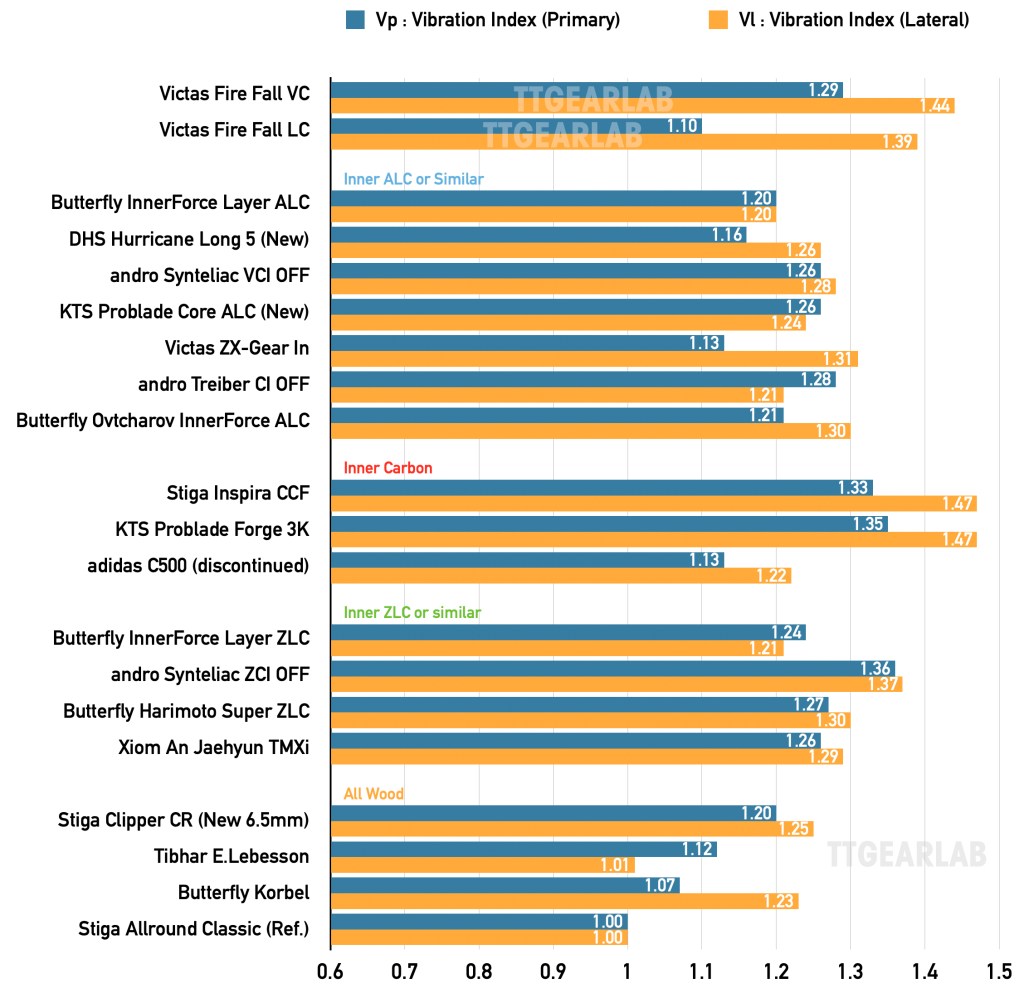
Fig.18 shows the comparison graph of Vibration Indices. Vibration Indices are concerned with feeling. The bigger the value the harder the feeling. Vp indicates primary feeling which is transferred to player’s palm. And, Vl is the feeling at the edge of the wing – the lower side of blade head. It is felt by player’s index finger or middle finger.
The indices of ‘Fire Fall VC’ are higher than those of ‘Fire Fall LC’. Especially the difference in Vp is significant while the difference in Vl is very small.
[Inner ALC or similar]
‘Fire Fall VC’ is an inner ALC blade, and it can be compared with the other inner ALC blades or the inner-type blades whose artificial materials are similar to ALC. The result of comparison can be summarized as follows:
- The Vp and the Vl of ‘Fire Fall VC’ is higher than those of any blade in this group. The difference between the Vp of ‘Fire Fall VC’ and that of another blade in this group is not big. However, there is significant difference between the Vl of ‘Fire Fall VC’ and that of another blade in this group. So, the primary feeling of ‘Fire Fall VC’ is a bit harder than that of those of the other inner ALC (or similar) blades, and the lateral feeling of ‘Fire Fall VC’ is significantly sharper than those of the other inner ALC (or similar) blades.
- The graph shapes of ‘InnerForce Layer ALC’, ‘Synteliac VCI OFF’, ‘Problade Core ALC’ and ‘Treiber CI OFF’ look totally different from that of ‘Fire Fall VC’. Players will feel those blades totally different from ‘Fire Fall VC’.
- But, the graph shapes of ‘Hurricane Long 5’, ‘ZX-Gear In’ and ‘Ovtcharov InnerForce ALC’ look not much different from that of ‘Fire Fall VC’. Although there are differences in primary indices, players will feel similarities between the overall feeling of ‘Fire Fall VC’ and that of one among those three.
[Inner Carbon]
‘Fire Fall LC’ is an inner uniaxial carbon blade. Because its artificial fiber is pure carbon fiber It can be compared with some inner-type blades whose artificial materials are pure carbon fiber (woven or uniaxial). The result of comparison can be summarized as follows:
- The Vp’s of two inner Woven Carbon blades – ‘Inspira CCF’ and ‘Problade Forge 3K’ – are noticeably higher than that of ‘Fire Fall LC’ which is an inner UD Carbon blade. For that reason, the graphs of ‘Inspira CCF’ and ‘Problade Forge 3K’ look close to that of ‘Fire Fall VC’, rather than ‘Fire Fall LC’.
- On the other hand, the Vp of ‘C500’ which is an inner UD Carbon blade is not much different from that of ‘Fire Fall LC’. So, we can understand that the Vp’s of inner UD Carbon blade are than lower those of inner Woven Carbon blades. Differently speaking, inner UD Carbon blades are softer than inner Woven Carbon blades in primary feeling. That coincides with the explanation by makers about reason why inner UD Carbon blades exist. The Vl’s of inner UD Carbon blades are also lower than those of inner Woven Carbon blades. Especially the Vl of ‘C500’ is much lower.
[Inner ZLC or similar]
Inner ZLC (or similar) blades can also be compared with ‘Fire Fall VC’ and ‘Fire Fall LC’.
- The blades in this group have small difference between Vl and Vp, while ‘Fire Fall VC’ and ‘Fire Fall LC’ have a large difference between Vl and Vp. Therefore, no blade in this group is expected to provide similar feeling with ‘Fire Fall VC’ or ‘Fire Fall LC’.
- Therefore, although ‘Harimoto Super ZLC’ and ‘An Jaehyun TMXi’ show the similarity with ‘Fire Fall VC’ in the graph shape of Elasticity Indices observed in former section, players will not feel that those two are close to ‘Fire Fall VC’. Probably players will just feel that those two are softer and milder than ‘Fire Fall VC’.
[All wood]
We can also compare various all-wood fiber blades with ‘Fire Fall VC’ and ‘Fire Fall LC’. The result of comparison can be summarized as follows:
- The graph shape of ‘Clipper CR’ looks somewhat different from that of ‘Fire Fall VC’. (The difference between Vl and Vp is much smaller.) However, its Vp is close to that of ‘Fire Fall VC’. So ‘Fire Fall VC’ gives similar primary feeling and much sharper lateral feeling than ‘Clipper CR’.
- The Vibration characteristics of ‘E.Lebesson’ and ‘Allround Classic’ are totally different from those of ‘Fire Fall VC’ or ‘Fire Fall LC’. The Vp of ‘E.Lebesson’ is close to that of ‘Fire Fall LC’. However, the tremendous difference between the Vl of ‘E.Lebesson’ and that of ‘Fire Fall LC’ makes those two blades totally different in feeling.
- Like ‘Fire Fall VC’ or ‘Fire Fall LC’, ‘Korbel’ shows its Vc which is much higher than its Vp. So, ‘Korbel’ is the only one in this group which can be compared with two ‘Fire Fall’ models. Especially its Vp is close to that of ‘Fire Fall LC’. However, its Vl isn’t as high as that of ‘Fire Fall LC’.
Examining Vl/Vp is easier way for the comparison of the tendency of feeling. Fig.19 shows the relationship between Vl/Vp and Vp for easier comparison.
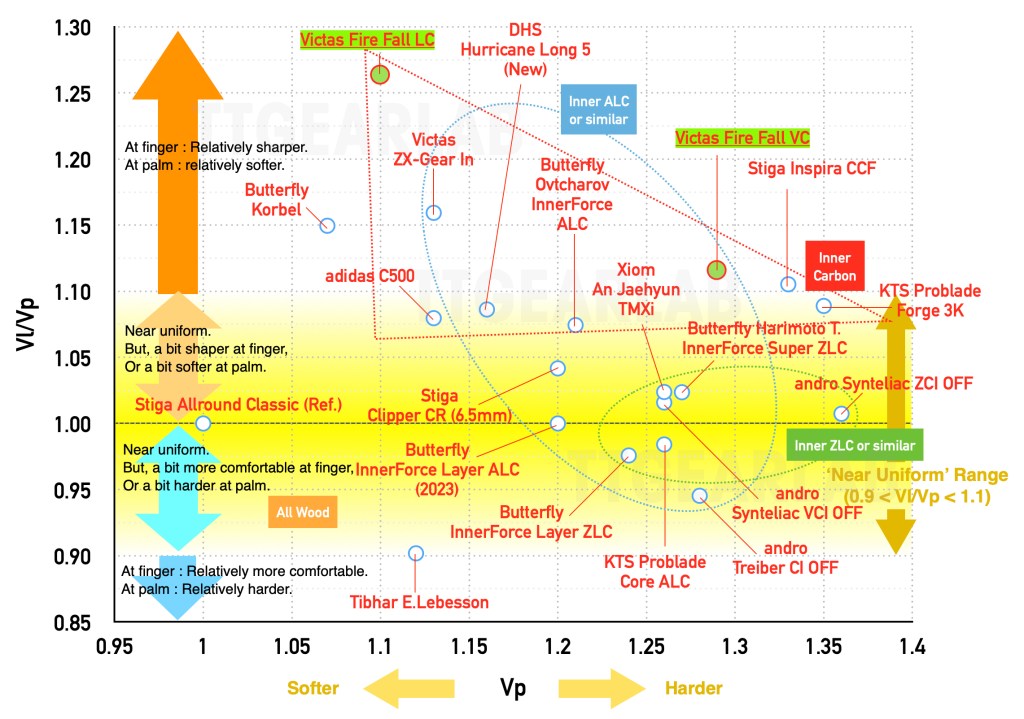
On the graph, the blades in this comparison are widely distributed up, down, left and right within the graph. But, more blades are located in upper area – ‘Relatively sharper ar finger’ range, and just four are located in lower area. And, eight blades are located on or near the ‘Uniform’ line (Vl/Vp = 1.0). Both of two models of ‘Fire Fall’ series – ‘Fire Fall VC’ and ‘Fire Fall LC’ – are located in the area that Vl/Vp > 1.1. So both of those two models transmit relatively sharper feeling to the index finger when compared with the feeling transferred to the palm. But, because ‘Fire Fall VC’ and ‘Fire Fall LC’ are far apart on the graph, players will feel much difference between those two models.
[‘Fire Fall VC’ in ‘Inner ALC or similar’ group]
- ‘Inner ALC or similar’ group including ‘Fire Fall VC’ is located at the center of the graph. And, the blades in this group are widely distributed vertically and horizontally within the graph. But, in fact, the wide distribution in horizontal direction is because of some blades whose Vp’s are much higher than the Vp’s of ordinary inner ALC blades. And, ‘Fire Fall VC’ is one of those blades whose Vp’s are exceptionally high.
- The Vp of ‘Fire Fall VC’ is even higher (= located to right) than the Vp’s of typical inner ZLC blades such as ‘InnerForce Layer ZLC’. It is even higher than the Vp of ‘Harimoto Super ZLC’ and ‘An Jaehyun TMXi’. (The only one inner ZLC blade whose Vp is higher than that of ‘Fire Fall VC’ is ‘Synteliac ZCI OFF’.) Further, the Vl/Vp of ‘Fire Fall VC’ is over 1.10. Because ‘Fire Fall VC’ gives quite stiff primary feeling and transmits very sharp relative feeling to the index finger, players who try this blade without prior knowledge may not notice that ‘Fire Fall VC’ is a kind of inner ALC blade.
- On the graph, ‘Inspira CCF’ and ‘Problade Forge 3K’ are located quite close to ‘Fire Fall VC’. Those two are just a bit stiffer than ‘Fire Fall VC’ in primary feeling and transmit similar relative feeling as ‘Fire Fall VC’ to player’s index finger. We may be able to group those two and ‘Fire Fall VC’ in a same new group even though there are differences in the kind of artificial fiber. But, the replacement among those three will not be easy because of the differences in elasticity characteristics.
- There are some blades whose Vl/Vp’s are around 1.10 like ‘Fire Fall VC’. However, among those blades we can’t find the one whose elasticity characteristics (for example Ec/Ep) are close to those of ‘Fire Fall VC’. So, we can understand that ‘Fire Fall VC’ is a quite unique blade. In that case, it is recommended for players to first consider Elasticity Indices for selection of new blade and then try to adapt to the vibration characteristics of that new blade. Then ‘Fire Fall VC’ can be recommended as the replacement of classic 5-ply wood all-round blade or classic 7-ply wood offensive blade.
[‘Fire Fall LC’ in ‘Inner Carbon’ group]
- ‘Inner Carbon’ group including ‘Fire Fall LC’ is located widely to the left and right at the top of the graph. Because the blades in this group are ‘pure carbon fiber’ blades, we may expect that those blades will give stiff feeling. However, we can notice that only two blades in this group give very stiff primary feeling, and the other two including ‘Fire Fall LC’ give quite soft feeling. So, this group can be divided into two subsidiary groups – stiff inner carbon blades and soft inner carbon blades.
- The major difference between two subsidiary groups – stiff and soft – is in the kind of carbon fiber. The carbon fibers of two stiff blades – ‘Inspira CCF’ and ‘Problade Forge 3K’ – are woven carbon fiber. On the contrary, the carbon fiber of two soft blades – ‘Fire Fall LC’ and ‘C500’ – are uniaxial carbon fibers. So we can understand that the inner-type blades with uniaxial carbon fiber give soft primary feeling. The Vp’s of ‘Fire Fall LC’ and ‘C500’ can be compared with that of ‘E.Lebesson’ which is a 5-ply wood offensive blade.
- The Vl/Vp’s of ‘Fire Fall LC’ is very high. It is much higher than that of ‘C500’ whose primary feeling is similar. The player will feel that ‘Fire Fall LC’ transmits much sharper feeling to index finger than ‘C500’. ‘Fire Fall LC’ is located at the top of the graph. That location is even much higher than the location of ‘ZX-Gear In’ which gives very sharp relative feeling to index finger. This is also an extreme case of Vibration Indices. Together with the ‘Extremely Deep Holding’ characteristics observed in the comparison by Elasticity Indices, this ‘Extremely Sharp Relative Feeling’ sets ‘Fire Fall LC’ apart from the other blades.
Please click here to return to top (table of contents)
4. Summary
Victas ‘Fire Fall’ series is a fiber blade family consisting only of inner-type blades, and was released by Victas to compete with Butterfly ‘InnerForce Layer’ series. However, the products in ‘Fire Fall’ series show their own distinct individuality in terms of plywood construction and actual characteristics, and are clearly differentiated from other inner-type blades from other companies for example ‘InnerForce Layer’ series. Such individuality are clearly evident in the two products – ‘Fire Fall VC’ and ‘Fire Fall LC’ those are currently representing ‘Fire Fall’ series. The characteristics of ‘Fire Fall VC’ and ‘Fire Fall LC’ can be summarized as:
4-1. Fire Fall VC (inner Vectran Carbon)
- ‘Fire Fall VC’ is an inner-type blade which places Vectran Carbon (= ALC) between the middle layer and the center layer.
- ‘Fire Fall VC’ provides the primary elasticity that we can expect from inner-ALC blades, but when the player hits the ball very strongly, it doesn’t hug the ball deeply or kick the ball more strongly, but rather responds almost linearly to the impact input. Its elasticity characteristics which can also be seen in some other recent inner-type blades fit for modern all-round play because the linear response lets the player control the ball very precisely.
- Regarding feeling, its primary feeling is much stiffer than ordinary inner-ALC blades, and it transmits very sharp feeling to the index finger. The sharp relative feeling transmitted to index finger distinguishes ‘Fire Fall VC’ from comparable blades those also fit for modern all-round play but don’t give that level of sharp relative feeling.
- Compared to Butterfly ‘InnerForce Layer ALC’ which uses the same Vectran Carbon, ‘Fire Fall VC’ hugs the ball less deeply and gives much harder and sharper feeling, so players who frequently use smashs and blocks will like find ‘Fire Fall VC’ more comfortable to use than ‘InnerForce Layer ALC’.
- ‘Fire Fall VC’ is recommended for the players who play with various technics rather than continuous topspin and prefers finishing by smash but don’t like the feeling of pure woven carbon fiber.
4-2. Fire Fall LC (inner Line Carbon)
- ”Fire Fall LC’ is an inner-type blade which places Line Carbon (= UDC or ULC) between the middle layer and the center layer.
- ‘Fire Fall LC’ provides the primary elasticity that we can expect from ordinary inner-ALC blades or inner-ZLC blades, but it hugs the ball extremely deep when the player hits the ball very strongly. Players may feel that ‘Fire Fall LC’ is somewhat slower than expected, because of the extreme deep hold characteristics.
- The primary feeling of ‘Fire Fall LC’ is much softer than those of ordinary inner-type blades. And, the feeling transmitted to index finger through the wing of ‘Fire Fall LC’ is much sharper than those of ordinary inner-type blades. The vibration characteristics remind us of those of 5-ply wood offensive blades such as ‘Korbel’, but ‘Fire Fall LC’ gives much sharper relative feeling to index finger.
- The overall characteristics of ‘Fire Fall LC’ fits for the players whose main strategy is very aggressive topspin at close-to-table area. It is expected that the players who have used 5-ply wood offensive blades with ‘Deep Hold’ characteristics will be able to adapt to ‘Fire Fall LC’ without much difficulty and enjoy the power enhanced by the addition of artificial fiber.
Both of ‘Fire Fall VC’ and ‘Fire Fall LC’ are inner-type fiber blades with very distinct personalities. If you’ve been feeling that the ordinary inner-type blades are lacking something, you might find the answer in one of these two unique blades. Since these are unique blades, the recommendations are also in opposite direction of what we can imagine from the kind of artificial fiber – ‘ALC’ and ‘Pure Carbon’. If the player likes the blade which feels somewhat hard and doesn’t hug the ball deeply, what is recommended is ‘Fire Fall VC’ which is an inner ALC blade. On the contrary, if the player likes the blade which feels very soft but sharp at index finger and hugs the ball very deeply, what is recommended is ‘Fire Fall LC’ which is an inner-type blade whose artificial fiber is pure carbon fiber.
Please click here to return to top (table of contents)
 TTGearLab
Hi! It would be very interesting to hear your comment on how you compare Fire Fall LC witch Cybershape Wood. Both have “deep hold” etc. How would you compare the two blades? Thank you!
LikeLike
We can find similarities between ‘Fire Fall LC’ and ‘Cybershape Wood’ – very low Ec/Ep and very high Vl/Vp. For that reaseon it is expected that the player who have used one between those two can adapt to another without problem.
The criteria for selection between to is primary elasticity. Because the Ep of ‘Fire Fall LC’ is much higher than that of ‘Cybershape Wood’, the player will feel that ‘Cybershape Wood’ is slower and more stable. Even ‘Cybershape Wood’ is softer than ‘Fire Fall LC’ if we observe Vp.
So ‘Cybershape Wood’ is more recommended for entry players. And, if the player requires highe power but doesn’t want to change playing style, ‘Fire Fall LC’ will be a very good solution. I think that it will be even better solution than ‘Cybershape Carbon’ in that case.
LikeLike
Thank you for your detailed answer!
LikeLike
Thank you! 🙂
LikeLike
Hi, can you write a review of Stiga Inspira Hybrid Carbon, or just compare that to other Butterfly blade and other green alc blade too. Thank you!
LikeLike
Currently I don’t have it. (It is on the buying list for future articles.) But, I can’t find meaningful difference among the outer green ALC blades. All of those blades are produced in the same factory, and the plywood constructions are 100% identical. The different is in the handle shape, and maybe in the inside structure of handle.
LikeLiked by 1 person
Thank you, hope to see your review soon.
LikeLike
I also hope that I can review that blade soon. 🙂
LikeLiked by 1 person
Hi, I love your work. I already played the Fire Fall VC and tried out the LC. Amazing blade and played more stiff than I anticipated.
Have you planned to review the Butterfly Diode Pro at some point? I’m going to start playing it myself tomorrow, but I would love to have a look at your test results 🙂
LikeLike
Thank you a lot for comment. 🙂
Unfortunately there isn’t schedule for the review of Diode Pro. Maybe I will introduce it with photos. There are problems in examining defensive blades because I’m not chopper. 🙂 But, probably I will be able to show you the Performance Indices if I can get the samples.
LikeLike
Thanks for your answer. To be honest the performance indices is what I care about the most by far, because they are an objective scale you can’t see anywhere else and actually have a meaning. So I would be happy to see these one day. But I am aware, that with all the blades available, it is unrealistic to do them all 😉
LikeLike
Thank you for your understanding. I’ll try to get Diode Pro as soon as possible because it is an important model. 🙂
LikeLike
Thanks for this complete article, could you recommend a victas blade: I like the fire fall fc but it lacks speed and rigidity on the other hand the control is really good and great for rotation.
I didn’t really like the innerforce alc but on the other hand I liked the Ovtcharov alc but it was a little too fast and powerful, I would just need a little below but with the same feeling.
What do you think of firefall SC or LC? or Gear-in range compared to my feeling?
I have a rather aggressive style but I also like to do variation and I need a fairly linear wood
.thank you
LikeLike
I think that you prefer the highly controllable blade with moderately high speed. But, if the meaning of ‘linear’ is same as what I imagine, linearity isn’t required characteristic. (I’m not sure.) The blade that hugs ball deeply when impact strength is high is the one fits for you in my opinion. Then Fire Fall LC is worth trying. Sometimes you will feel the ‘carbon fiber’ which is stiffer than mixed fiber like ALC. But, anyway its center hugs the ball very deeply, and it gives very exciting feeling. At least it will give you clearer feeling than InnerForce Layer ALC.
Regarding Fire Fall SC, I can’t tell you anything because I don’t have data.
Regarding ZX-Gear sereis, ZX-Gear In will be much softer and much slower than Ovtcharov InnerForce ALC. It is also slower than InnerForce Layer ALC. If that is acceptable, ZX-Gear In will be good choice, because it gives clear feeling and hugs ball very deeply when you hit the ball very strongly. Its controllability at close-to-table area will be excellent.
And, ZX-Gear Out is also considerable, if outer fiber construction is acceptable. It is a bit less elastic than Ovtcharov InnerForce ALC.
LikeLike
Hello,
Would you recommend trying the Fire Fall LC with the same rubbers as I play on the ZX-GEAR IN or harder rubbers because the Fire Fall LC will be more flexible at center ? Or because it has a much lower Ec/Ep ratio ?
At equivalent weights, will the ZXGI and the Fire Fall LC have similar speeds if the ball is hit gently (equivalent ep) ? And will the ZXGI be faster on harder impacts (because its EC is higher than that of the FF LC) ?
LikeLike
Anyway both of those two have very low Ec/Ep. And, if you want to compare two blades, I recommend you to use same rubber.
I think that there will not be significant difference in speed when you hit the ball softly. That is because there isn’t noticeable difference in Ec.
In hard hitting, both of those two will hug the ball very deeply and then release it. You will feel like that way. But, because both of those two show very low Ec/Ep, the actual speed mainly depends on how the player does. It will be like ‘catch and throw’.
LikeLike
Hello, congratulations on the new analysis, I actually use a Treiber Ci Off Andro blade, because I had trouble with low spin with a Feel Ax Xiom blade. Is it a good choice to try to play with a fire fall vc victas blade?
or it’s too stiff? Or different?….
LikeLike
Hi, thanks for this. Any chance of reviewing the Fire Fall FC?
LikeLike
The Fire Fall FC and SC…
LikeLike
Not yet. I’m just considering. (But, there is limit of budget.)
LikeLike
I think, if the Ep is bigger and the Ec/Ep is smaller, if the player has enough strength, he can play a very, very powerful topspin loop, and blade will have a very “erupt” feeling? On the contrary, a blade with a small Ep but a large Ec/Ep is more suitable for hitting some feeling-balls with the help of the opponent’s incoming power, and ending the opponent through the change of landing point and sudden smash, such as a player with’ out rubber’ or a player like’ Kokiniwa’? The cricket board with large Ep and large EC/EP should be almost difficult to control and have no good value unless it is used as a toy with pure impact play such as’ slapping’. As for the blade which is suitable for pure defense or beginners when Ep and EC/EP are both small.
LikeLike
Another problem is that although they are all aromatic fibers, polyarylate and aramid (that is, polyaramid, of course, there are different kinds) and PI, that is, polyimide (of course, also containing aromatic groups) should at least be clearly distinguished. For example, Kevlar fiber, that is, aramid fiber, is used in ALC commonly used in DHS. Vectran and zxion, as well as siveras and ekonol fibers that have not been used in table tennis equipment at present, are polyarylate fibers, although they are not the same kind of polyarylate fibers. Otherwise, pbo fiber also contains aromatic groups such as phenyl, which can also be regarded as an’ AL’. I support the practices of victas and xiom, which are either written as’ ZL’,’ VX’,’ ZX’ and’ KL’ according to the trade names, or divided into’ AL’ and’ AR’ to distinguish between (poly)arylate or (poly)aramid.
LikeLike
Thank you for comment! What you explained detailedly will be great reference when the players try to utilize performance indices. 🙂
LikeLike
Hello, thanks for the quality article.
I’m looking for a sligthly slower blade with more control than harimoto innerforce ALC. I’m an intermediate player.
My forehand is rather strong, I like to 3rd ball topspin with it. By backhand is more controlled right now but I’d like to topspin more during matches with it.
For reference, in the past I tried Viscaria, it was too fast for me, I felt that I had no dwell time, too much kick in the ball, leading to poor control for my level.
I also tried Nittaku acoustic, but I did not like the vibration, the feeling was not sharp enough, like if my hand was “””shaking”””.
Would Victas Fire Fall LC help me go in the direction I describe or should I stick to harimoto ALC?
Thanks 🙂
LikeLike
I’m not sure whether Fire Fall LC will be a good solution for you or not.
Anyway it will give you less kick than Viscaria while still providing much power, and will not give you the vibration like Acoustic. Your hand will not shake. But, that will not guarantee that it will be just fit for you. 🙂
LikeLike
Hi,
On a blade with a really low EC/EP rating like the Fire Fall LC, do you recommend maximum thickness rubbers (backhand & forehand) for playing close to the table ?
Are rubbers with a hardness of 47°-48° ideal for Fire Fall LC, which has a very low EC/EP ratio ?
Thank you.
LikeLike
In fact, the rubber with thickest sponge will not be problem if the player can once be accustomed to it. Without concerning playing style. That is one reason why only the rubbers with thickest sponges are being sold in some countries.
And, there isn’t a right answer for the question about combination. But, I think that the rubbers with a hardness of 47°-48° will not be bad with Fire Fall LC.
LikeLike
Hello, again, thank you, thank you, thank you. And a question: do you have any thoughts about the Quartet-Series, i.e. the AFC, SFC, LFC especially?
LikeLike
In addition to my rather vague question: can you compare the Quartet-Series to the FireFall-Series in terms of a well-considered guess about the relationship between the LFC an LC? Thanks in advance!
LikeLike