‘Foundation’ series announced in October 2024 is a new blade family of KTS (Kim Taek Soo) which is the Korean table tennis brand. Up to now KTS has managed two major blade families – high-end ‘Problade’ series for professional or highly skilled players and entry-level ‘Ngineered’ series for entry ~ middle class players. The concept of newly added ‘Foundation’ series is to provide professional class blades like ‘Problade’ series at a reasonable price close to that of ‘Ngineered’ series. ‘Foundation’ series consists of four fiber blades, and among those four three models – ‘Foundation ALC’, ‘Foundation GF.K’ and ‘Foundation GF.K Ebony Special’ – were released first.
‘Foundation GF.K’ is an outer-type blade whose artificial material is glass fiber. After verifying the characteristics of glass fiber in ‘Ngineered H’, KTS is actively utilizing it for following blades. It is expected that more blades with glass fiber will be launched by KTS in the future. Thanks to the characteristics of glass fiber, ‘Foundation GF.K’ provides very natural hitting feeling close to that of all-wood blade while providing higher power than the all-wood blade with similar elasticity level. And additionally, ‘Foundation GF.K’ provides the feeling like the ball is sticking to the blade surface when the player performing the spin-oriented technics. This type of blade is the one which is most preferred and recommended by TTGearLab.
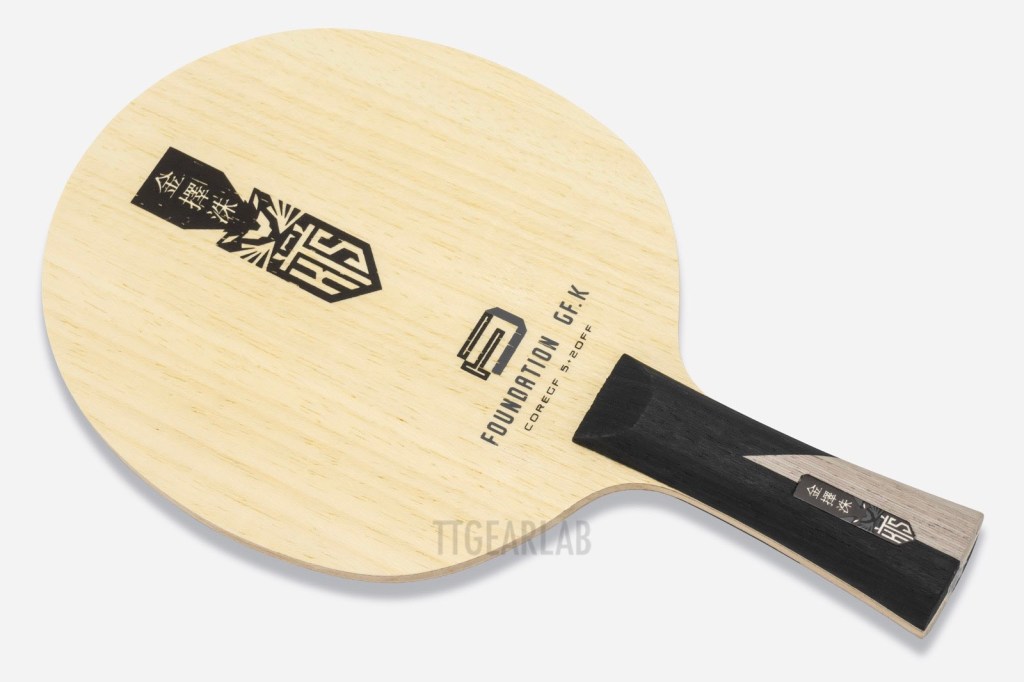
‘Foundation GF.K’ is a fiber blade whose artificial material is glass fiber. It is suitable for playing style which lays emphasis on spin. Four models in ‘Foundation’ series share the same graphic design, and each model is distinguished by the point color of the handle wood block and the head printing. The theme color of ‘Foundation GF.K’ is light gray.
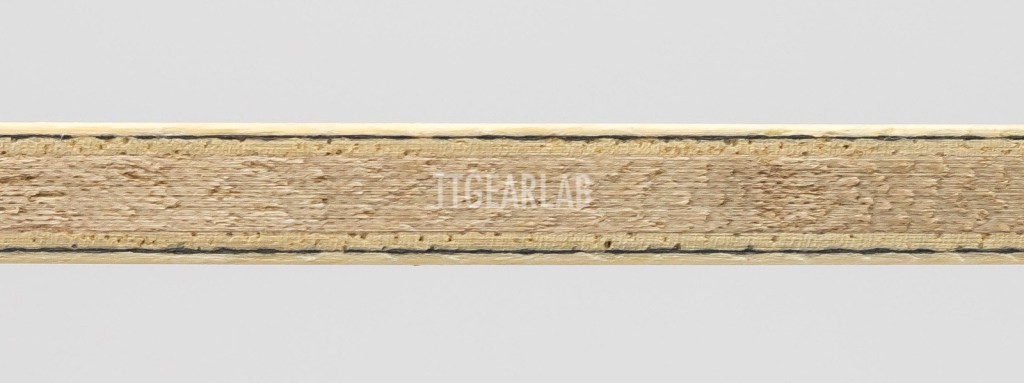
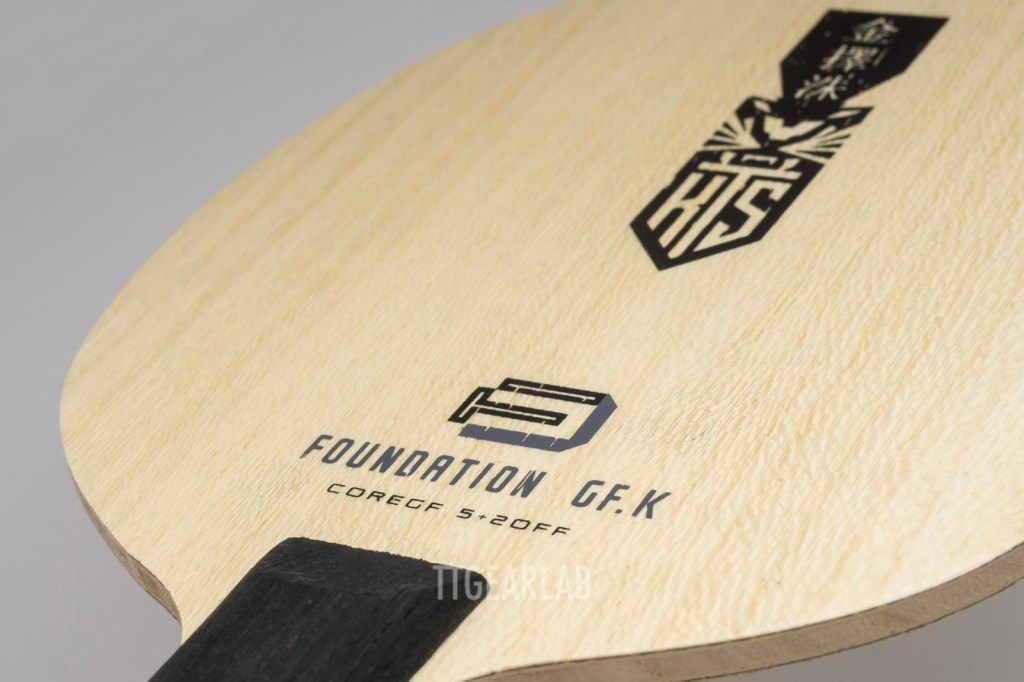
‘Foundation GF.K’ is an outer-type fiber blade of 5+2 ply construction. The top layer is Koto, the middle layer is Ayous, and the center layer is Kiri. Glass fiber is inserted directly under the top layer. Overall thickness is around 5.6mm. Except for the kind of fiber, it has a similar construction to the ‘Foundation ALC’ in the same family. But, since the artificial material thinner, the overall thickness of ‘Foundation GF.K’ is also slightly thinner than that of ‘Foundation ALC’.
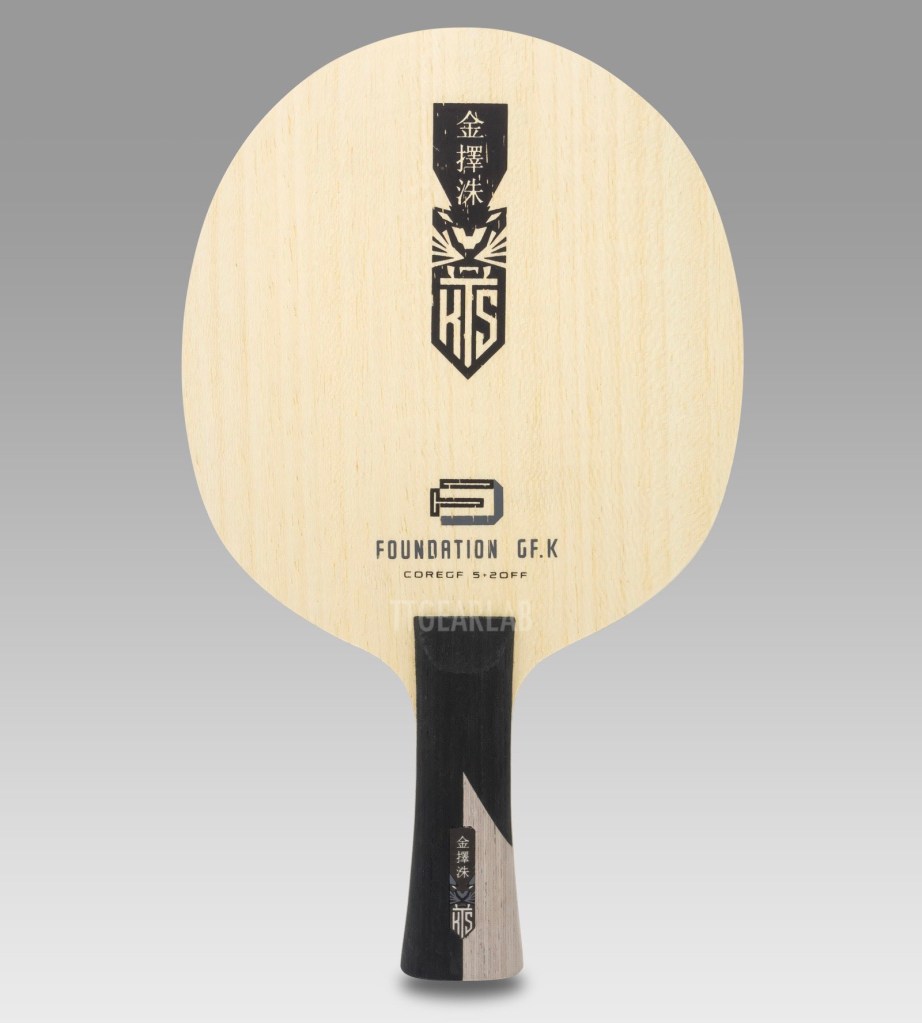
The size of head is around 157mm x 150mm. There can be small differences by piece.
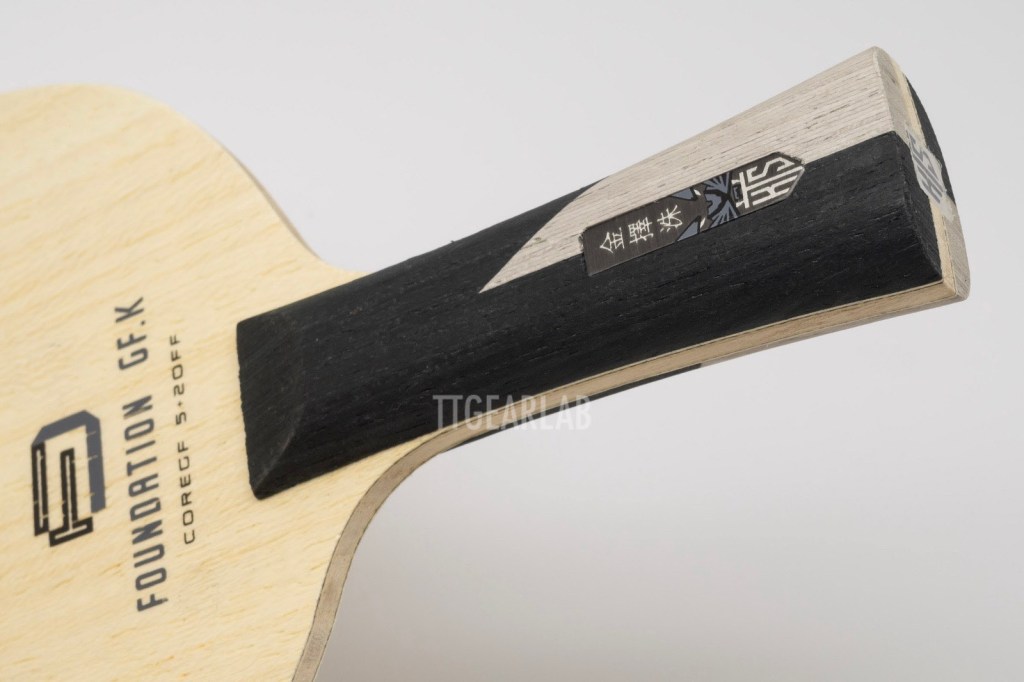
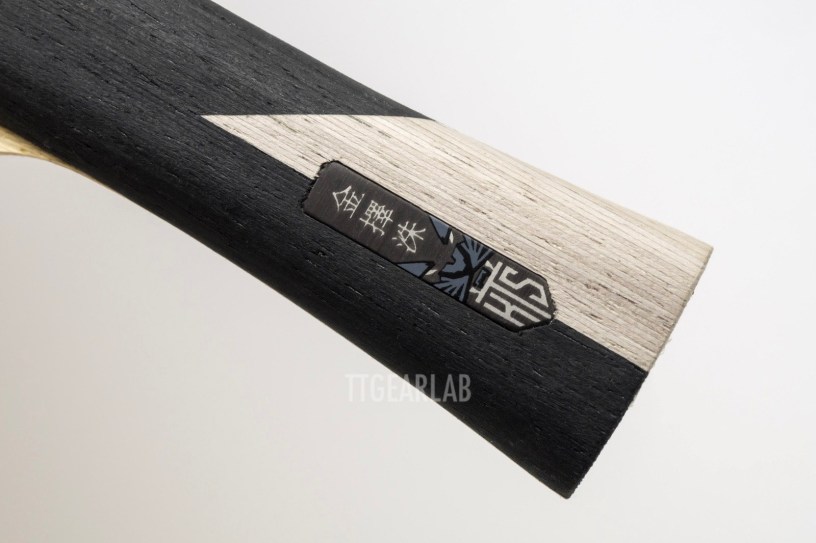
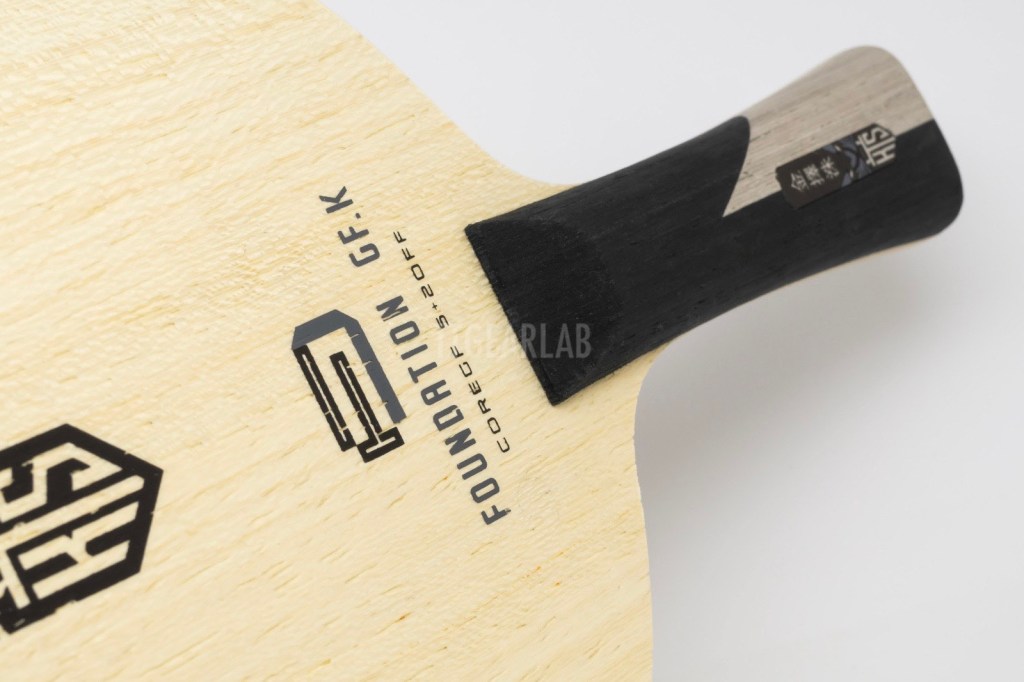
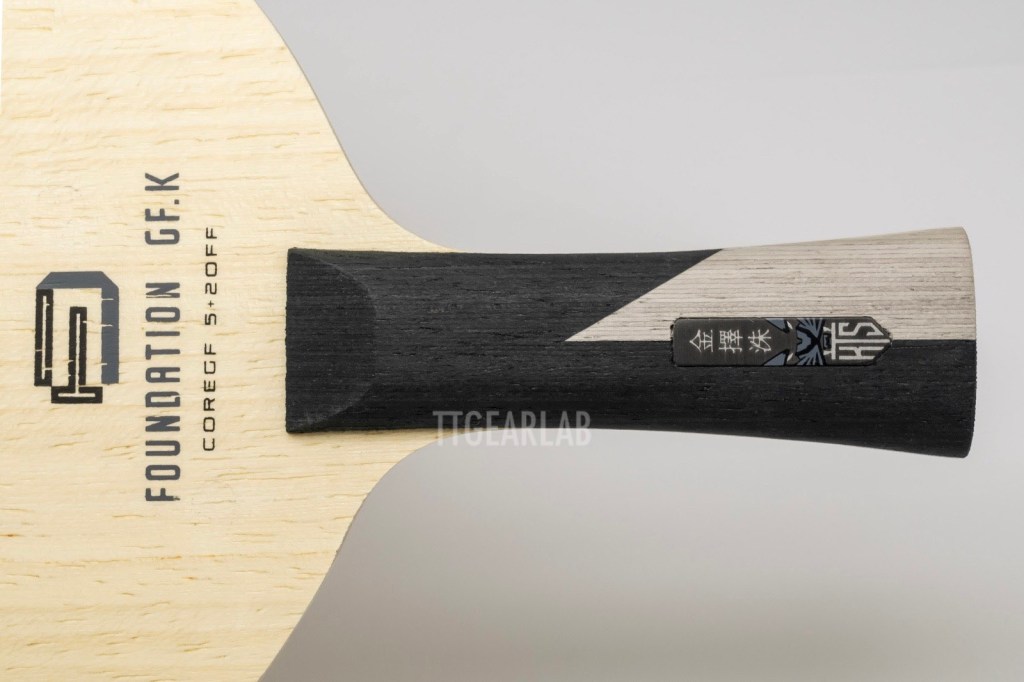
This FL handle is completely flat on the top and bottom, and it doesn’t have bulged section between the root section and the narrowest section. The width of FL handle is around 27mm (at top) ~ 26mm (at narrowest section) ~ 34mm (at the end), and the thickness of handle is around 22mm (at thumb) ~ 23.5mm (at the end). The unique FL handle whose top and bottom are completely flat reminds us the handle of old Butterfly blades such as ‘Gergely’ or ‘Primorac Carbon’, although the FL handle of KTS blade is rounded at the edge differently from that of ‘Gergely’. Although this FL handle isn’t a wide or semi-wide handle, it provides quite good stability thanks to the flat top and bottom.
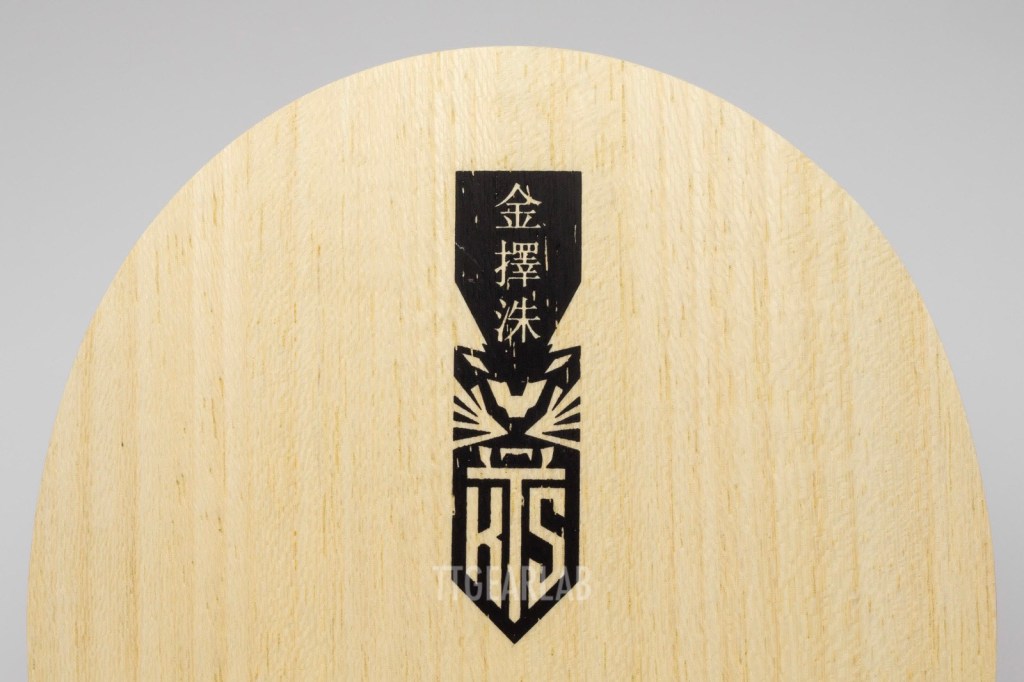
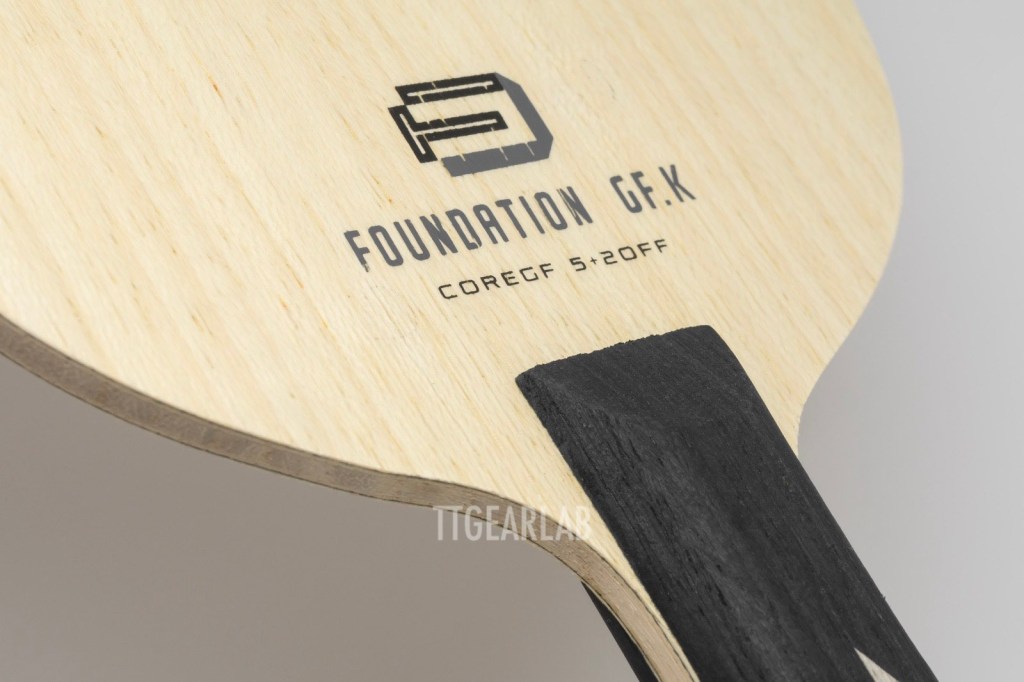
The Tiger Face ‘金擇洙(Kim Taeksoo)’ logo which is also applied to the top blade family – ‘Problade’ series – is printed on the top of the foreside of blade head. And, on the bottom of blade head, the logo of ‘Foundation’ series, the name of blade model, the name of artificial fiber, the construction and speed sign (= OFF) are printed. In the standard of KTS, the speed sign ‘OFF’ means that the blades is for offensive play by topspin, and the speed sign ‘OFF+’ means that the blade lays emphasis on speed.
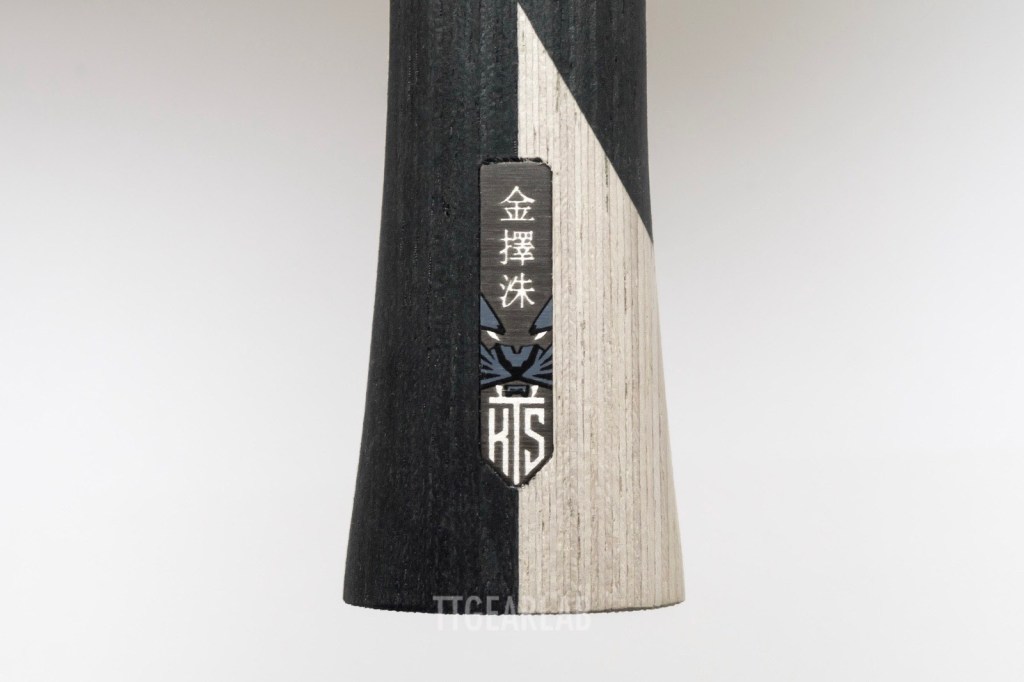
The aluminum plate that includes the Tiger Face ‘金擇洙(Kim Taeksoo)’ logo is applied at both sides of handle.
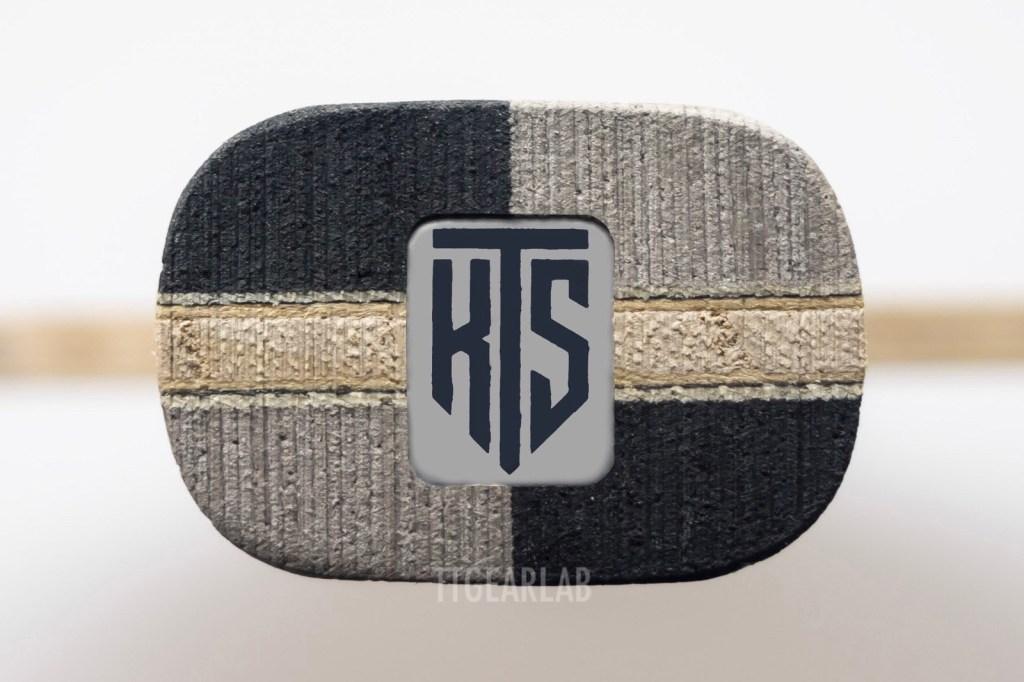
Aluminum logo plate that includes KTS logo is applied at the end of handle.
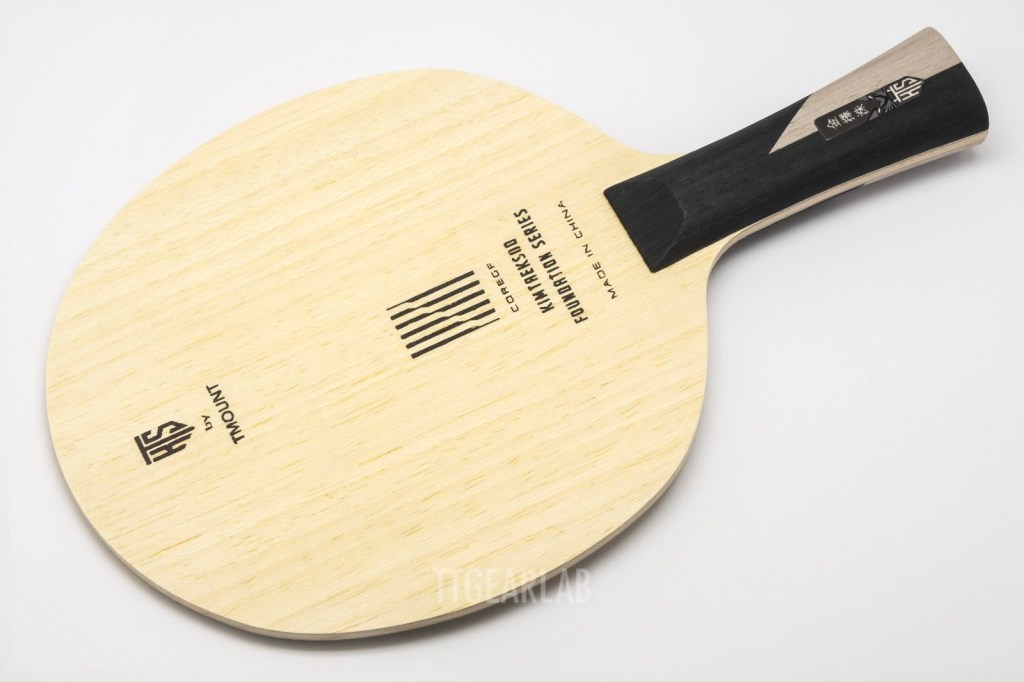
The printing and the aluminum panel are applied also at the backside. Because the backside of handle is same as the foreside of handle, we can’t tell the foreside from the backside when the rubbers are attached on the head.
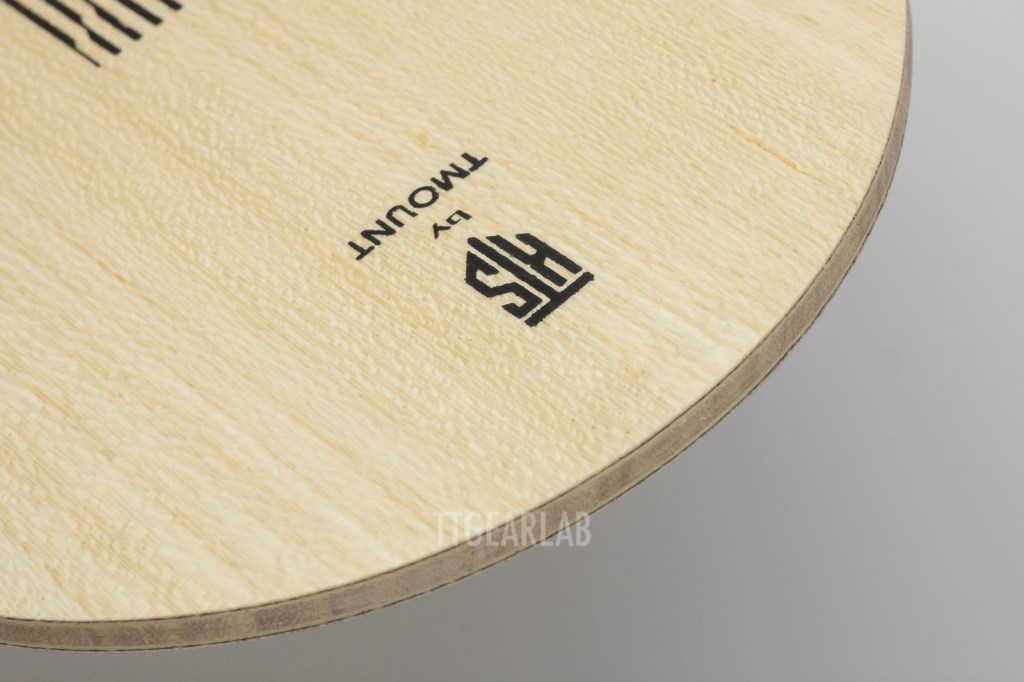
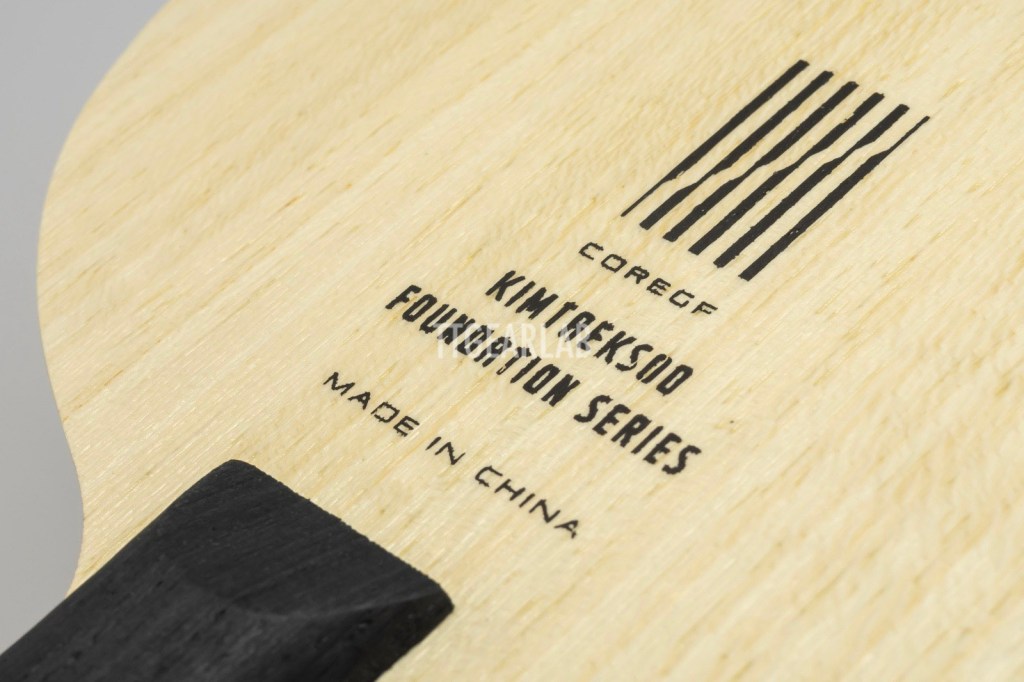
On the backside of head, the information on brand and company is printed at top, and the kind of artificial material and the name of series are printed at bottom.
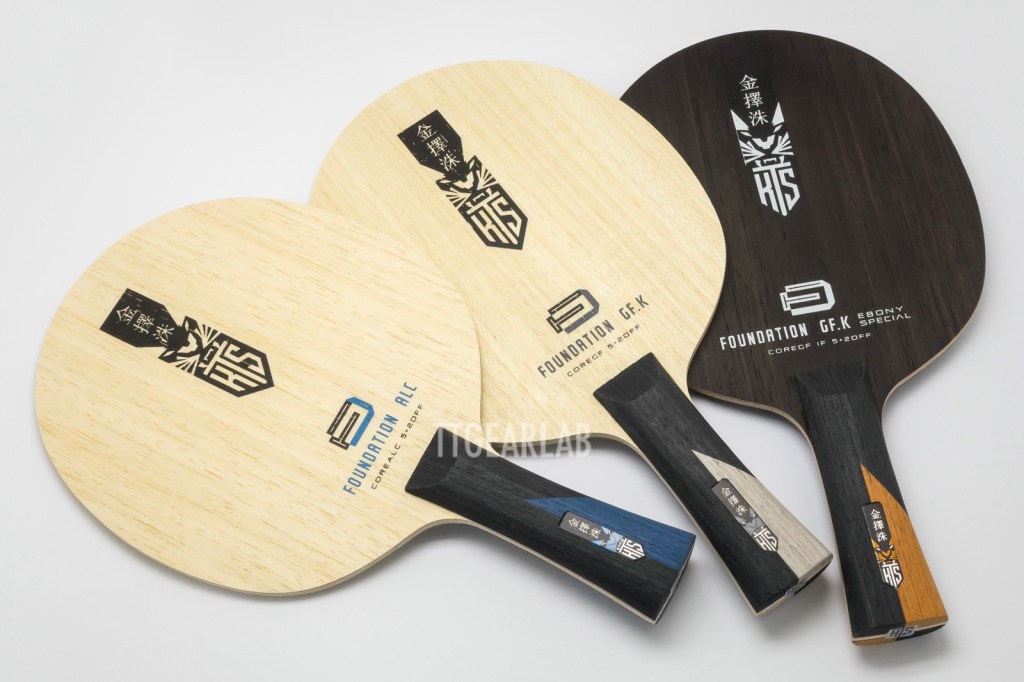
The first announced three models in ‘Foundation’ series are optimized for the offensive strategy by topspin. KTS is writing the speed sign ‘OFF’ for this kind of blades.
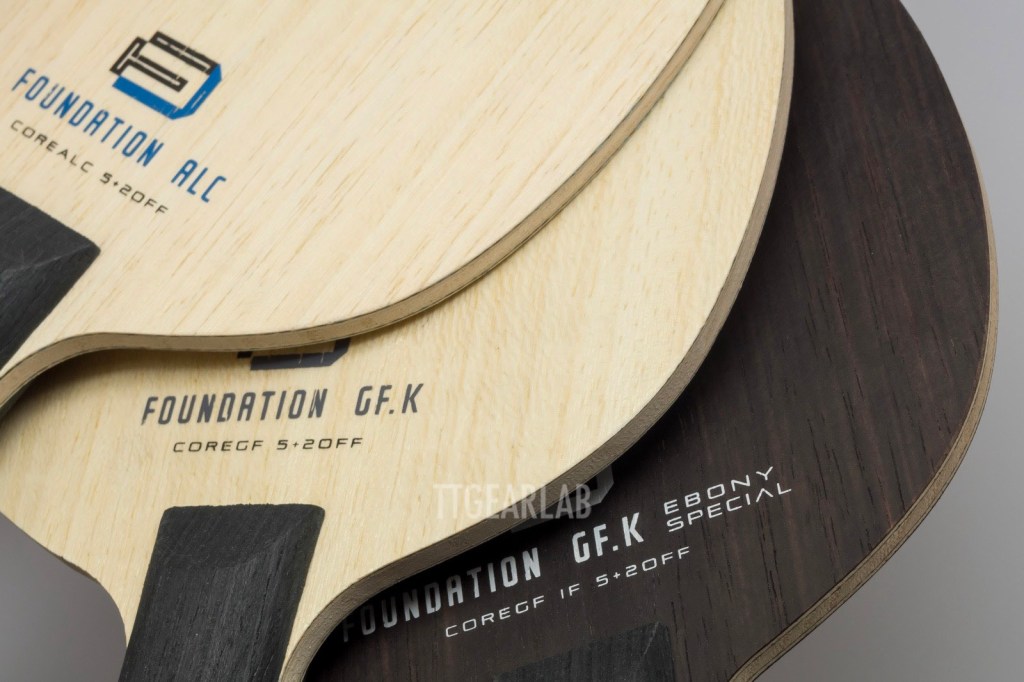
‘Foundation ALC’ (left) which is the outer ALC blade with Koto top layer is the most elastic among three models. ‘Foundation GF.K’ (middle) which is the outer glass fiber blade with Koto top layer provide moderate elasticity. ‘Foundation GF.K Ebony Special’ (right) which is also called as ‘Foundation Ebony’ is an inner glass fiber blade with Ebony top layer. ‘Foundation GF.K Ebony Special’ is the least elastic among three. But, it provides greatly enhanced stability of very aggressive topspin
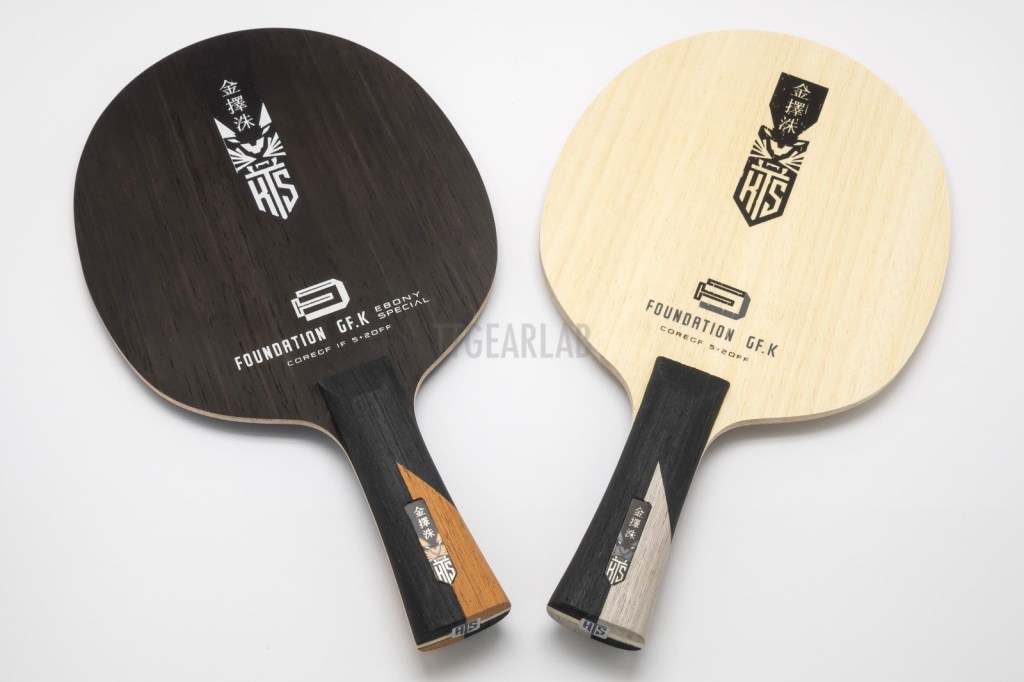
Glass fiber is the artificial material for two models – ‘Foundation GF.K Ebony Special’ (left) and ‘Foundation GF.K’ (right). Glass fiber seems to be the artificial material which is most preferred by KTS because it provides very natural hitting feeling. It is expected that more models with glass fiber will be launched by KTS in the future.
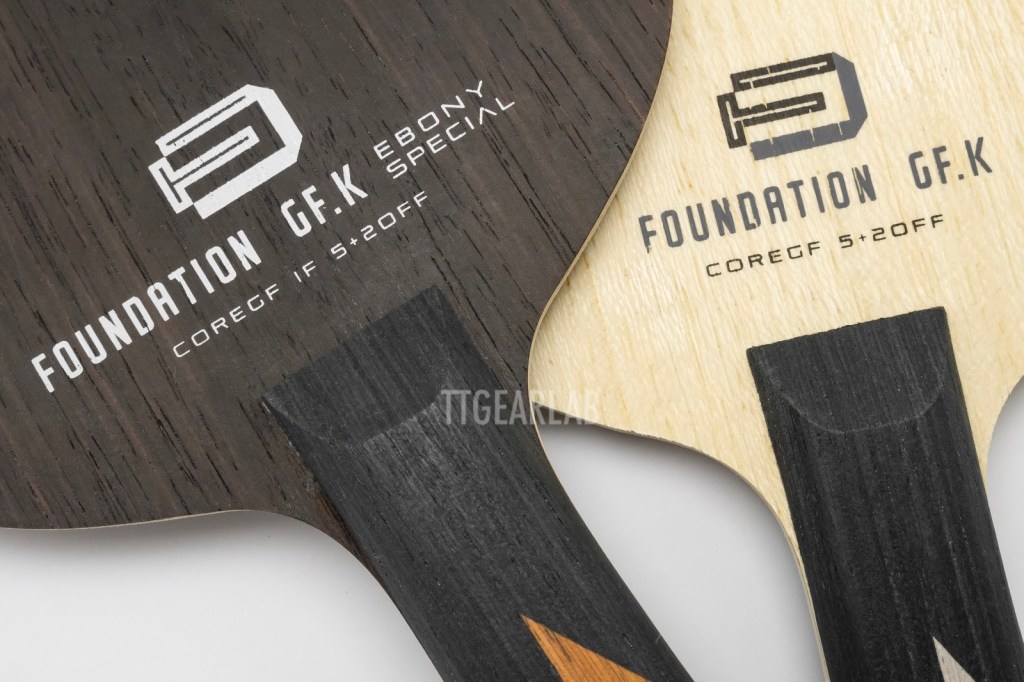
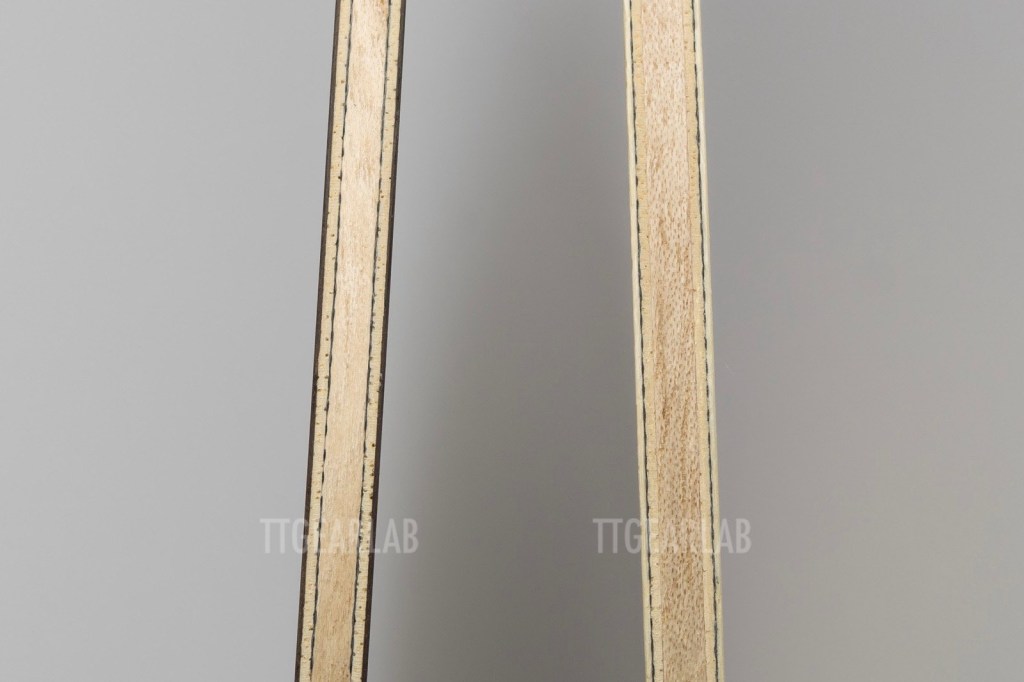
The constructions of ‘Foundation GF.K Ebony Special’ (left) and that of ‘Foundation GF.K’ (right) are noticeably different from each other. ‘Foundation GF.K’ has 5+2 ply outer construction with Koto top layer. But, ‘Foundation GF.K Ebony Special’ has 5+2 ply inner construction with Ebony top layer. And, ‘Foundation GF.K Ebony Special’ is much thinner than ‘Foundation GF.K’.
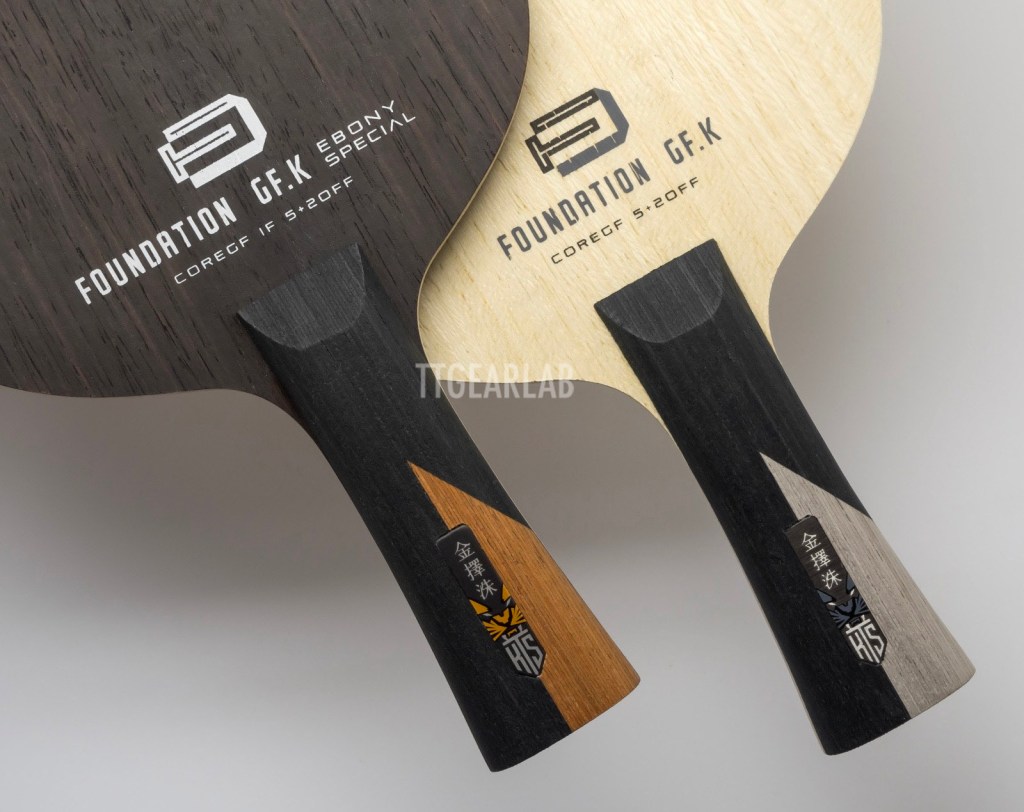
‘Foundation GF.K Ebony Special’ (left) is specialized blade for very aggressive topspin which aims at very early timing after bounce, while ‘Foundation GF.K’ is the blade for various kinds of strategies those are oriented by topspin. Both of those two provides high level of stability and controllability when used by entry level players, while providing higher power when compared with all-wood blades of similar elasticity levls.
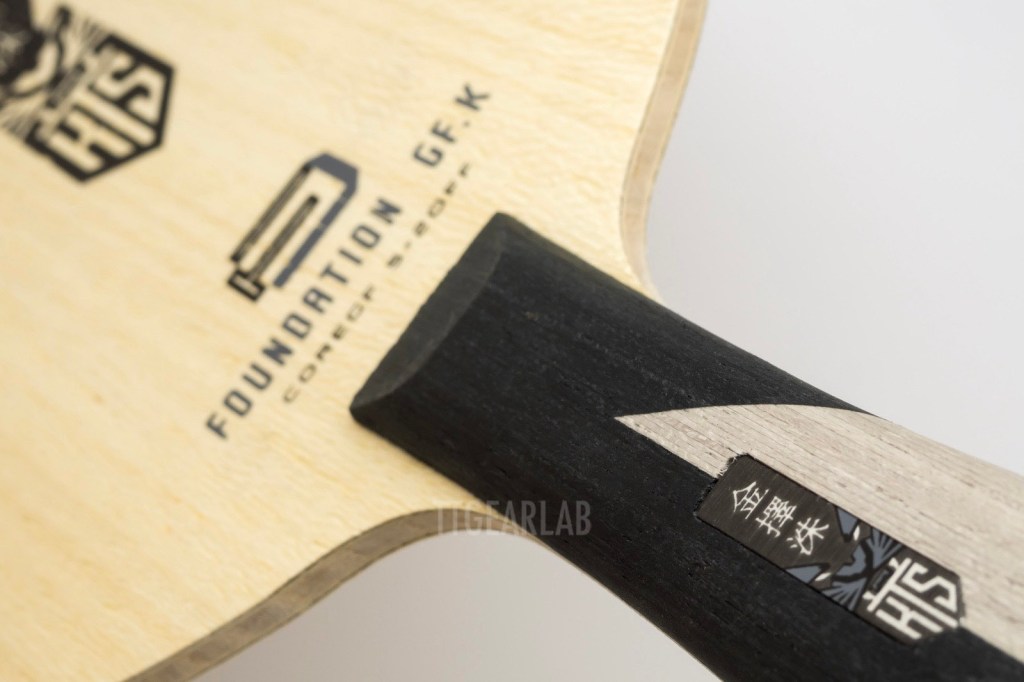
‘Foundation GF.K’ is a very well balanced blade for continuous topspin. It is also suitable for modern all-round style, like another glass fiber model in kTS blade range – ‘Ngineered H’. Comparing two glass fiber blades, ‘Foundation GF.K’ is more biased to offensive strategy, and on the contrary ‘Ngineered H’ is more biased to all-round strategy. Although ‘Foundation GF.K’ is less elastic than outer ALC blades such as ‘Foundation ALC’ or ‘Viscaria’, it can also create powerful if the player attacks with topspin. And, the feeling as if the ball sticks to the blade surface lets the player perform various kinds of spin-oriented technics with ease. Because of its construction and playing characteristics, ‘Foundation GF.K’ can be compared with Butterfly ‘Timo Boll ZLF’ or Xiom ‘Hugo HAL’. This kind of blades give the players high level of confidence by reducing misses in actual games, and as the result the players can attack more actively and more aggressively. ‘Foundation GF.K’ is a newcomer of that kind of blades, and can be recommend for all levels of players from beginners to professionals.
Following are the performance indices of KTS Foundation GF.K (avg.weight = 85.1g) :
– Ep = 1.47
– Ec = 1.30 (Ec/Ep = 0.88)
– Vp = 1.10
– Vl = 1.17 (Vl/Vp = 1.07)
Please note that above are average values and can be updated by further measurement.
Unauthorized use and/or duplication of this material without express and written permission from this website’s author and/or owner is strictly prohibited. Excerpts and links may be used, provided that full and clear credit is given to TTGearLab with appropriate and specific direction to the original content.
 TTGearLab
Thank you for the well written article. It is really good news that more and more blades of this type are coming out. Outer ALC / Viscaria type blade without the carbon is a great structure to use for amateurs.
Especially after Hugo HAL stopped being available in Europe, which is really sad news by the way, there now are at least more options to go for (TB ZLF, Hayabusa ZL Pro, new KTS blades). Have you tried out the Foundation GF.K yet? How did you like it?
By the way, there is another thing I would like to ask you. I have been using my Hugo HAL for about a year now, with H3 on forehand and G1 on backhand. I thought about trying out the Xiom 36.5 Alxi. Even though it is a different because it is inner type structure with limba outer ply, I thought it could help me to create more spin, more safety and when being out of position (I am really tall player).
At least according to your database, it shouldnt be much faster than my HAL. But of course, many factors will be different, like handle, vibrations and ball holding feeling. And, I read that koto outer ply needs fast acceleration of the arm to drag the ball and spin, while limba is a little bit more forgiving. My level is just intermediate, normal club player.
I am looking forward to your response, and what you think about it. I would intent to use the exact same rubbers on the new blade.
As always, thank you for your hard work 🙂
LikeLike
Thank you for comment. The outer-type blade without carbon fiber is very good for most of amateur players in my opinion. And, although Foundation GF.K is somewhat different from Hugo HAL, it can be the good replacement of it. The difference is that the feeling of Foundation GF.K will be closer to all-wood blade.
And, in my opinion, fast acceleration of the arm is not needed for dragging the ball and make topspin, although the top layer is Koto. Because the overall elasticity is supressed, the Koto top layers just helps precise control, and doesn’t impede dragging ball. Rather it creates the feeling that the ball sticks to the racket. Both of Timo Boll ZLF and Foundation GF.K give that kind of feeling.
LikeLike
To add on this, I also though about trying out Nittaku Acoustic or Carbon Inner!
LikeLike
Acoustic are Acoustic Carbon Inner are very good blades. But, I also recommend once trying Violin (of new G version) before using Acoustic if the low elasticity is acceptable. The feeling of Acoustic or Acoustic Carbon Inner is excellent. But, the feeling of Violin is fantastic, although it doesn’t make that fast ball. 🙂
LikeLike
hi. Do you plan to test new blades from Donic – Whiper series and Donic Anders Lind Hexa Carbon ?
LikeLike
No plan yet. But, I’ll check those blades.
I’m not sure whether I will be able to get the samples or not.
LikeLike
Thank you for your reply! I think Acoustic is a little closer to Hugo HAL speed, so I decided to order the new G revision version. I miss the soft feeling of Limba and heard good things about Acoustic feeling.Would you suggest to stick to my Hurricane 3 on the forehand, or try a more modern rubber like G1 on Acoustic?Thank you 🙂
LikeLiked by 1 person
You’re right. Acoustic is closer to Hugo HAL both in speed and feeling when compared with Violin.
Regarding rubber, I recommend you to keep current rubber. That is always the best way to understand everything of new blade in short time, even though there may be another rubber that makes better combination with new blade. (I think that Fastarc G-1 will make really good combination with Acoustic. But, I recommend you to first use Hurricane 3 and then consider another rubber. The result from the combination with Hurricane 3 will give you the guideline of selecting new rubber.)
LikeLike
hi. Do you plan to test new blades from Donic – Whiper series and Donic Anders Lind Hexa Carbon ?
LikeLike
I’m currently checking some Donic blades. But, the blades you mentioned haven’t been on the list. I’ll also check those models.
LikeLike
It’s great seeing less prominent TT brands featured. I’ve seen you work with some smaller Japanese companies. Are you familiar with the Wizard blades? The Kaito Yamashita blade looks interesting, but they have many more. Might be something fun to check out, something different. As always, great work with the page.
LikeLike
Thank you for comment. It is interesting that Wizard focuses on finding the optimal handle shape for each individual. For that reason Wizard provides 20 variations of handle shapes. 🙂 I hope that I can check the variations directly in the future.
LikeLike
Yes, the handle is no big deal for most people, but for bigger people it’s getting harder to find large ones, esp. on a blade you want to play with lol.
LikeLike
Hello. Thanks for the great report and research on the KTS Foundation ALC and KTS Foundation GFK blades. I’m currently playing the Butterfly Viscaria with Tenergy 05 on both sides. But I’d like to play with a blade that offers me more control and power than my Viscaria. Perhaps the KTS Foundation ALC or the KTS Foundation GFK would be a slight improvement? What do you think? Are the KTS blades as well-made as the Butterfly blades? Best regards, and thank you for your reports.
LikeLike
I think that Foundation ALC is a bit slower but a bit more controllable than current Viscaria. Especially when the player play more aggressively at close-to-table area, the difference becomes noticeable. And, Foundation GF.K is even slower and even more controllable. If controllability is the most important factor, Foundation GF.K will be seriously considerable.
The build quaility of KTS is very good. I think that still Butterfly blades is better in build quality. But, at least you will not be disappointed with the build quality of KTS blade.
LikeLike
Hello. I have a personal question for you. After so many reports, experiences, and test reports, I’d like to know which blade you consider the most balanced in terms of power, control, and sweet spot? What is your favorite blade for a controlled attacker? Best regards, and stay healthy, you and your family.
LikeLike
In fact this is very difficult to answer. That is because table tennis is the sports of individuality. There can be so many solutions even in case we search of ‘balanced’ blade.
I personally like the characteristics of Butterfly Timo Boll ZLF. But, that will not be solution for everybody who requires balanced blade. Further, I don’t like the handle shape of Timo Boll ZLF.
LikeLike
And, at the same time with Timo Boll ZLF, I like the characteristics of this blade (Foundation GF.K). Xiom Hugo HAL is another choice for me.
LikeLike
Good day. Thanks again for your interesting information and the many details and reports. Do I have another question? I’m currently wavering between the KTS Foundation ALC and the DHS 301 T. Perhaps you have a tip? Best regards, and stay healthy, you and your family.
LikeLike
I’m sorry for late response to this comment. But, I think that we could have talked much via e-mail. 🙂
LikeLike