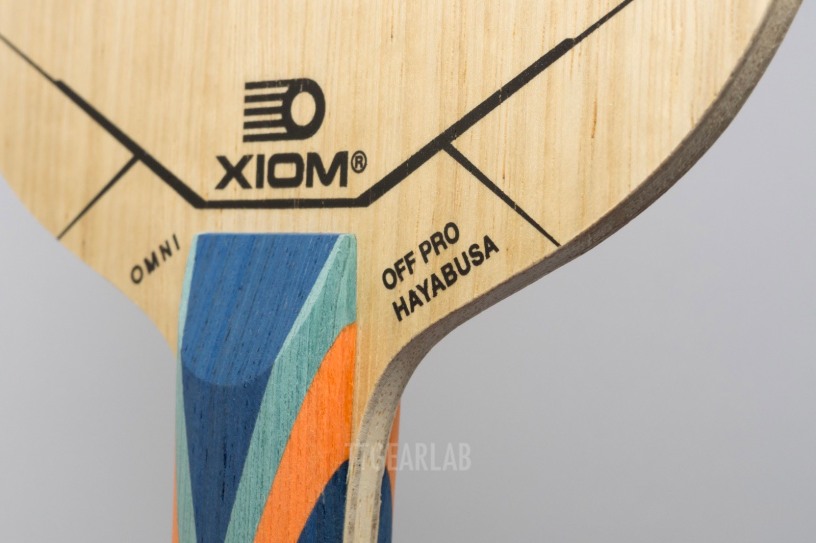
New ‘Hayabusa’ series released in April 2024 is the strategic blade family of Xiom mainly targeted for Asian market including Japan. This series is inheriting the blade family of the same name that released more than 10 years ago. In the past, original ‘Hayabusa’ series was a top product line consisting of relatively expensive blades manufactured in Korea. However, new ‘Hayabusa’ series consists of reasonably prices blades made in China. Five models are available in new ‘Hayabusa’ series – two outer fiber blades (ARX and ZLX) and three ‘Pro’ models (ZL Pro, HX Pro and OFF Pro). Although two outer fiber models don’t have the word ‘Pro’ in their names, those two are also professional class blades. ‘Pro’ is added for the other three models for emphasizing those three aims at more skilled players when compared with the blades of similar constructions.
‘Hayabusa OFF Pro’ is a 5-ply wood offensive blade. It focuses on natural feeling as pure wood blade and the excellent balance between offense and defense. ‘Hayabusa OFF Pro’ is harder and faster than most of 5-ply wood blade with similar thicknesses. Its elasticity is close to that of Nittaku ‘Tenor’, and its feeling is a bit harder than that of ‘Tenor’. Although it is a pure wood blade, its high elasticity allows player to perform quite powerful attack by topspin. Also, because it is the least expensive model in ‘Hayabusa’ series, it can be recommended for the players whose budget is limited or the entry players who lay emphasis on high cost-performance.
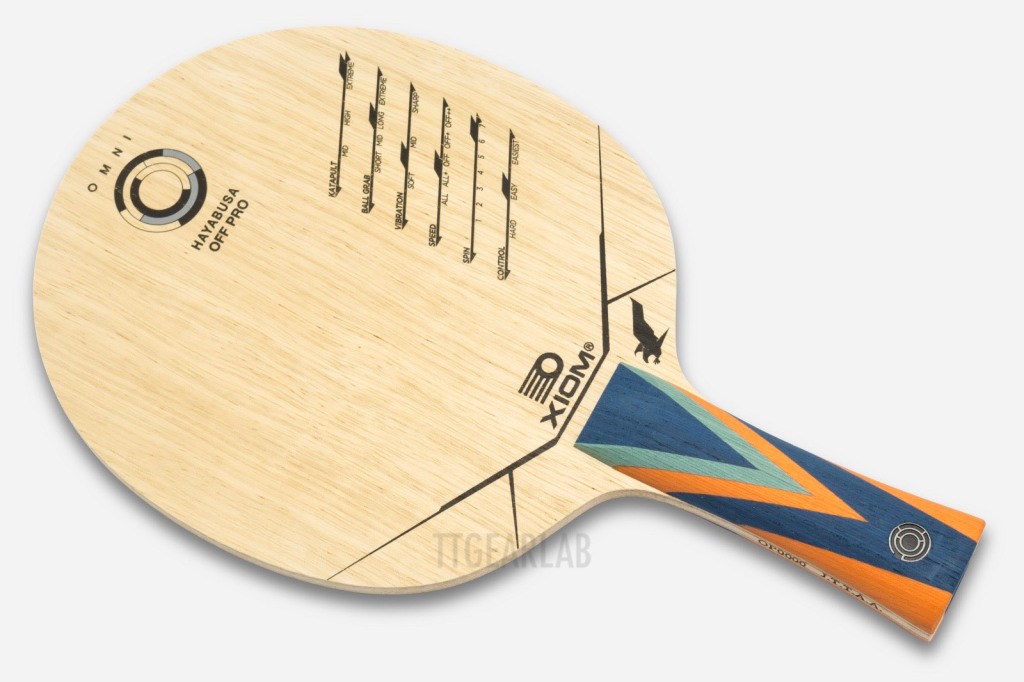
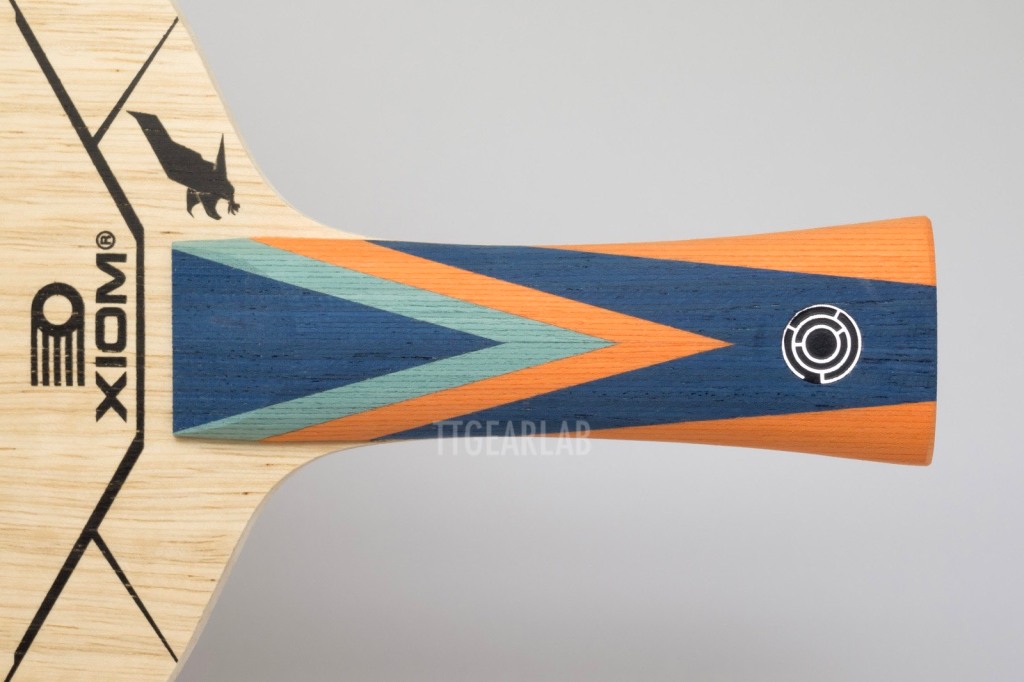
The graphic design of new ‘Hayabusa’ series is inheriting the design concept of original ‘Hayabusa’ series which symbolizes a falcon flying fast with its wings spread, but is much simplified from the original design. The five models in the series have a common design, and differ only in the color combination of the handle wood blocks. The color combination of ‘Hayabusa OFF Pro’ is teal & orange on navy background.
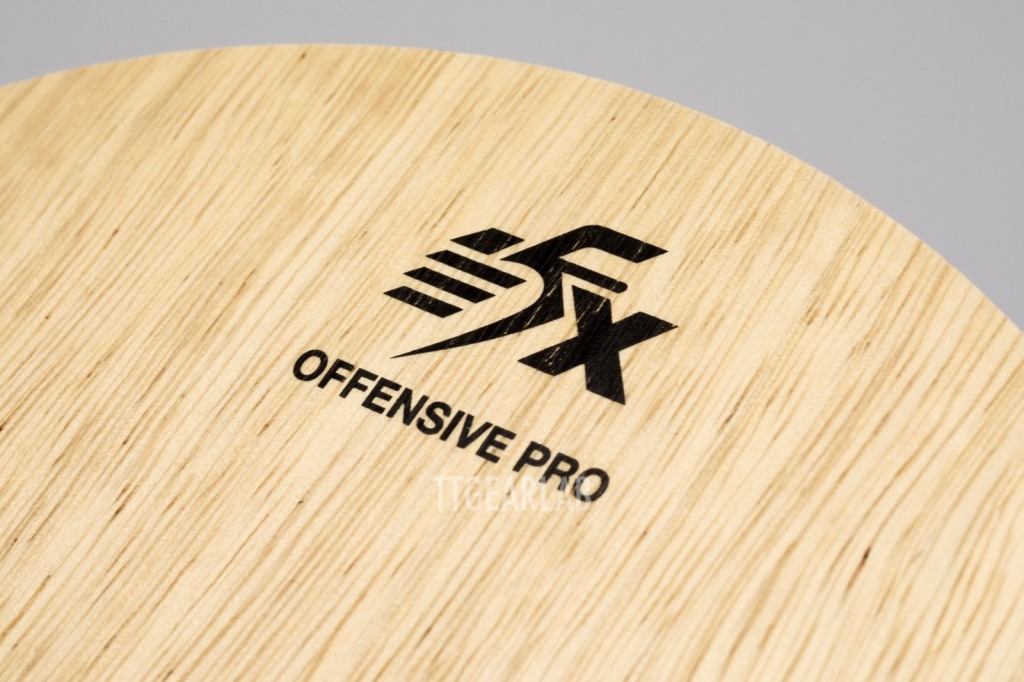
The kind of construction of this blade is indicated at top of the backside of head. ‘Hayabusa OFF Pro’ is a 5-ply pure wood blade.
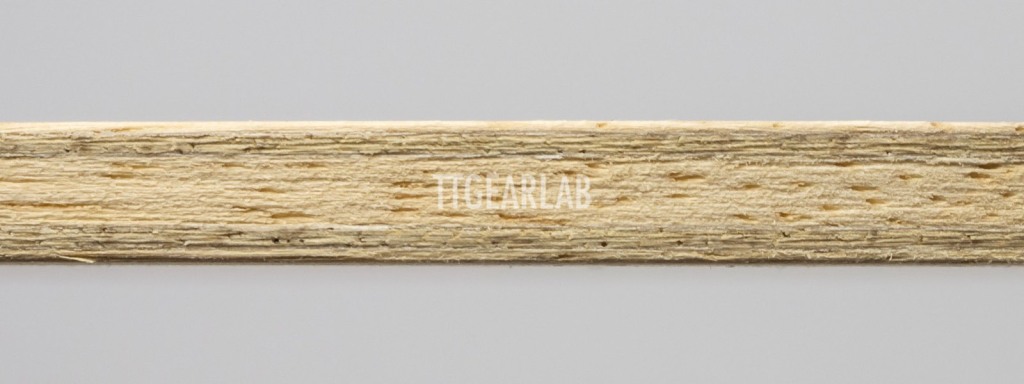
‘Hayabusa OFF Pro’ is a 5-ply wood blade. The top layer and the middle layer are Limba. And, the center layer is Ayous. Overall thickness is around 6.0mm.
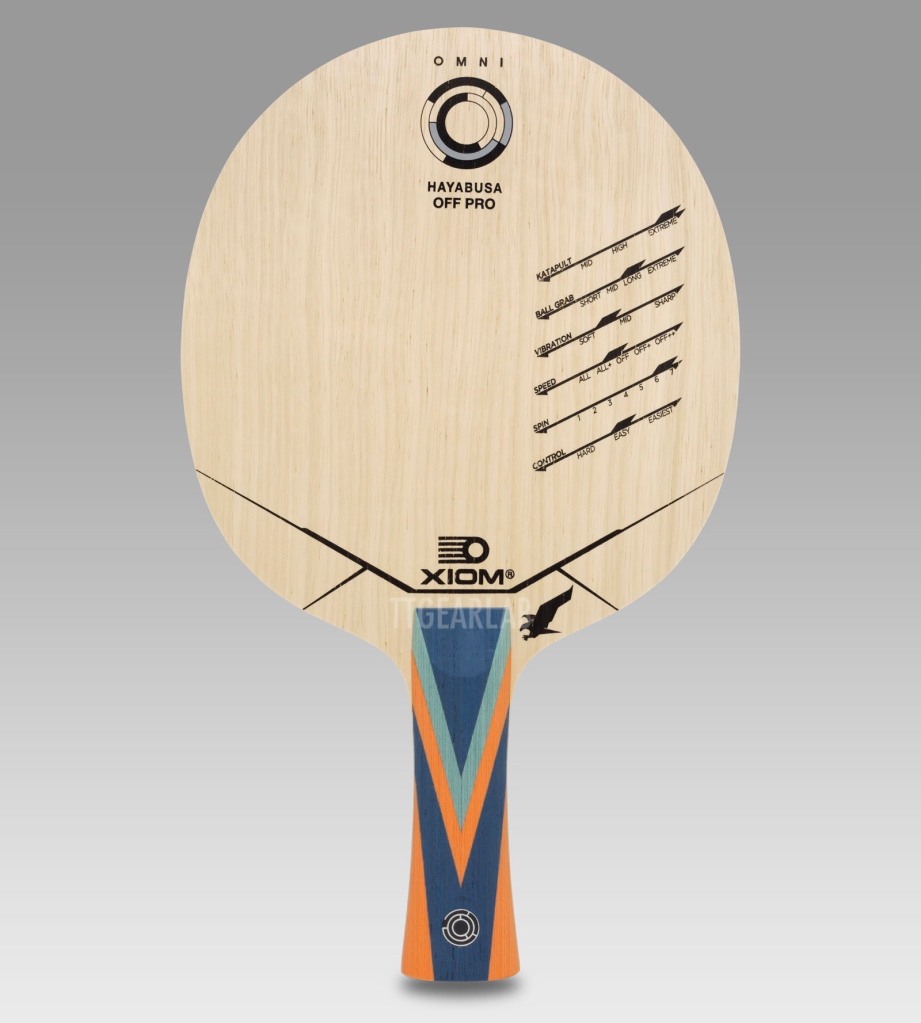
The official head size on the catalog is 158mm x 150mm. Measured size is around 157mm x 153mm.
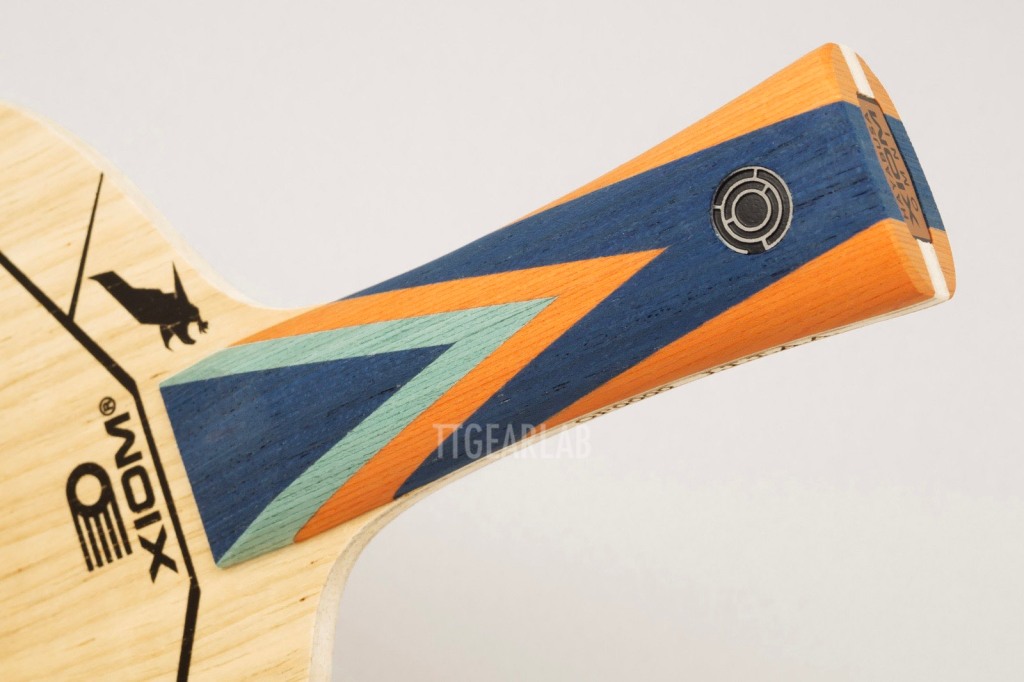
The width of FL (flared) handle is around 26mm (at head side) ~ 27mm (at bulge) ~ 26mm (at narrowest point) ~ 33mm (at the end). And, the thickness of FL handle is around 23.5mm (at thumb) ~ 25mm (at the end). This FL handle is a narrow/tall handle that is preferred in Japan and China. Although it isn’t wide, the circumference of handle isn’t small because it is quite thick.
The size of ST (straight) handle which isn’t shown in picture is around 29mm (width) x 23mm (thickness).
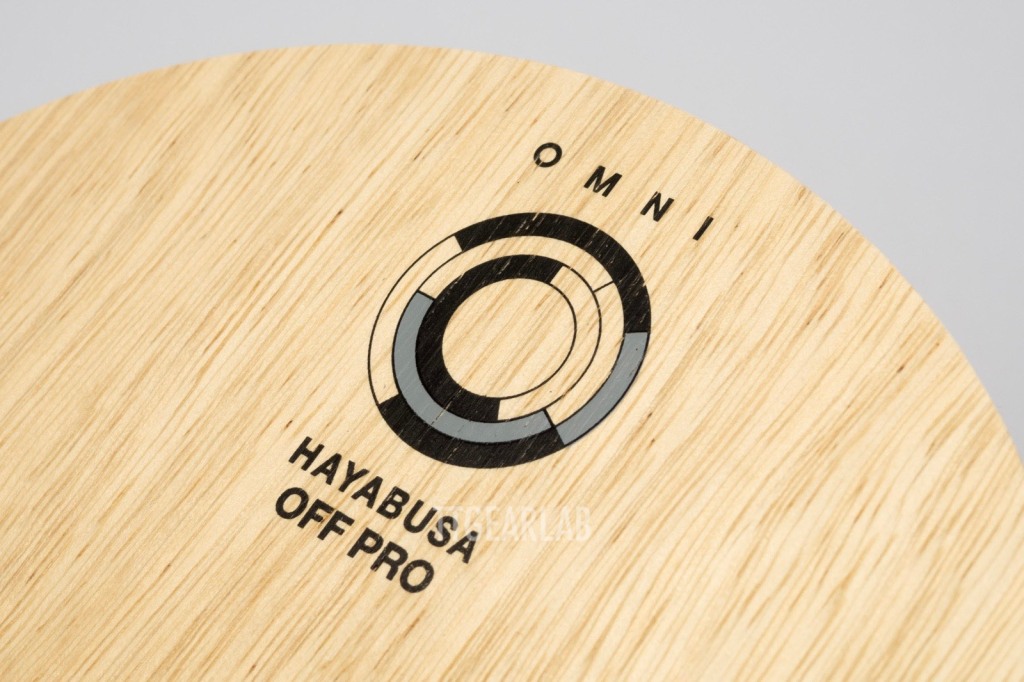
‘Hayabusa’ series is categorized as ‘Omni’ line in the blade range of Xiom. ‘Omni’ is one of the subsidiary brands of Xiom blades, and introduced in 2011 with the release of original ‘Hayabusa’ series for distinguishing new blades family from existing blades of ‘Novus’ line. New ‘Hayabusa’ series released in 2024 is inheriting ‘Omni’ brand.
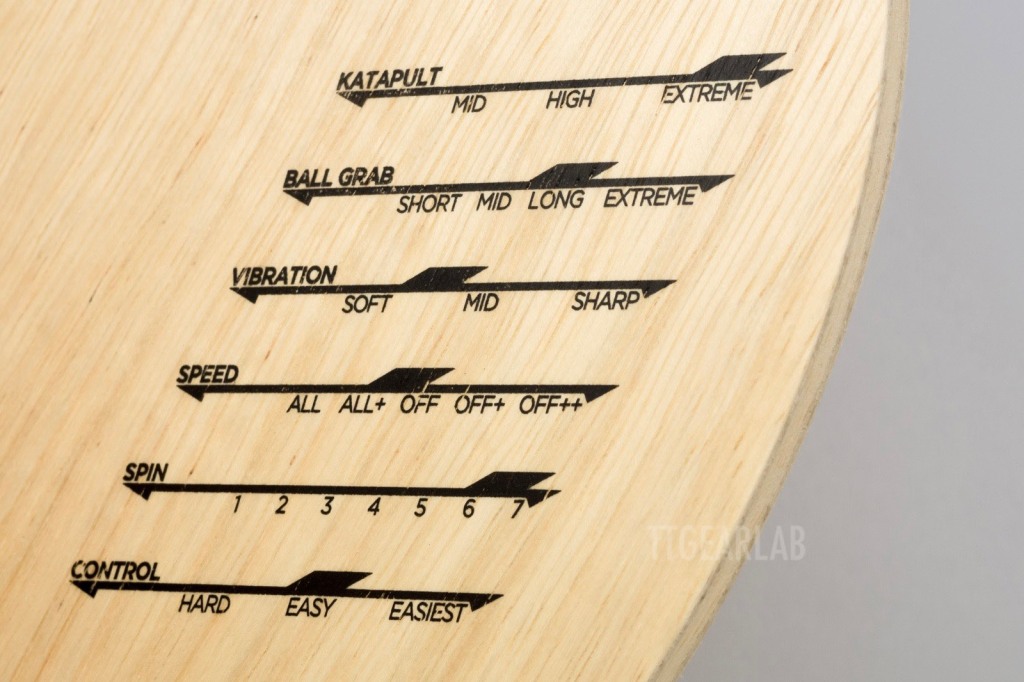
The chart that indicates the characteristics of this blade is printed at right side of the foreside of blade head. What this chart shows is based on different idea from the concept of Performance Indices of TTGearLab, and only two parameters among six are able to be quantified. So probably that is the result of the subjective field testing by test players. Especially, it is strange that SPIN is included in the six parameters of ‘blade’. It will be good for us that we accept its meaning as ‘how easy this blade is for producing rotation’ or ‘how suitable this blade is for the technics related with rotation’. Although those parameters are not the result of objective measurement, it seems that those are quite reliable. And the parameters almost coincide with the opinion of TTGearLab.
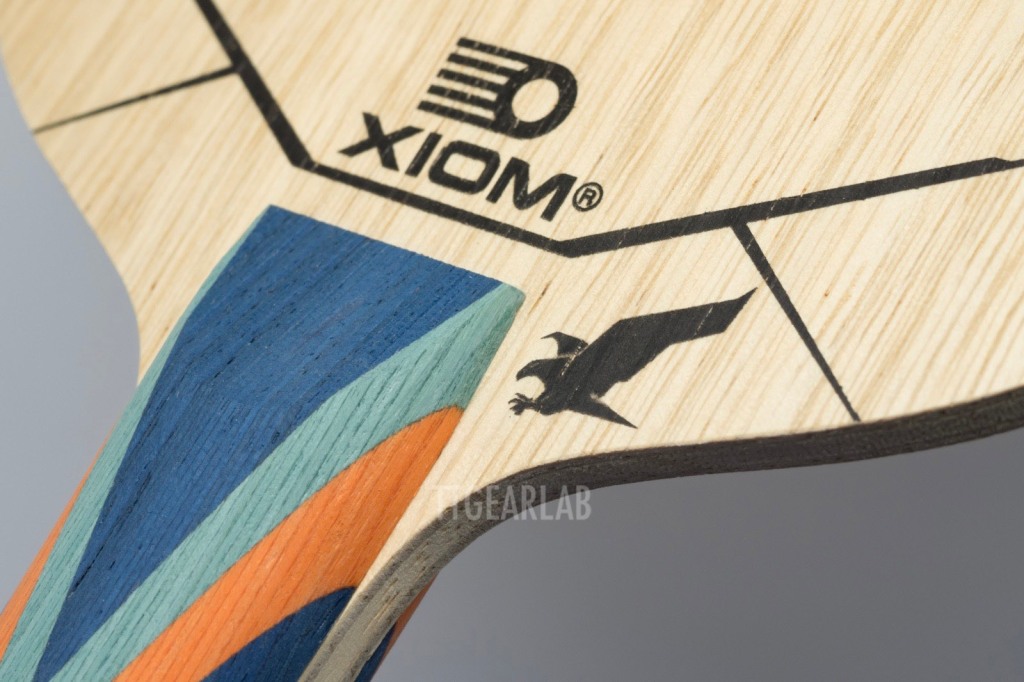
There is a picture of falcon on the right wing of foreside. Unfortunately, part of the falcon’s wing is covered by the rubber when the rubber is attached.
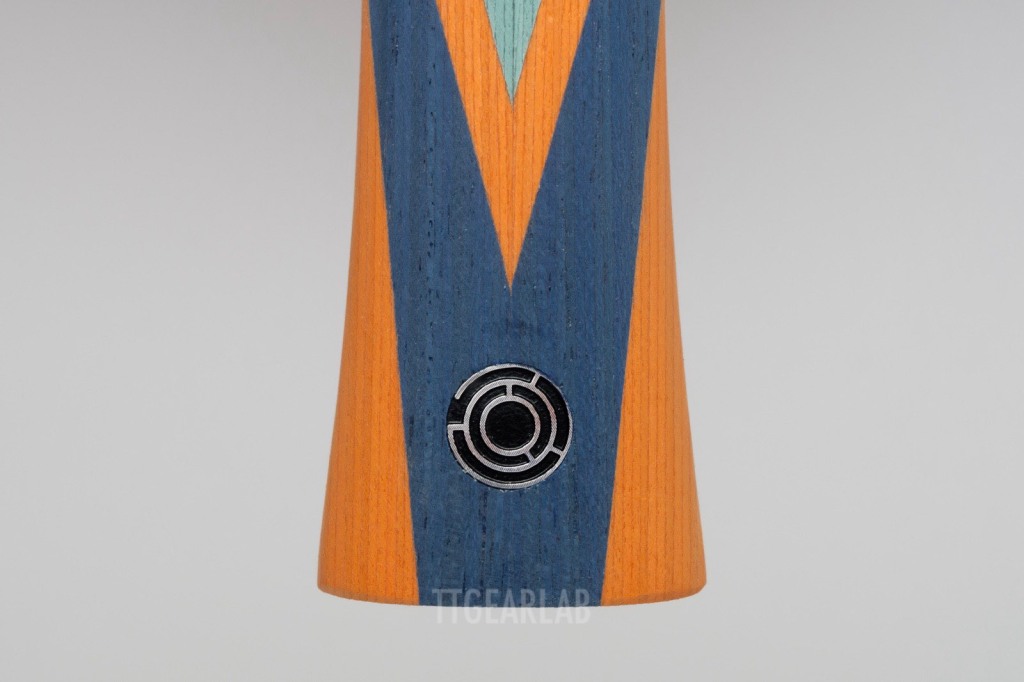
At foreside of handle, an aluminum panel that indicates the logo of ‘Omni’ is applied. This aluminum panel doesn’t disturb player’s finger because it is small.
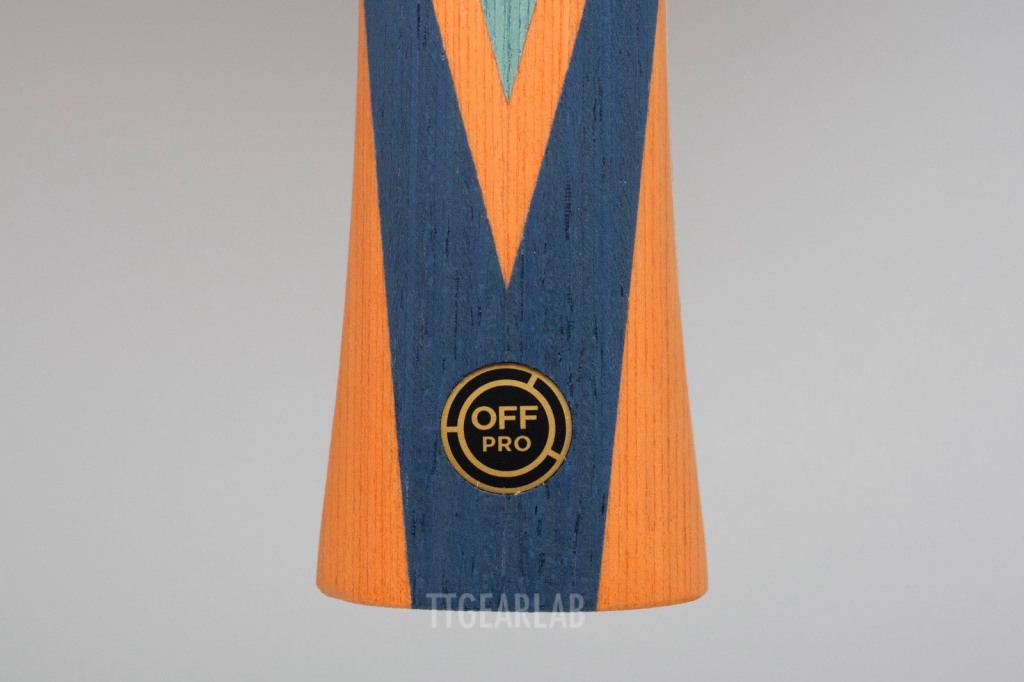
At backside of handle, another aluminum panel that includes the 2nd name of the model in ‘Hayabusa’ series is applied.
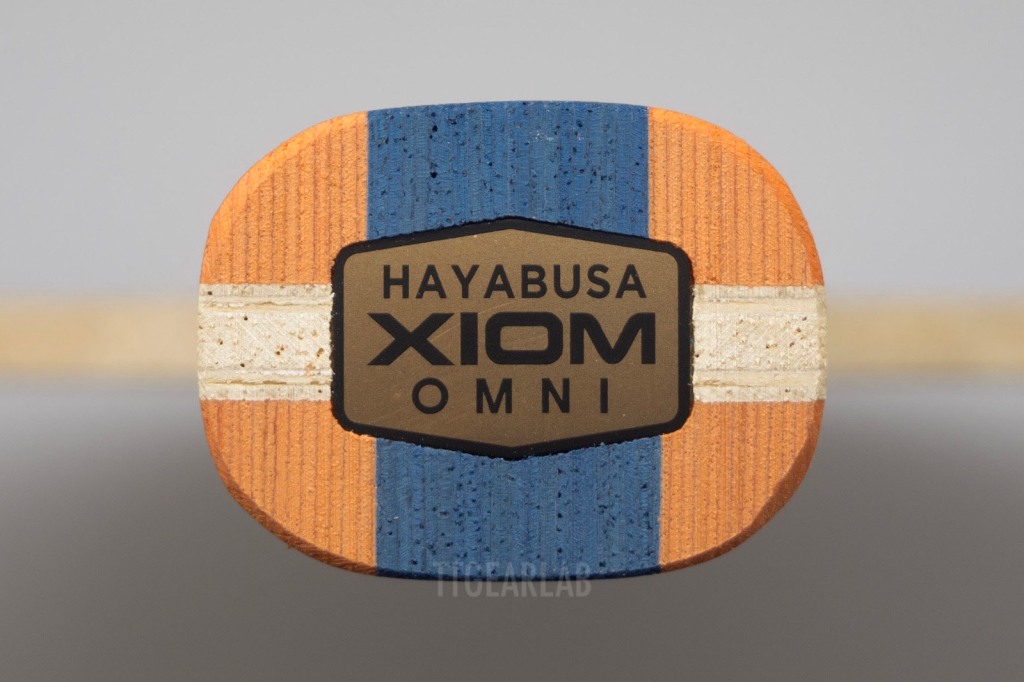
At the end of handle, a hexagonal aluminum panel that includes Xiom logo and the names of blade family (= Hayabusa) and sub-brand (= Omni).
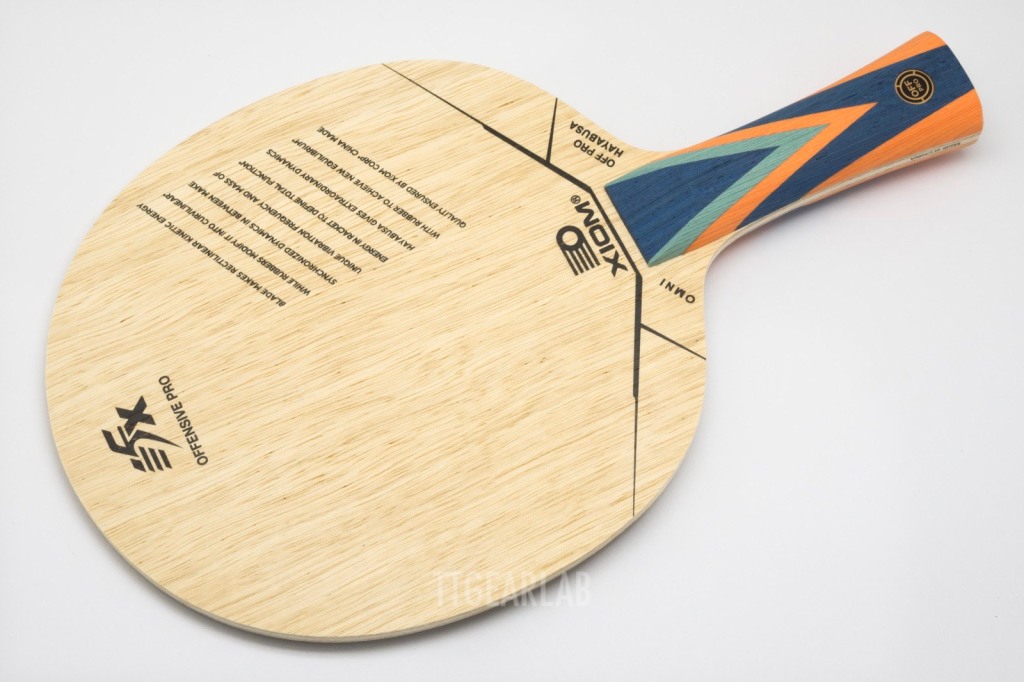
Various information including the description on blade, the name of sub-brand (= Omni) and the name of blade is printed.
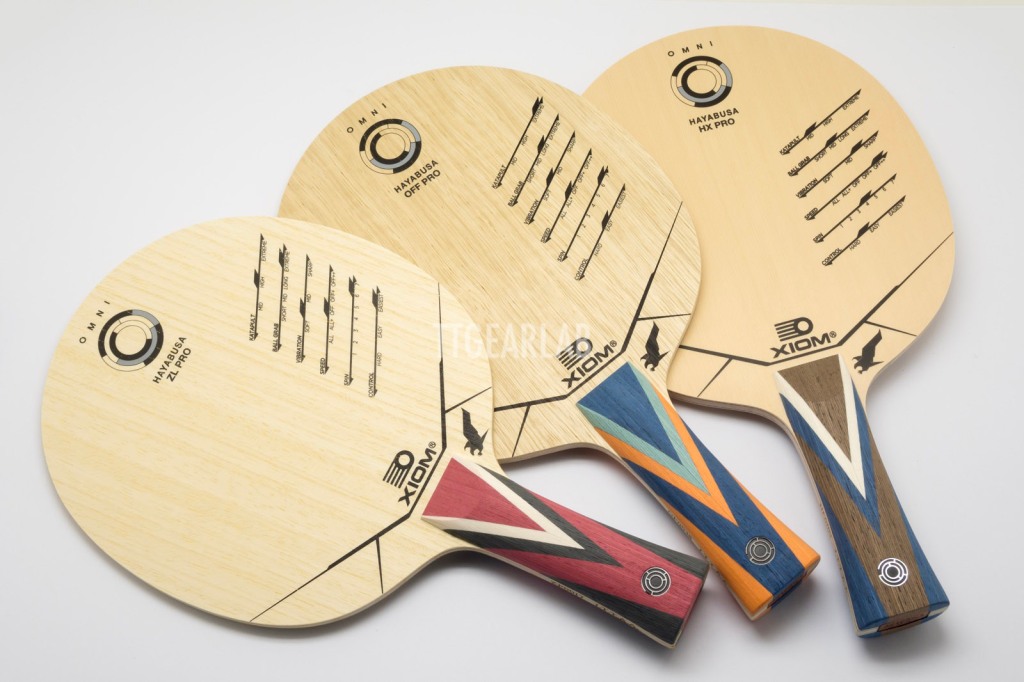
New ‘Hayabusa’ series consists of five models. Among those five, three models have ‘Pro’ in their names. That doesn’t mean that the other two models are lower-class blades than those three, but that those three are close to professional spec. when compared with the blades with similar constructions.

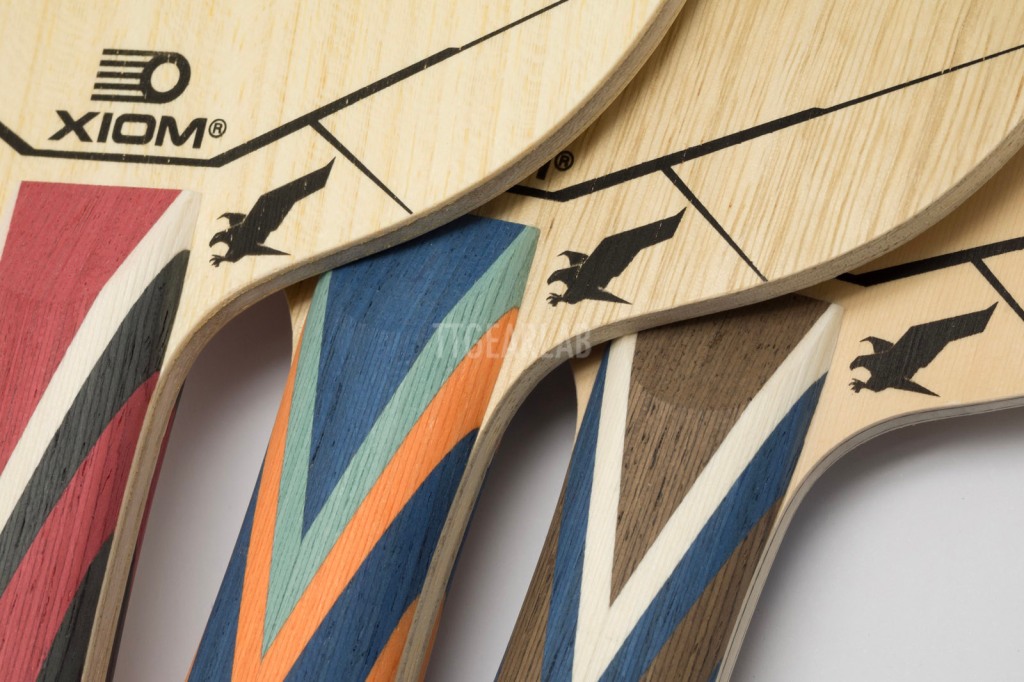
Same graphic design concept is applied for all models in ‘Hayabusa’ series. And, ‘Omni’ logo and the picture of a falcon are printed respectively at top and at right wing of foreside head.
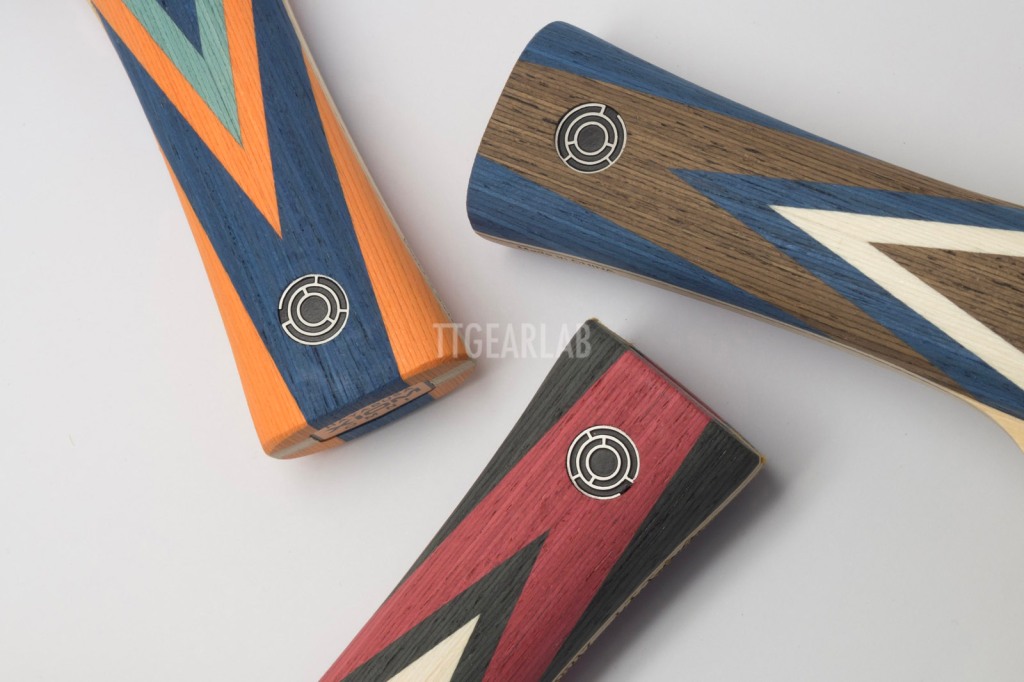
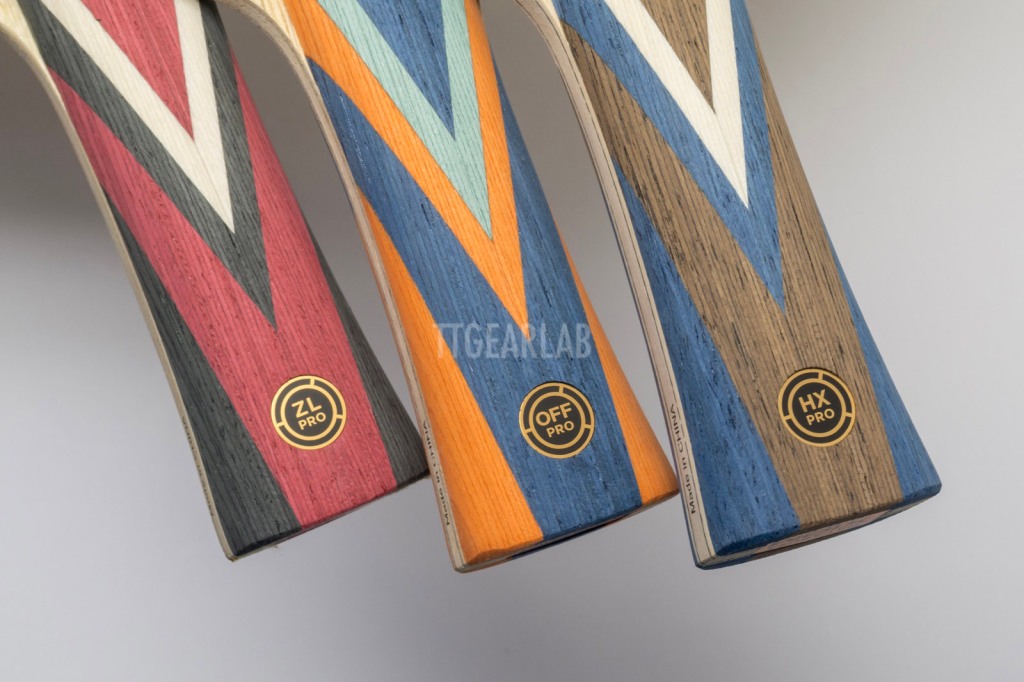
The graphic design of handle is common for all five models, and each model is distinguished by the color combination. Above pictures show three models including ‘Pro’ in their names. White & blade on burgundy background is for ‘ZL Pro’ (left), teal & orange on dark blue background is for ‘OFF Pro’ (center), and white and dark blue on dark brown background is for ‘HX Pro’ (right).
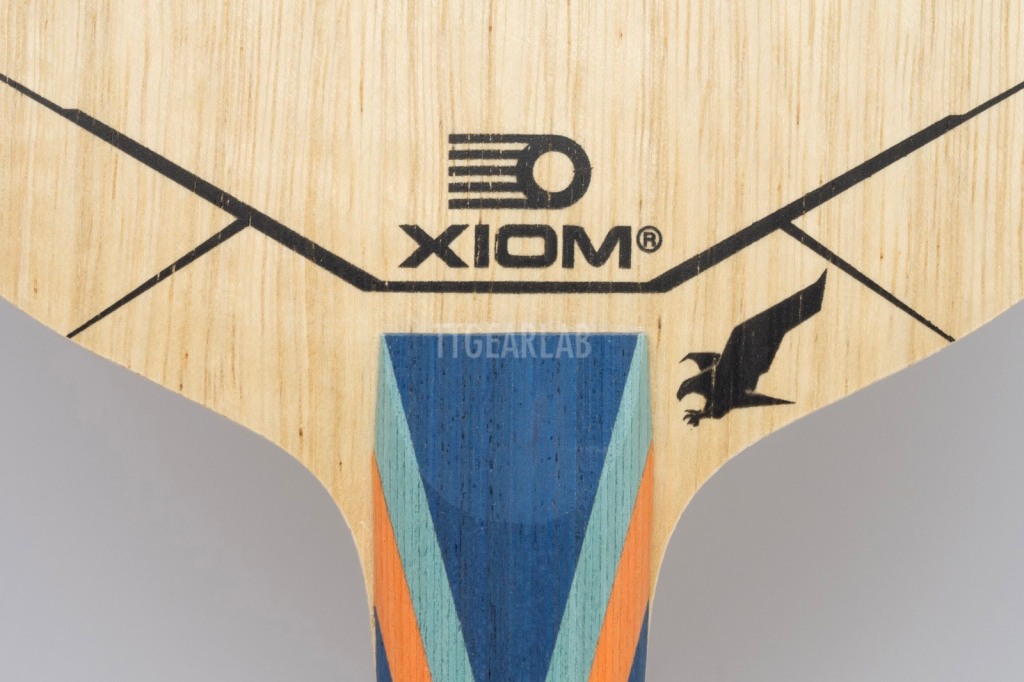
‘Hayabusa OFF Pro’ is a blade for the players who prefer the natural feeling of pure wood.
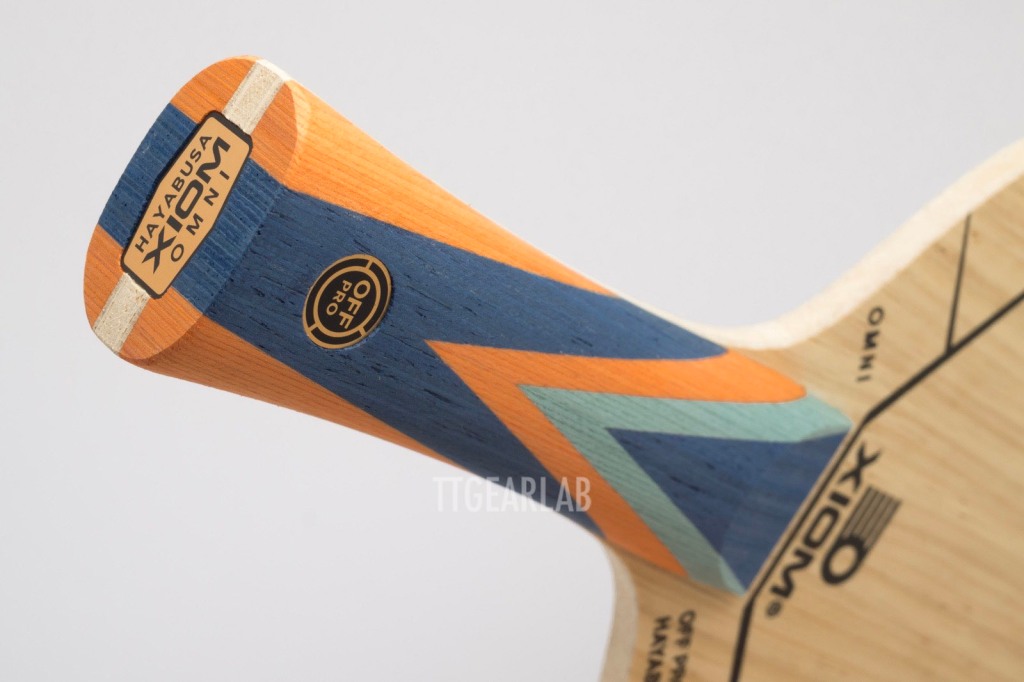

‘Hayabusa OFF Pro’ is a 5-ply wood blade, but it is relatively faster and harder than ordinary 5-ply wood offensive blades. Because it provides relatively high power at a reasonable price, it can be recommended for the players who want to try ‘Hayabusa’ series but are on a tight budget.
TTGearLab will analyze and compare some new 5-ply wood blades including ‘Hayabusa OFF Pro’ in near future.
Following are the performance indices of Xiom Hayabusa OFF Pro (avg.weight = 88.2g) :
– Ep = 1.92
– Ec = 1.72 (Ec/Ep = 0.90)
– Vp = 1.25
– Vl = 1.29 (Vl/Vp = 1.03)
Please note that above are average values and can be updated by further measurement.
Unauthorized use and/or duplication of this material without express and written permission from this website’s author and/or owner is strictly prohibited. Excerpts and links may be used, provided that full and clear credit is given to TTGearLab with appropriate and specific direction to the original content.
 TTGearLab
Wow.. Hayabusa OFF has a higher EP than ZLPro.
Feels like the correlation is there OFF with a higher catapult and thicker plies, while ZLPro though with in-fibre construction has a lesser catapult and thinner plies.
Looking forward to your review of the new Xiom Omni Hayabusa blades.
LikeLike
Thank you for comment. It may take some time until I can test new Hayabusa series. But, I’m greatly interested in this new series. And, I will test those blades in near future.
LikeLike
thanks again for testing hayabusa series
love it and wonderful
so surprised that a 5 layer Woody blade, with less than 6mm thickness can deliver such a high speed spec
I would like to buy one in fact
LikeLike
I think that this is a great blade.
Probably the energy efficiency of this blade is not as good as that of fiber blades with similar elasticity level. 🙂 However, at least at close to table area, we will not need the higher efficiency of fiber blades.
LikeLike
Hello,
Great work, as usual. This is probably the best resource available for blade hunters in TT. No one can test all these different blades, so it really helps narrow things down.
My question is if you could elaborate on energy efficiency. i have an idea, but I’m not sure exactly. Could you compare two blades with similar ec/ep numbers but vastly different energy efficiency and talk about exactly what it would feel like for the the player?
LikeLike
The good example is the comparison between Korbel and fiber blades with similar Ec/Ep (and Ep).
In that case the player will not feel much difference in power if that player plays at very close-to-table area. However, if the player plays at mid-distance area, the energy efficiency becomes more important because the strength of impact becomes higher. In that case the pure wood blades loses more energy during the process of deformation and restoration. That results in the loss of the power of ball. But, fiber blade with similar Ec/Ep (and Ep) loses less power because it loses less energy.
LikeLike
Ok, that’s what I figured you meant. Do you think there is a way to put a number on a blades energy efficiency, somehow?
LikeLike
In fact it can be expressed by values in some level. But, I’m not doing that measurement because it is more time consuming than the measurement of current performance indices. 🙂
LikeLike
I understand. Is it possible to establish a general energy efficiency tier based on different carbon or other added non wood material of equal thickness?
For instance, could you say ZLC is generally more energy efficient than ALC carbon and so on?
LikeLike
It is possible but I’m not doing it because it takes much time for measurement and it can make things complex.
And, as far as I have measrued, there isn’t meaningful difference between ZLC blade and ALC blade. But, I can’t say that there isn’t difference, because the condition isn’t same for those blades. (For example there is difference in thickness.) For more correct comparison I have to make special samples whose all conditions are identical except for the kind of fiber.
So, at current stage, I can just say that artificial fiber blade is more energy efficient than all-wood blade. That is because the structural damping loss factor of all-wood blade is higher than the case artificial fiber is inserted.
LikeLike
Hi TTGearLab, have you heard that ZLC and ALC differ by stiffness and hardness? It is all explained in this youtube video: https://youtu.be/KcD26efjI34?feature=shared
LikeLike
Does higher energy efficiency of fiber blades take influence (in order to increase) both to Ec and Ep values compared to pure wood blades with similar Ec and Ep?
LikeLike
No. Energy efficiency isn’t concerned with Ep or Ec.
In fact there are other hidden indices those are concerned with energy dissipation. I’m not mentioning those indices not to make things complex. 🙂
LikeLike
what do you consider is the main reason why the Off Pro has such high Ec & Ep values compared to other similar constructed 5 ply blades or say a Xiom Diva, especially as the outer Plies are said to be Limba.
LikeLike
I don’t know the reason why the Ep of that blade is so high. Probably harder wood materials are being used for the construction, but I’m not sure.
LikeLike
Hello! Is the Off Pro a “remake” of the Novus 19 Offensive S? They have similar thicknesses, both with limba tops, in the Off category. I am unsure about the intermediate/core layer though. I have heard the Off S is supposed to be a cousin of the Korbel, so perhaps not, but I wanted to hear your opinion!
LikeLike
At the beginning I though the same thing. But, the result of measurement indicates that Hayabusa OFF Pro is different from Offensive S, although those two look similar to each other. Hayabusa OFF Pro is astonishingly elastic. And, the actual bounce of ball was also high when I tried it.
I think that I have to measure more pieces in next production lot. (I have to weight until the first products are sold out and Xiom produces next ones.) If the measured elasticity of next products is lowered, we will be able to think that the extremely high elasiticity of first products is just because of deviation. Then I will correct the values.
Offensive S is close to Korbel, although it isn’t 100% same.
Extreme S, Offensive S and Allround S were developed by me. At that time Xiom needed the blades for top players who are using Clipper, Korbel and Allround Classic. And, I had to copy those three models. The result were Extreme S, Offensive S and Allround S. (On the contrary, Solo, Diva and Acro introduces together with those three are unique blades those are not copy of other products.) I tried to make Offensive S as close to Korbel as possible. But, due to the limit of available veneers I couldn’t make 100% same one. But, I think that the performance itself of Offensive S is very good. However, I’m not sure whether Hayabusa OFF Pro will be as satisfactory as Offensive S or not. (Hayabusa OFF Pro isn’t developed by me.)
LikeLiked by 1 person
Wow! So cool that you developed that series 🙂 I’ve heard great things about the Offensive S in particular, and really want to try it. Since I am talking to THE developer(s?), I just wanted to ask a few questions if you have the time for a response.
1) Would you say for this blade that in general the input=output as it’s EC/EP is close to 1.00? I.e., does it accelerate linearly in response to higher/lower force applied?2) Are there any meaningful differences between the old brown handle version and blue handle version? (In particular if it shifts the balance of the blade)
3) Is the second layer Ayous as with the Korbel?
Thank you for your time, and keep up the awesome work!!!
LikeLike
Thank you for comment.
(1) Ummmmm …… 0.90 is not the value close to 1.00. You’d better think that the Ec/Ep = 0.90 means that the blade hugs the ball somewhat deeply when the impact is strong. It is far from linear. If the value is 0.97 or 0.98 we will be able to think that the behavior may be linear. In fact the criteria varies also by player. But, at least for me, 0.90 doesn’t mean linear response. If you mean the value of Offensive S, 0.96 may be sufficiently linear for some players.
New blue handle version of Offensive S isn’t fundamentally different from old brown handle version as far as I know. But, please don’t forget that there is always the deviation by piece.
The middle layer of Offensive S is Limba. Because of the difference of factory, the wood material can’t be 100% same for getting similar characteristics.
LikeLiked by 1 person
Compared with zl pro, although the energy loss of 7-ply is greater than the fiber, given that the ec and ep of off pro are significantly larger than zl pro, Does it mean that the near platform is faster and the long-distance confrontation is equal?
LikeLiked by 1 person
In general we can think of it that way. However, since ZL Pro is much less elastic than OFF Pro, there is no guarantee that it will be faster in offensive shots from long distance.
LikeLike
How does it compare to other 5 ply wood blade like korbel, primorac, MLEO, YSE?
LikeLike