Note : All values are average values, and can be updated by further measurement.
| Quad/Triple Fiber | Outer | Inner | 3+2 ply | Center Fiber | 7-ply Wood | 5-ply Wood |
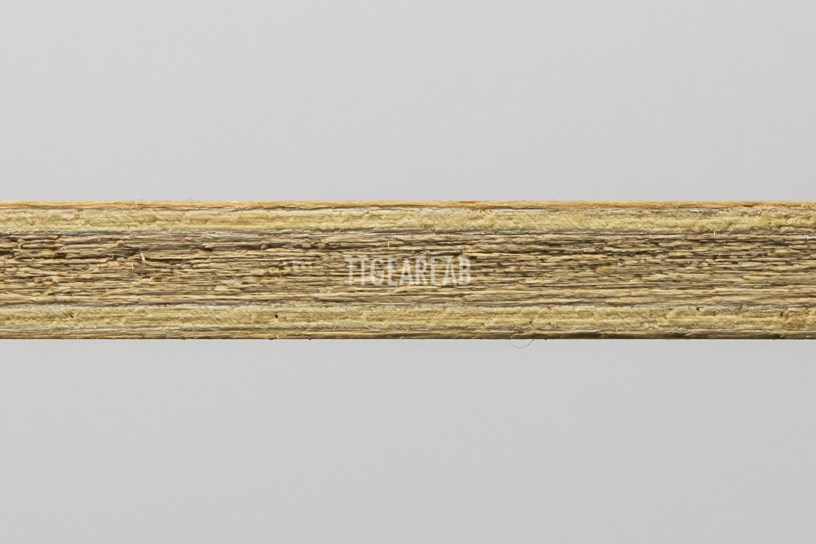
andro / 5-ply wood
| Name | Avg.Wt (g) | Ep | Ec | Ec/Ep | Vp | Vl | Vl/Vp |
| andro J.M.Saive OFF | 81.8 | 2.01 | 1.97 | 0.98 | 1.40 | 1.43 | 1.02 |
| andro Kinetic Explorer OFF | 87.1 | 2.53 | 2.10 | 0.83 | 1.40 | 1.55 | 1.11 |
| andro Suss Hinoki OFF | 87.1 | 2.02 | 1.93 | 0.96 | 1.33 | 1.19 | 0.89 |
| andro TP_Ligna OFF | 83.9 | 1.72 | 1.82 | 1.06 | 1.32 | 1.21 | 0.92 |
| andro TP_Ligna OFF/S | 89.5 | 1.78 | 2.07 | 1.16 | 1.34 | 0.94 | 0.70 |
| andro Wanokiwami Ao | 87.9 | 1.88 | 1.51 | 0.80 | 1.16 | 1.31 | 1.13 |
Avalox / 5-ply wood
| Name | Avg.Wt (g) | Ep | Ec | Ec/Ep | Vp | Vl | Vl/Vp |
| Avalox BT555 | 84.0 | 1.45 | 1.02 | 0.70 | 0.98 | 1.26 | 1.29 |
| Avalox P500 | 80.0 | 1.35 | 1.14 | 0.84 | 1.08 | 1.33 | 1.23 |
Butterfly / 5-ply wood (Offensive & Allround)
| Avg.Wt (g) | Ep | Ec | Ec/Ep | Vp | Vl | Vl/Vp | |
| Butterfly Falcima | 86.4 | 1.72 | 1.53 | 0.89 | 1.18 | 1.31 | 1.11 |
| Butterfly Korbel (Japan) | 88.7 | 1.54 | 1.27 | 0.82 | 1.07 | 1.23 | 1.15 |
| Butterfly Korbel Speed | 97.3 | 1.55 | 1.39 | 0.9 | 1.15 | 1.23 | 1.07 |
| Butterfly Jonyer-H OFF | 75.0 | 0.95 | 1.02 | 1.07 | 1.06 | 1.02 | 0.96 |
| Butterfly Schlager OFF Butterfly Legout | 79.4 | 1.18 | 0.93 | 0.79 | 1.01 | 1.3 | 1.29 |
| Butterfly Mazunov | 94.1 | 2.34 | 2.02 | 0.86 | 1.32 | 1.37 | 1.04 |
| Butterfly Primorac (Europe) | 87.5 | 1.31 | 1.29 | 0.98 | 1.11 | 1.17 | 1.05 |
| Butterfly Primorac (Japan) | 88.1 | 1.27 | 1.09 | 0.86 | 1.01 | 1.12 | 1.11 |
| Butterfly Timo Boll W5 | 81.8 | 1.37 | 1.18 | 0.86 | 1.09 | 1.24 | 1.14 |
| Butterfly Xstar V | 80.7 | 1.18 | 1.12 | 0.95 | 1.06 | 1.11 | 1.05 |
Butterfly / 5-ply wood (Defensive)
| Name | Avg.Wt (g) | Ep | Ec | Ec/Ep | Vp | Vl | Vl/Vp |
| Butterfly Defence II | 98.2 | 2.03 | 1.84 | 0.91 | 1.22 | 1.19 | 0.98 |
| Butterfly Diode | 101.3 | 1.88 | 1.56 | 0.83 | 1.10 | 1.01 | 0.92 |
| Butterfly Diode V | 96.8 | 1.63 | 1.19 | 0.73 | 0.98 | 1.16 | 1.18 |
| Butterfly Joo Se Hyuk | 101.2 | 2.08 | 1.92 | 0.92 | 1.22 | 1.10 | 0.90 |
| Butterfly Shibutani Pro Model | 81.9 | 1.00 | 0.93 | 0.93 | 0.98 | 1.08 | 1.10 |
DHS / 5-ply wood
| Name | Avg.Wt (g) | Ep | Ec | Ec/Ep | Vp | Vl | Vl/Vp |
| DHS Hurricane King | 88.9 | 1.55 | 1.44 | 0.93 | 1.17 | 1.21 | 1.03 |
| DHS Hurricane King 2 | 85.8 | 1.65 | 1.52 | 0.92 | 1.19 | 1.30 | 1.09 |
Donic / 5-ply wood
| Name | Avg.Wt (g) | Ep | Ec | Ec/Ep | Vp | Vl | Vl/Vp |
| Donic Walnder Dicon | 85.3 | 1.42 | 0.97 | 0.68 | 0.96 | 1.21 | 1.26 |
Joola / 5-ply wood
| Name | Avg.Wt (g) | Ep | Ec | Ec/Ep | Vp | Vl | Vl/Vp |
| Joola Flame Fast | 86.1 | 1.76 | 1.66 | 0.94 | 1.24 | 1.27 | 1.03 |
Nittaku / 5-ply wood
| Name | Avg.Wt (g) | Ep | Ec | Ec/Ep | Vp | Vl | Vl/Vp |
| Nittaku Acoustic | 90.6 | 1.51 | 1.21 | 0.80 | 1.03 | 1.18 | 1.15 |
| Nittaku Violin | 83.9 | 1.23 | 1.09 | 0.89 | 1.03 | 1.13 | 1.10 |
| Nittaku Tenor | 91.4 | 1.88 | 1.67 | 0.89 | 1.21 | 1.21 | 1.00 |
Stiga / 5-ply wood
| Name | Avg.Wt (g) | Ep | Ec | Ec/Ep | Vp | Vl | Vl/Vp |
| Stiga Allround Classic (Ref.) | 84.3 | 1.00 | 1.00 | 1.00 | 1.00 | 1.00 | 1.00 |
| Stiga Allround CR | 76.4 | 0.82 | 0.93 | 1.13 | 0.99 | 0.99 | 1.00 |
| Stiga Allround Wood NCT | 82.8 | 1.32 | 1.42 | 1.07 | 1.18 | 1.10 | 0.93 |
| Stiga Arctic Wood | 88.4 | 1.35 | 1.05 | 0.78 | 0.98 | 1.24 | 1.27 |
| Stiga Celero Wood | 88.1 | 1.37 | 1.12 | 0.82 | 1.01 | 1.12 | 1.11 |
| Stiga Cybershape Wood | 83.5 | 1.50 | 1.08 | 0.72 | 1.02 | 1.22 | 1.20 |
| Stiga Ebenholz NCT V | 83.8 | 1.57 | 1.48 | 0.94 | 1.20 | 1.39 | 1.16 |
| Stiga Emerald VPS V | 91.1 | 2.03 | 1.53 | 0.75 | 1.17 | 1.42 | 1.21 |
| Stiga Energy Wood V2 | 85.0 | 1.35 | 1.01 | 0.75 | 0.96 | 1.18 | 1.23 |
| Stiga Intensity | 87.0 | 1.43 | 1.24 | 0.87 | 1.10 | 1.29 | 1.17 |
| Stiga Maplewood NCT V | 89.0 | 1.54 | 0.97 | 0.63 | 0.96 | 1.21 | 1.26 |
| Stiga Nostalgic Allround | 90.5 | 1.59 | 1.26 | 0.79 | 1.06 | 1.20 | 1.13 |
| Stiga Nostalgic Offensive | 94.8 | 1.94 | 1.43 | 0.74 | 1.09 | 1.27 | 1.17 |
| Stiga Offensive Classic | 79.9 | 1.18 | 1.09 | 0.92 | 1.01 | 1.23 | 1.22 |
| Stiga Offensive CR (new 5.5mm) | 76.9 | 1.19 | 1.01 | 0.85 | 1.03 | 1.25 | 1.21 |
| Stiga Offensive Wood NCT | 80.1 | 1.22 | 1.17 | 0.95 | 1.09 | 1.27 | 1.16 |
| Stiga Rosewood NCT V | 90.8 | 1.64 | 1.36 | 0.83 | 1.10 | 1.27 | 1.15 |
| Stiga Rosewood XO | 93 | 1.72 | 1.12 | 0.65 | 0.98 | 1.17 | 1.19 |
Tibhar / 4~6-ply wood
| Name | Avg.Wt (g) | Ep | Ec | Ec/Ep | Vp | Vl | Vl/Vp |
| Tibhar Chila OFF | 73.2 | 1.37 | 1.42 | 1.04 | 1.27 | 1.44 | 1.13 |
| Tibhar E.Lebesson | 83.2 | 1.29 | 1.26 | 0.98 | 1.12 | 1.01 | 0.90 |
| Tibhar IV-S | 89.3 | 1.85 | 1.75 | 0.95 | 1.28 | 1.23 | 0.96 |
| Tibhar Nimbus OFF | 91.3 | 1.89 | 1.63 | 0.86 | 1.21 | 1.35 | 1.12 |
| Tibhar Samsonov Premium (New) | 87.1 | 1.21 | 1.29 | 1.07 | 1.14 | 1.05 | 0.92 |
| Tibhar Samsonov Premium Contact | 88.4 | 1.33 | 1.30 | 0.97 | 1.13 | 1.14 | 1.01 |
| Tibhar Samsonov Pure Wood | 91.1 | 1.34 | 1.23 | 0.92 | 1.04 | 1.09 | 1.05 |
| Tibhar Stratus PowerWood | 89.7 | 1.80 | 1.54 | 0.86 | 1.17 | 1.32 | 1.13 |
| Tibhar Stratus PowerDefense | 86.8 | 1.34 | 1.10 | 0.82 | 1.01 | 1.16 | 1.15 |
Xiom / 5-ply wood
| Name | Avg.Wt (g) | Ep | Ec | Ec/Ep | Vp | Vl | Vl/Vp |
| Xiom Allround S | 82.4 | 1.19 | 1.24 | 1.04 | 1.11 | 1.00 | 0.90 |
| Xiom Aria | 85.7 | 1.80 | 1.79 | 0.99 | 1.29 | 1.29 | 1.00 |
| Xiom Aria Lite | 78.4 | 1.36 | 1.29 | 0.95 | 1.16 | 1.30 | 1.12 |
| Xiom Fuga | 86.4 | 1.58 | 1.32 | 0.84 | 1.11 | 1.30 | 1.17 |
| Xiom Hayabusa OFF Pro | 88.2 | 1.92 | 1.72 | 0.90 | 1.25 | 1.29 | 1.03 |
| Xiom Offensive S | 85.6 | 1.60 | 1.54 | 0.96 | 1.20 | 1.25 | 1.04 |
| Xiom Aigis (DEF) | 90.9 | 1.14 | 1.12 | 0.99 | 0.98 | 0.94 | 0.95 |
Yasaka / 5-ply wood
| Name | Avg.Wt (g) | Ep | Ec | Ec/Ep | Vp | Vl | Vl/Vp |
| Yasaka Gatien Extra Yasaka Sweden Extra | 87.1 | 1.20 | 0.96 | 0.80 | 0.96 | 1.15 | 1.20 |
| Yasaka Ma Lin Extra Offensive | 87.7 | 1.72 | 1.33 | 0.77 | 1.11 | 1.33 | 1.20 |
Unauthorized use and/or duplication of this material without express and written permission from this website’s author and/or owner is strictly prohibited. Excerpts and links may be used, provided that full and clear credit is given to TTGearLab with appropriate and specific direction to the original content.


Error on Butterfly Primorac Japan Ec/Ep.
LikeLike
Thank you for comment. This article and the DB of Butterfly have been corrected just now.
Please also comment if you find any other error.
LikeLike
You can add also datas for Tibhar Samsonov Pure Wood and Premium Contact. As your shared in some comments earlier.
LikeLike
Samsonov Premium is already in the list. (I’ll add the word ‘contact’.) And, I will add some other blades including Samsonov Pure Wood sooner or later.
LikeLike
The Performance Indices of Samsonov Premium Contact (New version) is as follows:
Ep = 1.33Ec = 1.30 (Ec/Ep = 0.97)Vp = 1.13Vl = 1.14 (Vl/Vp = 1.01)
This is from one of your comments. It looks different from “Premium” in the table.
LikeLike
Just now I have checked the data. And, you are right.
I will add old ‘Contact’ version of Samsonov Premium.
LikeLike
Great research! Why are the elasticity values of most BTY Defensive blades are so high in contrast to the elasticity of many all-wood or even composite Offensive blades? Which set of metrics could be used to classify these blades flavored by many defenders into a separate distinct category?
LikeLike
Butterfly has made many defensive blades those are suitable for ‘all-round play based on chopping’. So usually Butterfly defensive blades are more elastic than ordinary defensive blades. (Of course, there are much slower defensive blades in Butterfly range for example Shibutani Pro Model. That is a normal defensive blade.) For that reason some Butterfly defensive blades have been used by offensive players. 🙂
We’d better think that defensive blades are totally different from offensive and allround blades. Even the speed indicators (DEF+, DEF, DEF-) are set by different standard from OFF+ ~ ALL- blades.
The high elasticity of Butterfly defensive blades are just because of the thickness. Those Butterfly defensive blades are as thick as or thicker than many offensive or all-round blades.
(Further, if the material and the thickness are identical, wider blade is more elastic than narrower blade. And, defensive blades are wider than offensive blades.)
LikeLiked by 1 person
Great work! It is really enjoyable to read your posts.
Are there any plans to measure indices of Donic Waldner Offensive 2016? I have been playing with it for a while and have been very satisfied with its performance. Now, I want to find a faster blade with similar properties, so it would be a great help to see its indices compared to other blades.
LikeLiked by 1 person
Thank you for comment. Donic Walnder Offensive 2016 is same as original Donic Waldner Offensive or Banda Waldner.
I don’t have the data of original Donic Waldner Offensive. But, Donic Waldner DICON is same as Waldner Offensive except for the slit at the handle. So you will be able to refer to the data of Waldner DICON. Following is the data of Waldner DICON. (I will add it to database.)
Donic Waldner DICON (avg.weight = 85.3g)
Ep = 1.42
Ec = 0.97 (Ec/Ep = 0.68)
Vp = 0.96
Vl = 1.21 (Vl/Vp = 1.26)
Its Ec/Ep is extremely low. It hugs the ball very deeply when you hit the ball very strongly. So it will be good for you to search for the blade whose Ec/Ep is very low.
But, one important problem is that the unique shape of Waldner Offensive. Its head shape is quite unique, and its wings (the blade part at the neck between head and handle) are very small. Those small wings enable you to grip it very deeply. Currently we can’t find a blade with that small wings. Of course, it will be all right if you haven’t been totally accustomed to the shape of Waldner Offensive.
LikeLike
Thank you for your response.
I didn’t know that Donic Waldner Offensive was the same as Waldner DICON, but you’re indeed right, as they have the same composition and similar weights.
Also, you’re right about the head shape and small wings of Waldner offensive. It is a shame there are not many blades with this shape because it can add some unique characteristics to your play. Because the Blade head is longer than most blades (about 5mm longer than Viscaria I think) and the wings are smaller, it has a much more vertical sweet spot compared to a lot of blades. This can be used to your advantage for a lot of close-to-table techniques like Banana Flicks. More precisely, if you manage to brush the ball with near the top of the racket, it will produce noticeably higher speed and spin with more direct arcs and deeper placements. So, you can vary the speed, spin, placement, and trajectory of your shots not by physical force but only by changing the contact point. Although the same can be said about other blades, the unusual shape of Waldner Offensive takes this to an extreme.
Anyway, before asking you about the data of DONIC Waldner Offensive, both Viscaria and Timo Boll ALC were among my top candidates for my next blade, but according to your answer, TBALC could be a better option as it has a deeper hold. This was a great help.
LikeLike
I totally agree with your comments on the shape of Waldner Offensive. I love that shape very much. Especially that small wing is the best wing for me. But, currently I have only three models those have that kind of small wings – Waldner Dicon, Butterfly Pulser(1977) and Butterfly Gergely.
Regarding the selection of new blade, in fact the basic construction of TB ALC is same as that of Viscaria. But, the difference is because of the shape, the average weight and the deviation of thickness. In general TB ALC is heavier and more elastic than Viscaria. The difference of hold character comes from the difference of primary elasticity. The deeper hold character of TB ALC is because of its higher primary elasticity.
Some players will feel the difference between those two, but the others not. And, light pieces of TB ALC may give us different result.
In my opinion, you’d better once consider Victas ZX-Gear Out instead of Butterfly blades. That is because it hugs ball very deeply when the impact is very strong. Further its top layer is Limba which is same as the top layer of Waldner Offensive. One problem of ZX-Gear Out is that its handle shape and wing shaper are much different from those of Waldner Offensive.
LikeLike
Thank you for your response. I will definitely consider Victas ZX-Gear Out.
Another thing came to mind while reading your posts. I was wondering if it is possible to find a parameter that measures the ease of generating spin with blades using the Ec/Ep rate. I know that this is very much dependent on the composition of blades, rubbers, and techniques, but intuitively, I expect blades in the hold range to create more spin (when hitting with force) than those in the kick range. If true, maybe we can find a parameter, although I don’t expect it to be easy. And obviously, if we manage to find such a parameter, it won’t tell anything about generating spin with light shots, which is not ideal!
LikeLike
In fact, spin is determined by rubber. And, the influence of blade is not as great as we might think. Differently speaking the blade with high value of Ep and Ec/Ep can make the same amount of rotation as the blade with low Ep and Ec/Ep. However, the difference is in how we feel the ease of making rotation. And, that also differs by player, by technic or by playing style. For example some players will think that the blade with high Ec/Ep is better than the blade with low Ec/Ep when creating spin by brushing the ball with small angle. But, if the player hits the ball very aggressively by somewhat bigger angle for making rotation at rising of ball, the blade with low Ec/Ep will be better.
And, that is one of main reasons why the Performance Indices are important. 🙂
LikeLike
Hello – a very nice blade to use indeed. What was the measures of the handles? I have the anatomic (it measure about 30 mm where the wings end 29 mm in the middle and 30 then and 33 at the end). It is for me the unique racket for my rather broad hands also enabling movements I cannot do easily with other rackets. The minute wings enable unusually quick switches between FH and BH. As for speed I have several blades and one is a bit heavier, not really heavy, but as a consequence a bit thicker and together with a modern fast rubber like Stiga Mantra Pro H gives quite a lot of power from mid-distance.
LikeLike
Thank you for comment and sharing your experience. 🙂
I also think that it is a really good blade.
And I also like its small wings. Currently it is difficult to find the blades with that small wings.
The width of FL handle is around 29mm ~ 35mm. Thickness is 22~25mm. This handle shape is quite similar to the FL handles of Avalox P / BT series and Yasaka Ma Lin / Falck series.
LikeLiked by 1 person
Hello – with a new user name from honest… 🙂 Thank you from very useful information. Do you have any idea what the measures for the ST handle would be for Waldner Dicon/Offensive?
LikeLiked by 1 person
Currently I don’t have ST samples. But, I have had many ones of Waldner DICON ST because it was the blade that I personally used for my table tennis. I remember that its size is 29mm x 23mm.
It provides much firmer grip than other Donic ST blades such as Waldner Senso ST or Persson Powerplay ST.
(Similar handle as Walnder DICON/Offensive ST was applied for Peter Franz GT-R and Persson PowerCarbon, more than 25 years ago.)
LikeLiked by 1 person
Thank you for this information. The the difference is probably not very large between the anatomic and straight. The anatomic is a rather smooth anatomic closer to the straight than to the concave.
LikeLike
In fact, the location of the center of bulge section is very important in AN handle. Some AN handles give somewhat strange feeling because of wrong placement of that point.
I think that the AN of Walnder DICON is very good. I have once experienced it, and I liked it very much.
And, the AN handle with good shape is compatible with ST handle as you mentioned. 🙂
LikeLiked by 1 person
Hello again. Again thank you for great information. I have seen that there might have been 6 ply Dicon’s. If this really was the case do you have any idea if this still aplies or was just for some limited edition or by mistake?
LikeLike
Ummmmmm ….. I haven’t seen that one. I don’t know whether it was mistake or the feature of limited edition, but at least it isn’t present now.
LikeLike
Thank you for your data! I wonder if stiga’s offensive wood NCT is harder/faster than energy wood or offensive classic CR.
LikeLike
Offensive Wood NCT (80.1g) : 1.22/1.17(0.95)/1.09/1.27(1.16)
Offensive CR (76.9g) : 1.19/1.01(0.85)/1.03/1.25(1.22)
Offensive Wood NCT is just a bit more elastic and harder than Offensive CR. But, the avg. weight of Offensive Wood NCT is higher than that of Offensive CR. The difference will be smaller if we compare the ones with same weight.
LikeLike
Thanks for your information. Considering that wood is not exactly the same as industrial products, may I ask how big is the performance gap (ep,ec) for the same 5-ply wood of different weights (such as kobel 85g and 100g)
LikeLike
Because table tennis blades are made of natural woods, there is always deviation in performance and feeling.
In case of Korbel, it is expected that the range of Ep will be around 1.5 ~ 1.8 if the range of weight is 85~100g. And Ec will vary in the range of 1.25~1.4.
But, I don’t have Korbel whose weight is over 95 gram. For that reason above values are no more than expectation.
LikeLike
My brother has a 97g korbel, it hits like a brick compared to my 87g acoustic lol
LikeLike
77* not 87 theres no edit comment
LikeLike
Extremely heavy Korbel and quite light Acoustic!!!
Then we’d better not think that those two blades are not similar with each other in performance and feeling. 🙂
LikeLike
I’ve been selling electronic measurement instruments for almost 30 years now and curious which instruments you use.
LikeLike
Here I can just comment that the devices are produced by PCB and NI.
LikeLike
That’s what I thought. I understand, thanks.
LikeLike
🙂
LikeLike
Thank you for the information you shared here! I started with an Acoustic, played also with a FZD ALC and then, after training for about one year mainly with the Acoustic, I once tried an ALL+ blade (Victas Euro Classic) and found that I liked a lot even a slower blade than the Acoustic (in fact, I was considering switching to a faster blade like the Butterfly Innerfoce Layer ALC). Using the information on your site, I was able to find suitable blades for me (Yasaka Sweden Extra and Nittaku Violin) which I hope will help me in the continuous learning of table tennis, without feeling like the blade I use is often out of control.
LikeLiked by 1 person
Thank you a lot for comment! It is good that this home page may have been helpful for you.
And, I think that the blades of ALL+ class can be the best solution for many players. Thank you for sharing your experience! 🙂
LikeLiked by 1 person
Hi,
I have been reading and comparing your data with great interest for some time.
I have a 85g Sweden Extra which is just perfect, especially the Anigre top layer, but I find a bit too slow at times a bit more far from table. Even with 47,5 deg rubbers. My technique may also still not be too advanced.
I have also a 85g Korbel Euro which I find a bit too speedy again and not so easy to create spin due to the bit higher EC/EP.
To overcome this I just bought a 88g Energy Wood V2 which is 1.35 EP and thus just in the middle between the two in value, except for the considerably lower EC/EP. During testing with same rubbers as on YSE and Korbel I found it almost as fast as the Korbel and quite good close to table but pretty inconsistent looping from me far behind.
Do 3gr weight create such a EP increase of about 0.2? And does this influence also the EP/EC negatively?
I was a bit disappointed playing it and presently thinking about buying another YSE with 91gr. But that is +6gr to mine and +4gr to your tested 1.20 EP.
Do you any guidance or suggestions? I would be a great help as I need this perfect to advance on my technique I believe.
LikeLike
Thank you for sharing your experience. 🙂
The change of weight affects the value. But, the level differs by case. And, the somparison should be done among same models.
Anyway, if we just see the parameters, the Ep should be sufficiently high (not need to be too high) for making powerful shot from mid-diatance area. And, Ec/Ep is concerned with how to do or the preference of player. So there isn’t any right answer of Ec/Ep.
Further, 5-ply wood blade isn’t that good for mid-distance play in current table tennis. That is because of the low energy efficiency of 5-ply wood blades. Even though the values are same, fiber blades are much more effective than 5-ply wood blade when you play at mid-distance.
In your case, I strongly recommend you to once try inner-type fiber blade and see the result.
LikeLike