DHS ‘506A’ is a new outer-fiber blade which is released in 2023, and is the second outer-fiber model added to the ‘506’ series following ‘506X’. ‘506’ series was originally a blade family consisting mainly of 7-ply wood blades such as ‘506’ and ‘506+’, but with the release of ‘506X’ and the addition of ‘506A’, it transformed into a product family centered on outer-fiber blades. (The official name of ‘506’ series is ‘Skyline 506’, and therefore the official name of ‘506X’ is also ‘Skyline 506X’. However, ‘Skyline’ isn’t seen on the product and the packaging, and we can see that name only on the DHS catalog.) Like ‘506X’, ‘506A’ is the outer-fiber blade whose top layer is Koto and whose artificial material is ALC. Therefore, it can also be treated as a cheaper alternative to ‘Viscaria’. But, the characteristics of ‘506A’ are somewhat different from those of existing ‘506X’ because of the change of artificial material. TTGearLab plans to compare and analyze the characteristics of ‘506X’ and ‘506A’ with other existing blades in near future.
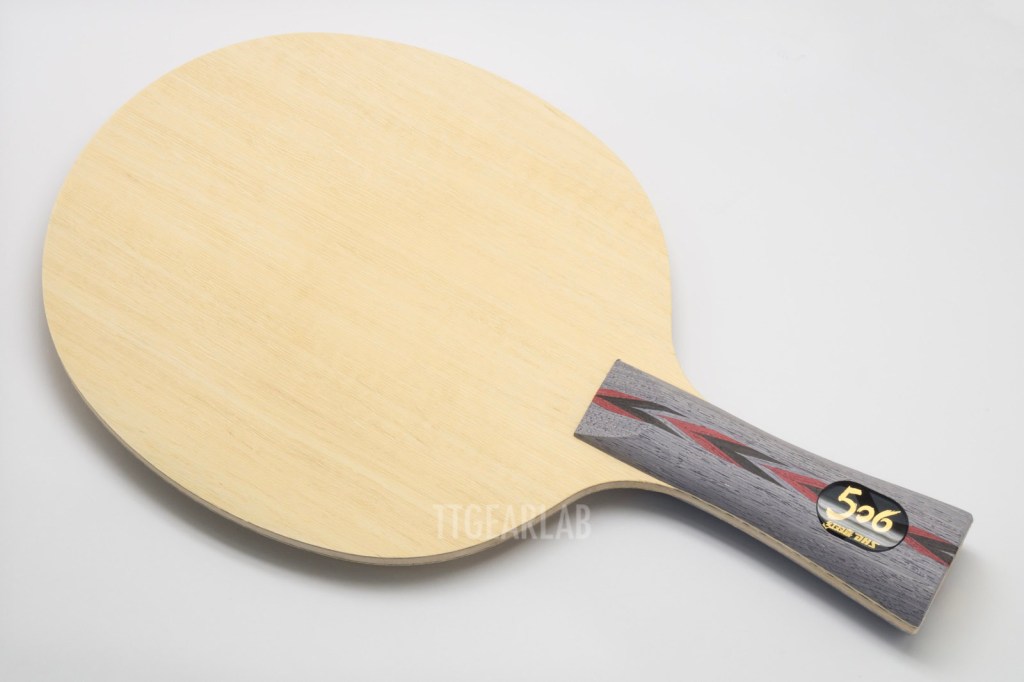
‘506A’ is one of DHS’s representative outer fiber blades, and is a model with somewhat different characteristics from existing ‘506X’.
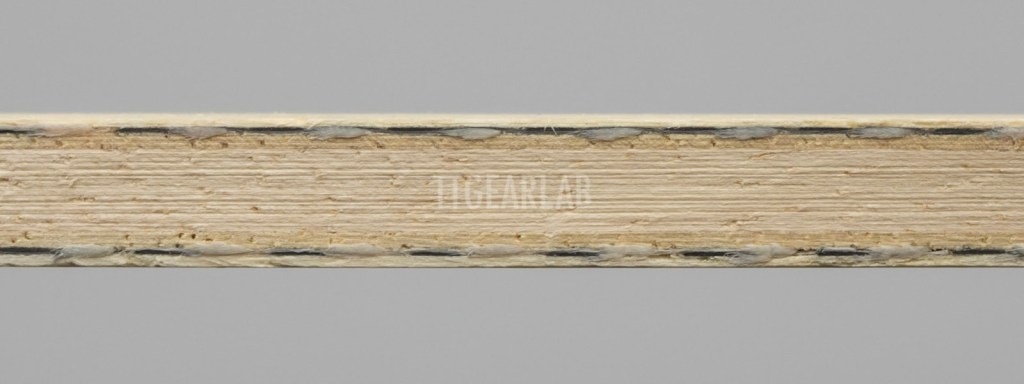
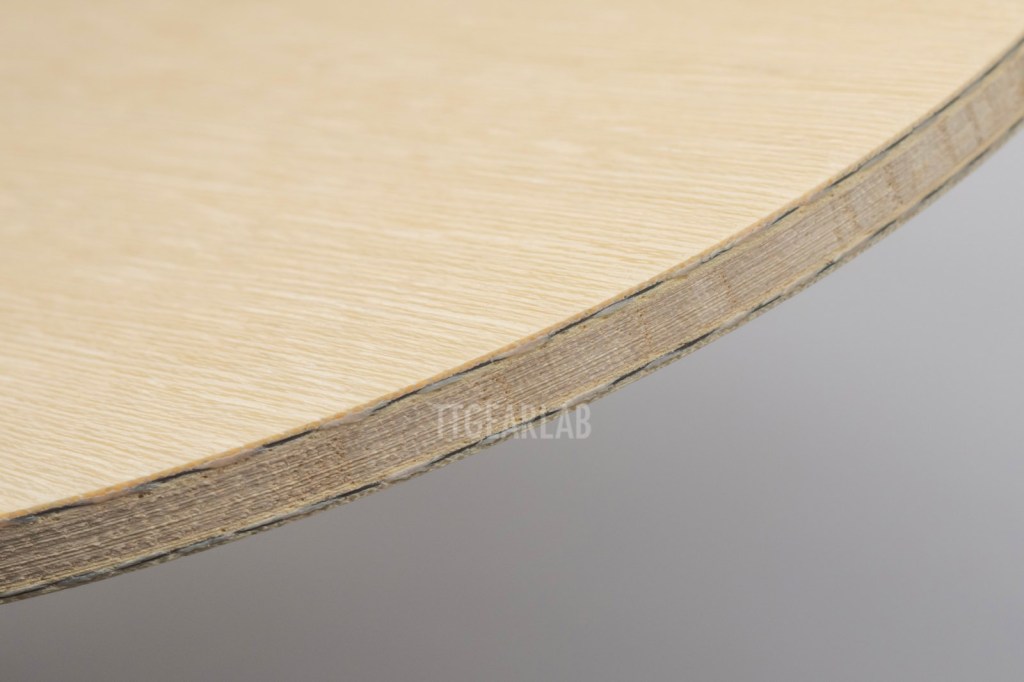
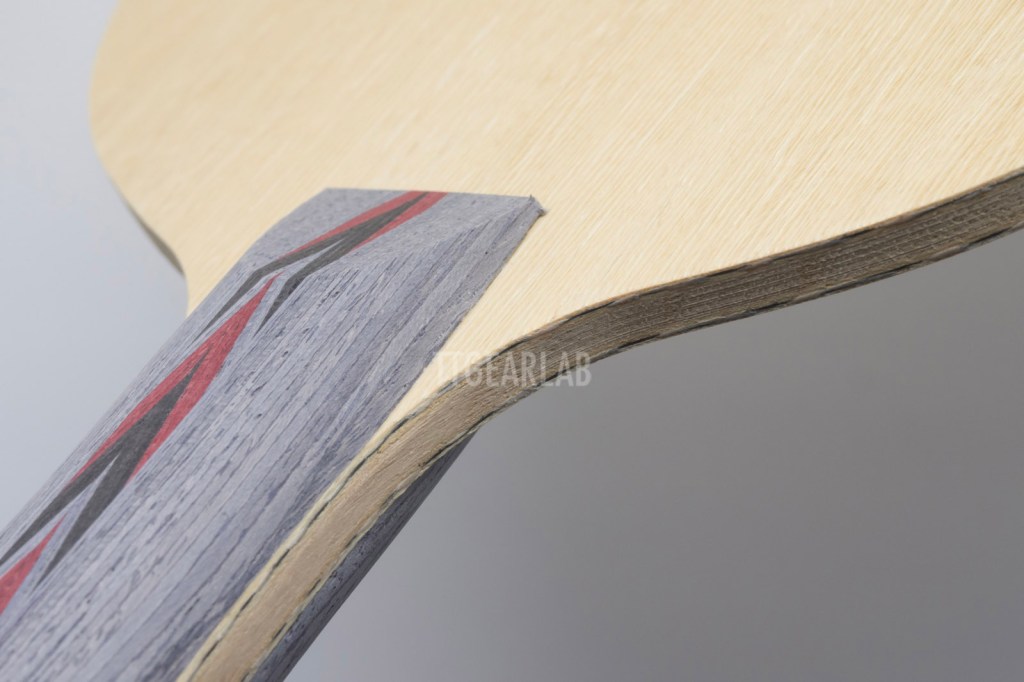
The blade construction of ‘506A’ is based on typical outer-ALC construction of ‘Viscaria’ type. But, the color of Arylate fiber isn’t typical blue but white. The top layer is Koto, the middle layer is Ayous, and the center layer is Kiri. ALC (Woven Arylate Carbon) is inserted directly under the top layer. Overall thickness is around 5.7mm. (Just a bit thicker than 5.7mm.)
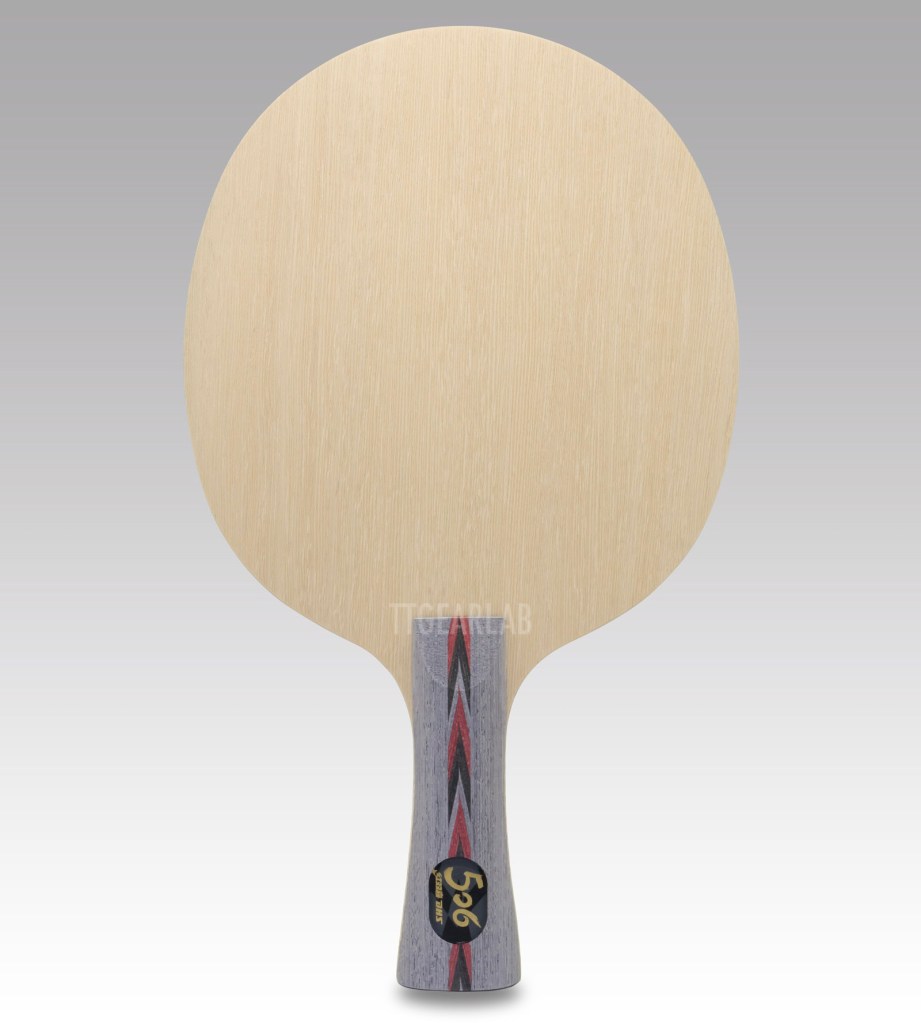
The size of head is around 159mm x 150mm which is a bit longer than the 157mm x 150mm of ‘Viscaria’.
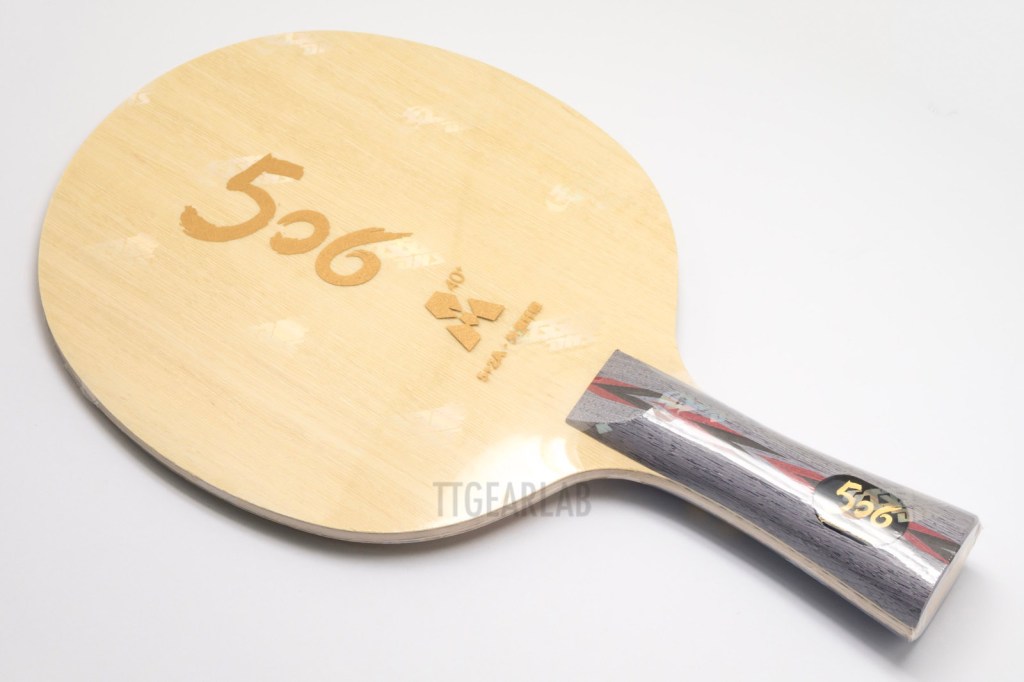
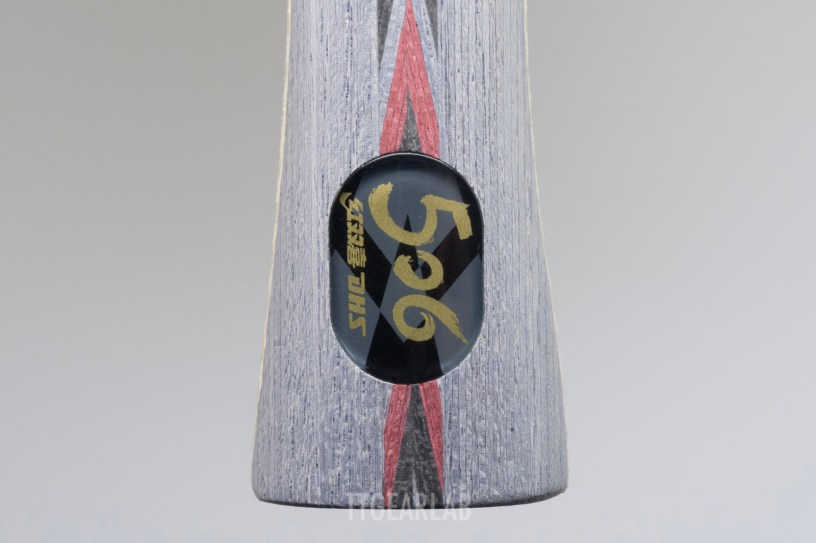
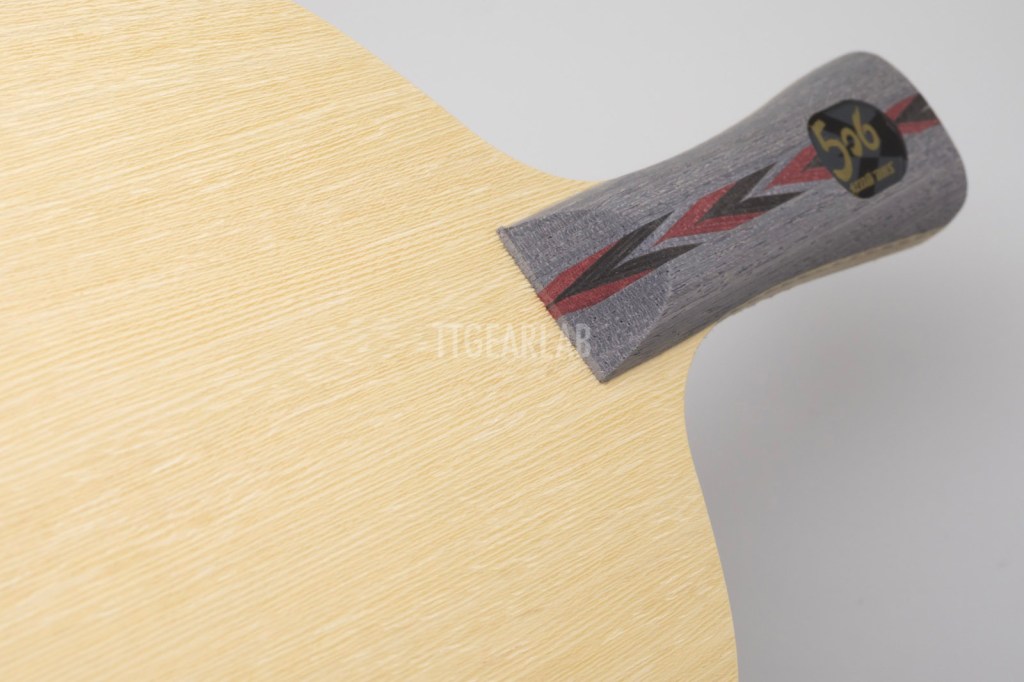
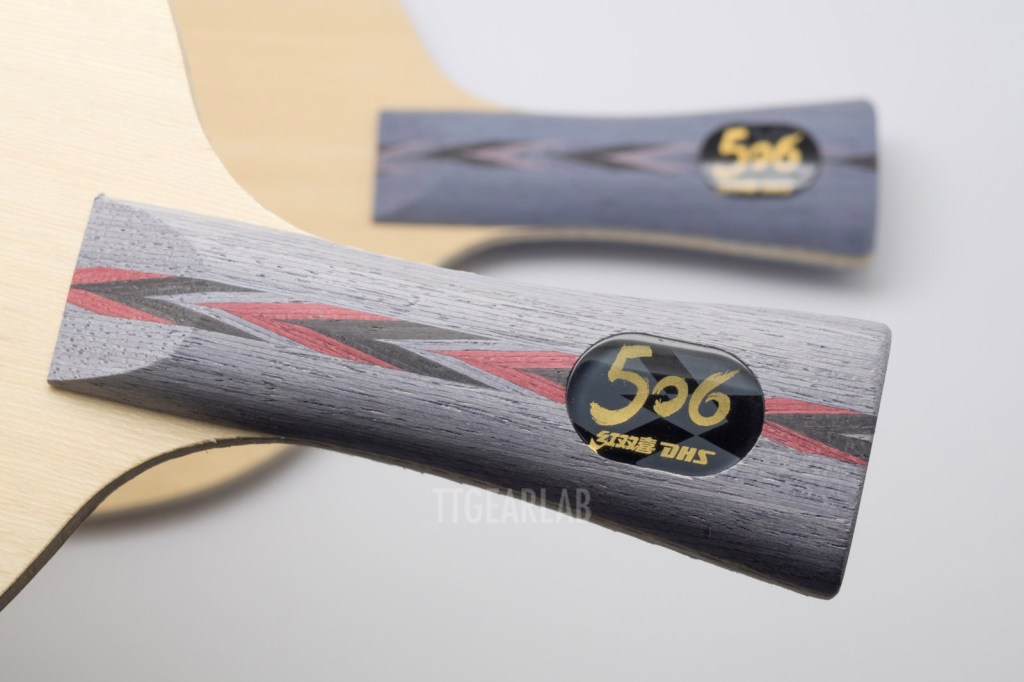
There isn’t any printing on the head itself. But instead, the information is printed in gold color on the transparent plastic cover.
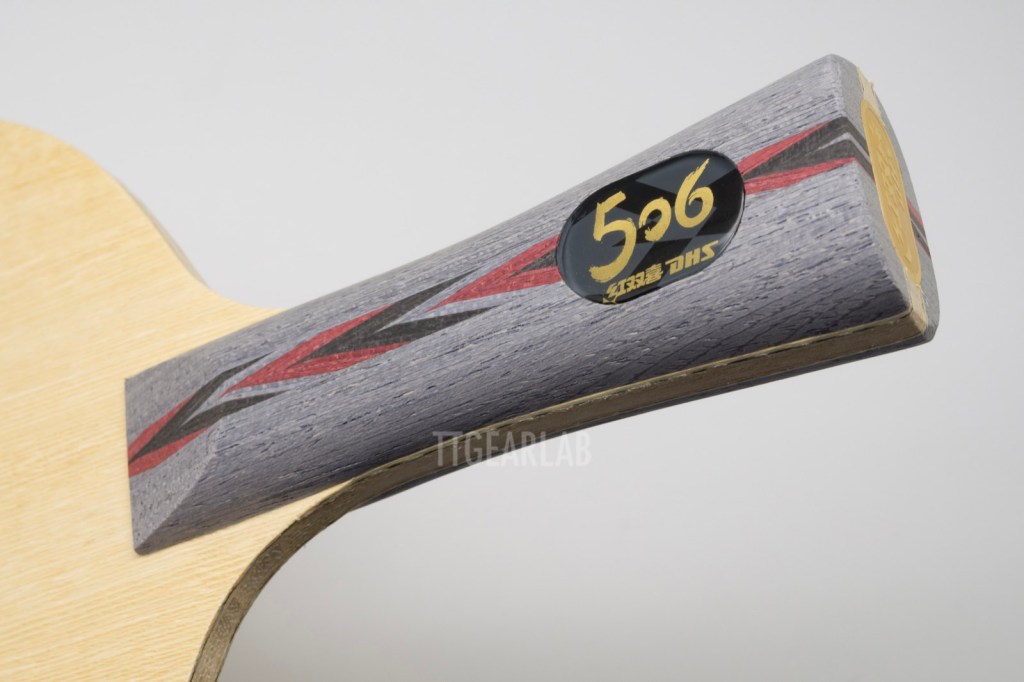
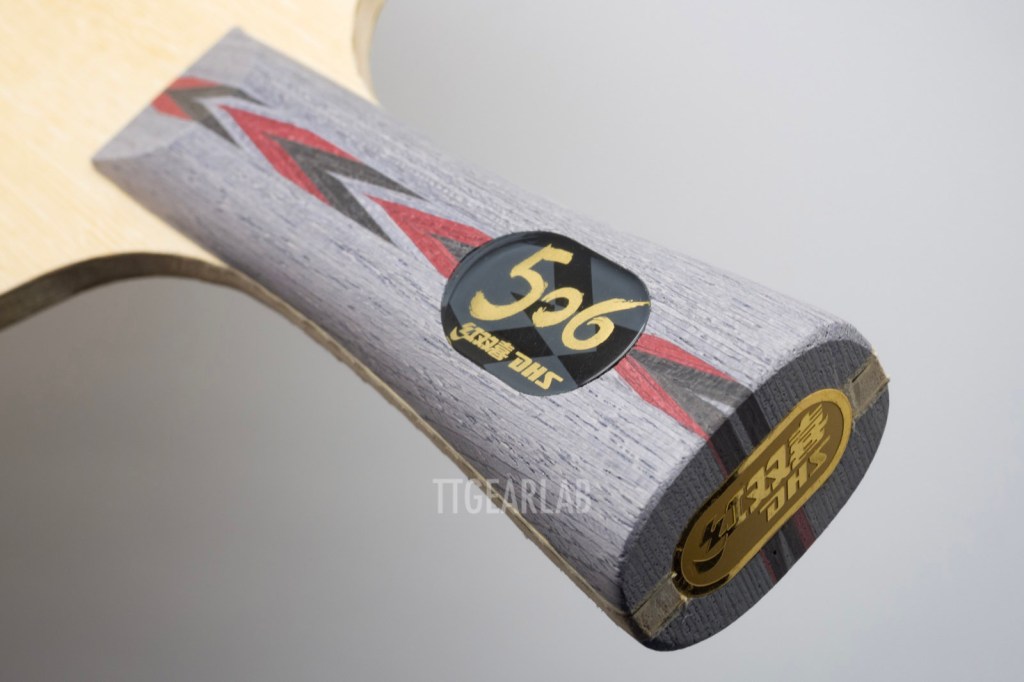
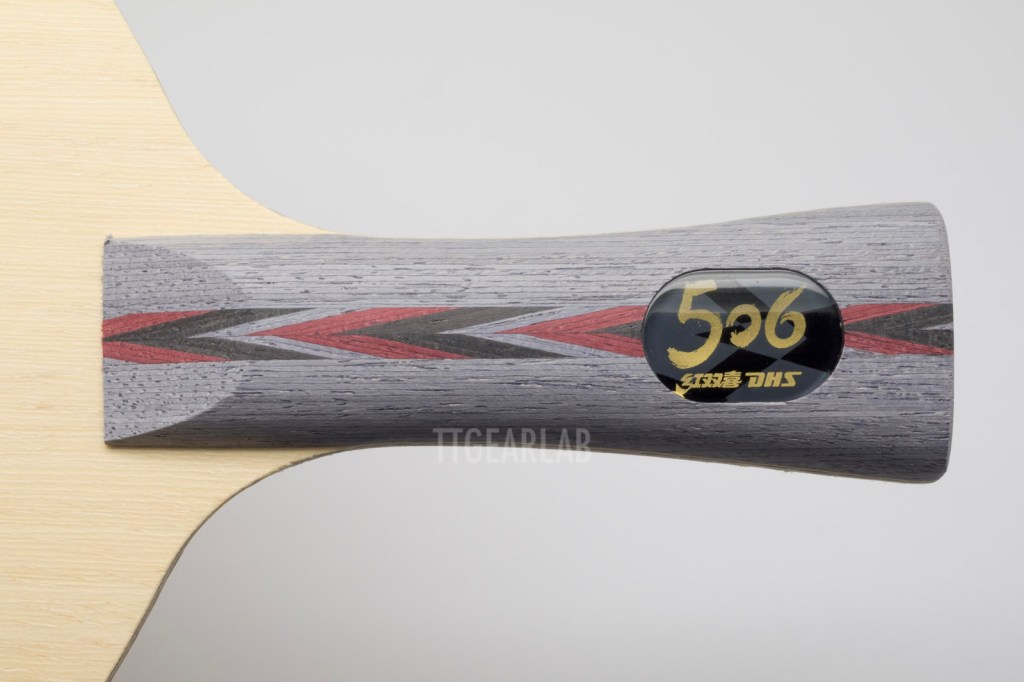
The width of FL (flared) handle is around 25mm (at head side) ~ 26mm (at bulge) ~ 25.4mm (at narrowest point) ~ 34.5mm (at the end). And, the thickness of FL handle is around 22mm (at thumb) ~ 25mm (at the end). It is very slim towards the head and somewhat chunky towards the end.
ST (straight) handle isn’t available.
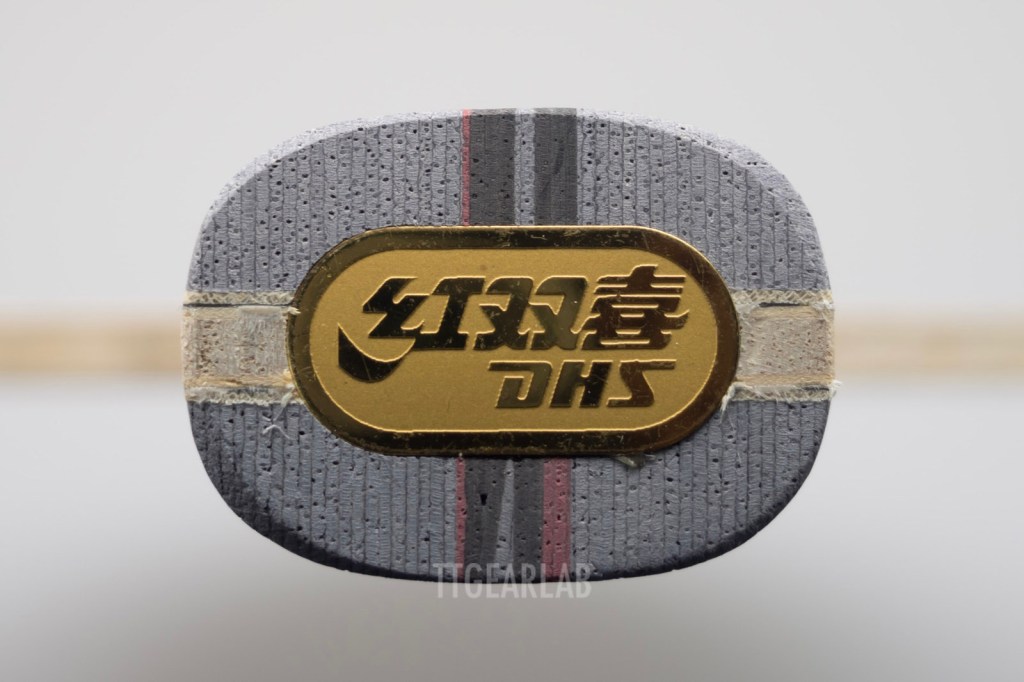
Metal plate that includes DHS logo is applied at the end of handle.
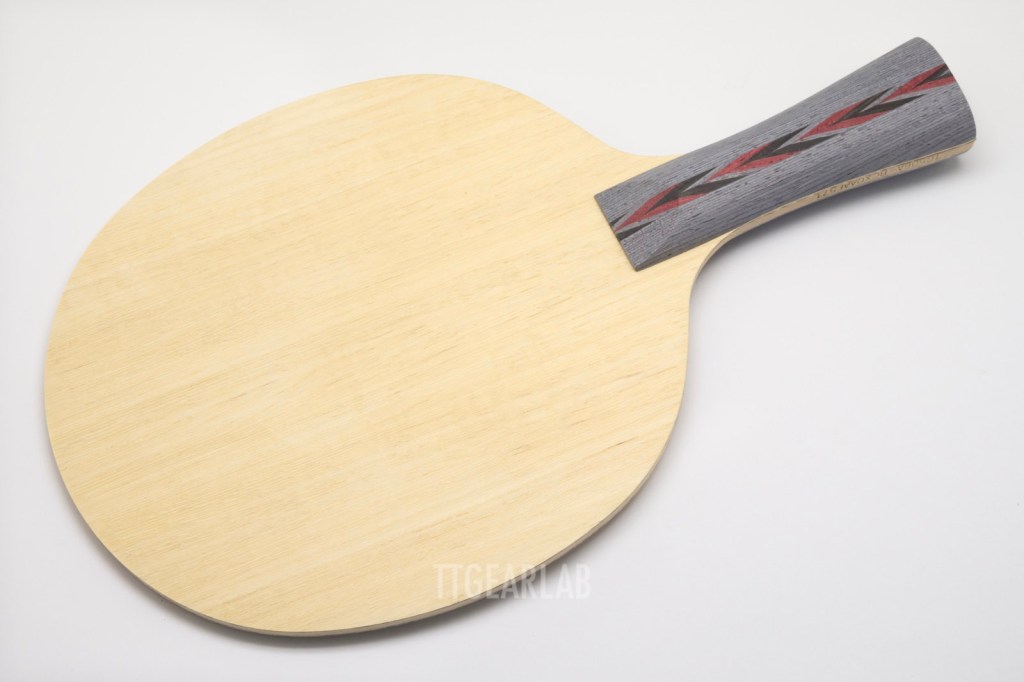
Nothing is printed on the backside of head.
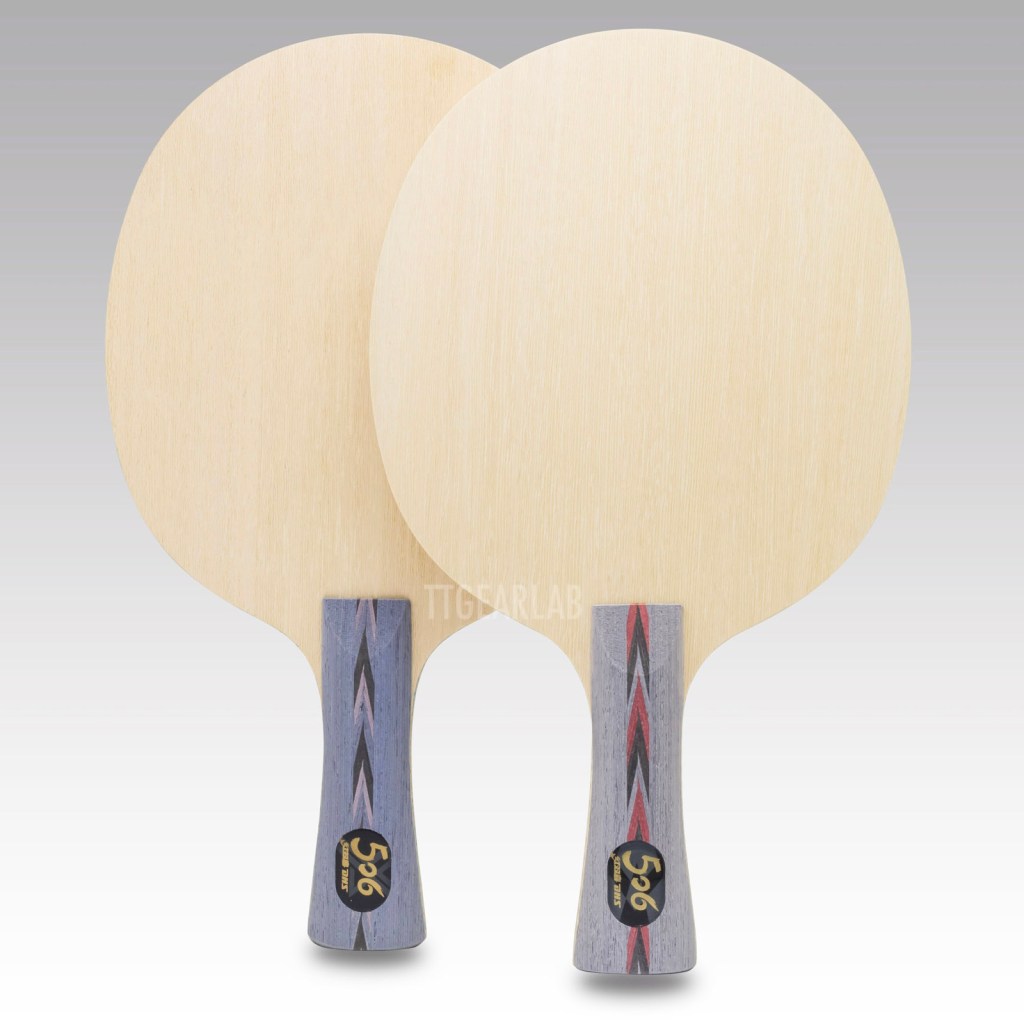
Left is existing ‘506X’ and right is new ‘506A.
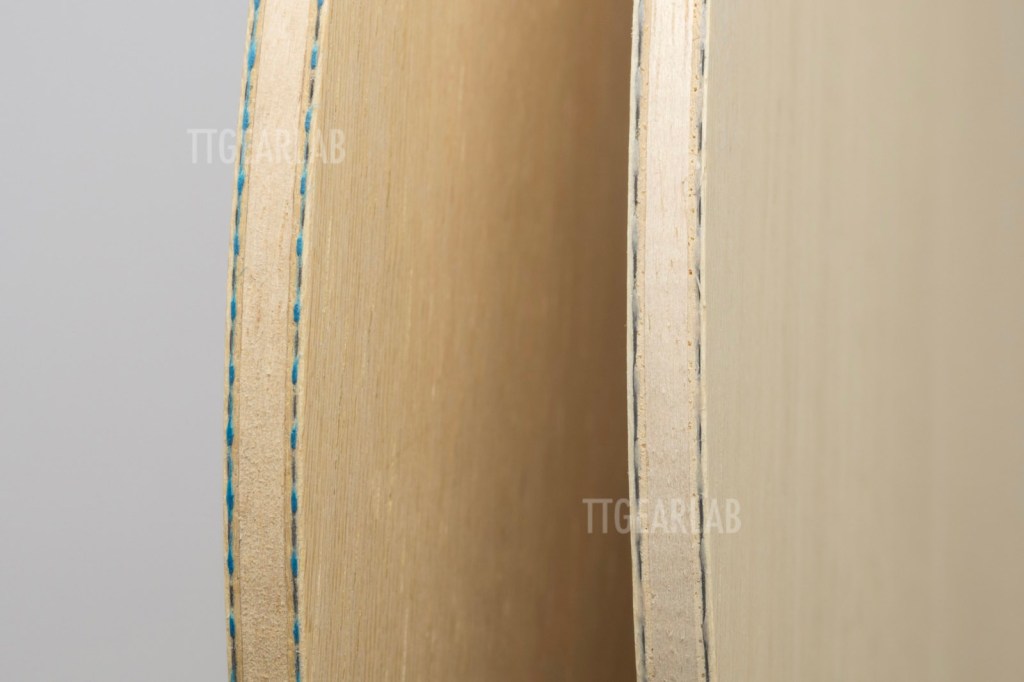
Left is ‘506X’ and right is new ‘506A. Two models of ‘506’ series share the construction except for the kind of ALC. ‘506A’ provides different characteristics from ‘506X’ because of the difference of artificial material.
Following are the performance indices of DHS 506A (avg.weight = 87.6) :
– Ep = 1.99
– Ec = 1.68 (Ec/Ep = 0.84)
– Vp = 1.24
– Vl = 1.37 (Vl/Vp = 1.10)
Please note that above are average values and can be updated by further measurement.
Unauthorized use and/or duplication of this material without express and written permission from this website’s author and/or owner is strictly prohibited. Excerpts and links may be used, provided that full and clear credit is given to TTGearLab with appropriate and specific direction to the original content.
 TTGearLab
is this the same as early model of viscaria with brass logo?
LikeLike
No. Its construction is very close to that of ‘Viscaria’. But, it doesn’t mean that it is same as ‘Viscaria’.
It can be categorized as ‘Viscaria type’. ‘Viscaria type’ shares the concept of construction. But, it doesn’t mean that it is same as ‘Viscaria’.
LikeLike
Hello, what is this “A” fiber? How’s it compared to regular blue or yellow AL fibre in ALC?
LikeLike
There isn’t detailed information. But, it looks like just a kind of yellow AL fiber.
And, although it is written just as ‘A fiber’ on the packaging of 506A, it is ALC woven from A fiber and Carbon fibrer.
LikeLike
Hi, how does the handle feel compared to the Hurricane Long 5 2022 and the Viscaria/FZD ALC?
LikeLike
When compared with the FL handle of Viscaria, the handle of HL5 is narrower and thinner at the middle, and wider and thicker at the end.
So the overall feeling of FL handle is slimmer at the middle but not slim at our little finger
LikeLike
In fact, it should not be simply classified as ALC. According to the official statement of DHS, the fiber it uses is not AL fiber mixed carbon fiber, but “Polyarylate”. Some brands in China, such as SWORD, also use this fiber, but they are dyed gold or blue or green. This one of DHS is not dyed, so it looks like KLC(ALC) or AC of LONG 5 (DHS calls KLC and ALC both AC instead of A fiber, which means there is a difference between ALC and A fiber). DHS has introduced a new blade——LONG 5A also uses this A fiber, which is an upgraded version of 506A.
LikeLiked by 1 person
The original name of ‘Arylate’ is polyarylate fiber.
And, there are various brand names for polyarylate fiber – Vectran, Zxion and so on.
Butterfly is using Vectran(polyarylate fiber produced by Kuraray) dyed in blue color. And, the mixed woven of that polyarylate fiber and carbon is generally called as ALC. (It isn’t mixed carbon fiber. It is mixed woven by ‘Carbon Fiber’ and ‘Polyarylate Fiber’.)
Of course there will be difference in this arylate fiber and that arylate fiber. But, if the fiber isn’t para-aramid fiber, it can be anyway called as Arylate fiber. And, if it is woven together with carbon fiber, it becomes ALC or AC. (There are also different names for example Crypto Carbon, Voltema Carbon or ZX Carbon.)
LikeLike
Oh, in that case, it should be that China is more accustomed to distinguishing these fibers to show that they are not actually the same fiber. It may be beneficial to make a more detailed distinction. After all, each kind of aryl fiber is different. But this distinction is really dazzling. Do you have any relevant information about the statement that butterflies use Vectran? I haven’t found any relevant information. I want to know about it.
LikeLike
Butterfly have explained that the new material is ‘Vectran’ from autumn 1992 when Keyshot (= the first blade with Vectran fiber) was released. It is clearly written as ‘Vectran Fiber’ on Butterfly 1993 catalog.
And, in fact, it is very well know story that Butterfly is using Vectran produced by Kuraray.
The Vectran fiber used by Butterfly are dyed in two colors – red for Arylate Fiber and blue for Arylate Carbon.
LikeLike
Hi, I have some questions about timo boll alc. In your test timo boll alc has significant difference from other butterfly blades that have same construction. But bty website gives out same specification. Do you think it is due to products deviation or some other reasons?
Also I see my timo boll alc has hollow handle, will hollow handle affect the performance and makes that difference?
Thank you!
LikeLike
Probably it is products deviation. And, maybe Butterfly is ‘selecting’ produced plywoods for making different models. For example heavier plywoods for TB ALC and lighter plywoods for Viscaria. (Of course I’m not sure.)
The performance of blade doesn’t vary much by making hollow. It becomes somewhat head heavy. But, the weight of the head itself doesn’t change by making hollow. And, the stiffness of blade doesn’t change much. (It changes a bit at handle side. But, the effect is small because handle is much thicker than head.)
But, one important thing is that the piece with hollow is originally much heavier piece. And, in general heavier one is more elastic than lighter one if all the conditions are identical. For example, if the weight reduction by making hollow is 4 gram, the 86g one with hollow is as fast as the 90g one without hollow. And, if there are two blades of same weight but one has hollow and the other doesn’t has hollow, the one with hollow will be more elastic because it is originally heavier blade.
It is simple that we just think that the blade with hollow is similar to heavier one without hollow.
LikeLike
Thank you for your very detailed reply, I have learned a lot!
LikeLike
Thank you for comment. 🙂
LikeLike