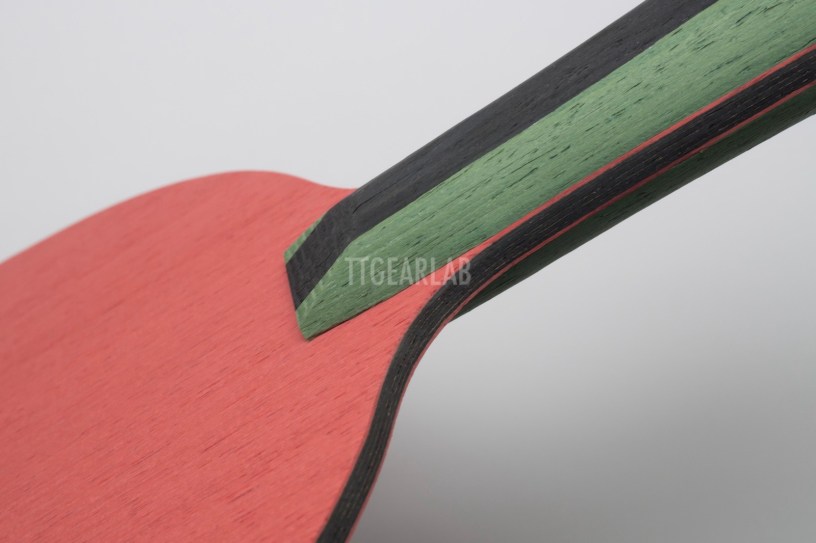
Tibhar ‘Genshu’ is the blade designed to be used with long pimple rubber on its backhand side. It is a special order model ordered by WRM which is a Japanese seller. The meaning of Japanese word ‘Genshu’ is ‘fantastic defense’. That ‘defense’ doesn’t mean chop but block. It fits for the fast attack players who takes chances with unusual blocks at close-to-table area. But, choppers are also able to use it if the playing style is the all-round style based on chop defense but the portion of forehand attack is high.
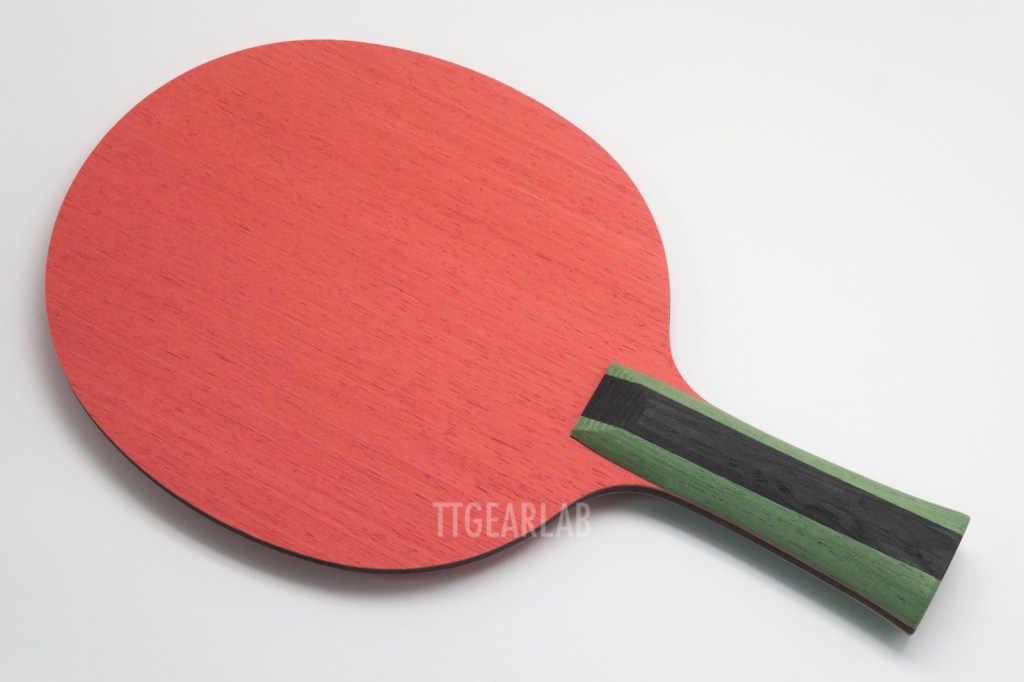
‘Genshu’ is the blade for long pimple players. None of head printing or lens is applied because this is a special order model by a seller.
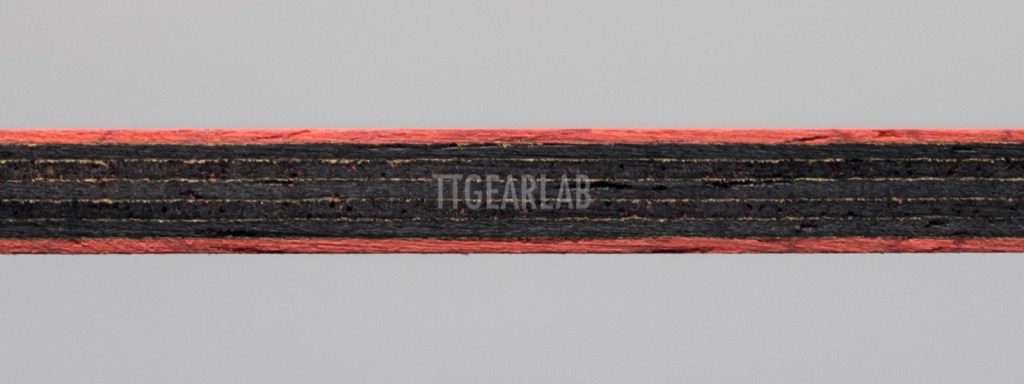
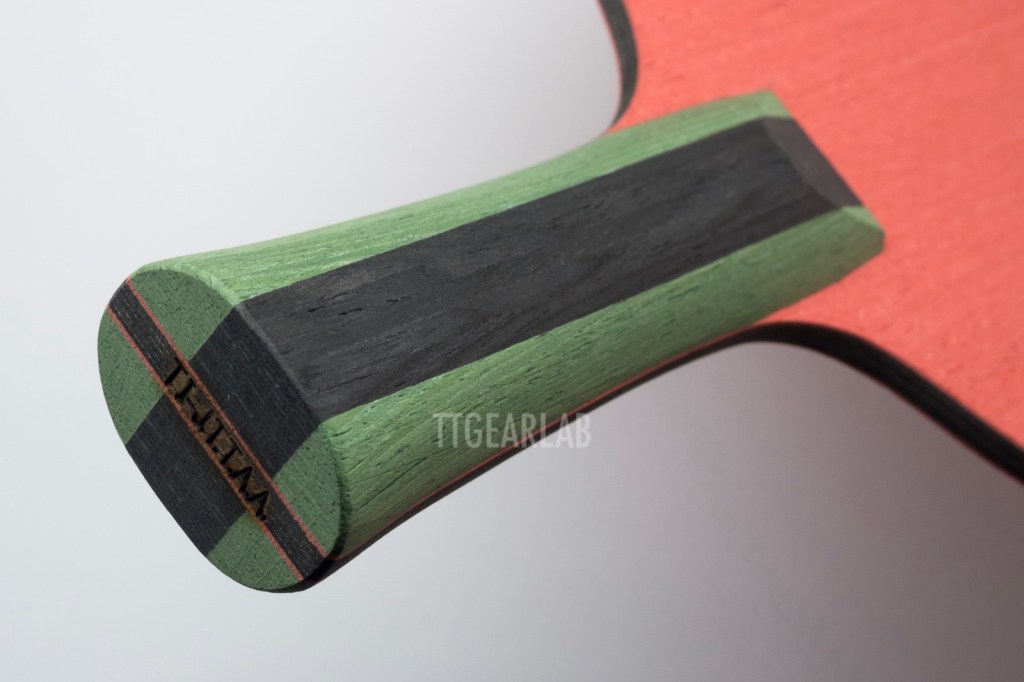
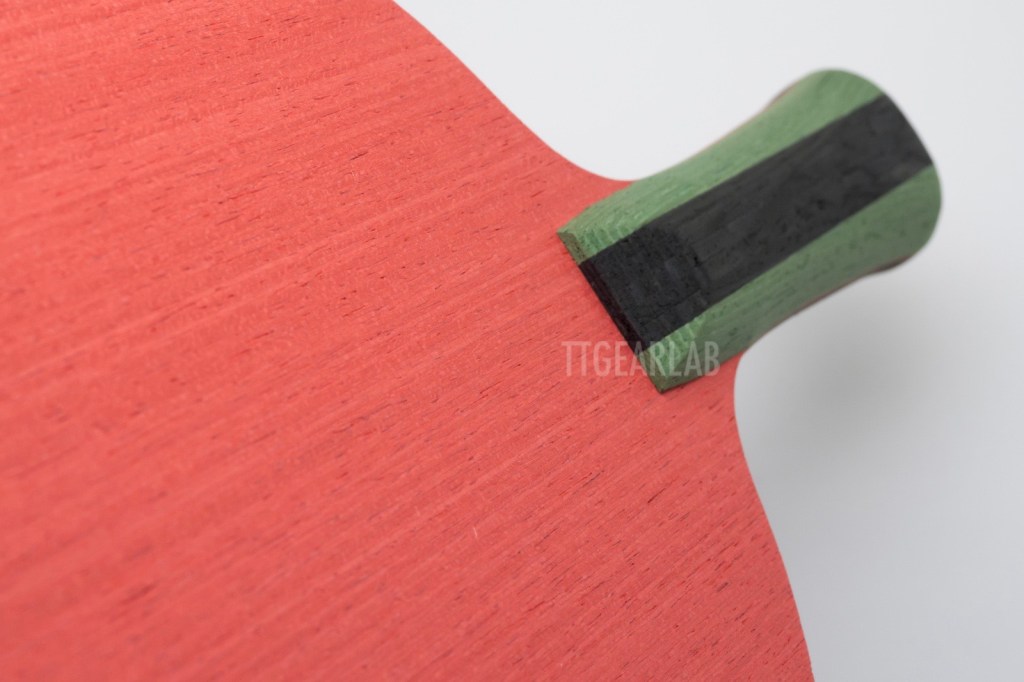
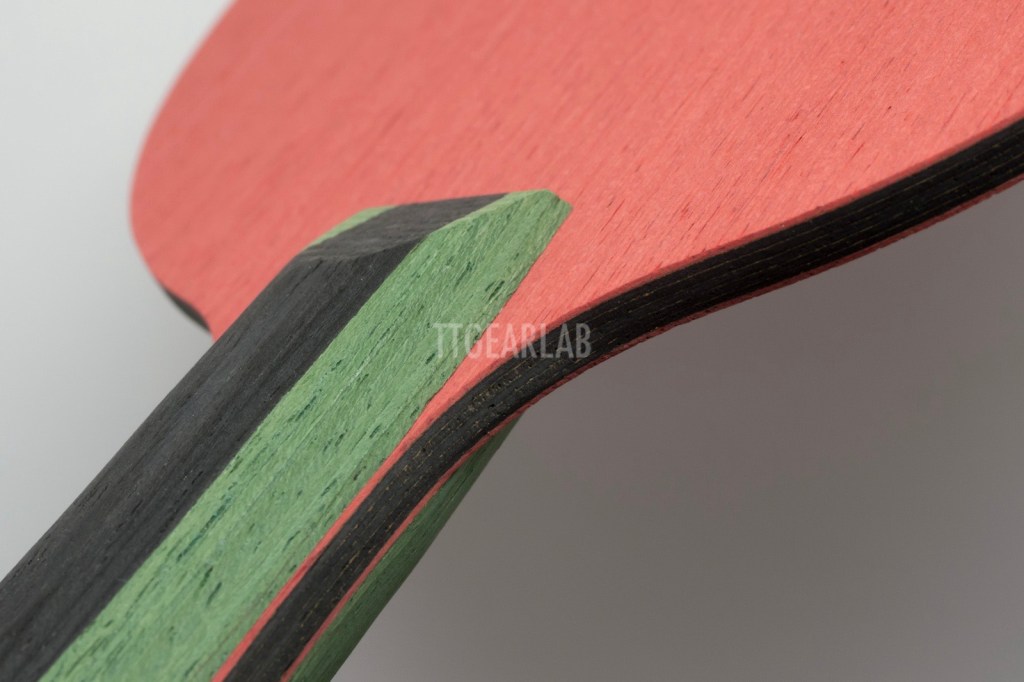
‘Genshu’ is a 7-ply wood blade. The top layer is Fineline dyed in red. All of the inside layers are Ayous died in black. Overall thickness measured is around 5.2mm.
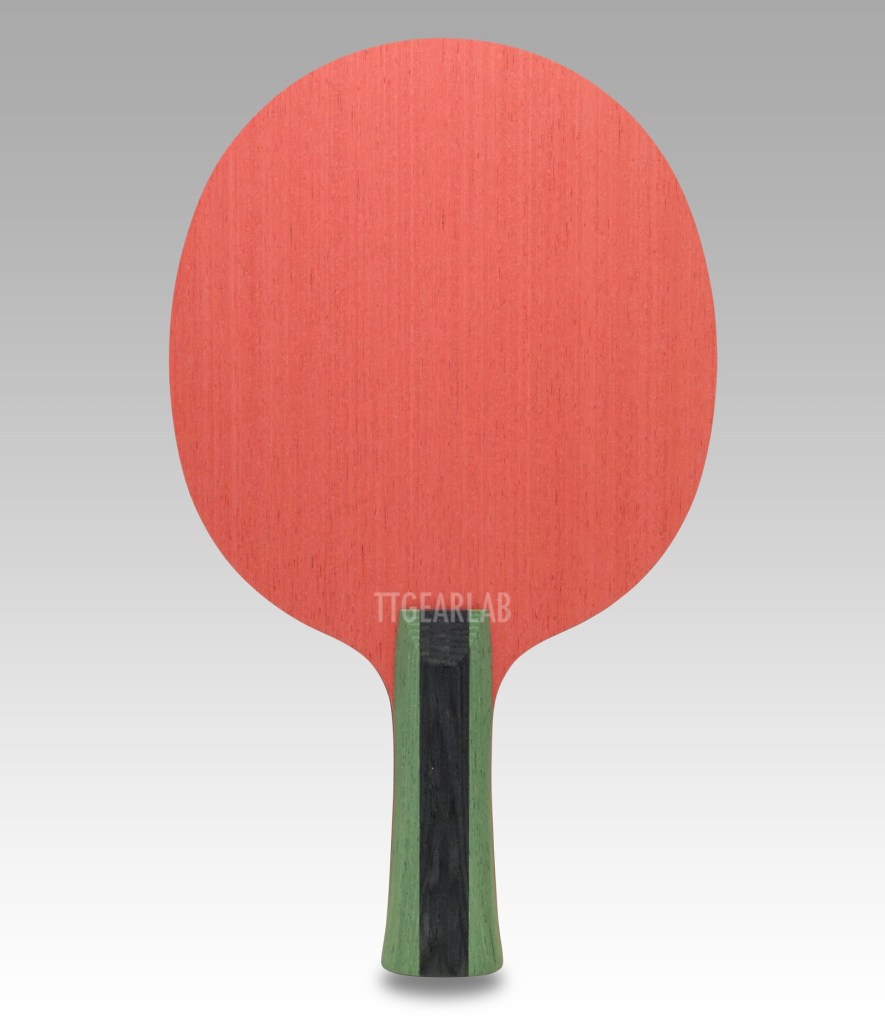
The size of the head of ‘Genshu’ is around 158mm x 153mm. It is small as the size of chopper’s blade, but it the chopper play with the mixture of forehand topspin and backhand chop, this size will be proper. And, originally this blade isn’t for choppers but for fast attackers whose main weapon is various block.
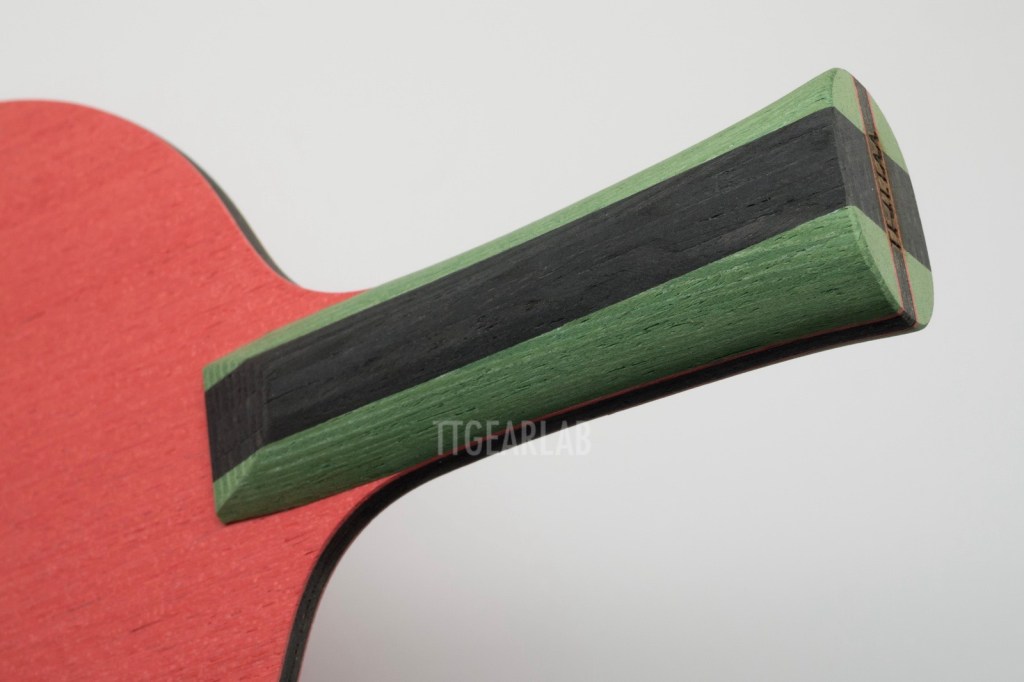
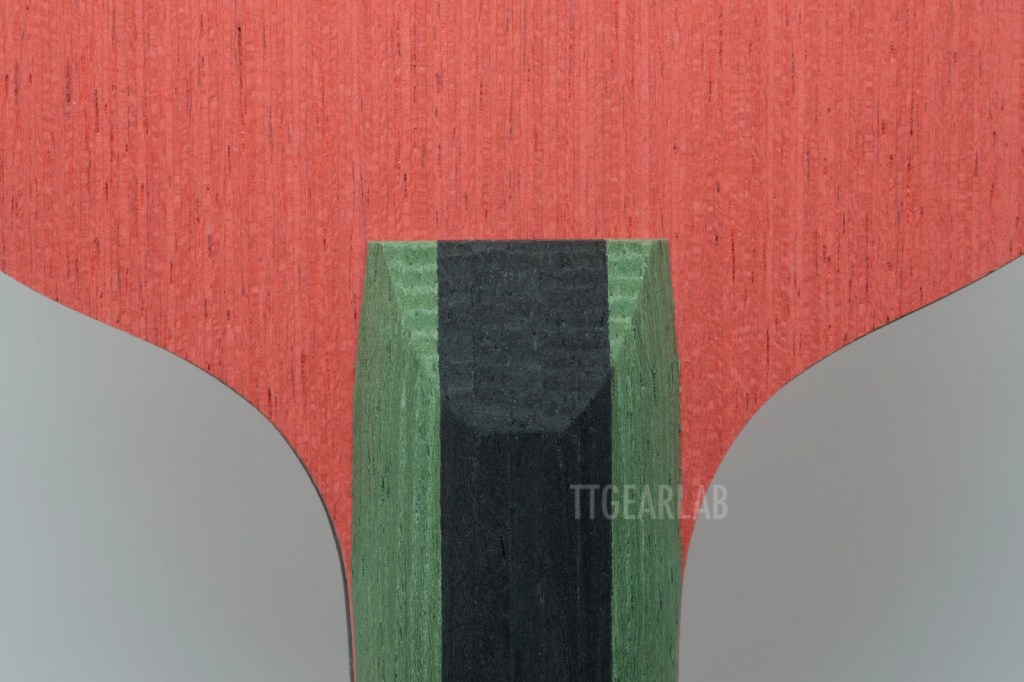
The handle shape of ‘Genshu’ is that of traditional handle of Tibhar blade made in Slovenia. However, unlike the handles of some products such as ‘LeBesson’, it doesn’t feel unique when held. The width of FL (flared) handle is around 25mm (at head side) ~ 27.5mm (at the middle of handle) ~ 34.5mm (at the end), and the thickness of FL handle is around 21.5mm (at thumb) ~ 26mm (at the end). It is somewhat wide handle, which is thin at thumb but thick at the end. ST (straight) handle hasn’t been measured.
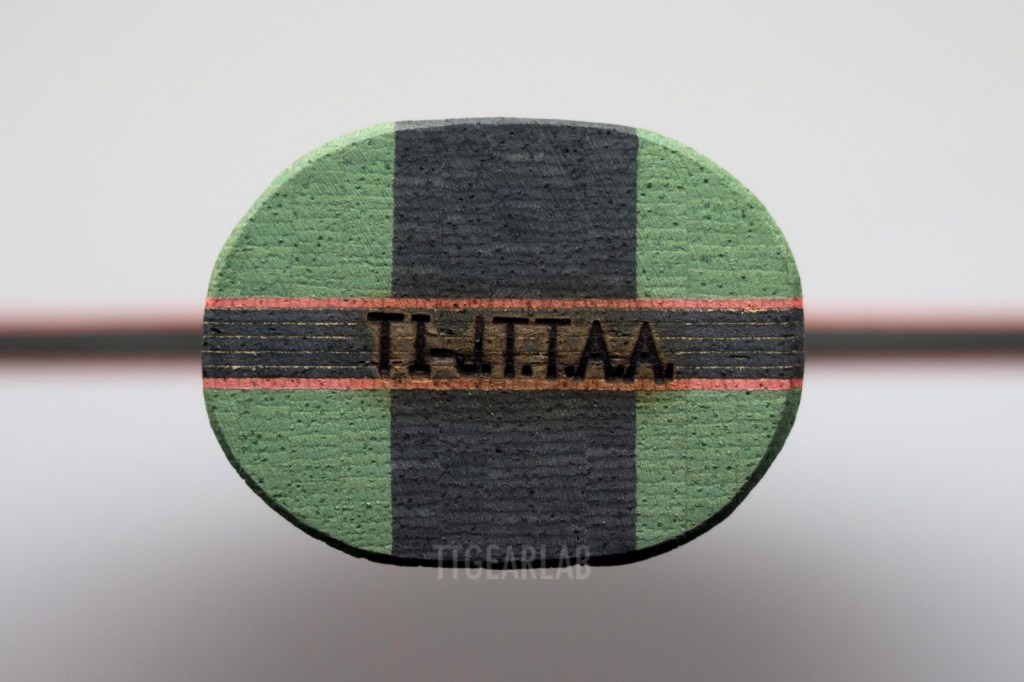
There isn’t metal plate or plastic lens at the end of handle.’ Since this is a blade mainly sold in Japan, the engraved ‘J.T.T.A.A.’ (an indication that it has been approved for use in competitions organized by Japan Table Tennis Association) is applied as standard.
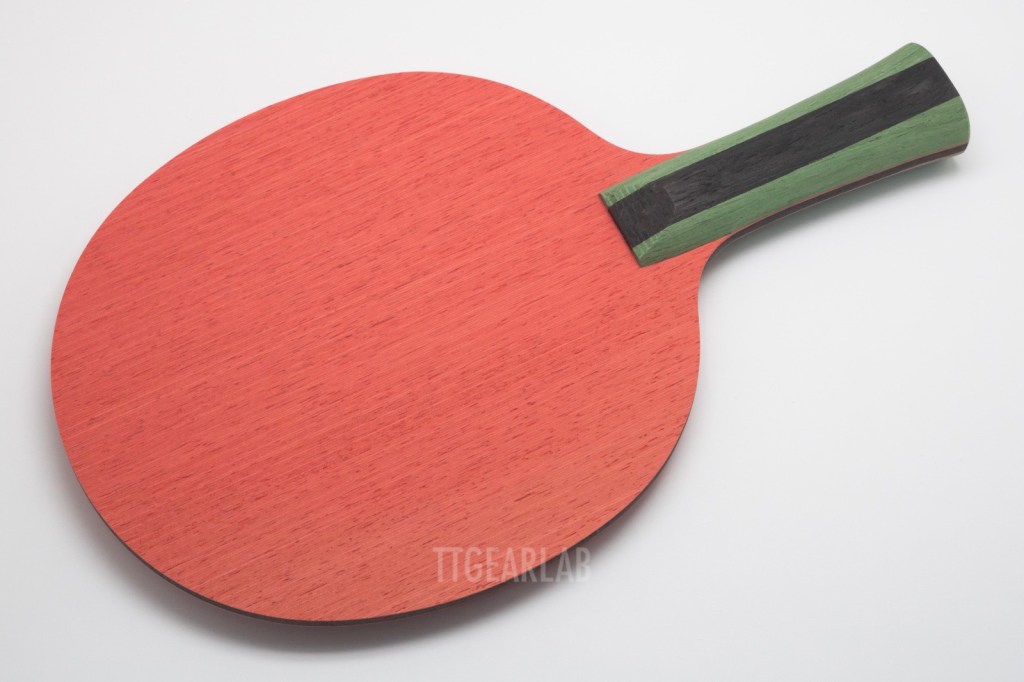
Of course, printing or lens isn’t applied at the backside of head.
Following are the performance indices of Tibhar Genshu (avg.weight = 80.4) :
– Ep = 0.80
– Ec = 0.84 (Ec/Ep = 1.06)
– Vp = 0.92
– Vl = 0.74 (Vl/Vp = 0.81)
Note : Above data isn’t averaged from many pieces but just from one piece. For that reason there may be big difference between above data and average data. Data can be updated by further measurement.
Unauthorized use and/or duplication of this material without express and written permission from this website’s author and/or owner is strictly prohibited. Excerpts and links may be used, provided that full and clear credit is given to TTGearLab with appropriate and specific direction to the original content.
 TTGearLab
Genshu(幻守) blocks precisely!Actually I don’t feel it’s such a slow blade with 0.8 Ep,maybe because it gives some kick when hit harder. I have similar feeling there is additional kick when use many defensive blade with equal thickness ply(such as Xiom Aigis ,7 equal thickness Wallnut blade Nittaku Goriki Super Cut,Nexy Joo Se Hyuk) .Do you have the performance indices of Tibhar CO-S-3 and Tibhar Stratus Powerdefence?
LikeLike
Thank you for comment. I’m not sure whether current data is close to the average data of Genshu or not because I could measure just one piece at this time. 🙂 We can’t expect high elasticity from such a thin pure wood blade although it is a 7-ply wood blade. However, its 7-ply construction makes its Ec/Ep quite high and probably it makes many players feel that it is faster than its actual elasticity. Anyway Genshu is a very good blade for block.
Following is the data of Stratus Power Defense (average weight = 86.8g) :
Ep = 1.34
Ec = 1.10 (Ec/Ep = 0.82)
Vp = 1.01
Vl = 1.16 (Vl/Vp = 1.16)
Differently from the data of Genshu, above is averaged data from some pieces.
There isn’t data for CO-S-3. I couldn’t have got it.
LikeLike
Very interesting. The data of Stratus Powerdefense is very similar to Primorac. But BTY called theirs Primorac (OFF-), when Tibhar called theirs Powerdefense (DEF) instead. Maybe there is another differences between them?
LikeLike
The elasticity of defensive blades are sometimes much higher than we expect. There are many cases that DEF blade is faster than ALL blade. Makers put the DEF as the speed sign just because those are designed for chopping. 🙂
LikeLike
Does it mean that Primorac can’t use for chopping and PowerDefense can’t use for topspin?
LikeLike
We can use Primorac for chopping. Even Korbel can be used for chopping. The problem of Primorac when we try chop with it is that its head is too small for chopping.
Chopping need much bigger head for more safety and stability. We can try chopping with the small head, but it isn’t effective.
Also, we can use defensive blade such as Stratus PowerDefence for offensive play. Actually some top players have used defensive blade for offensive play.
In table tennis there isn’t anything impossible, although it is difficult or less effective.
LikeLike
Will the size of head effect performance index of blade?I feel bigger surface cause a sense of hollow,slow,delay,
longer trajectory ,which makes difficult to predict result.
LikeLike
Any small change affects the performance index. But, for more precise values I need more pcs. of samples.
I expect that enlarging the head size makes the blade a bit faster and a bit softer.
LikeLike
Hello
where can I buy this racket?
greetz Joost
LikeLike
You can buy it at World Rubber Market (Japanese company).
https://rubber.ocnk.net/
However, I’m not sure whether there is stock or not.
LikeLike