| Table of Contents | 1. Overview 2. Performance Indices 3. Comparison by Performance Indices ……. 3-1. Elasticity Indices ……. 3-2. Vibration Indices 4. Field Test 5. Summary |
andro ‘Gauzy SL OFF’ is the 7-ply wood blade used by Simon Gauzy who is the ace of French Men’s National Team. According to information Simon Gauzy is now trying different blade, but it seems that it isn’t fixed yet. Still his official equipment is ‘Gauzy SL OFF’. TTGearLab will update the information once his new blade is fixed. However, regardless of whether he is using this blade or not, ‘Gauzy SL OFF’ is worth analyzing. That is because it is one of the few 7-ply wood blades those have been used by top players during poly ball era, and because its construction is very unique.
TTGearLab will analyze ‘Gauzy SL OFF’ through Performance Indices and will compare it with some existing blades.
1. Overview
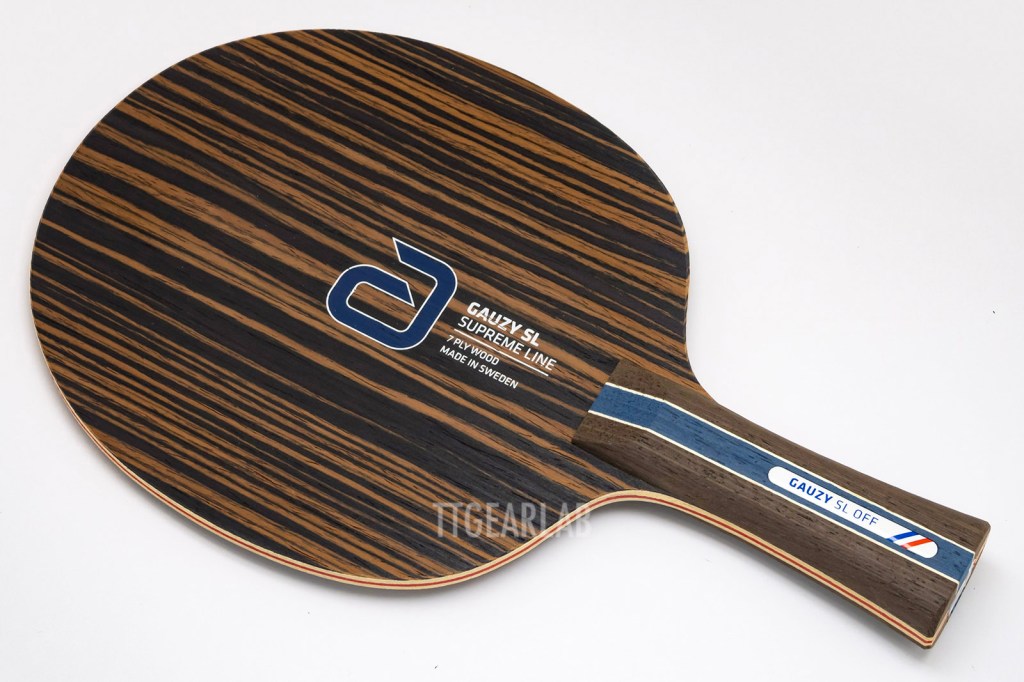
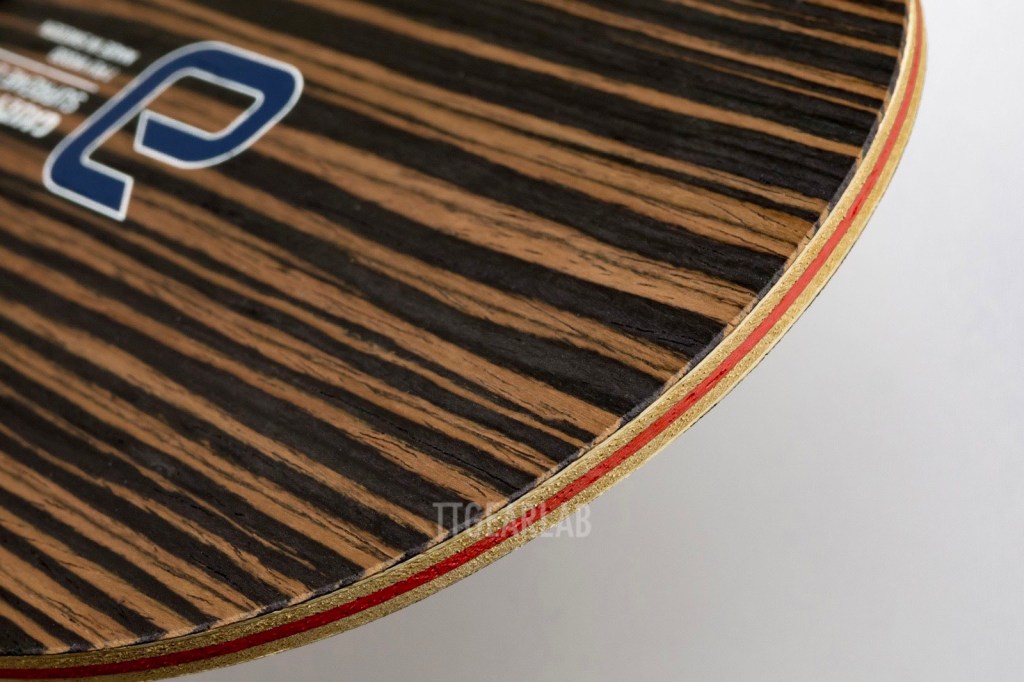
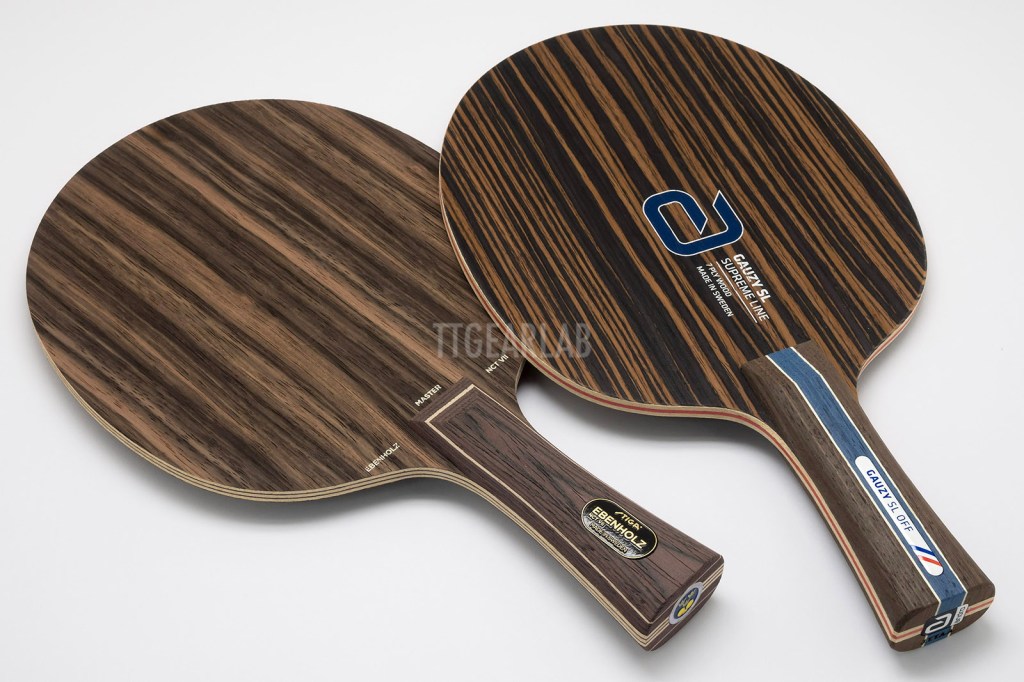
‘Gauzy SL OFF'(or just ‘Gauzy SL’) is the 7-ply wood blade made in Sweden. It is specially developed by andro for Simon Gauzy, and is optimized for his unique playing style – various topspin by full swing from mid-distance area, and defensive play at far-distance area such as chop and lob. One of the most important features of ‘Gauzy SL OFF’ is the Ebony top layer with beautiful grain. The expression ‘Swedish 7-ply wood with Ebony top layer’ reminds us Stiga ‘Ebenholz NCT VII’, actually ‘Ebenholz NCT VII'(= lightweight ones newly measured in October 2023) can be directly compared with ‘Gauzy SL OFF’. But, everything except for the wood name of top layer is different. ‘Ebenholz NCT VII’ is included in the list of the blades to be compared with ‘Gauzy SL OFF’.
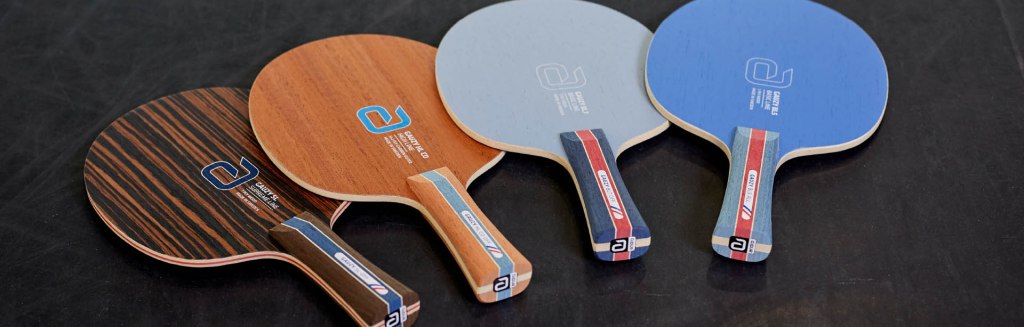
andro ‘Gauzy’ series includes ‘Gauzy SL (Supreme Line)’ which is used by Simon Gauzy, ‘Gauzy HL (High Line) CO OFF’ which is a carbon blade, and two basic wood blades – ‘Gauzy BL(Basic Line)7 OFF’ and ‘Gauzy BL5 ALL’. Among four models ‘Gauzy SL OFF’ and ‘Gauzy HL CO OFF’ are high-price models made in Sweden. And, ‘Gauzy BL7 OFF’ and ‘Gauzy BL5 ALL’ are low-cost models those can be recommended for starters.
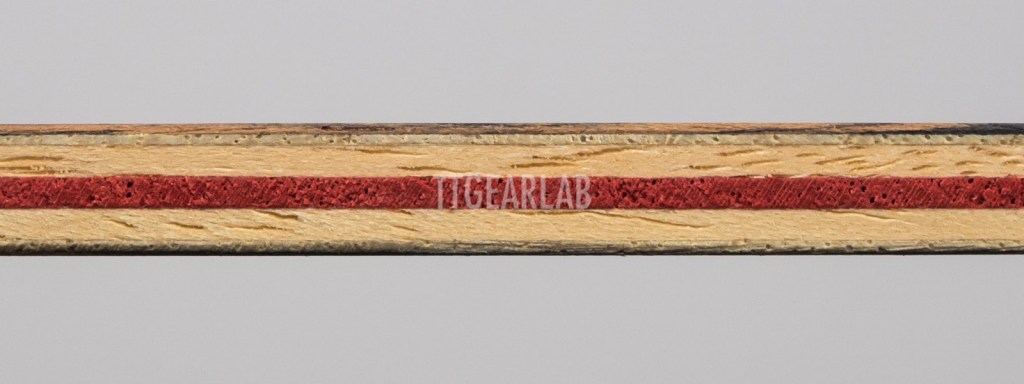
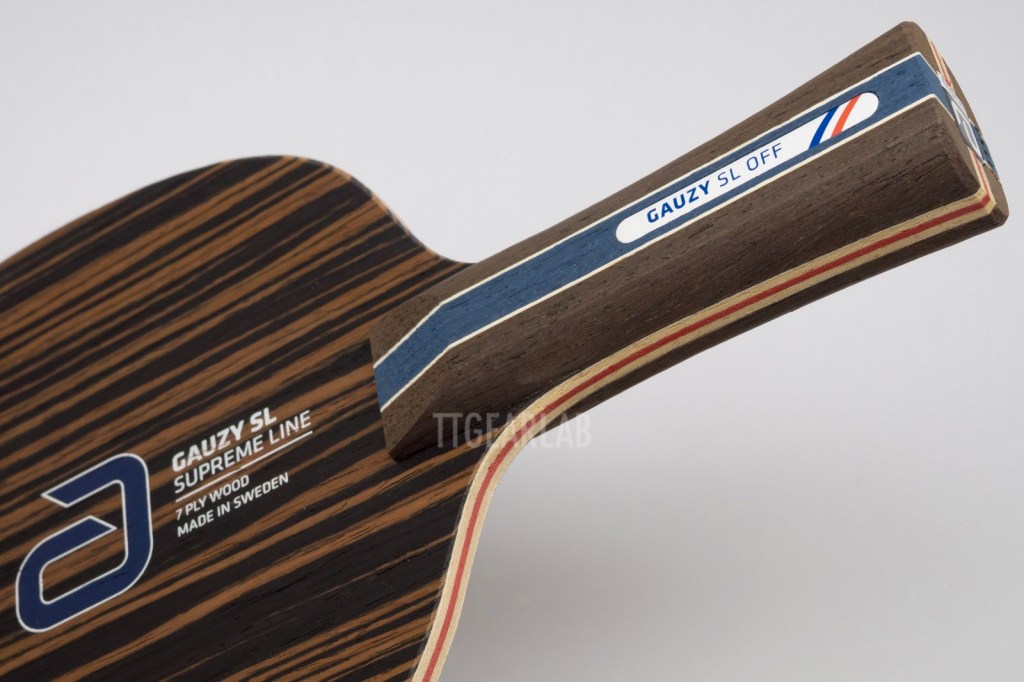
The construction of ‘Gauzy SL OFF’ is based on traditional 7-ply wood construction which has very thick center layer cluster with three layers, but the top layer and the middle layer are different from those of traditional construction of ‘Clipper’ type. Most of all the top layer isn’t ordinary Limba or Koto but very unique Ebony with beautiful wood grain. And, the middle layer is Limba while the middle layer of traditional construction is Ayous. And, among the three layers of center layer cluster, only one layer at the center is dyed. Overall thickness is around 6.1mm.
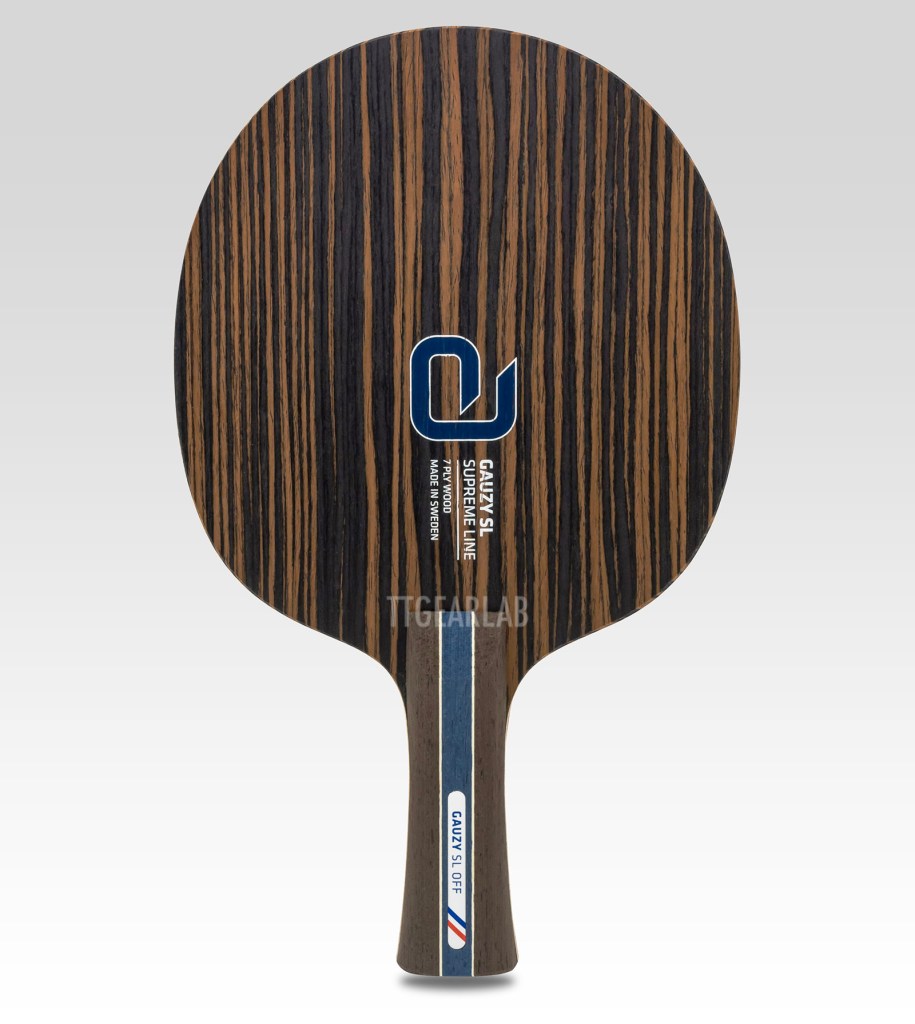
The size of head is 157mm (length) x 152mm (width). The average weight of measured pcs. is 90.2g.
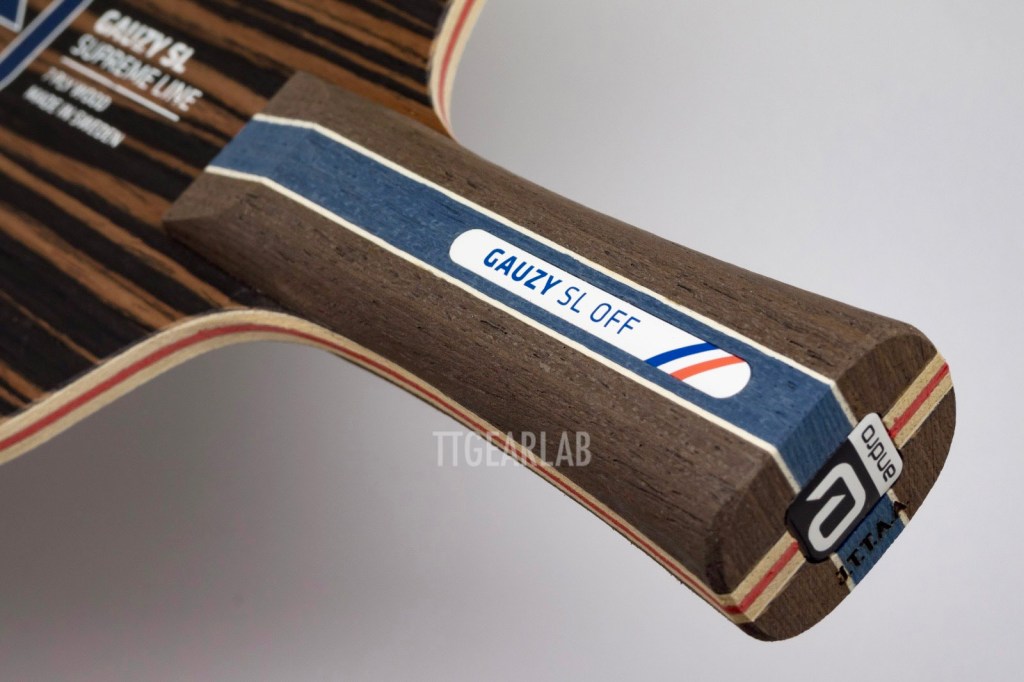
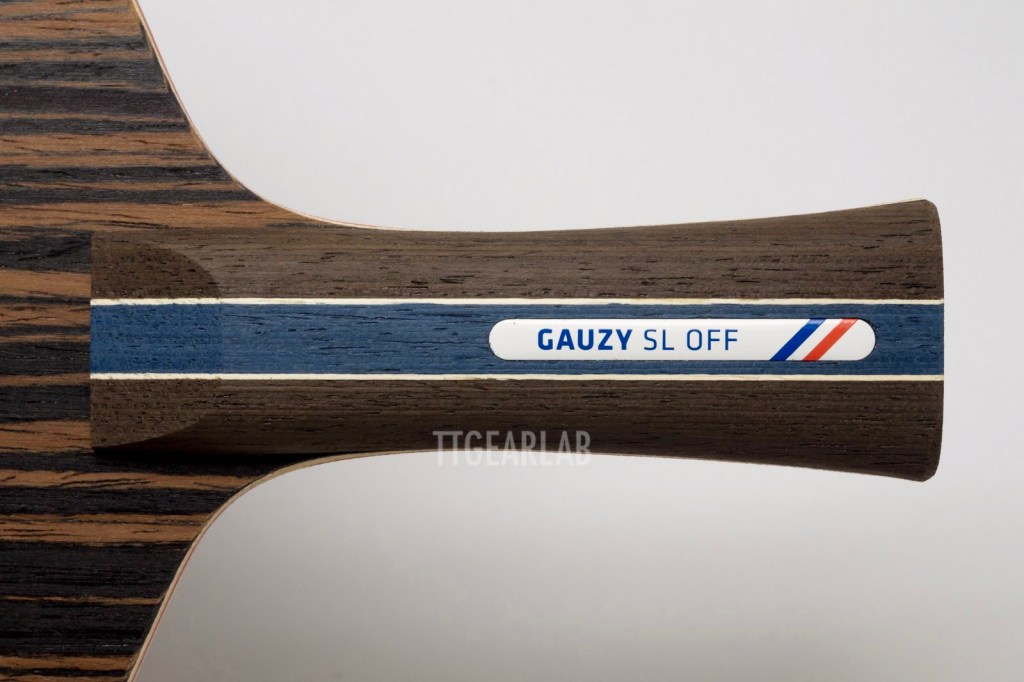
The FL (flared) handle is almost flat on both faces, and is angular. (Of course the edges are rounded.) The width is around 26mm (head side) ~ 27.5mm (at bulge) ~ 26.5mm (at the narrowest point) ~ 34mm (at the end). The thickness (height) of FL handle is 23mm (at thumb) ~ 24mm (at the end).
The ST (straight) handle which isn’t shown in the picture is also flat and anglar. The size of ST handle is around 28mm (width) x around 23mm (thickness).
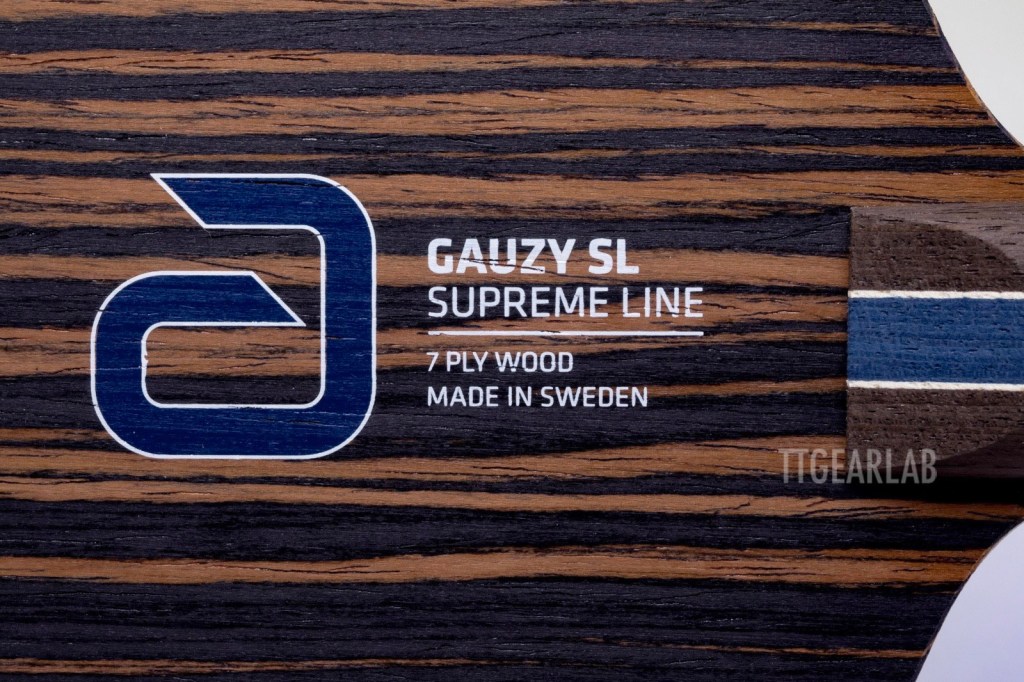
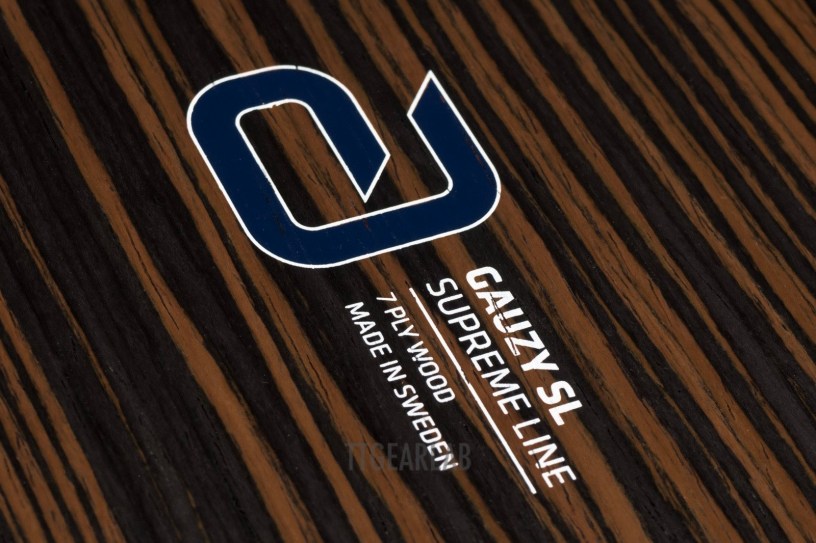
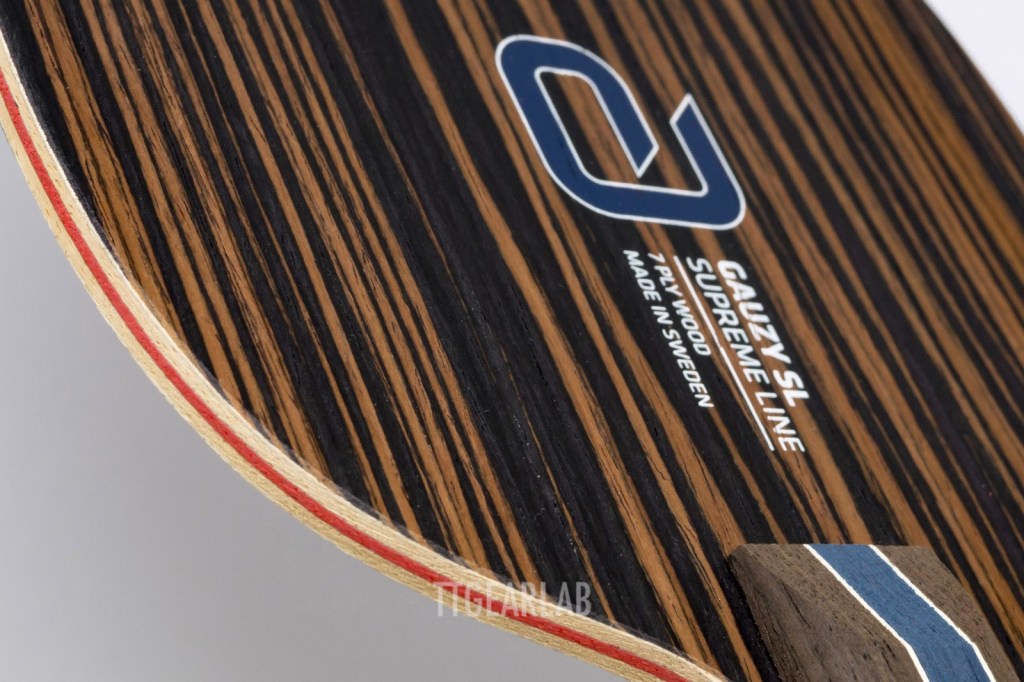
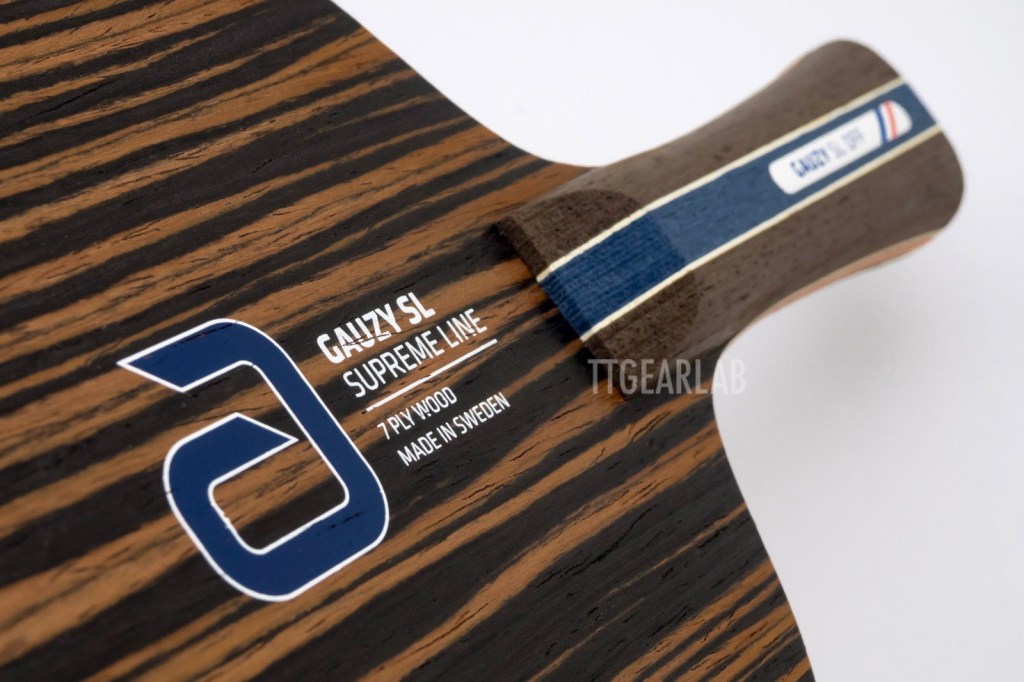
The product name, # of plies, and the origin of blade are printed along with ‘a’ logo are printed at the bottom center of the foreside of blade. From the printing we can understand that ‘SL’ is the abbreviate of ‘Supreme Line’.
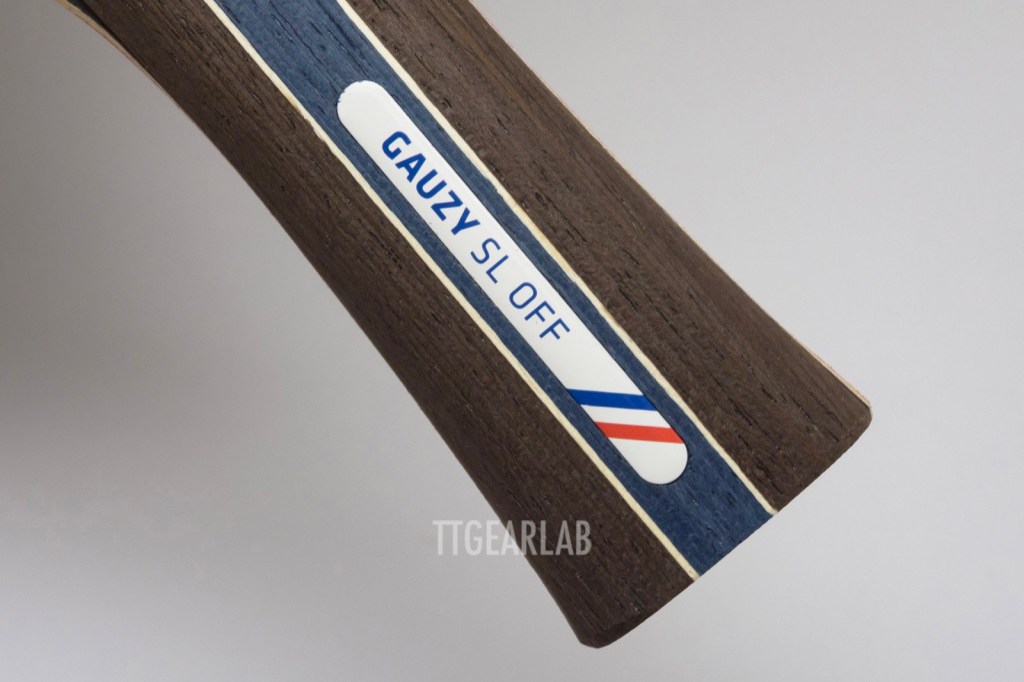
A long & narrow Aluminum nameplate is at the foreside of handle. It includes the name of blade and is decorated by ‘Tricolor’ symbol taken from the French flag. There isn’t the name or the logo of andro at the nameplate.
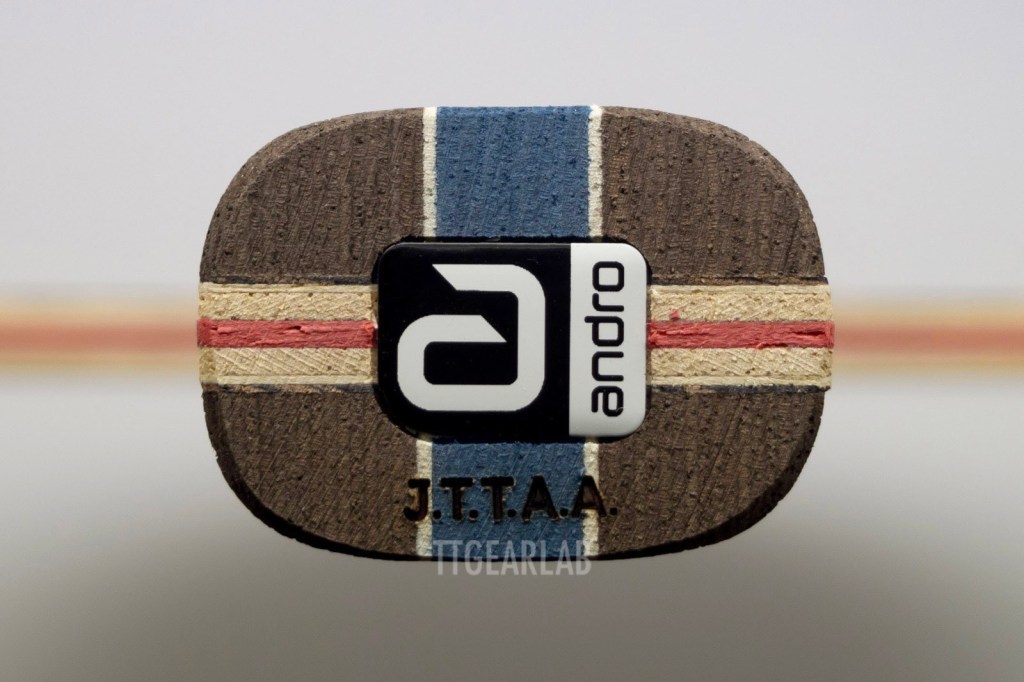
An Aluminum ‘a’ logo plate is at the end of handle. At first glance, the logo plate looks like the usual square shape with rounded corners, but if we look closely, we can see that the curvature of the rounded lower left corner is greater than that of the other three corners.
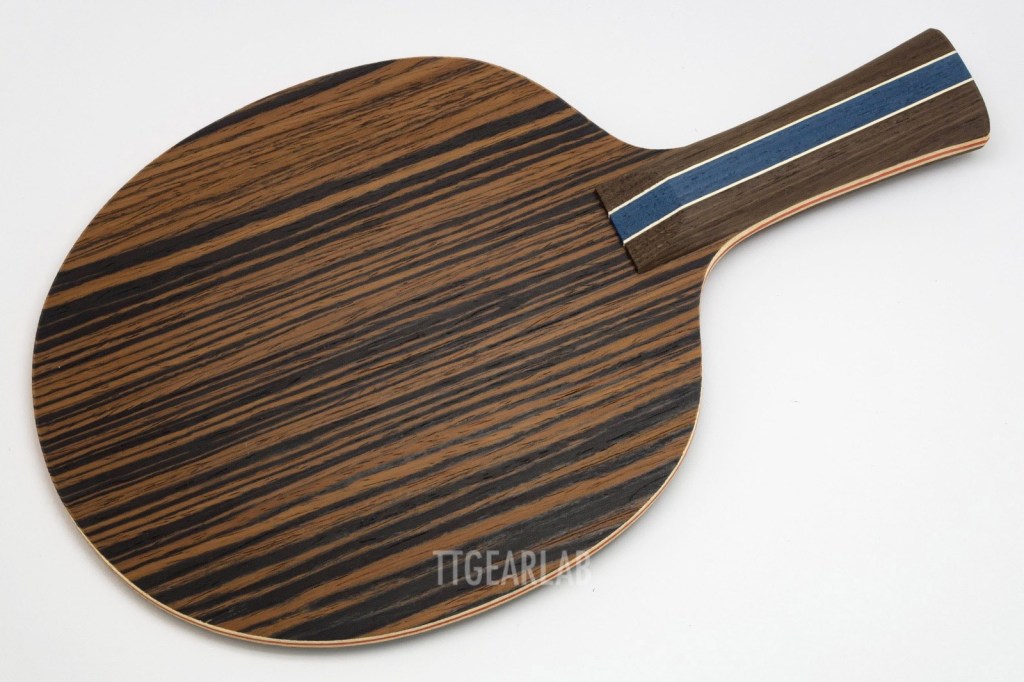
There isn’t any printing on the backside of blade head, and any Aluminum plate at the backside of handle.
Then let’s check the Performance Indices of ‘Gauzy SL OFF’.
2. Performance Indices
Performance Indices are measured objective values to represent the characteristics of table tennis gears. Concerning the detail of four performance indices, please refer to following articles in ‘About TTGearLab’ section :
- Performance indices : the way to evaluate blade by measurement
- The example of comparison by performance indices
The performance indices of ‘Gauzy SL OFF’ are as follows:
Gauzy SL OFF (average weight = 90.2g)
Ep = 1.44
Ec = 1.36 (Ec/Ep = 0.94)
Vp = 1.09
Vl = 1.17 (Vl/Vp = 1.07)
Although ‘Gauzy SL OFF’ is a kind of ‘Hardwood’ blade, its elasticity is not high. Ep (= 1.44) is even lower than 1.5 that is the standard value of 5-ply wood offensive blade. ‘Gauzy SL OFF’ isn’t the blade that can make fast ball just by the elasticity of blade, but it will require the strong impact by fast swing for giving the ball high power. Instead, we can expect high level of control and stability from ‘Gauzy SL OFF’.
Ec (= 1.36) is lower than Ep. But, the difference between Ec and Ep is not significant. Therefore Ec/Ep is close to 1.0. ‘Gauzy SL OFF’ is in the ‘Mild Hold’ range. It holds the ball a bit when the player hits the ball very strongly, but the level of hold is not ‘Deep’ but ‘Mild’. Some players will think that the response of ‘Gauzy SL OFF’ to the change of the strength of impact is almost linear. In other words, the speed of the ball is roughly proportional to the strength of impact. Low Ep and the Ec close to Ep enables the player to control the ball very precisely especially at close-to-table area, and that kind of blade is very good for modern all-round play that uses block and counter-topspin a lot.
Vp is just 1.09. It is a quite low value as the index of a 7-ply wood blade. We can expect that the primary feeling of ‘Gauzy SL OFF’ will be soft. And, Vl is 1.17, and Vl/Vp is 1.07. Therefore the feeling transferred to index finger is relatively sharper than the primary feeling, but the difference isn’t significant. Some players will feel that the distribution of feeling is somewhat uniform throughout the blade, but others will feel that it is sharper at finger.
Please click here to return to top (table of contents)
3. Comparison by Performance Indices
Then let’s compare ‘Gauzy SL OFF’ with some 7-ply wood blades and some fiber blades. Five 7-ply wood blades whose elasticities are close to that of ‘Gauzy SL OFF’, three 7-ply wood blades those are noticeably faster than ‘Gauzy SL OFF’, three very important fiber blades, and two 5-ply wood blades including reference blade have been selected for the comparison with ‘Gauzy SL OFF’.
Following is the list of the blades to be compared :
Mid-Speed 7-ply wood blades
- Stiga ‘Ebenholz NCT VII’ (avg. weight = 91.3g) : 7-ply wood blade with Ebony top layer (lightweight ones measured in October 2023).
- Butterfly ‘Korbel SK7’ (avg. weight = 87.1g) : Clipper-type, but with reduced elasticity for topspin.
- DHS ‘Hurricane Long 3’ (avg. weight = 89.0g) : All-wood version of Hurricane Long series.
- Victas ‘Swat’ (avg. weight = 87.6g) : Soft 7-ply wood blade for continuous topspin.
- Stiga ‘Clipper CR (New 6.5mm)’ (avg. weight = 81.7g) : New lightweight version of ‘Clipper CR’.
- Donic ‘Persson PowerPlay’ (avg. weight = 83.9g) : Thinner construction. Top layer is Koto.
Fast 7-ply wood blades (Not extremely fast)
- Tibhar ‘Bernadette Szöcs Signature 1’ (avg. weight = 84.9g) : 7-ply wood blade of Clipper type.
- Avalox ‘P700’ (avg. weight = 91.8) : Swedish 7-ply blade developed for Chinese players.
- Victas ‘Swat Power’ (avg. weight = 89.9g) : Faster version of ‘Swat’.
Fiber blades
- Butterfly ‘Viscaria’ (avg. weight = 87.1g) : The representative of outer-fiber blades.
- Butterfly ‘InnerForce Layer ALC’ (avg. weight = 91.2) : The standard of inner-ALC blades – 2023 version which is thicker, heavier and faster than older version measured in 2018.
- DHS ‘Hurricane Long 5’ (avg. weight = 88.1g) : Another standard of inner-ALC blades.
5-ply wood blades
- Butterfly ‘Korbel’ (avg. weight = 88.7g) : The standard of 5-ply wood offensive blades.
- Stiga ‘Allround Classic’ (avg. weight = 84.3g) : Reference blade. The most famous all-round blade.
3-1. Elasticity Indices
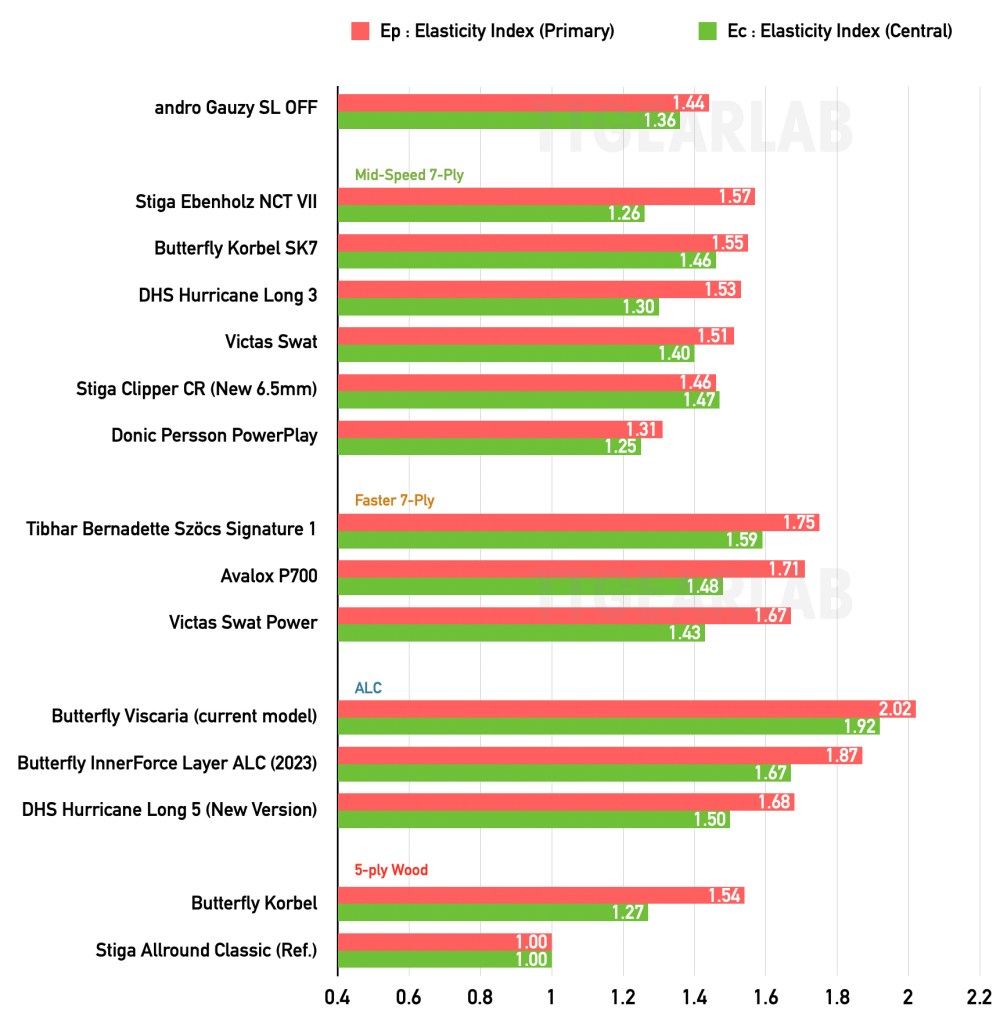
Fig.12 shows the comparison graph of Elasticity Indices.
Ep (Primary Elasticity Index) is directly concerned with the rebound speed of blade. Ec (Central Elasticity Index) is concerned with additional ‘kick’ when player hits ball very strongly.
The first group to be compared is ‘Mid-Speed 7-Ply’ group that includes six blades. (And, ‘Gauzy SL OFF’ can also be categorized into this group.) These 7-ply wood blades are soft and less elastic than traditional 7-ply wood blades those are thick, heavy and extremely elastic. The first one that can be compared with Stiga ‘Ebenholz NCT VII’ whose top layer is same as that of ‘Gauzy SL OFF’. Please note that the data is new one for new samples those are much lighter (91.3 g vs. 101.6g) than the ones used for former article on ‘Ebenholz NCT VII’ written in February 2017. The new data has also been added to former article.
The Ep of ‘Ebenholz NCT VII’ is noticeably higher than that of ‘Gauzy SL OFF’ while the Ec is noticeably lower. It means that ‘Gauzy SL OFF’ is less elastic than ‘Ebenholz NCT VII’ but gives more kick when the player hits the ball very strongly. Although those two have the same wood on their top layers, those two seems to have significantly different goals. The ones whose graphs look similar to that of ‘Gauzy SL OFF’ are ‘Korbel SK7’, ‘Swat’, and ‘Persson PowerPlay’. When compared with ‘Gauzy SL OFF’, ‘Korbel SK7’ is one step faster, ‘Swat’ is a bit faster, and ‘Persson PowerPlay’ is slower. Although there are differences in the level of elasticity, those three will be able to used for similar purpose as ‘Gauzy SL OFF’. And, the one that is similar to ‘Ebenholz NCT VII’ is ‘Hurricane Long 3’. Both of ‘Ebenholz NCT VII’ and ‘Hurricane Long 3’ holds ball very deep whan the player hits the ball very strongly, although ‘Hurricane Long 3’ is a bit slower and provides a bit more kick. Finally, ‘Clipper CR’ (lightweight ones with 6.5mm thickness) provides similar primary elasticity as ‘Gauzy SL OFF’ but gives much more kick when the player hits the ball very strongly. (It is expected that ‘Clipper CR’ is still very good for smash and block although current one is much light and slower than its thicker/heavier version. But, the players who mainly play with topspin may feel that current ‘Clipper CR’ is uncomfortable.)
The second group is ‘Faster 7-Ply’ group that includes three blades – ‘Bernadette Szöcs Signature 1’, ‘P700’ and ‘Swat Power’ – those are faster and generally thicker than the blades in the ‘Mid-Speed 7-Ply’ group. Those three are based on the traditional thick 7-ply wood construction, but have thinner constructions. The blades in this group are optimized not for smash but for topspin. (Note : ‘P700’ is originally dealt as the blade not for topspin but for smash & block. However, under current situation it can be dealt as the blade for topspin.) From the graph we can observe that the Ep’s of those three are much higher than the Ep’s of ‘Gauzy SL OFF’ and ‘Mid Speed 7-Ply’ models, but not extremely high. On the contrary, the Ec’s of just two models among three are higher than those of ‘Mid Speed 7-Ply’ models. The Ec of ‘Swat Power’ is lower than those of ‘Korbel SK7’ and ‘Clipper CR’. In this group, no model shows similar graph shape as ‘Gauzy SL OFF’.
The third group is ‘ALC’ group that includes ‘Viscaria’, ‘InnerForce ALC’ and ‘Hurricane Long 5’. It is obvious that those three are more elastic than ‘Simon Gauzy’ and ‘Mid-Speed 7-Ply’ blades. ‘Viscaria’ which is an outer-ALC blade is much faster than all 7-ply wood blades in this comparison. But, two inner-ALC blades are quite close to ‘Faster 7-Ply’ group. And between two, especially ‘Hurricane Long 5 can be directly comparable with ‘Faster 7-Ply’ group. In fact, there are many inner-ALC blades those are close to ‘Hurricane Long 5’, and the blades in ‘Faster 7-Ply’ group can be directly compared with those inner-ALC blades.
When we compare the relationship between Ec and Ep, it is interesting that the graph shape of ‘Viscaria’ which is the fastest blade in this comparison is similar to the graph shape of ‘Gauzy SL OFF’ which is much slower than ‘Viscaria’. ‘SK 7’, ‘Swat’ and ‘Persson PowerPlay’ are also showing similar shapes. If we consider only the elasticity characteristics, it is expected that the players will not experience much trouble when they switch between two among those five blades – ‘Viscaria’, ‘SK7’, ‘Swat’, ‘Persson PowerPlay’ and ‘Gauzy SL OFF’ – although there is noticeable difference of speed. (But, the story will differ if we consider also the vibration characteristics.)
Finally, the Elasticity Indices of ‘Korbel’ which is a 5-ply wood blade are quite close to those of ‘Ebenholz NCT VII’ and ‘Hurricane Long 3’. Its Vp is higher but its Vl is lower than those of ‘Gauzy SL OFF’ respectively.
Examining Ec/Ep is an easier way to understand the characteristics of blade concerned with elasticity. Fig.13 shows the relationship between Ec/Ep and Ep.

Fig.13 Ec/Ep vs. Ep
Ec/Ep expresses the ‘tendency’ of the elasticity of blade. By examining Ec/Ep and Ep at the same time, we can easily understand the behavior of blades.
On the graph, all blades except for two (including reference blade) in this comparison are in ‘Hold’ range (Ec/Ep < 1.0). And, ‘Mid-Speed 7-Ply’ group is located at left side, and ‘ALC’ group is located at right side. ‘Faster 7-Ply’ group is located between those two groups, but is overlapped with ‘ALC’ group. The modern 7-ply wood blades with enhanced elasticity are as fast as inner-ALC blades. (And, the traditional thick 7-ply wood blades those are not shown in this comparison are as fast as outer-ALC blades.)
‘Gauzy SL OFF’ is located in the range of ‘Mid-Speed 7-Ply’ group. And, if we don’t consider ‘Persson PowerPlay’, the Ep of ‘Gauzy SL OFF’ is the lowest of the Ep’s of all blades in this group. So we can notice that ‘Gauzy SL OFF’ isn’t the blade that provide high elasticity for making powerful ball. When compared with ‘Ebenholz NCT VII’, ‘Gauzy SL OFF’ is located at relatively upper left position. It means that ‘Gauzy SL OFF’ provides lower primary elasticity but gives much higher additional kick than ‘Ebenholz NCT VII’ when the player hits the ball very strongly. Therefore, the playing characteristics of ‘Gauzy SL OFF’ is much different from that of ‘Ebenholz NCT VII’. ‘Ebenholz NCT VII’ fits for the close-to-table topspin, but ‘Gauzy SL OFF’ is expected to be better for the all-round play at close-to-table area. Further, its relatively higher Ec/Ep will make ‘Gauzy SL OFF’ better than ‘Ebenholz NCT VII’ for mid-distance topspin. However, because the elasticity itself isn’t high, it may be difficult for ordinary players to perform powerful topspin from mid-distance area.
The blades whose Ec/Ep’s are at the same level as ‘Gauzy SL OFF’ are ‘Persson PowerPlay’, ‘Swat’, ‘Korbel SK7’ and ‘Viscaria’. ‘Persson PowerPlay’ provides noticeably lower Ep than ‘Gauzy SL OFF’, and therefore it requires even higher physical power of player for performing powerful topspin. ‘Swat’ and ‘Korbel SK7’ are faster than ‘Gauzy SL OFF’, but the differences aren’t significant. It may be difficult to compare those two directly to ‘Gauzy SL OFF’ because the top layer of those two are different from that of ‘Gauzy SL OFF’ (Limba vs. Ebony). However, we can expect that those two will at least provide similar playing characteristics as ‘Gauzy SL OFF’. And, in case the player require more power while keeping Ec/Ep, ‘Viscaria’ is considerable. The problem is that the difference of Ep is too big, and the adaptation may be quite difficult. In that case faster 7-ply wood blades such as Bernadette Szöcs Signature 1′ or inner-ALC blades such as ‘Hurricane Long 5’ or ‘InnerForce Layer ALC’ can be the solution although the Ec/Ep of those blades in this comparison is noticeably lower than those of ‘Gauzy SL OFF’, ‘Swat’ and ‘Korbel SK7’. Although there is noticeable difference in Ec/Ep, it may be able to easily covered by the training for adaptation if the player mainly play with topspin (especially at mid-distance area). Then next, let’s compare Vibration Indices.
Please click here to return to top (table of contents)
3-2. Vibration Indices
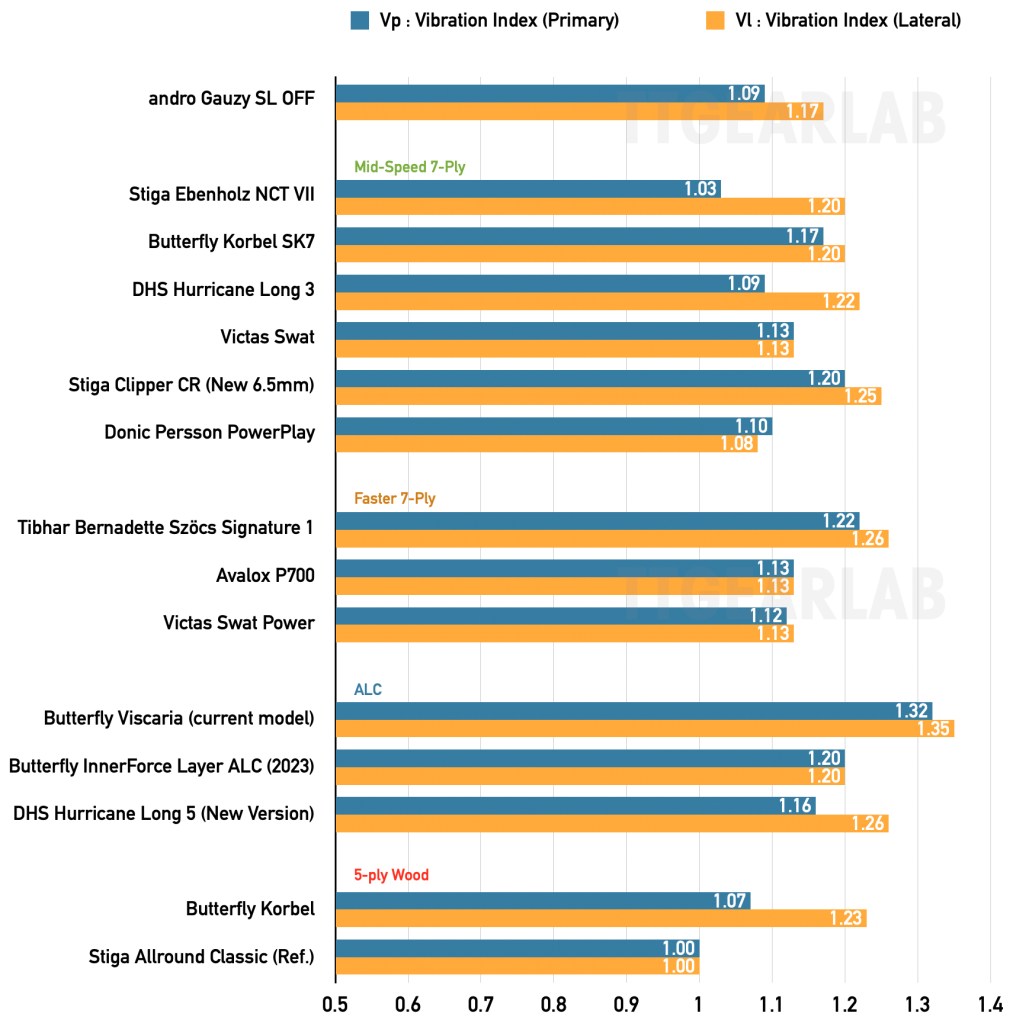
Fig.14 Comparison of Vibration Indices
Fig.14 shows the comparison graph of Vibration Indices. Vibration Indices are concerned with feeling. Vp indicates primary feeling which is transferred to player’s palm. And, Vl is the feeling at the edge of the wing – the lower side of blade head. It is felt by player’s index finger or middle finger.
In the first group (= ‘Mid-Speed 7-Ply’ group) the blade which is closest to ‘Gauzy SL OFF’ is ‘Hurricane Long 3’. But, its top layer is different from that of ‘Gauzy SL OFF’, and it showed different character when we observed Elasticity Indices. Because Ec (or Ec/Ep) also affects what the player feel about the blade, there will be many players who doesn’t agree that ‘Hurricane Long 3’ provides similar feeling as ‘Gauzy SL OFF’. And, ‘Ebenholz NCT VII’ whose top layer is same as that of ‘Gauzy SL OFF’ shows lower Vp and a bit higher Vl. If there isn’t significant difference in weight, ‘Ebenholz NCT VII’ is basically softer than ‘Gauzy SL OFF’ but gives a sharper feeling to the index finger of player. ‘Korbel SK7’ and ‘Clipper CR’ are noticeably harder than ‘Gauzy SL OFF’ even though those two have softer top layer. Probably those two will give soft ball touch thanks to the soft Limba top layer. However, because the thicker construction of those two make the feeling relatively harder. Finally, the Vp of ‘Persson PowerPlay’ is just a bit higher than that of ‘Gauzy SL OFF’. If we consider the difference by piece, we can consider that there isn’t meaningful difference of Vp between those two blades. However, the Vl of ‘Persson PowerPlay’ is noticeably lower than that of ‘Gauzy SL OFF’.
In the second group (= ‘Faster 7-Ply’ group), there isn’t any model that shows similar character as ‘Gauzy SL OFF’. ‘Bernadette Szöcs Signature 1’ shows very similar values as ‘Korbel SK7’ and ‘Clipper CR’. Probably that is because those three have similar classic 7-ply wood constructions, and even the thicknesses of those three are not that different. The Vp and Vl of ‘P700’ are same as, and those of ‘Swat Power’ is very close to those of ‘Swat’. Although ‘P700’ and ‘Swat Power’ are more elastic than ‘Swat’, there isn’t significant difference in feeling. (Note : Of course, there is more thing that can’t be described by current four Performance Indices, and the Ec also affects what the player feels. So the feeling of ‘Swat’ can’t be 100% same as that of ‘P700’ or ‘Swat Power’. However, anyway the difference isn’t significant.)
In the third group (= ‘ALC’ group) the Vp and the Vl of Viscaria are much higher than those of all blades in this comparison. (We may think that ‘Viscaria’ is quite soft blade. But, that is just ‘softer than expected’. When ‘Viscaria’ was launched, it was the blade softer than the blades with same speed level.) Even two inner fiber blades – ‘InnerForce Layer ALC’ and ‘Hurricane Long 5’ have higher Vibration Indices than ‘Gauzy SL OFF’. Between two, ‘Hurricane Long 5’ shows similar graph shape as ‘Gauzy SL OFF’. The graph shape of ‘InnerForce Layer ALC’ is similar to those of ‘P700’, ‘Swat’ and ‘Swat Power’, but the values are a bit higher than those of 7-ply wood blades.
Finally, the Vp of ‘Korbel’ which is a 5-ply wood blade is a bit lower but the Vl is higher than those of ‘Gauzy SL OFF’ respectively. But, because the difference isn’t big, there will be some players who think that the feeling of ‘Gauzy SL OFF’ is close to that of ‘Korbel’. But, the players who are more sensitive to elasticity characteristics will think that those two are quite different from each other.
Examining Vl/Vp is an easier way for the comparison of the tendency of feeling. Fig.15 shows the relationship between Vl/Vp and Vp for easier comparison.
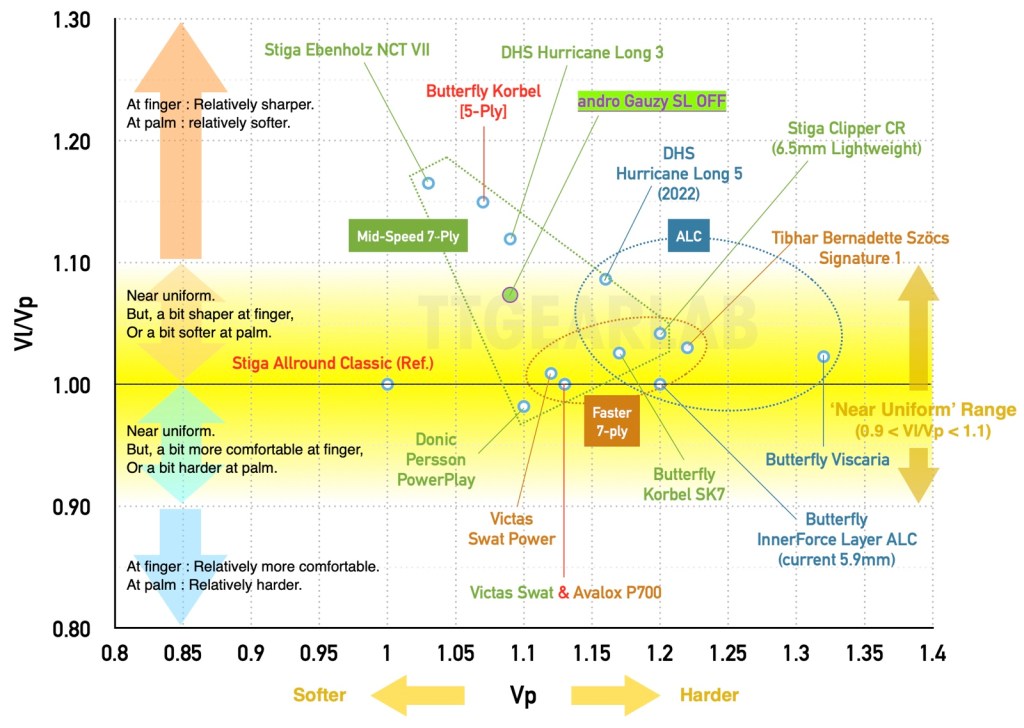
On the graph, many blades in this comparison are placed in upper parts of the graph – ‘Relatively sharper at finger’ range. However, there are also many blades those are close to, or on the ‘uniform’ line (Vl/Vp = 1.0) That is because the comparison at this time is dealing with many 7-ply wood blades. Many typical 7-ply wood blades are located close to the uniform line. (Some blades are placed at the area further down from the uniform line. But, at this time, such kind of blade isn’t included in the comparison.)
‘Gauzy SL OFF’ is located in the ‘Uniform’ range. But, that is just because TTGearLab is setting the scope of ‘Uniform’ range rather large (0.9 < Vl/Vp < 1.1). We can observe that there is sufficient distance between the location of ‘Gauzy SL OFF’ and the uniform line (Vl/Vp = 1.0), while there are seven 7-ply wood blades those are located very close to uniform line. So from the graph we can understand that ‘Gauzy SL OFF’ gives different feeling from those seven 7-ply wood blades – ‘Persson PowerPlay’, ‘Swat’, ‘Swat Power’, ‘P700’, ‘Korbel SK7’, ‘Clipper CR’ and ‘Bernadette Szöcs Signature 1’.
We will be able to think that the closest one to ‘Gauzy SL OFF’ is ‘Hurricane Long 3’ although there is unignorable difference of Vl/Vp between two blades. Both of two certainly gives relatively sharper feeling at index finger, while the seven blades close to uniform line are not. And, ‘Korbel’ gives sharper relative feeling while its primary feeling is softer than that of ‘Gauzy SL OFF’. ‘Ebenholz NCT VII’ goes one step further than ‘Korbel’. We can observe that the gap between ‘Ebenholz NCT VII’ and ‘Gauzy SL OFF’ is quite big, although there is a common feature – both of those two are far from the seven 7-ply wood blades close to uniform line. The primary feeling of ‘Gauzy SL OFF’ is harder than that of ‘Ebenholz NCT VII’ (if those two are similar in weight), but the distribution of the feeling of ‘Gauzy SL OFF’ is much more uniform than that of ‘Ebenholz NCT VII’.
‘Hurricane Long 5’ (current version from 2022) in harder than ‘Gauzy SL OFF’ in primary feeling, but its Vl/Vp is close to that of ‘Gauzy SL OFF’. So ‘Hurricane Long 5’ will be a good solution if the player likes the feeling of ‘Gauzy SL OFF’ but needs more power. Although the Ec/Ep of ‘Hurricane Long 5’ is noticeably lower than that of ‘Gauzy SL OFF’, the similarity of Vl/Vp will be able to cover it if the player can spend time for the adaptation to ‘Hurricane Long 5’. (And vice versa. If the player who is using current version of ‘Hurricane Long 5’ wants to reduce the elasticity of the hardness, ‘Gauzy SL OFF’ can be good solution.) In the description of Elasiticy Indices ‘Bernadette Szöcs Signature 1’ and ‘InnerForce Layer ALC’ were mentioned together with ‘Hurricane Long 5’ as the replacement of ‘Gauzy SL OFF’ for enhancement of power. However, the change to ‘Bernadette Szöcs Signature 1’ and ‘InnerForce Layer ALC’ is expected to be more difficult than the change to ‘Hurricane Long 5’ because of the difference of Vl/Vp.
Please click here to return to top (table of contents)
4. Field Test
‘Gauzy SL OFF’ has been briefly tested at table tennis court. The test wasn’t an intensive one, and not many kinds of rubbers were combined. However, it was sufficient to find out the basic characteristics of the blade. Please note that the result of the field test is no more than the opinion of TTGearLab, and there can be players who disagree with it. The field test isn’t an objective test, and therefore it is always affected by the personal characteristics of the tester and the environment of testing.]
Before dealing with the technics, what needs to be mentioned is the combination with the rubber. We may think that this blade will be hard and fast because of the material of top layer. However, ‘Gauzy SL OFF’ is the blade with moderate elasticity and soft feeling. Therefore, in order to make a powerful shot, it is necessary to combine it with a rubber which is fast and hard to a certain extent.
The ones those are considered optimal are top models those focus on spin and whose sponge density exceeds 50°. For example ‘Rasanter R53’ and ‘Dignics 05’. We may worry about the hard feeling, and there will be some players who don’t like the combinations with those rubbers. However, basically those rubbers make good harmony with the hard Ebony top layer, and don’t put much of a strain on the feeling. The combinations with those rubbers are suitable for modern all-round play because those make various technic very easy and controlled precisely.
In case the player lays more emphasis on stability and safety, lowering the sponge density below 50° will not be bad choice. Then the sound becomes more lively, the feeling becomes more dynamic, and the stability becomes improved, although producing high power will become difficult. But, lowering the sponge density below 45° isn’t recommended. It makes overall feeling too soft, and at the same time there will also be the uncomfortable feeling that the ball collides with the surface of blade due to the hard Ebony top layer. (The result differs also by player. If you want to combine the rubber with soft sponge, please attach it on only one face of ‘Gauzy SL OFF’ and test it at the beginning. And then attach it also on another face if there isn’t any problem in the testing.)
The combination with sticky rubber seems to be not as good as the case that sticky rubber is combined with ‘Ebenholz NCT VII’. Of course the balance and the ease of use aren’t bad. However, it doesn’t fully utilize the ability of sticky rubber that provides maximum power when the player focuses on rotation by dragging the ball. That is probably because the level of hold of ‘Gauzy SL OFF’ is not as big as that of ‘Ebenholz NCT VII’. If you want to just focus on control and strong rotation, combining the sticky rubber with softer sponge, for example ‘Rasanter C48’, may be considerable. But, the basic recommendation by TTGearLab are non-sticky rubbers with harder sponges.
Overall hitting feeling is excellent. The harmony of soft feeling of core and a bit hard feeling of surface makes very dynamic sensation of hitting. Sound is clear and pleasant although it isn’t as high as expected. Excellent feeling and sound provide very accurate feedback. That advantage is shown from a light warm-up rally.
Topspin is very easy thanks to moderate elasticity and soft feeling. Precise feedback makes the topspin even easier. However, while the stability of topspin is very high, it is difficult to make fast ball. If the player mainly plays at mid-distance area, it is especially difficult to perform powerful topspin as Simon Gauzy does. Very high level of skill and physical strength is necessary. For most of players, it is recommended to play with continuous high loop instead of trying powerful topspin if the players play at mid-distance area. In that case, it seems that the rubber with high density sponge for example ‘Rasanter R53’ makes the best harmony with ‘Gauzy SL OFF’.
At close-to-table area, performing fast and powerful topspin is easier than the case of mid-distance topspin. However, it is much easier to concentrate of stability and rotation, also at close-to-table area. Regarding the density of sponge, the combination with medium sponge rubber such as ‘Rasanter R48’ provides extreme safety and control. But, because the hard sponge rubber such as ‘Rasanter R53’ also gives more than sufficient stability, lowering sponge density for stability isn’t necessary if the player doesn’t especially hate hard sponge. It will be good to just select sponge density by the personal preference.
Block against topspin is also stable. However, because of low speed, it tends to easily allow the opponent’s continuous attacks if the player can’t send the ball to severe course. For that reason, counter-topspin at close-to-table area is more effective than block. It is easy to change the situation from defense to offense by counter-topspin. At close-to-table area, counter topspin is recommended not only for forehand but also for backhand. Regarding the density of sponge, hard sponge is basically recommended because it provides very good balance for counter-topspin and block. But, medium sponge isn’t bad if the player keeps the position close-to-table and plays mostly with quick topspin and counter-topspin.
Stop and flick are also very easy and precise thanks to the moderate elasticity. However, since the speed of the flick isn’t high, it is easy to be counterattacked by the opponent if the rotation of ball isn’t sufficiently strong.
‘Gauzy SL OFF’ is considered as the blade suitable for modern all-round play. Continuously playing with very aggressive topspin aiming at rising isn’t bad, but not best because the feeling of deep hold isn’t sufficient. Rather than that kind of playing style, modern all-round style that uses a variety of technics seems to be better. In that case, the basic playing position is close-to-table area, but playing at mid-distance area is also possible if hard sponge rubber such as ‘Rasanter R53’ is combined. For ordinary players powerful topspin from mid-distance area will not be easy because ‘Gauzy SL OFF’ is relatively low elastic among 7-ply wood blades. If the player wants to perform power play not also at close-to-table area but also from mid-distance, it is recommended to select more elastic blade.
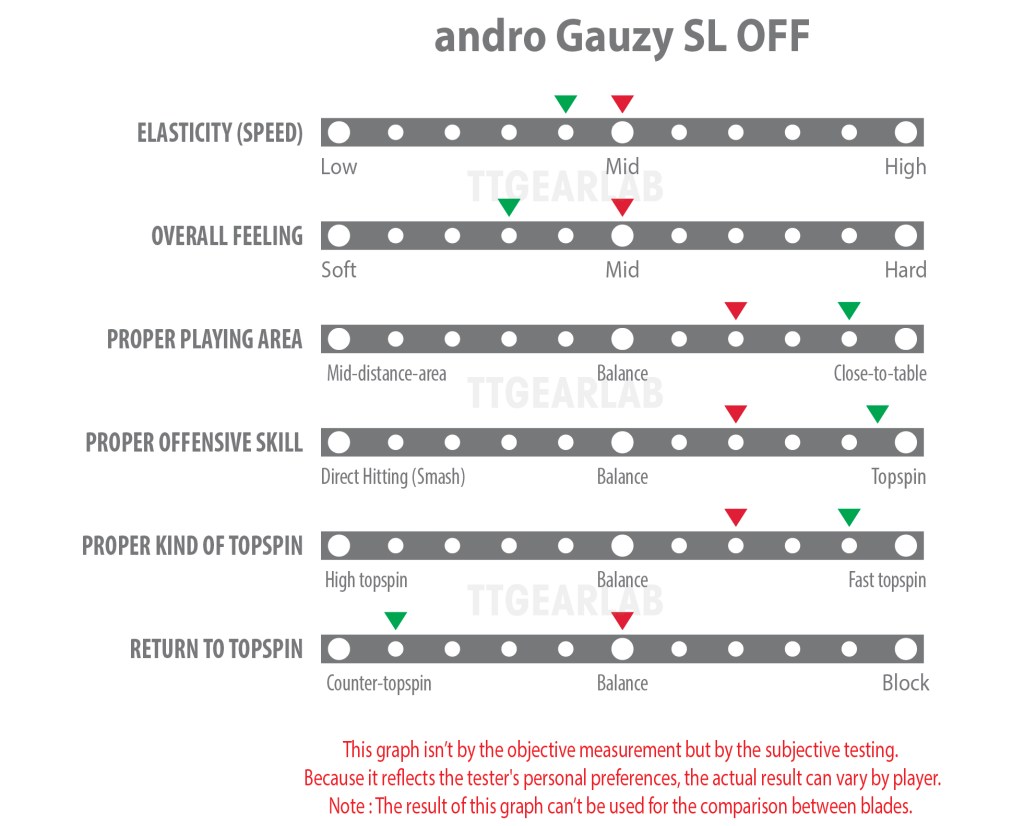
Below is the testers’ opinions on the ‘Gauzy SL OFF’. Testers are distinguished by the color of indicator. (Red and green.)
Please click here to return to top (table of contents)
5. Summary
andro ‘Gauzy SL OFF’ is 7-ply wood a blade specially developed for Simon Gauzy. The characteristics of ‘Gauzy SL OFF’ can be summarized as follows :
- ‘Gauzy SL OFF’ is a 7-ply wood blade with hard Ebony top layer, and it can be categorized as modern mid-speed 7-ply wood blade. Among 7-ply wood blades, it provides relatively low value of primary elasticity. But, its central elasticity is what we can expect from mid-speed 7-ply wood blade.
- The feeling of ‘Gauzy SL OFF’ is what we can expect from modern 7-ply wood blade. Although its ball touch at the surface is somewhat hard due to the hard top layer, its overall feeling isn’t hard but soft. And, the feeling transferred to the finger through the wing of blade is relatively sharper than the primary feeling. Its value is higher than those of many 7-ply wood blades based on traditional construction, and that makes ‘Gauzy SL OFF’ unique.
- When compared with ‘Ebenholz NCT VII’ which has same kind of wood at top layer, ‘Gauzy SL OFF’ is a bit slower but gives more kick than ‘Ebenholz NCT VII’, and is a bit harder but the feeling transferred to the index finger is less sharp.
- ‘Gauzy SL OFF’ fits for modern all-round style or aggressive topspin at close-to-table area.
Although the top layer of ‘Gauzy SL OFF’ is a hard wood, ‘Gauzy SL OFF’ isn’t a fast blade. It is a soft blade with moderate elasticity, and therefore it doesn’t make fast ball by its elasticity. To make fast and powerful shot, sufficient physical strength of the player is necessary. Therefore, it will be difficult for ordinary players to play like Simon Gauzy with this blade. ‘Gauzy SL OFF’ is recommended not for power player but for modern all-round player. If the player requires higher power, fiber blade such as ‘Synteliac VCI OFF’ will be better choice. However, if the player prefer safety to power, ‘Gauzy SL OFF’ will be one of the best solutions.
PROS :
- Excellent feeling – soft but dynamic feeling with clear feedback.
- Ease of performing a variety of topspin technics with strong rotation.
CONS :
- Elasticity is lower than expected. Power play requires high physical strength of player.
- The blade can’t fully utilize the ability of sticky rubber in case it is used for close-to-table topspin.
VERDICT :
- A 7-ply wood blade which provides excellent feeling and high level of stability.
RECOMMENDATION :
- The modern all-round player who lays emphasis on the safety.
Please click here to return to top (table of contents)
 TTGearLab
What factors will effect the ability of sticky rubber?Why some stiff blades go well together with hard chinese sticky rubbers,but some soft blades like Gauzy SL Off not,is it because of the hard ebony top layer?
LikeLike
There isn’t enough data to explain it. We can only make a few guesses. And, what matters is how we play with that combination.
In fact Gauzy SL OFF also go well with sticky rubbrers. It’s just not the best. If we keep a little distance from the table, the harmony of low elasticity of Gauzy SL OFF and stickiness of the rubber surface makes offensive shots slow. The stiff blades you meant provide higher elasticity than Gauzy SL OFF, and that additional elasticity compensates for the slowdown caused by stickiness.
To make more effective attack by the combination of Gauzy SL OFF and sticky rubbers, we have to keep our position very close to table and aim at rising of ball. Then the result is good. Because we are aiming at very early timing, the elasticity isn’t problem. But, the testers felt that we’d better keep the racket angle closed to some level, and there is little freedom of racket angle. Differently speaking this combination is somewhat sensitive to racket angle. If we open the racket angle, the feeling becomes stiffer than expected, and the power of ball decreases when we swing very fast. That is probably because the ‘deep hold’ of Gauzy SL OFF isn’t sufficient. In the same situation Ebenholz NCT VII gives better freedom of racket angle.
So I’m not 100% sure but I think that ‘for the very aggressive close-to-table topspin with sticky rubbers’ the blade that holds ball very deep is better. This tendency seems to be more pronounced when the surface is hard.
On the contrary Gauzy SL OFF showed better result than Ebenholz NCT VII when non-sticky rubber such as Rasanter R53 is attached and used for modern all-round play. Evan in close-to-table topspin it gives very good result.
(Please note that the result of testing at court is always subjective, and differs by tester and playing condition.)
LikeLike
Hello! What kind of blade is best suited for long pips 0x close to the table blocking? And what about short pips forehand?
LikeLike
There isn’t right answer for that question. But, for blocking with OX version of long pimple rubber, some very thick blades with thick balsa core is recommended. There are some makers specialized for that kind of playing and equipments.
And, for that case, I can’t recommend shor pimples rubber for forehand side. The combination of foreside short and backside long OX is very unique combination, and it is very unfamiliar to me. 🙂 So I don’t have sufficient knowledge of that kind of combination. Another problem will be the weight balance. OX rubber is very light in weight, and short pimples rubber is also light. And, the blade I recommended first is also very light. Then the total weight may be too low. The solution is to find blade to thick traditional 7-ply blade whose weight is around 100g. But, I’m not sure whether long OX will fit for that kind of blade or not.
LikeLike
You are doing a fantastic job!
I think many beginners (like me) want to get more objective information about relativly affordoble and not to fast blades. Sooner or later I hope to found on this blog perfomance indexies for Yasaka Sweden Classic, Yasaka Sweden Extra, Xiom Allround S and ofcourse Yasaka Ma Lin Soft Carbon. Maybe you can publish some comparison of blades for beginners?
Whith best regards.
LikeLike
Thank you for comment. Some models among the blades you mentioned will be measured sooner or later.
And, I’m preparing for the article on the beginner’s blades. I have to get some more samples for it. 🙂
BTW, you will be able to see the Performance Indices of Xiom Allround S from following article :
Although the one on that article is ‘Classic Allround S’ with older design, its specification is 100% same as current ‘Allround S’.
One problem of that model is that the deviation of values is quite big because it is a thin pure-wood blade. So you will be able to hardly find the one piecs that is same as another piece. There is big difference piece by piece.
LikeLike
Great article, as always. This is sort of off topic, but was wondering if you could review a Yasaka Reinforce LT? Curious how its control is so good. If we could identify exemplary blades at lower price points its would be a massive boost more many players.
LikeLike
Thank you for comment. I don’t have Yasaka Reinforce LT. I’m not sure whether I can get it soon or not, but I will seriously consider to get and measure it.
LikeLike
Thank you, my friend. Thanks again for the reviews and data, theres nothing else like this, that that I know of. I think this website has saved people a LOT of money lol take care 🙏
LikeLike
🙂
LikeLike