Butterfly ‘Viscaria’ which is the best seller of Butterfly is the representative of the ‘outer-fiber’ blade. And, it is also the representative of all fiber blades. ‘Viscaria’ had been announced in late 1993 as the new fiber blade of model year 1994, and started to be sold on 21th November 1993. ‘Viscaria’ is a very important blade in the history of table tennis blade because it is the first blade for which composite material is used. Arylate Carbon (= ALC) which is first used for ‘Viscaria’ is currently dealt as the standard material for fiber blades. ‘Viscaria’ had once been discontinued, and replaced by ‘Timo Boll Spirit’ in most of market except for China. But, thanks to the Zhang Jike’s performance with ‘Viscaria’, it could be launched again in 2019. During 30 years, the specification and the graphic design of handle have been changed several times. This article shows the current model of ‘Viscaria’ and compare it with mid-term model that is generally called as ‘Old Viscaria’.

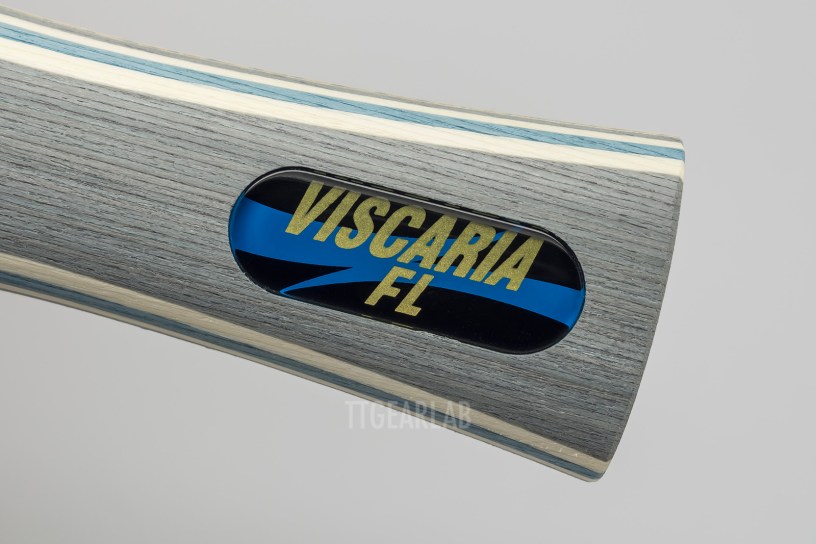
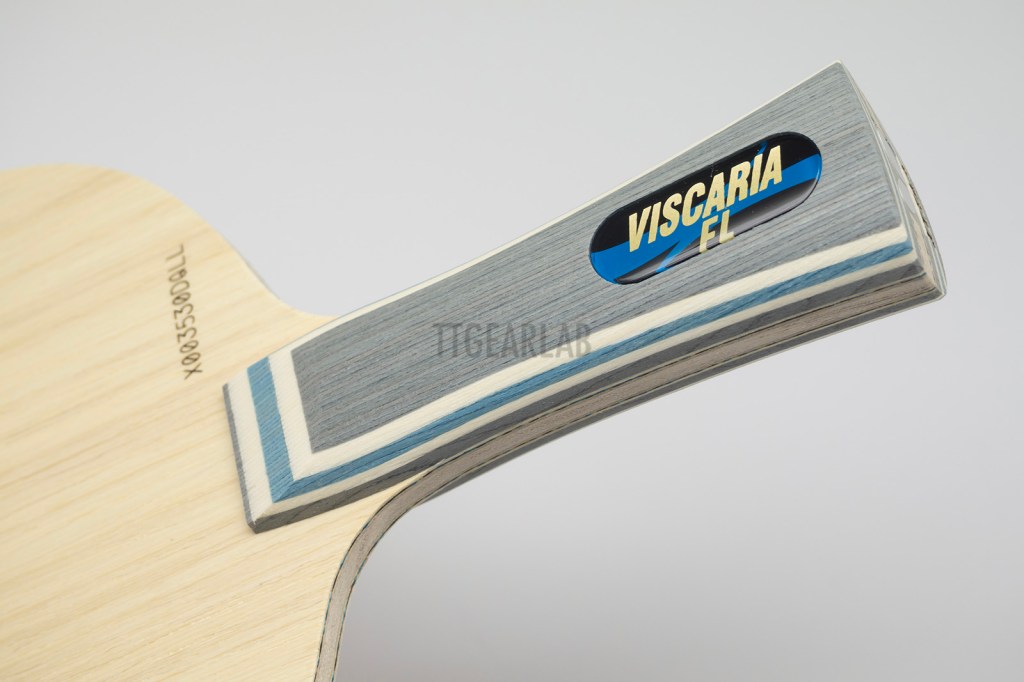
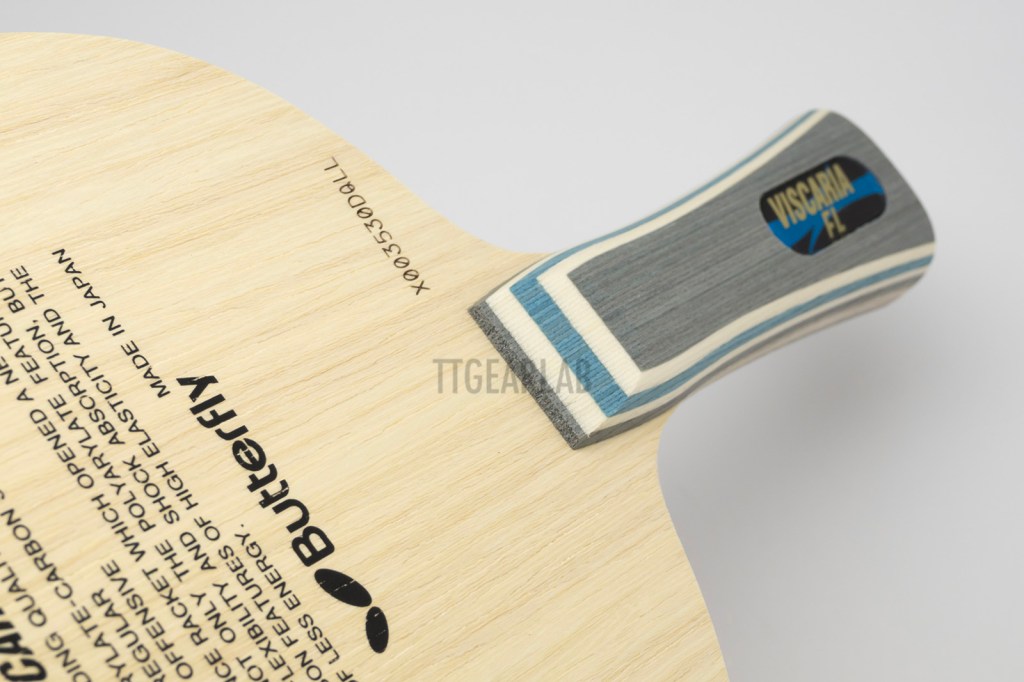
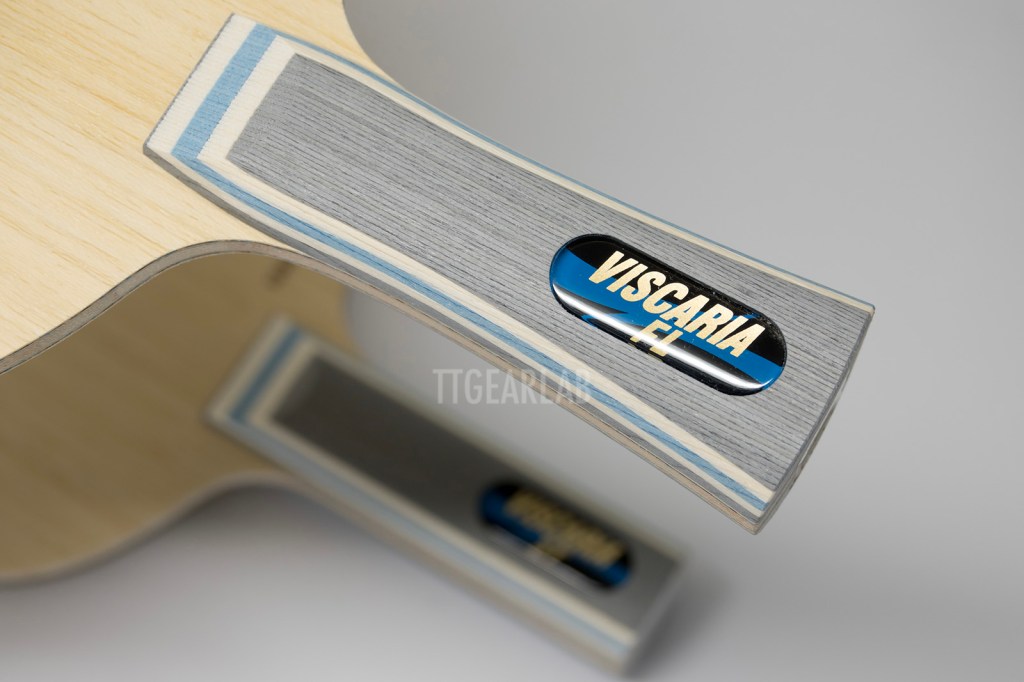
Above picture is FL handle version of new ‘Viscaria’ that was launched in 2019. The overall image has not been changed during 30 years.
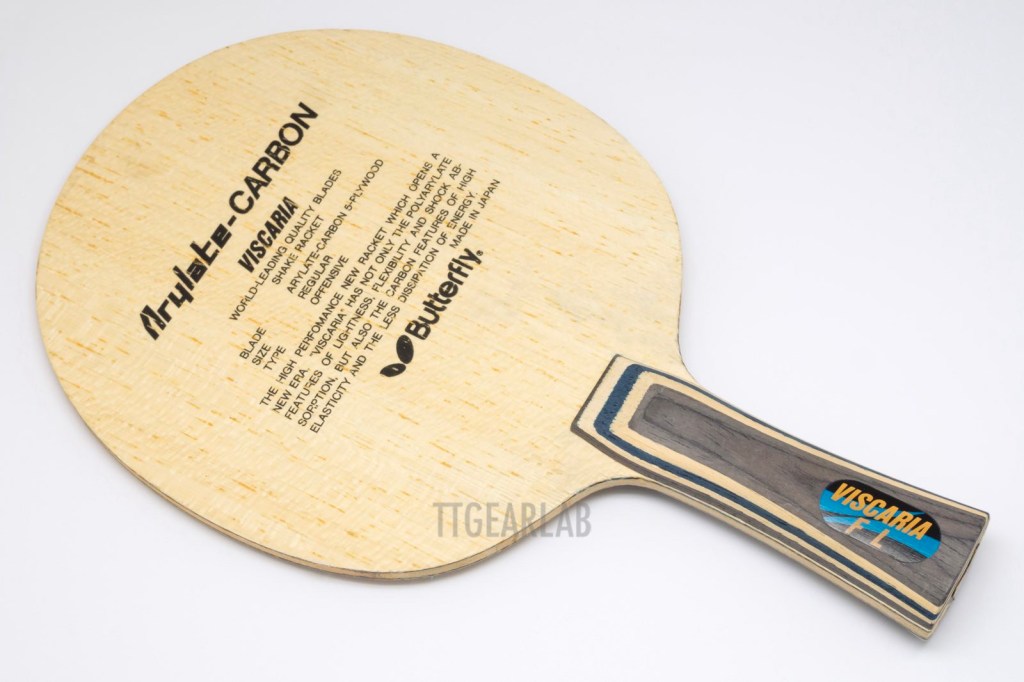
Above is the early version of ‘Viscaria’ that was launched in late 1993. Although there are differences in details, we can notice that there hasn’t been change of concept. But, the handle of early version is noticealby thinner than that of current version (2019-) or mid-term version (1998-2018).
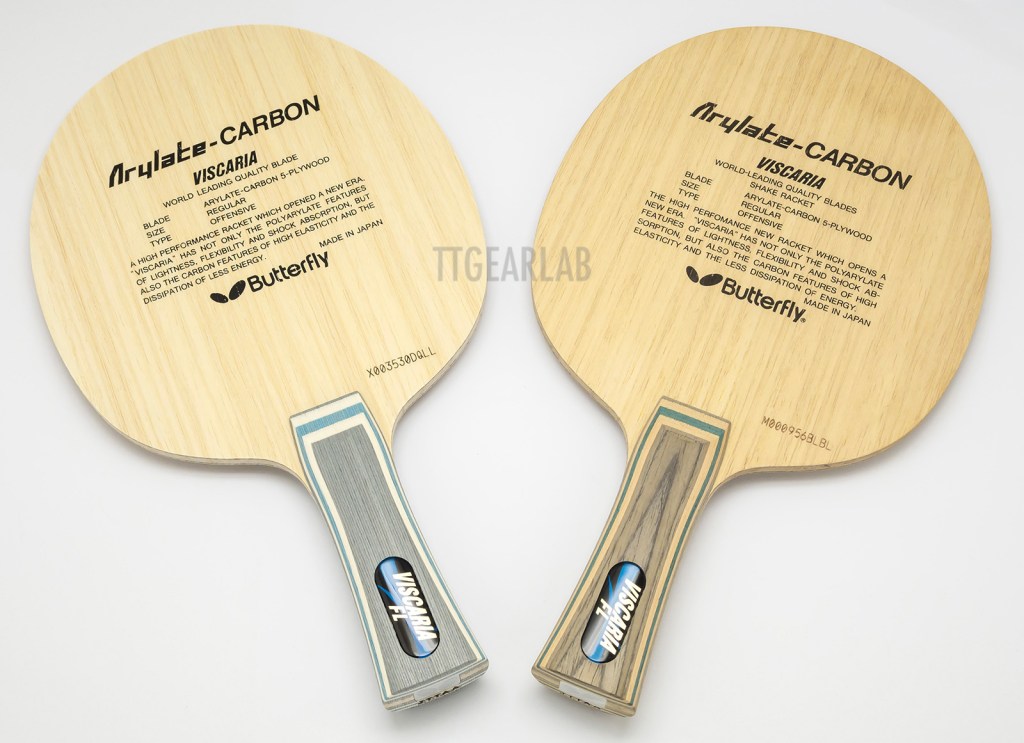
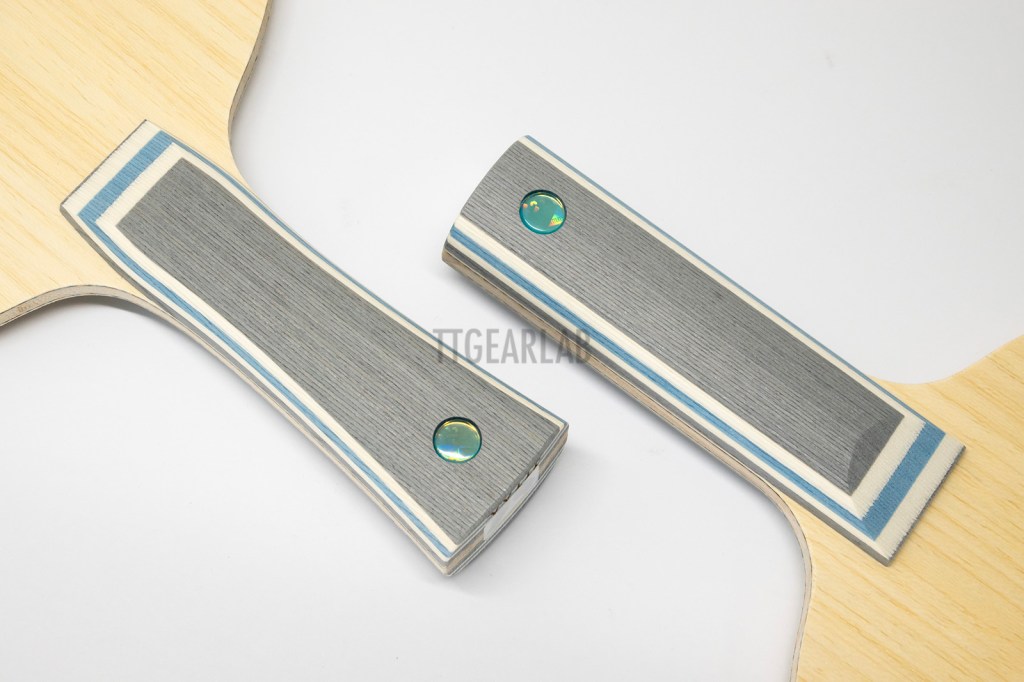
Above is the comparison between current version (left one) and mid-term version (right one). If a player mentions ‘old Viscaria’, in most cases it means the mid-term version that was produced from 1998 to 2018. Because the ‘mid-term’ is so long, the details has been changed two times. The logo plate at handle end was changed from butterfly-shaped brass plate to square aluminum plate, and the serial number was added at right bottom of the head.
From above picture, we can notice the difference of the material of handle. The handles of early version and mid-term version are made of ayous that is considered as a classic material for handle of table tennis blade. However, the handle of current version is made of Italian fineline. For that reason the color of the handle of current version is more vivid than that of old (= mid-term) version. And, if we look more cafefully, we can notice that there is also the difference of the typeface that is used for the text on blade head.

The logo plate of current version includes new logo that was started to be used from 2014, while the logo plate of mid-term version includes old logo.
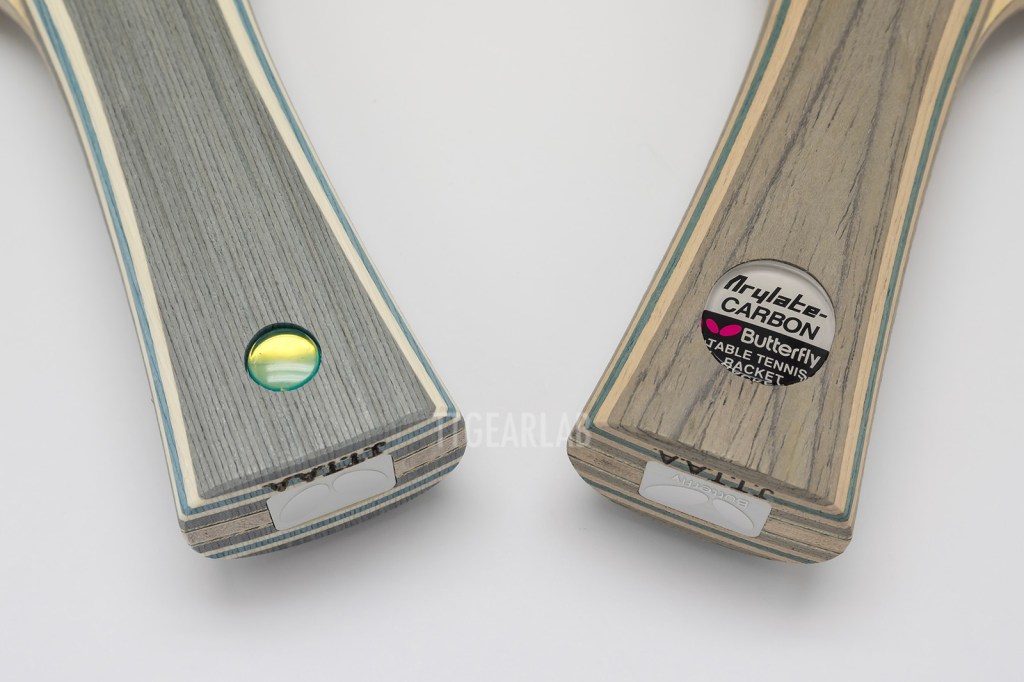
Backside lens of current version is a small hologram lens that is currently used for all models of Butterfly blades. On the contrary, the backside lens of mid-term version is bigger, and incldes the name of artificial material and Butterfly logo.
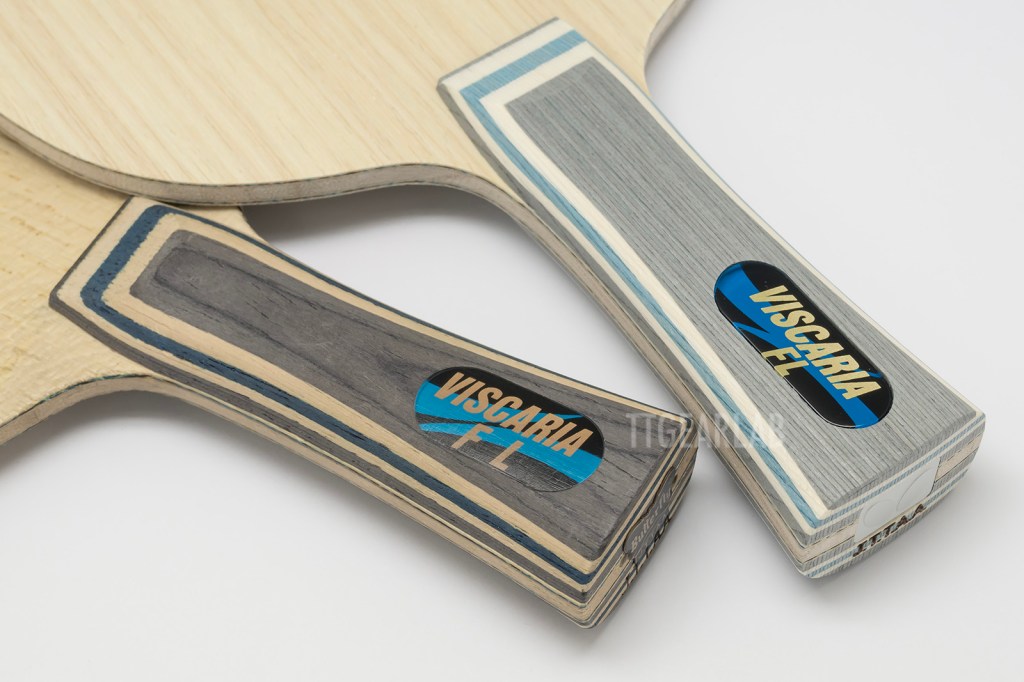
The handle of current version looks totally different from that of early version (MY 1994). The color of early version is darker than that of current version. Also, the shape of plastic lens of current version is different from that of early version. The plastic lens of early version looks very luxurious although it isn’t an aluminum plate. On the contrary the plastic lens of current version looks normal. The normal plastic lens has been used from mid-term version. (I.e. from around 1998.)
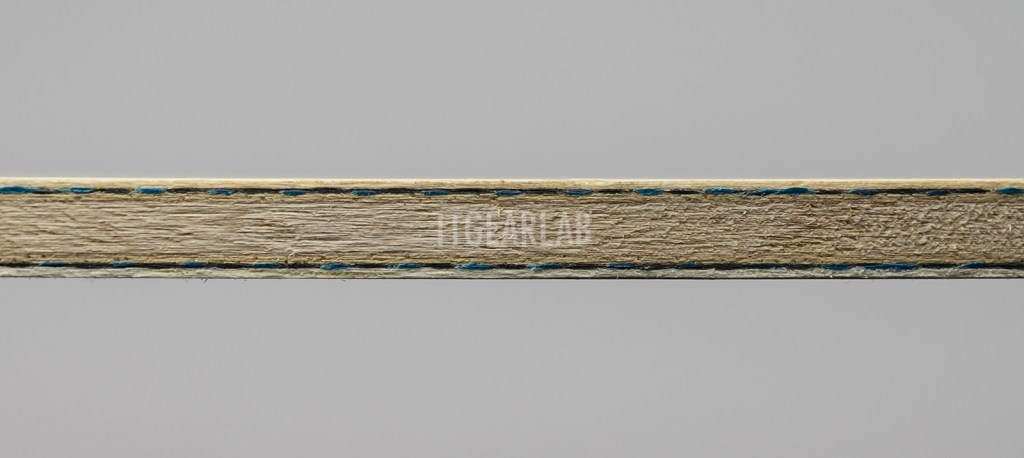
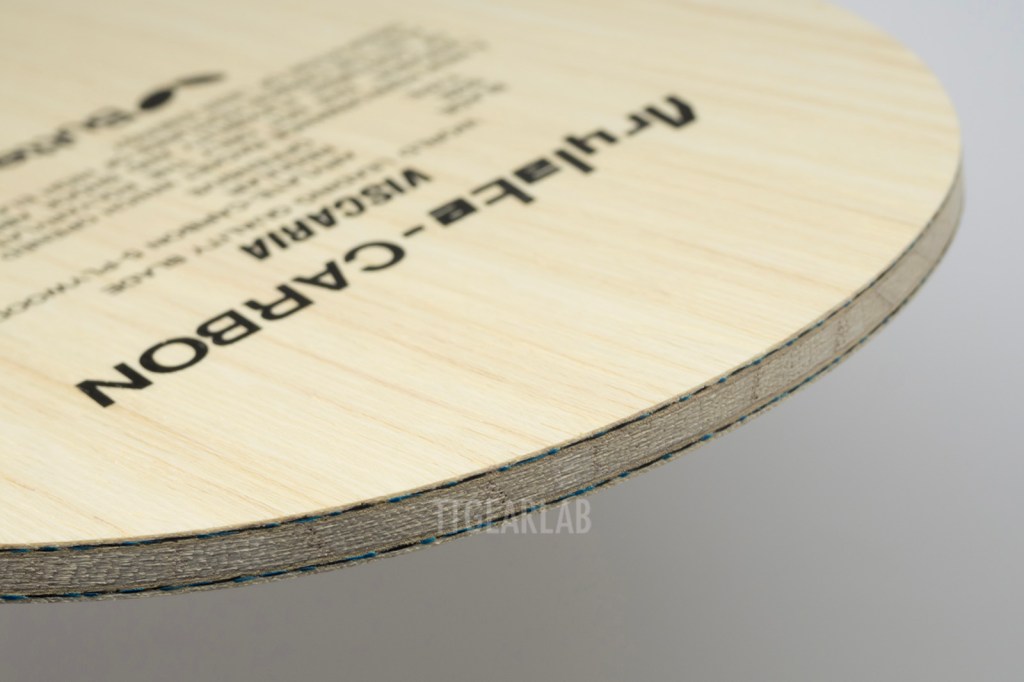
The blade construction hasn’t been fundamentally changed during 30 years. Top layer is Koto. Middle layer is Ayous. Center layer is Kiri. And, ALC (Arylate Carbon) is placed directly under the top layer.
However, there has been the change of thickness. For long time the tickness had been written as 5.7mm on Butterfly catalog. However, it was changed to 5.8mm form 2015. As the catalog indicates, the actual (average) thickness had been around 5.7mm. So the thickness of early model and mid-term model is around 5.7mm. However, the thickness of current version is around 5.8mm. Although the difference is only 0.1mm, it is very big difference for sensitive players. They will feel that current version is a different blade from mid-term version.
At the same time with current version of ‘Viscaria’, the specification of ‘Zhang Jike ALC’ was changed. The thickness of ‘Zhang Jike ALC’ until ‘Q’ serial number is 5.7mm. However, the thickness of ‘Zhang Jike ALC’ from ‘R’ serial number is 5.8mm. And, ‘Fan Zhendong ALC’ follows the specification of ‘Zhang Jike ALC’ from ‘R’ serial number.
Followings are the details of current version.
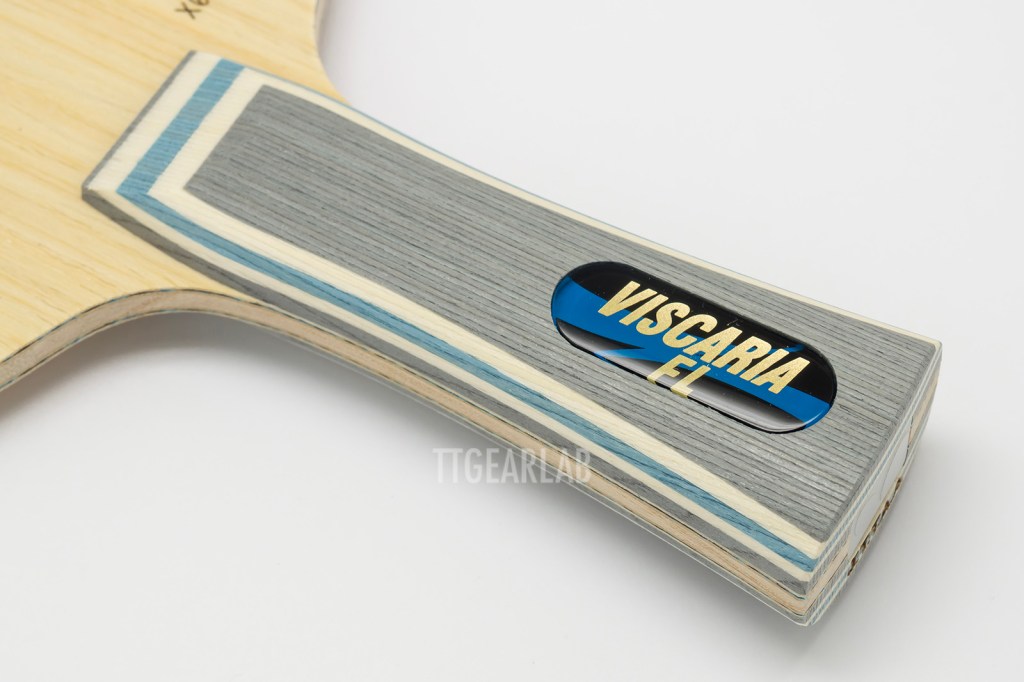
The shape of FL handle of current version is based on the mid-term version. But, the height is bigger by 0.1mm (24.9mm vs. 24.8mm at the end, and 22.7mm vs. 22.5mm at thumb). If the basic specification of handle shape has not been changed, without doubt that difference is due to the difference thickness. Width is 26.4mm at the narrowest section, and 34.5mm at the end. (Width of mid-term version is 26.3~34.1mm) There is bigger differnce in width at the handle end. But, the difference of width at the handle end of FL handle happens often, due to the finising process of blade edge. So what is more important is the difference in thickness.
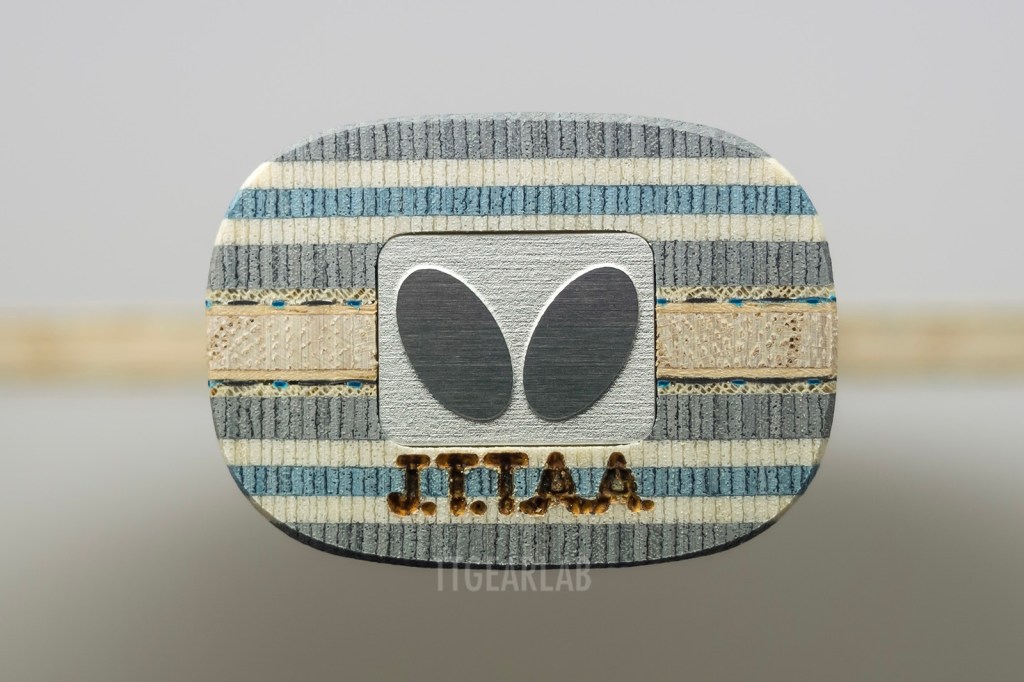
New logo plate with new logo has been applied to all Butterfly models (except for some old models) from 2014. Current version of ‘Viscaria’ has had this logo from the beginning because it was launched in 2019.

Small hologram lens at the backside of handle is currently the symbol of Butterfly blades.

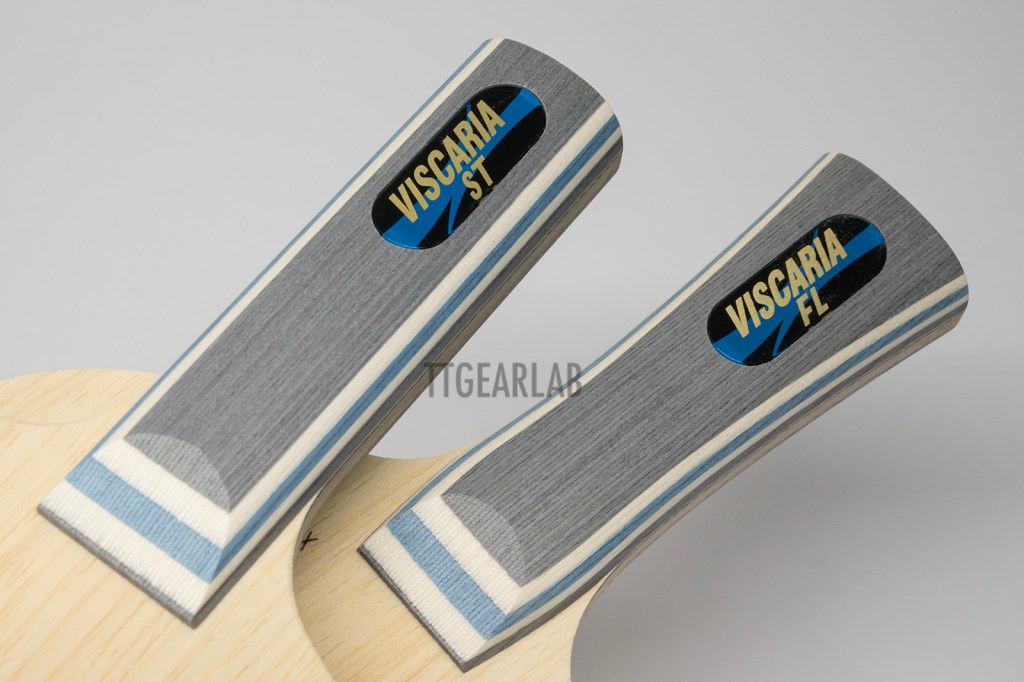
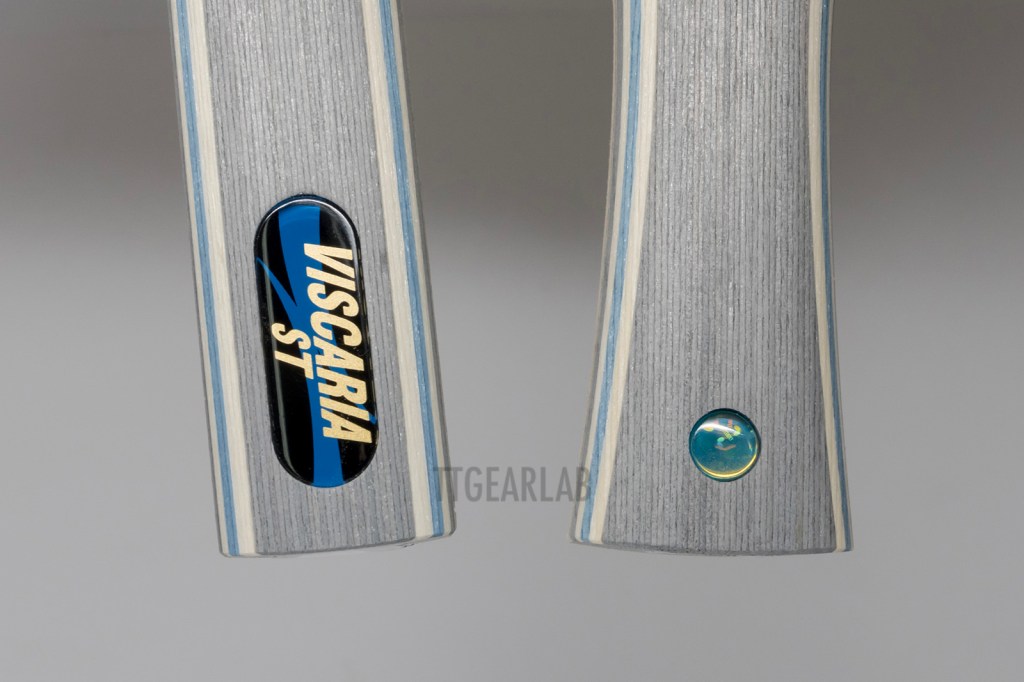
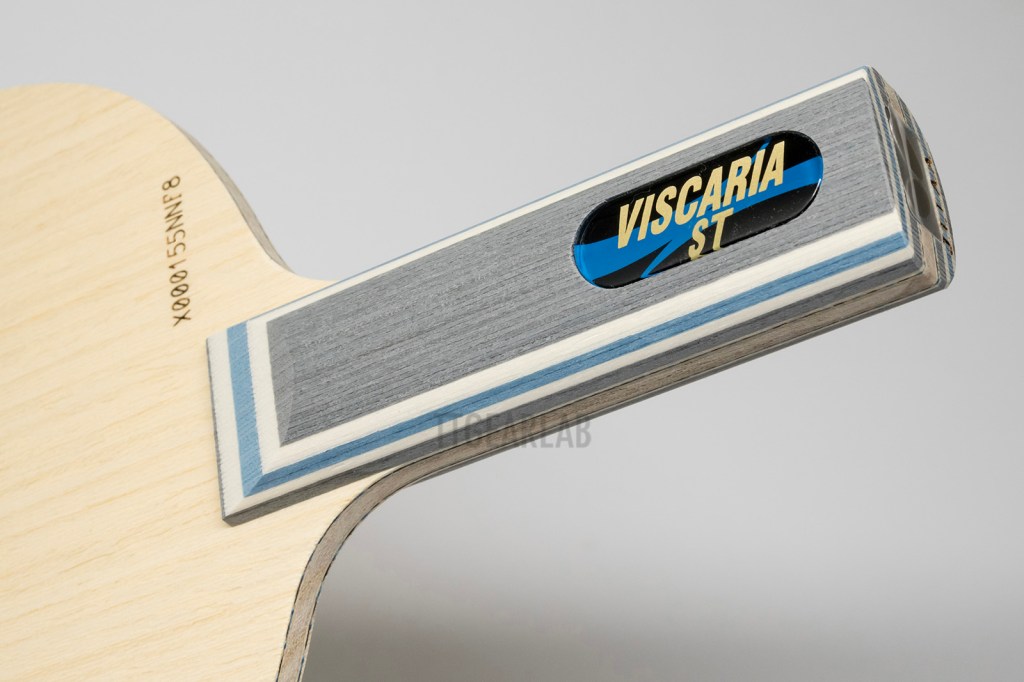
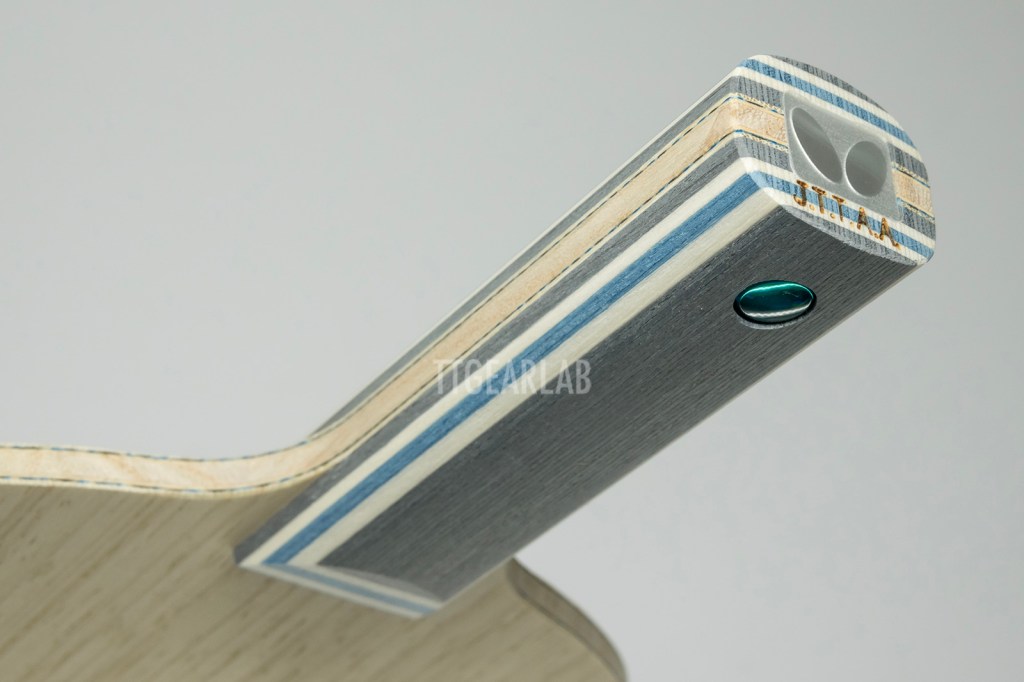
ST handle came back. The ST handle of mid-term version had been discontiued in the early 2000’s and there hasn’t been ST handle of ‘Viscaria’ for long time. But, it is available in current version of ‘Viscaria’. Chinese penholder version is also available.

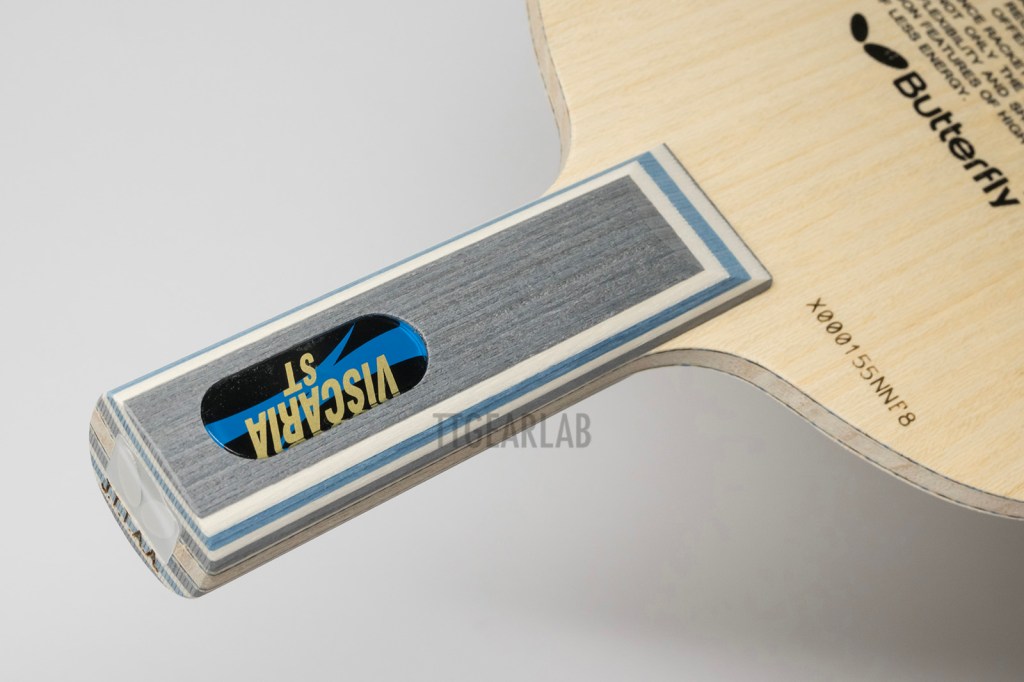
The ST handle of ‘Viscaria’ is same as the standard ST for most of Butterfly blades such as ‘InnerForce Layer ALC’. And, it is apparently different from the squared ST of ‘Timo Boll’ series or ‘Mizutani Jun’ series.
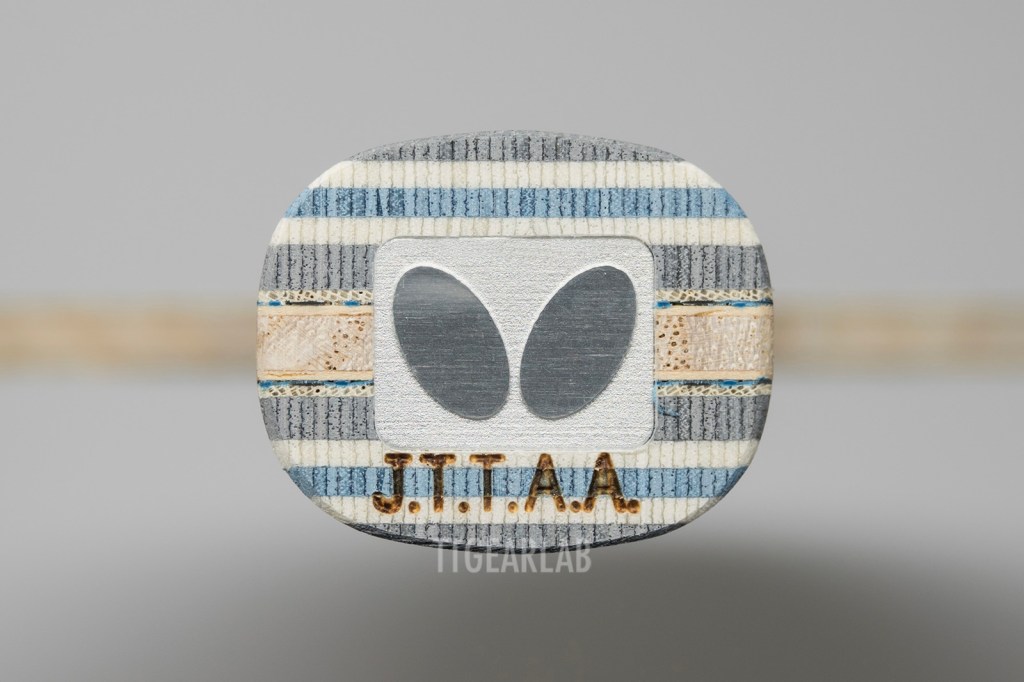
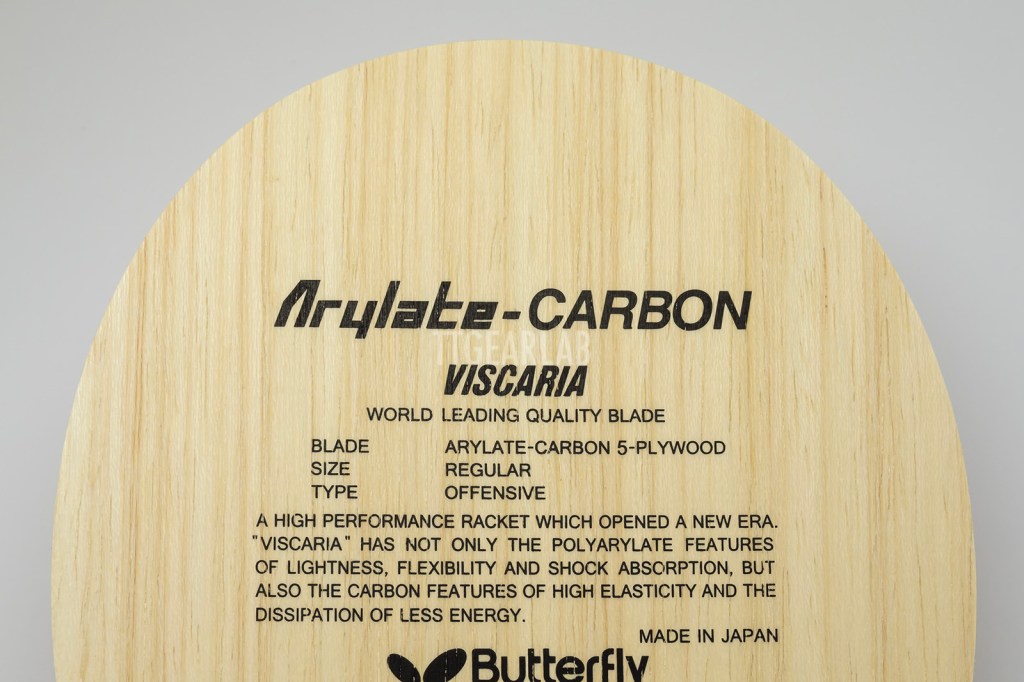



Because current version is thicker than old (mid-term) version there is difference in performance indices.
Following are the performance indices of current Viscaria whose blade thickness is around 5.8mm (avg. weight = 87.1g) :
– Ep = 2.02
– Ec = 1.92 (Ec/Ep = 0.95)
– Vp = 1.32
– Vl = 1.35 (Vl/Vp = 1.02)
(Same as the data of ‘Fan Zhendong ALC’ and most of recent units of ‘Zhang Jike ALC’ whose thickness is 5.8mm.)
Following are the performance indices of mid-term version Viscaria (= old Viscaria)whose blade thickness is around 5.7mm (avg. weight = 86.0g) :
– Ep = 1.98
– Ec = 1.80 (Ec/Ep = 0.91)
– Vp = 1.28
– Vl = 1.37 (Vl/Vp = 1.07)
(Same as the data of early ‘Zhang Jike ALC’ whose thickness is 5.7mm. We can also find some 5.7mm units among recent units whose thickness is generally 5.8mm.)
Unauthorized use and/or duplication of this material without express and written permission from this website’s author and/or owner is strictly prohibited. Excerpts and links may be used, provided that full and clear credit is given to TTGearLab with appropriate and specific direction to the original content.
 TTGearLab
Thank you very much for the insightful post.
I want to ask you something about comparison between viscaria (current) and timo boll alc. I am using Hugo HAL at the moment and wanted to try something faster.
I tried 2 different viscarias and 2 different TB ALC (all 4 models were around 85-87g), both with japanese and chinese rubbers. For some reason, both Viscarias for me felt softer but they had the metallic feeling, I could feel the artificial feel of fiber which is disturbing or uncomfortable.
With both TB ALCs, it felt slightly harder / stiffer but there was no feeling of metallic clicking / artificial fiber, it just felt “clear” and comfortable. FYI, Hugo HAL for me also feels very clear, but very soft and crisp.
I am curious why the difference of feeling between Viscaria and TB ALC was so distinct, because I thought it was basically the same blade with same composition, headsize and so on.
Maybe you have some information or insight about this.
Thank you as always, Cheers
LikeLike
Originally Timo Boll ALC is same as Viscaria except for the shape of handle. However, I also feel that Timo Boll ALC is somewhat harder and more elastic than Viscaria. Even there are differences in measured Performance Indices.
I remember that the differences were not that clear 20 years ago. But, it seems that at some point Butterfly started to dividing that construction into two types – one for Viscaria and the other for Timo Boll ALC. Softer plywood becomes Viscaria, and harder plywood becomes Timo Boll ALC.
Of course, everything is just speculation. 🙂
LikeLike
At this site https://stervinou.net/ttbdb/liste.php
we can find slightly different composition for Viscaria, TBS, TBALC and so on. It is stated that composition is: Koto-ALC-Limba-Kiri-Limba-ALC-Koto. The difference is in the middle layer: Limba vs Ayous. Which composition is correct?
LikeLike
Ayous.
That web site is fantastic. It provide us very useful data. But, not all data in that web site are correct. (It is very difficult to gather all correct data of so many blades from so many companies.)
LikeLike
“first blade for which composite material”. bty started selling composite blades (tamca 5000 gergely etc) in 1978… the ittf 85% rule appeared ‘cuz of that.
LikeLike
Yes. ‘Tamca 5000’ is originally the name of the first Butterfly carbon blade. And then Butterfly started to use it as the name of artificial material.
LikeLike
what is the difference between Viscaria normal and golden viscaria fish scale?
LikeLike
The Koto top layer with fish scale may be a bit different. But, that isn’t fundamental difference.
LikeLike
Hello, nowadays I bought a viscaria golden, this blade is very different, the weight is approximately 96gr, can you bring us a review and comparison with viscaria normal? For my the golden viscaria with FH Hurricane 3 41gr 2.1mm yellow haifu two slayers is another level, BH dignics 09c
LikeLike
Because there isn’t data I can’t give you detailed explanation. But, if its construction is not different from ordinary Viscaria, there will be only the difference by pieces. Probably it will be a bit faster than the Viscaria of average weight.
LikeLike
Great work! How do you compare in terms of speed and spin, viscaria and ma long v, both current models. Do you think for hurricane neo version without further boosting on FH are these blades good options? Or something like zjk szlc suit better?
LikeLike
Great work! How do you compare in terms of speed and spin, viscaria and ma long v, both current models. Do you think for hurricane neo version without further boosting on FH are these blades good options? Or something like zjk szlc suit better?
LikeLike
Thank you for comment! In fact spin is mainly related with rubber, and blade just help player to utilize the ability of rubber. So the relationship between blade and spin depends on the individuality of player.
But, if you want to put rotation to ball more easily, in my opinion HL5 will be better than Viscaria. And, if you want to make faster ball, Viscaria will be better and ZJK SZLC will be even better.
LikeLike
Do you think that current HL5 is a good pairing with 09c for forehand? I am searching an alternative for H3 without boosting.
LikeLike
Yes. But, please note that 09c is different from H3. Even though 09c makes good combination with HL5, the difference may embarass you at the beginning.
LikeLike
GreatWork, well done. Thank you so much.
What’s your advice of which rubbers to be used on current version Vicaria?
LikeLike
So far I have tried many rubbers on Viscaria, Timo Boll Spirit, Timo Boll ALC and similar blades. But, there isn’t right solution for everybody.
But, I personally think that the rubber which is concentrating on spin performance and whose feeling is sitff will fit for Viscaria. I don’t like the combination of Viscaria and the rubber of soft feeling. For example, the combination with Tenergy 05 is better than the combination with Tenergy 64 for me.
That will be the same for the combination with the rubbers from other brands. And, I also think that new ‘Hybrid’ rubbers will make great combination with Viscaria if the player has basic skills.
LikeLike