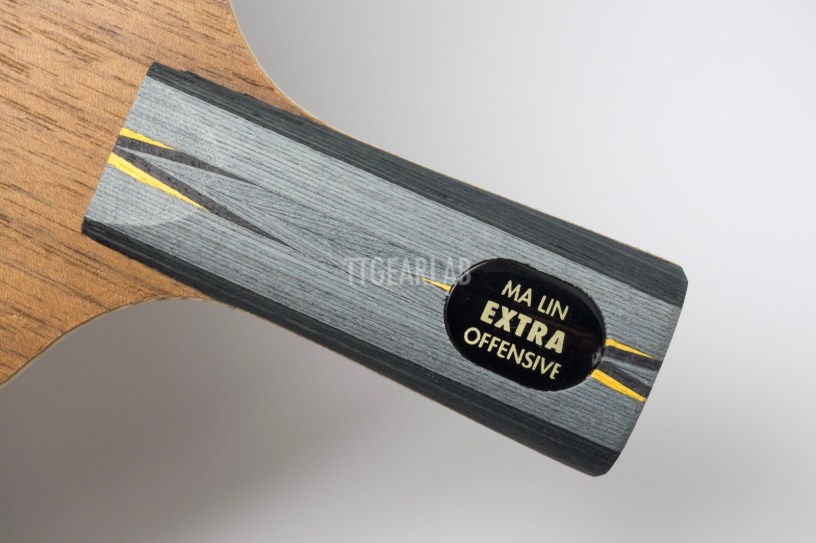
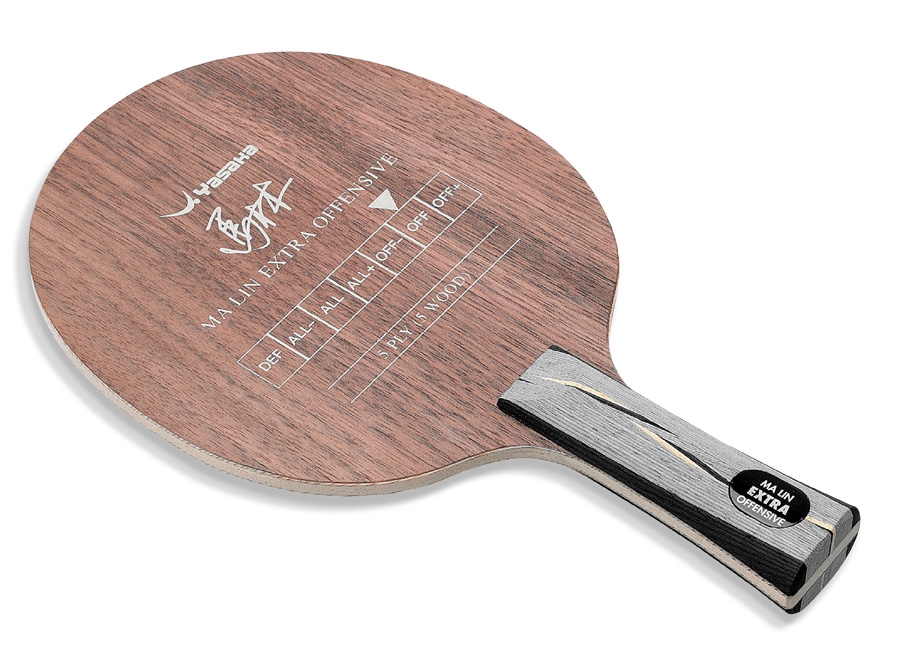
Yasaka ‘Ma Lin Extra Offensive’ had been one of the bestseller blade that had represented Yasaka in late 2000’s and early 2010’s. It was used by Ma Lin – the member of Chinese Men’s National Team – and won the gold medal of Men’s Singles at 2008 Olympic Games. It is a 5-ply wood blade whose top layer is hard Walnut wood. It is easy to use when player players at close-to-table area very aggressively. Although it was launched long time ago, it is still seriously considerable.
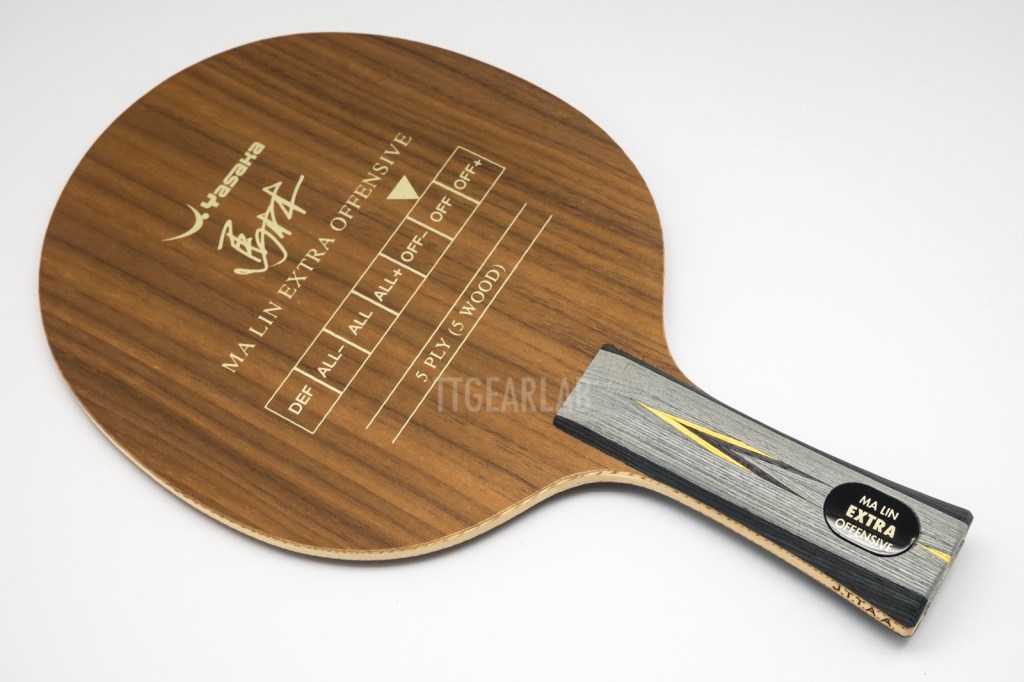
‘Ma Lin Extra Offensive’ is a 5-ply wood blade made in Sweden. Above picture is FL (flared) handle version.
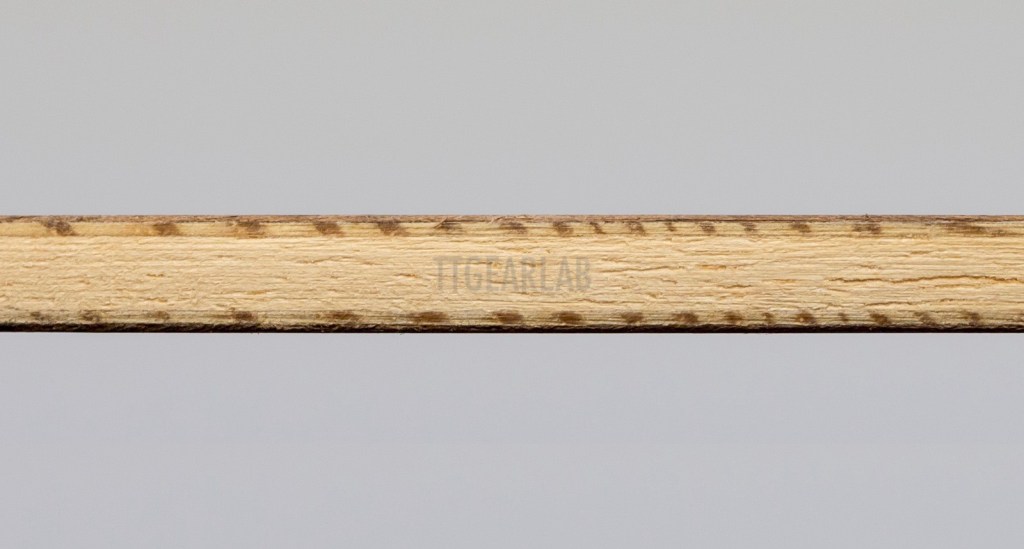
The top layer of 5-ply construction is Walnut. The middle layer is Tanne, and the center layer is Ayous. Overall thickness is around 5.9mm.
‘Ma Lin Extra Offensive’ is pure 5-ply wood blade. However, the elasticity is quite high thanks to the hard top layer.
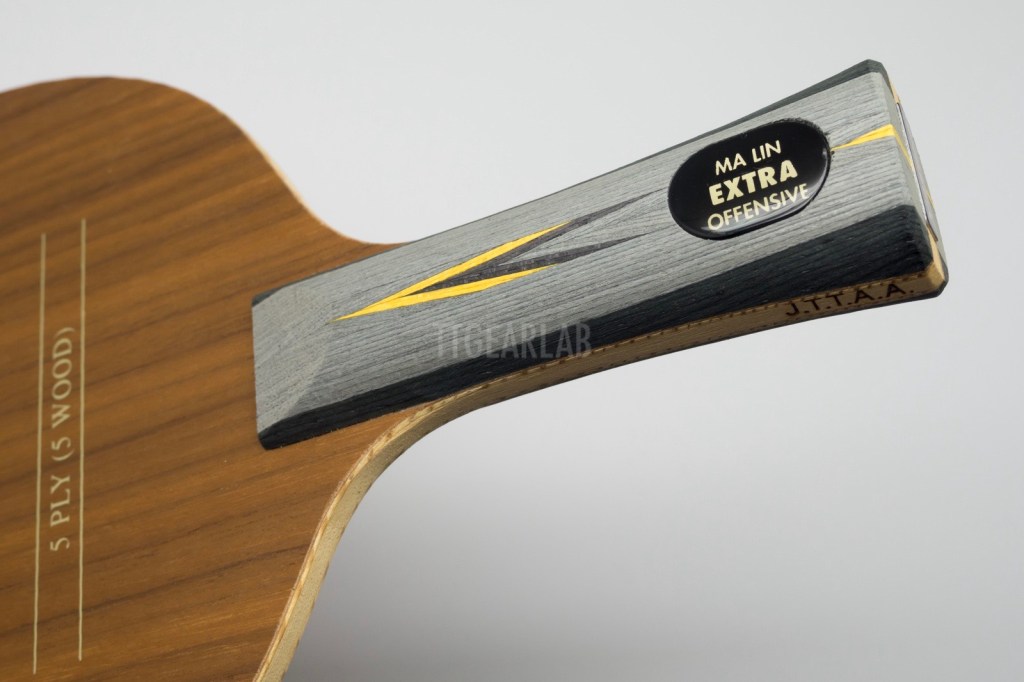
The garphic design of handle inherits that of ‘J.P.Gatien’ series that is the representative blade family of Yasaka in 1990’s.
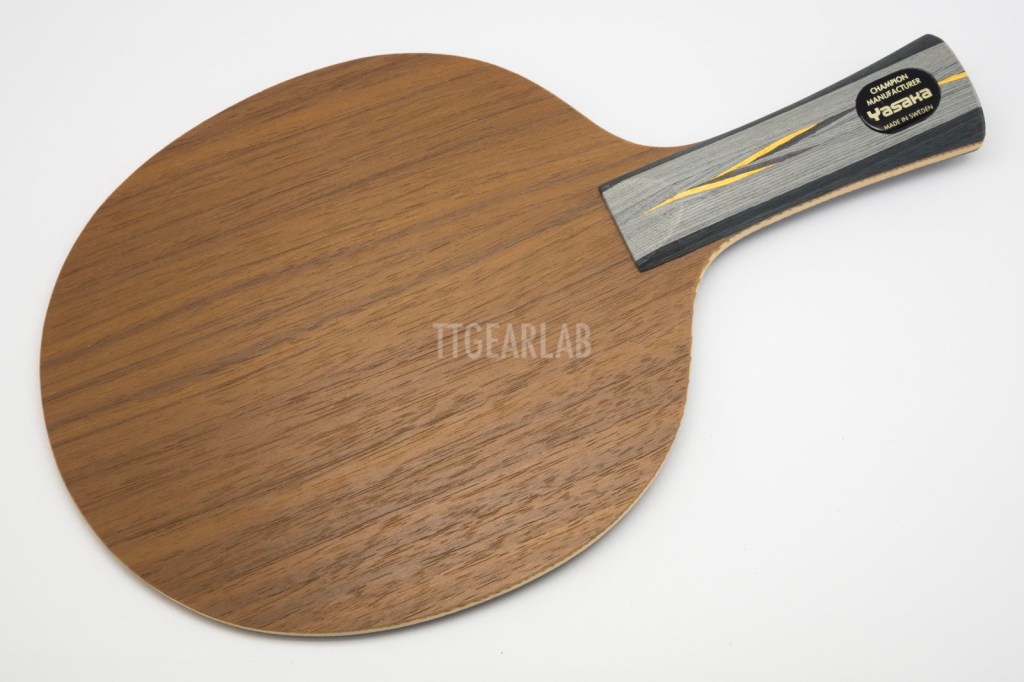
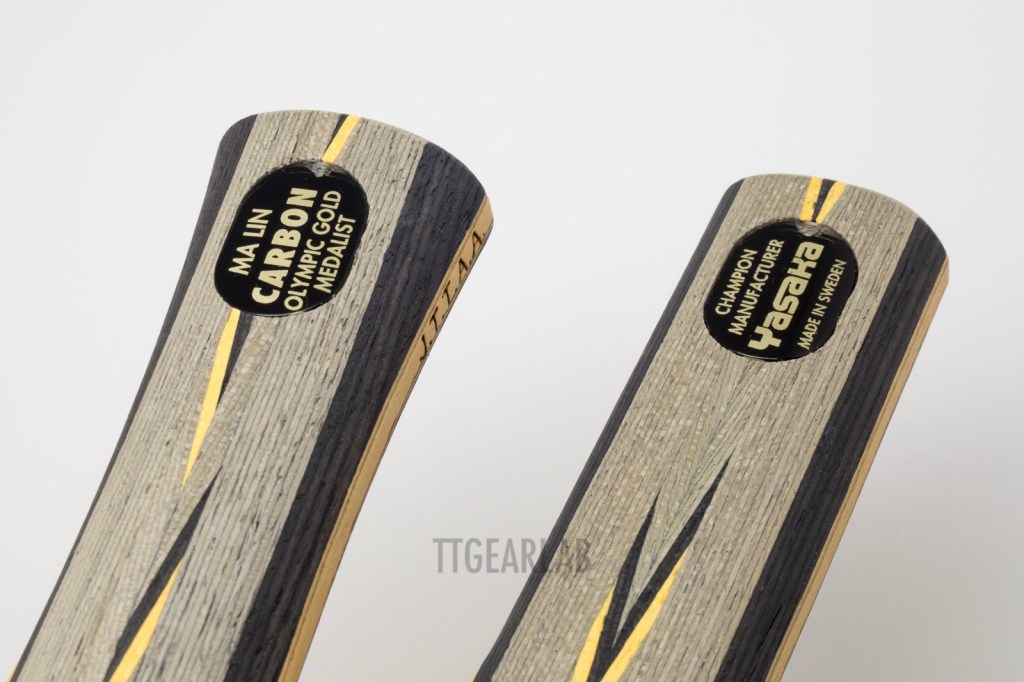
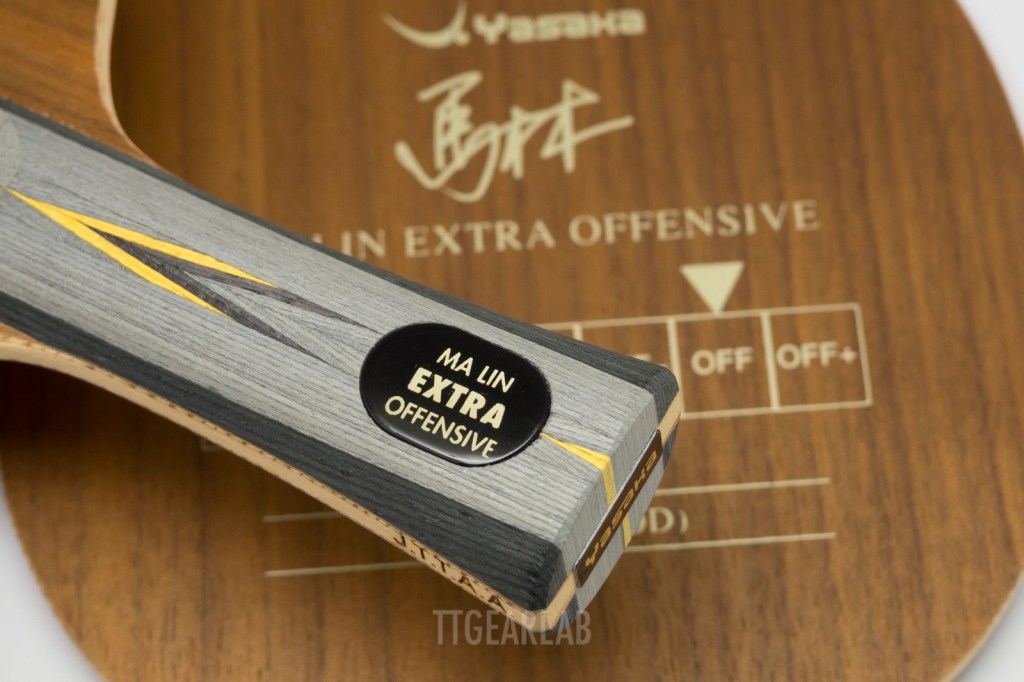
There isn’t any printing on the head of backside. But, there is backside lens on the handle. ‘Double Lens’ is the tradition from the time of ‘J.P.Gatien’ series.
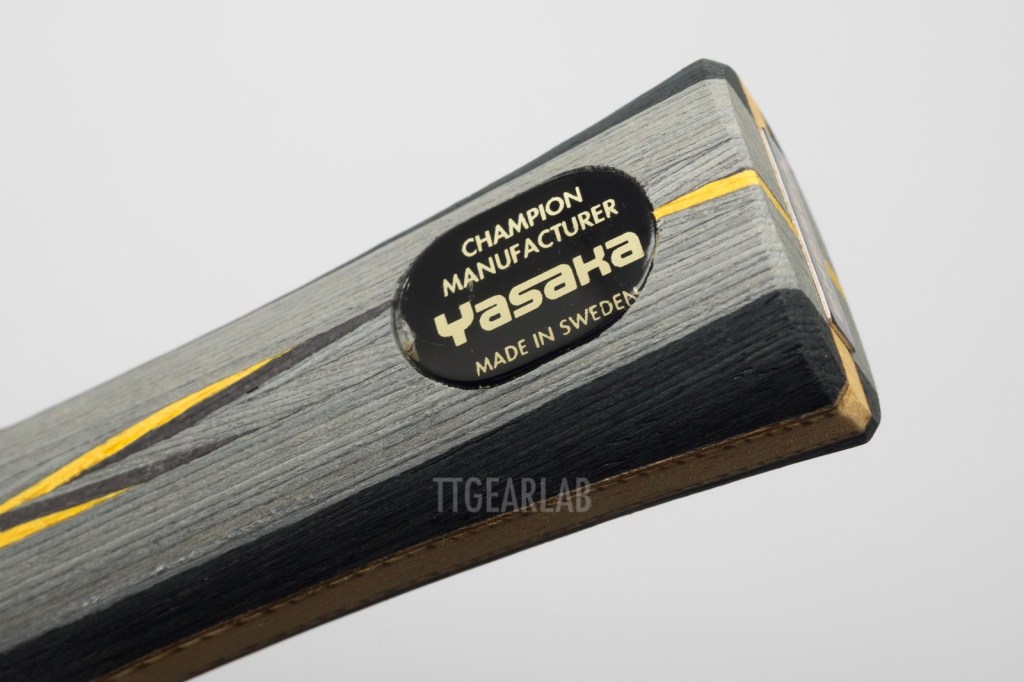
Backside lens is the same one as the lens for ‘J.P.Gatien’ series.

FL (flared) handle isn’t a thick handle, but very stable. ST (straight) handle is noticeably thin and noticeably wide.

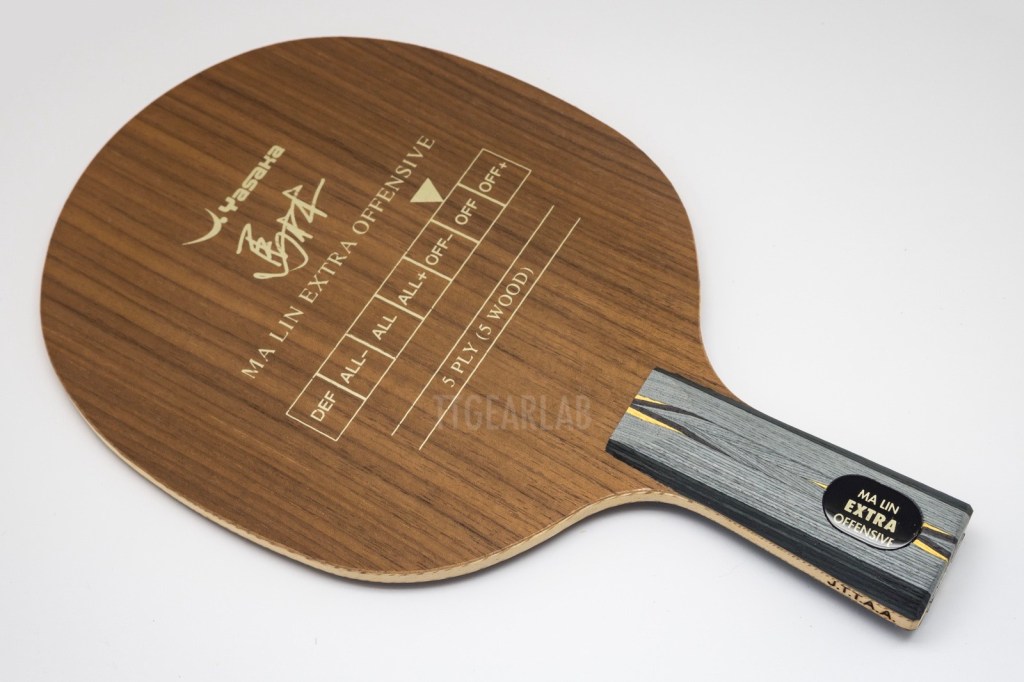
The Chinese Penholder version of ‘Ma Lin Extra Offensive’ had been used by Ma Lin.
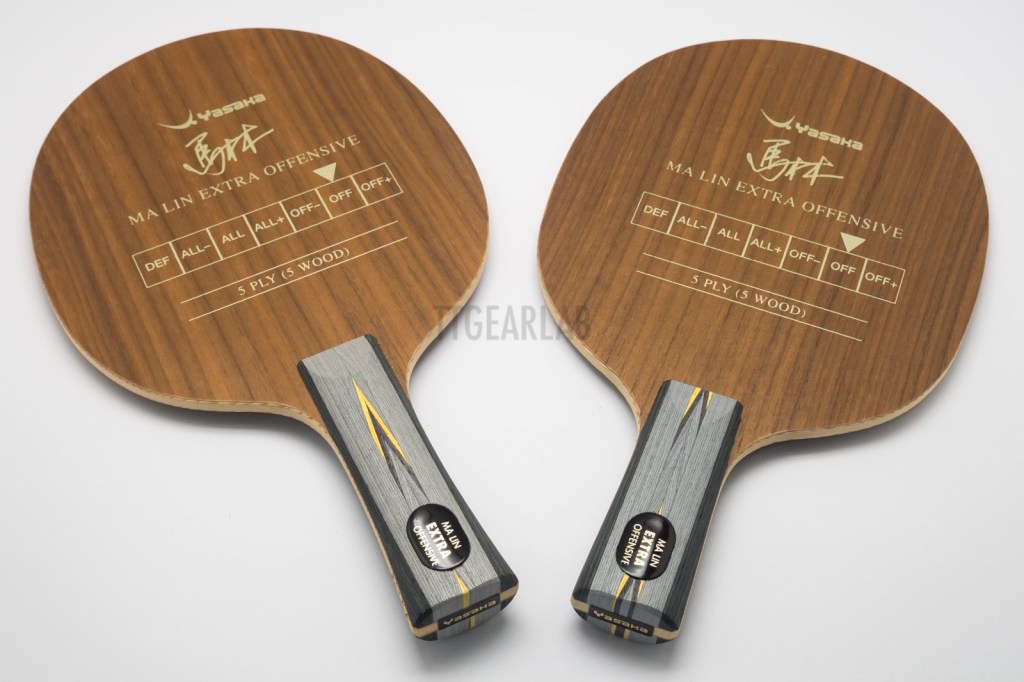
FL version and CP version.
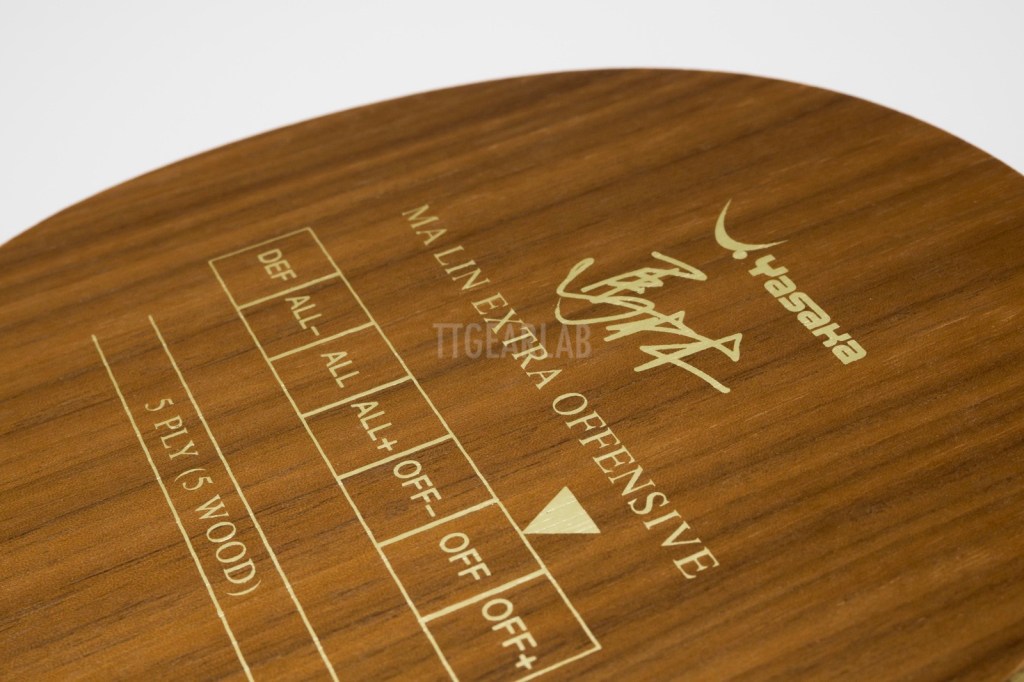
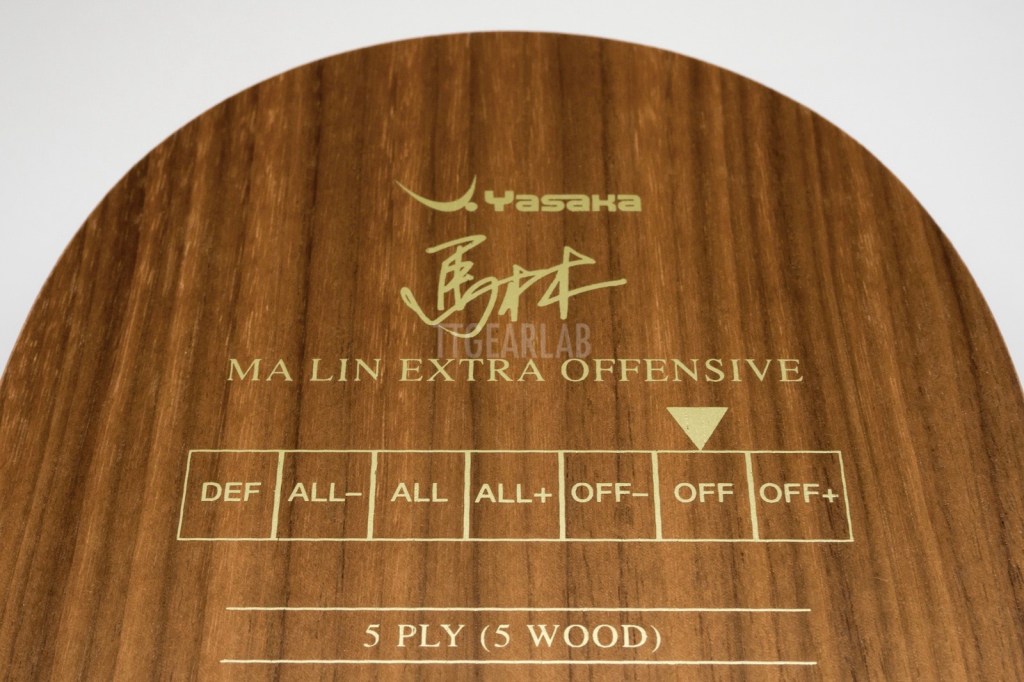
Speed sign at speed indicator is ‘OFF’. ‘Ma Lin Extra Offensive’ is a quite fast one as a 5-ply wood blade.
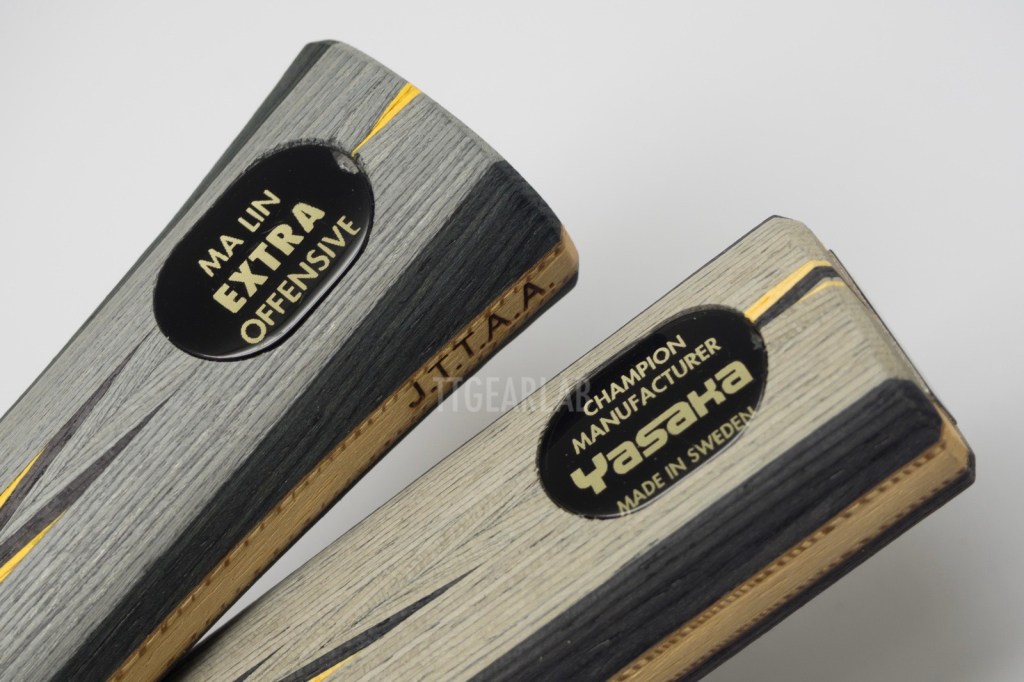
Foreside lens and backside lens.
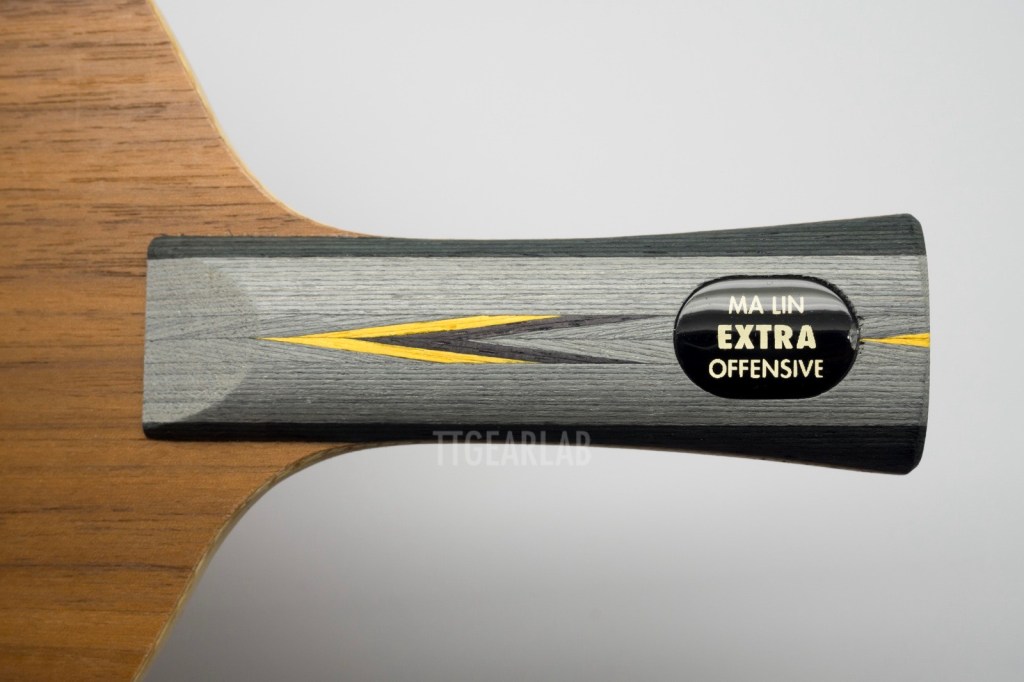
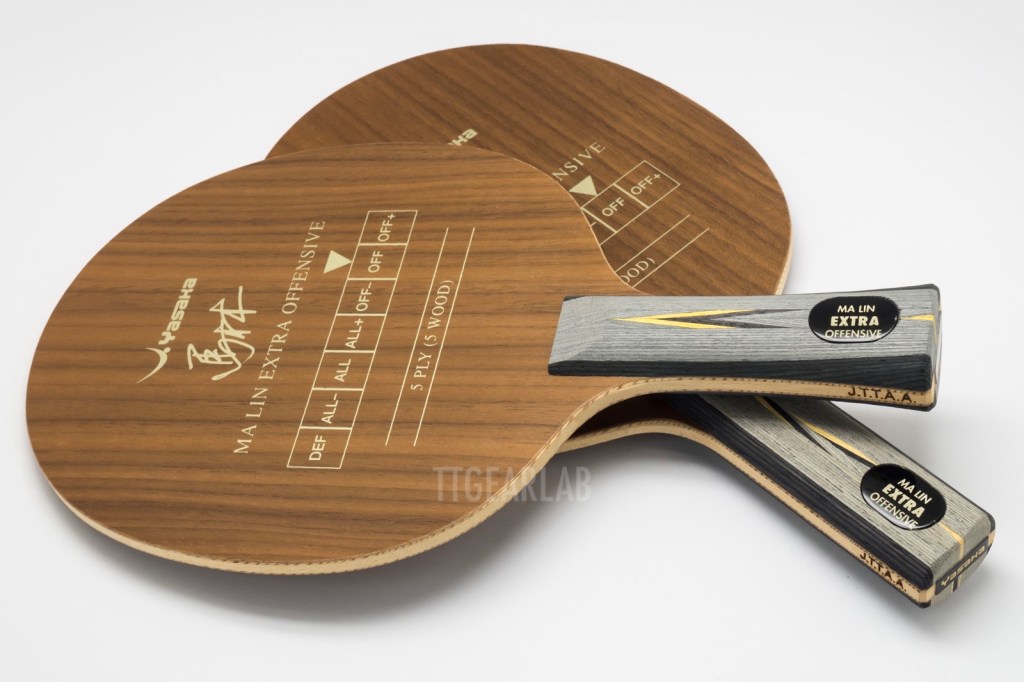
Shakehand FL and shakehand ST.
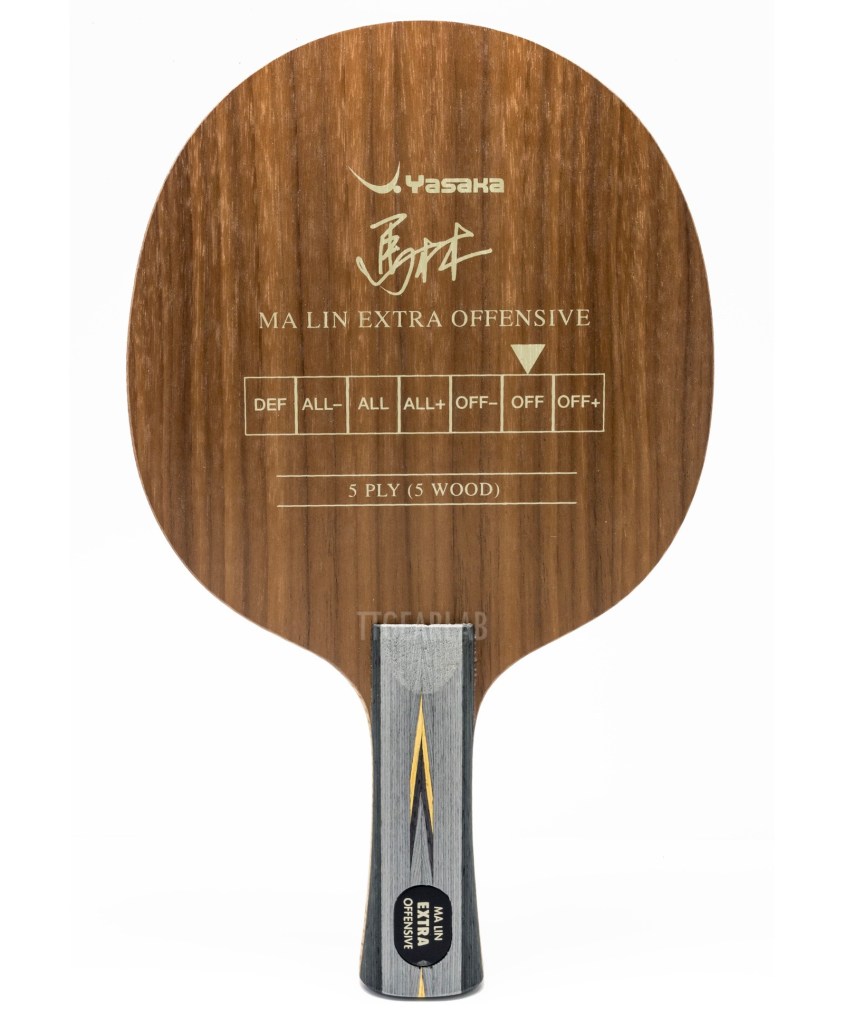
The size of head is 156.5mm x 151.5mm. It is smaller than that of ‘Ma Lin Carbon’, and is even smaller than the standard head size (157mm x 150mm) of many blades. The average weight of measured pcs. is 87.7g.
Ma Lin Extra Offensive (average weight = 87.7g)
Ep = 1.72
Ec = 1.33 (Ec/Ep = 0.83)
Vp = 1.11
Vl = 1.33 (Vl/Vp = 1.20)
 TTGearLab
Hello,
I played with a Ma Lin Extra Offense blade some time ago when I was developing my swing, and it was my favorite blade until I found it was too slow for me. I like the sound and feel of the blade when I made contact with the ball. It is very crisp and I can tell I have made good contact by the sound. I wonder if you have the performance index, Ep and Ec of the upgraded version, the Extra Offensive 7 Power. I was under the impression that the wood composition is the same as Ma Lin, but with two additional layers of carbon.
Also do you have the Ep and Ec of the Yasaka Ebony Carbon?
Can you tell me what is the playing characteristic of a walnut or ebony top layer?
It seems 90% of the table tennis blade uses Limba or Koto for the top layer, is it most blades are made for looping? Thank you.
LikeLike
Hello,
I played with a Ma Lin Extra Offense blade some time ago when I was developing my swing, and it was my favorite blade until I found it was too slow for me. I like the sound and feel of the blade when I made contact with the ball. It is very crisp and I can tell I have made good contact by the sound. I wonder if you have the performance index, Ep and Ec of the upgraded version, the Extra Offensive 7 Power. I was under the impression that the wood composition is the same as Ma Lin, but with two additional layers of carbon.
Also do you have the Ep and Ec of the Yasaka Ebony Carbon?
Can you tell me what is the playing characteristic of a walnut or ebony top layer?
It seems 90% of the table tennis blade uses Limba or Koto for the top layer, is it most blades are made for looping? Thank you.
LikeLike
Currently I don’t have the samples of the blades you mentioned. But, I will soon post the result if I can get ones.
Basically the tensile modulus of Ebony is higher than that of Koro or Limba. For that reason, the overall elasticity becomes higher if the top layer of a blade is replaced from Limba or Koto to Ebony with identical thickness. But, at the same time the ball touch becomes harder. That is the main reason why it can’t be popular. Some players will like it but more players not. And, there is another way of raising elasticity without making the ball touch of blade surface harder – just inserting artificial material, especially under middle layer.
LikeLike