Butterfly’s ‘InnerForce Layer’ series, released in November 2016, is a product line that inherited the ‘InnerForce’ series, which was released in November 2009. (Some models of ‘InnerForce Layer’ series were added in 2010.) The basic concept of the ‘InnerForce Layer’ series is the same as the ‘InnerForce’ series, but the head size has been unified at 157mm x 150mm, the design has been unified, some models have been removed and a new model have been added. The newly added model is ‘InnerForce Layer ALC.S’ which can be said to be a soft version of ‘InnerForce Layer ALC’. Butterfly is explaining that ‘InnerForce Layer ALC.S’ provides higher stability and ease of performing spin-oriented techniques and higher stability by the reduction of the thickness from ‘InnerForce Layer ALC’ and the application of new blade construction and wood materials. ‘InnerForce Layer ALC.S’ is specialized for the players who play most with counter-topspin close-to-table area.
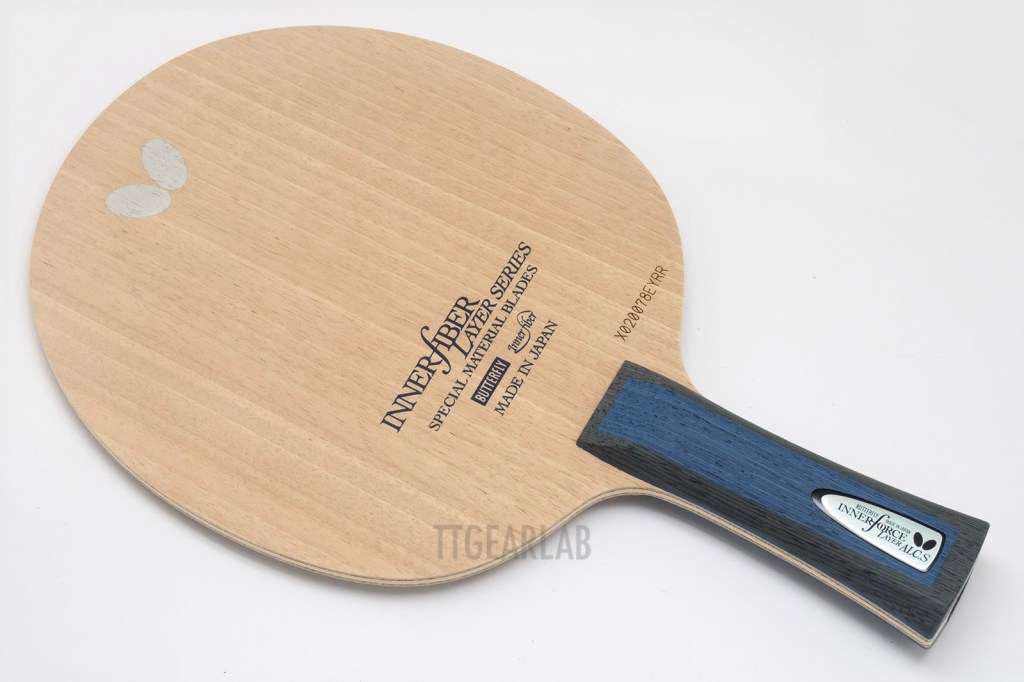
‘InnerForce Layer ALC.S’ can be dealt as the soft version of ‘InnerForce Layer ALC’.
The design theme of ‘InnerForce Layer ALC.S’ is same as that for the other models in ‘InnerForce Layer’ series. Each model in the series is distinguished by its point color, and the point color of ‘InnerForce Layer ALC.S’ is dark blue that is applied for the center of handle.

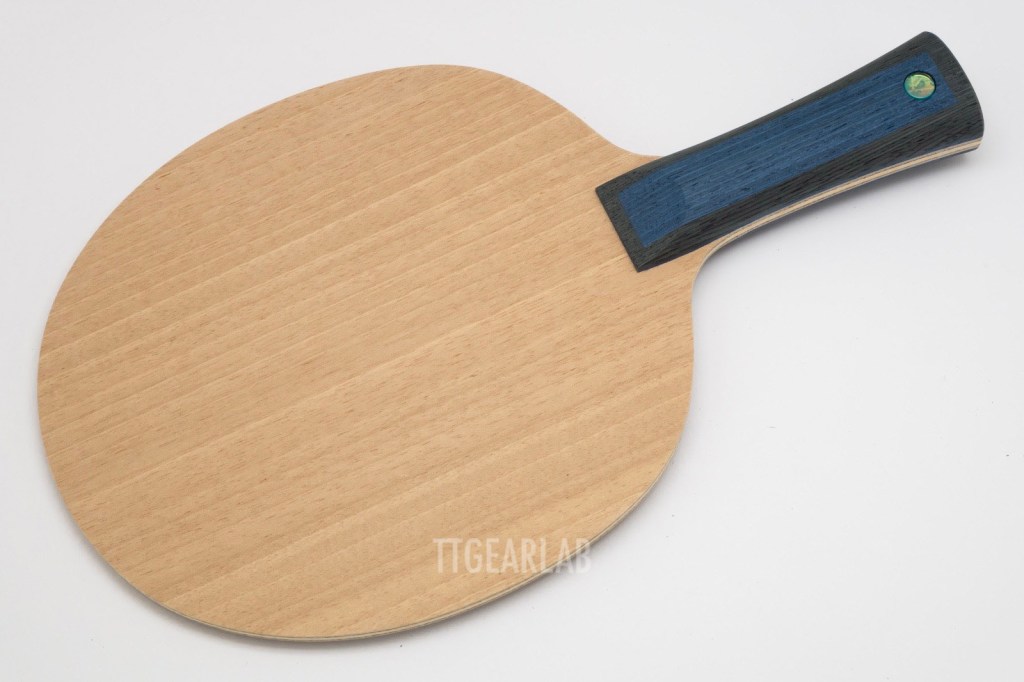
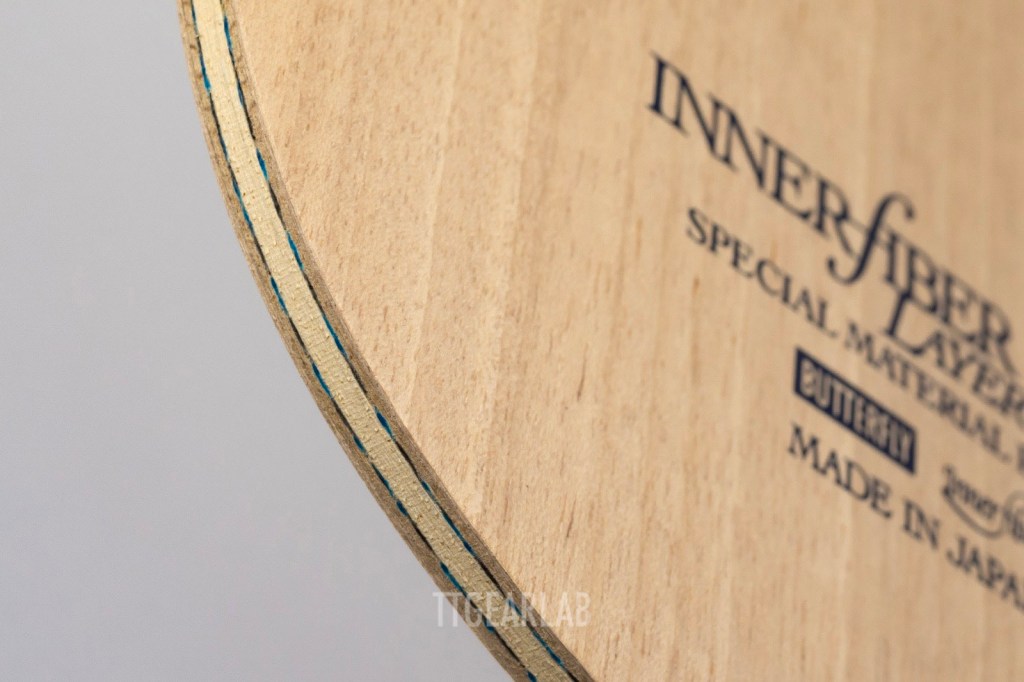
The construction of ‘InnerForce Layer ALC.S’ is somewhat different from those of the other models in ‘InnerForce Layer’ series. The top layer of ‘InnerForce Layer ALC.S’ is a different wood from Limba which is used as the top layers of the other models. The kind of wood hasn’t been announced. (It isn’t spruce because we can’t see the dot patter when we see it from the top of head. Also it isn’t Akazie or Anegre because its grain looks different.) The middle layer is Spruce, and the center layer is Ayous. ALC (Arylate Carbon) is inserted between the middle layer and the center layer. Overall thickness is around 5.5mm which is much thinner than 5.9mm of current ‘InnerForce Layer ALC’.
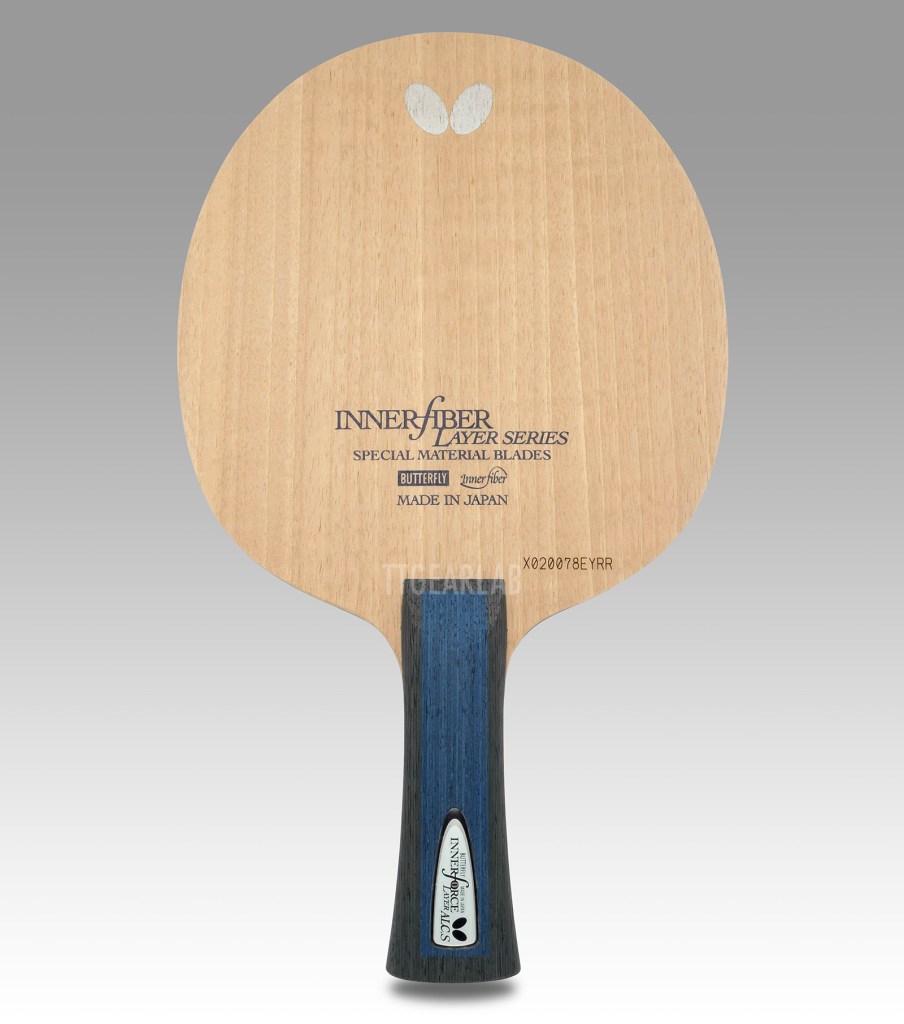
The size of head is around 157mm x 150mm. Not different from the head size of the other models in ‘InnerForce Layer’ series.
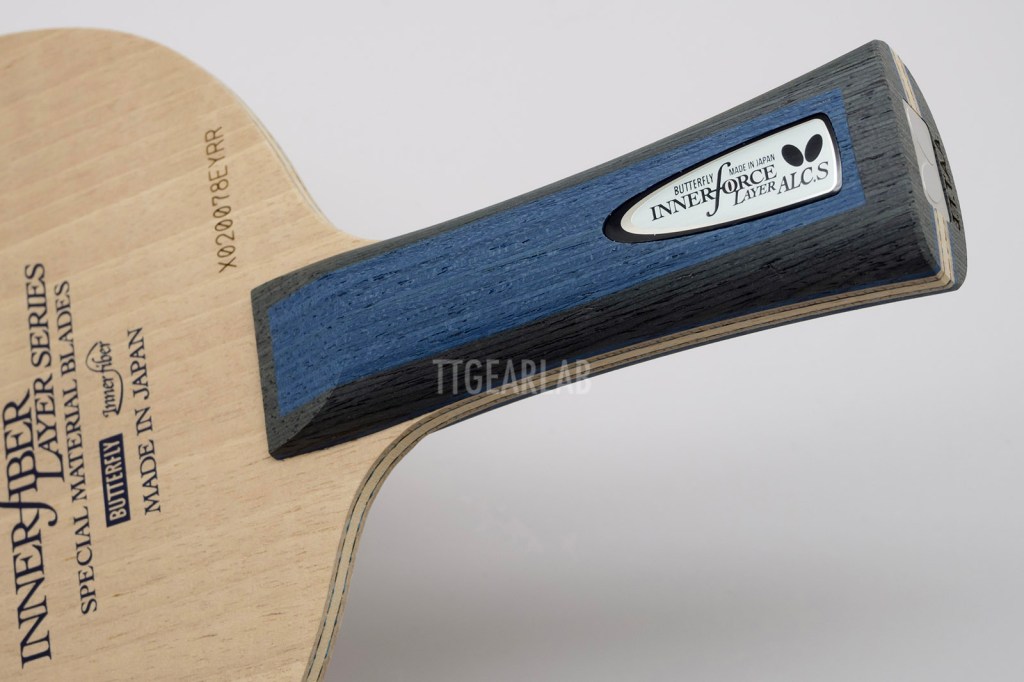
The FL (flared) handle is the standard FL handle of Butterfly, and basically identical to those of the other models in ‘InnerForce Layer’ series. The width of FL (flared) handle is around 26.5mm (at head side) ~ 27.5mm (at bulge) ~ 26mm (at narrowest point) ~ 34mm (at the end). And, the thickness of FL handle is around 23mm (at thumb) ~ 24mm (at the end).
The size of ST (straight) handle is also the standard ST handle of Butterfyl, and basically identical to those of the other models in ‘InnerForce Layer’ series. Its size is around 28mm (width) x 23mm (thickness).
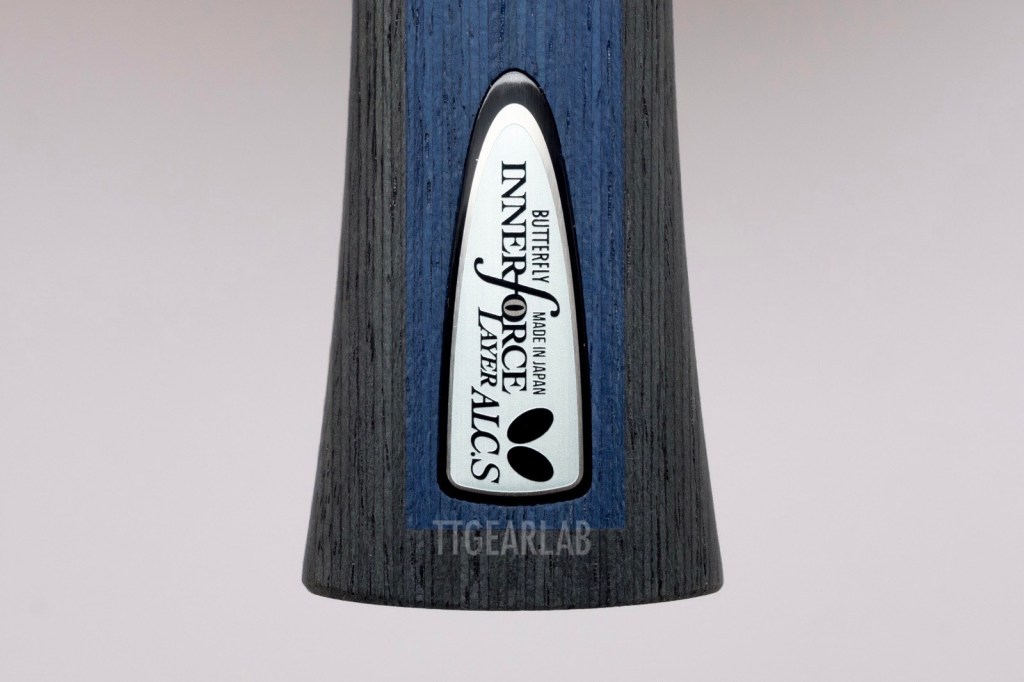
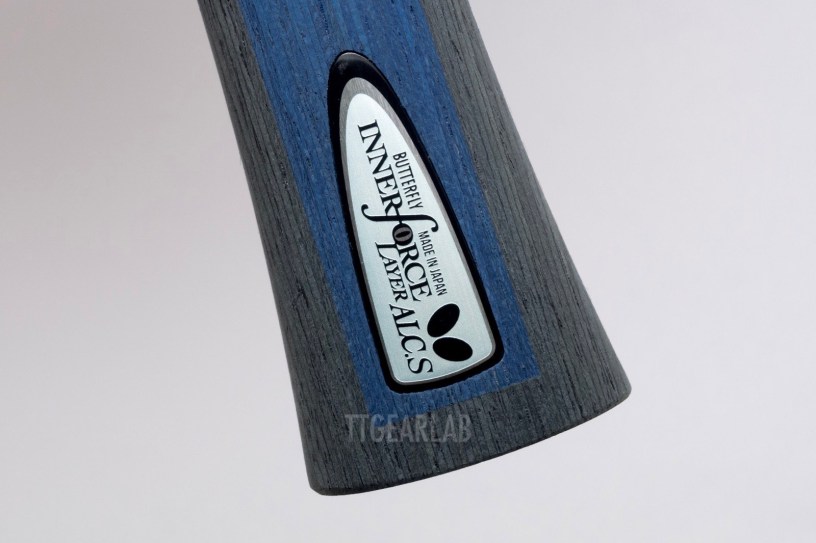
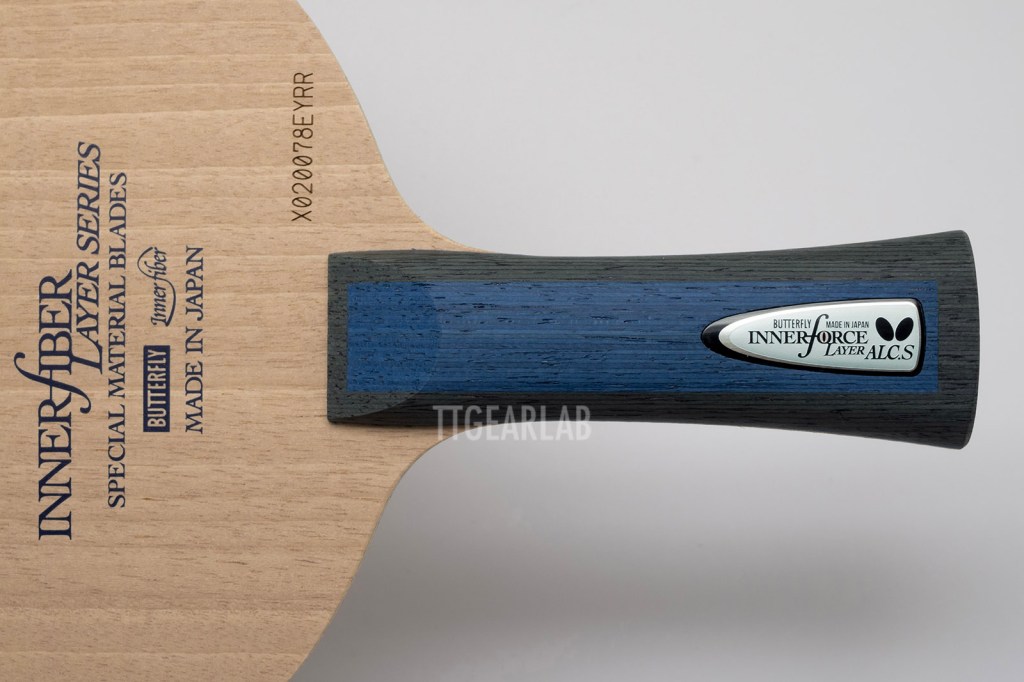
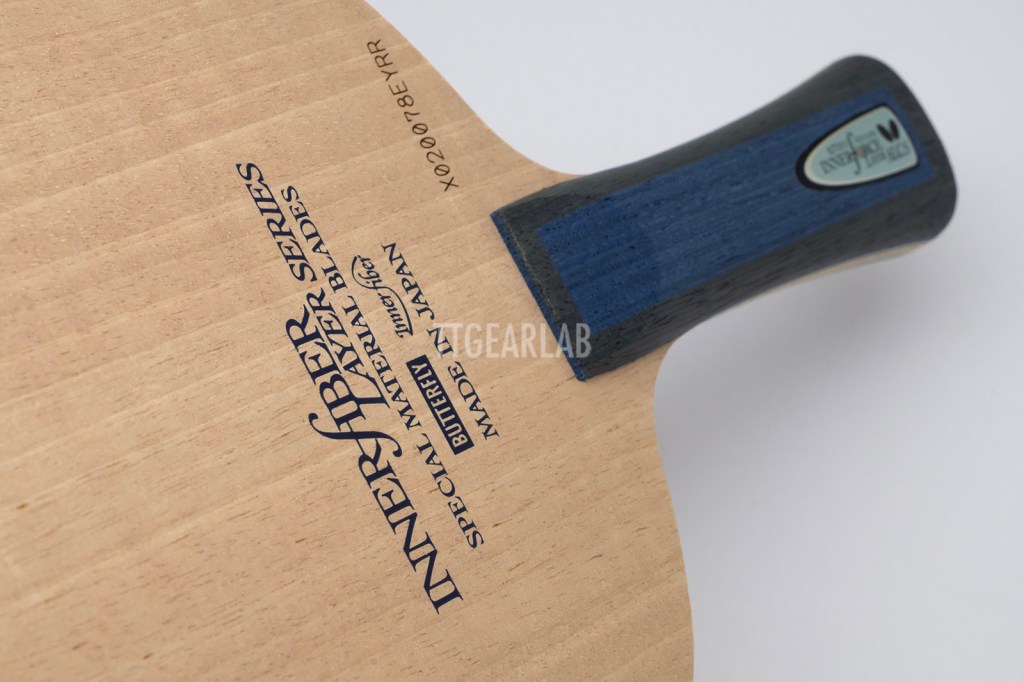
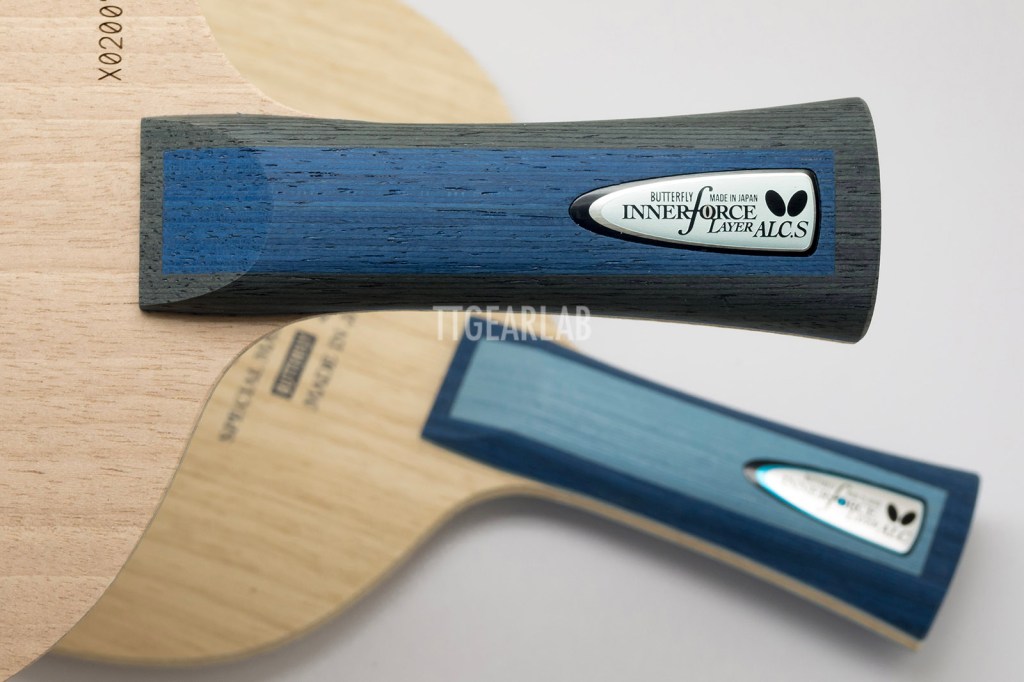
Aluminum nameplate is applied at the foreside of handle. The hologram inside the lens is to prevent counterfeit products.
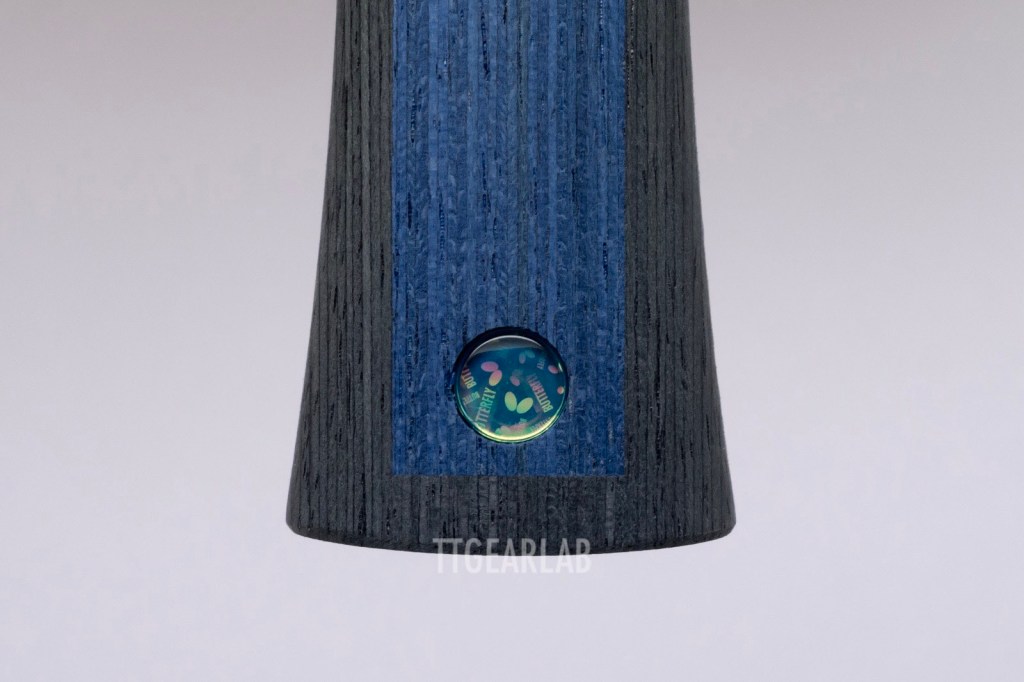
Small rounded plastic lens is applied at the backside of handle.
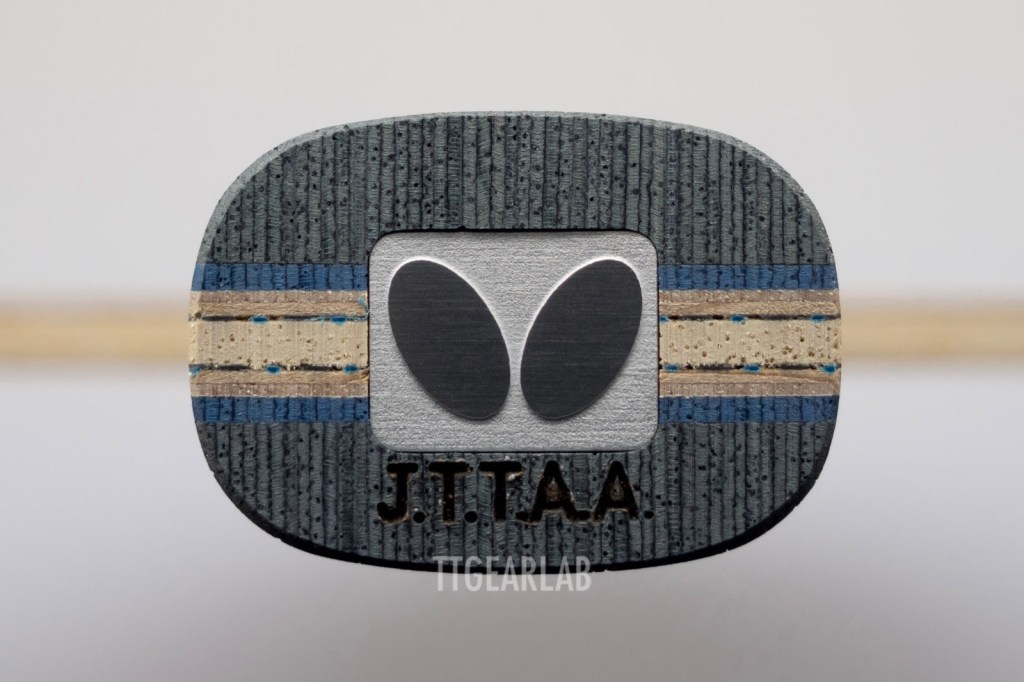
Squared aluminum plate with Butterfly logo is applied at the end of handle.
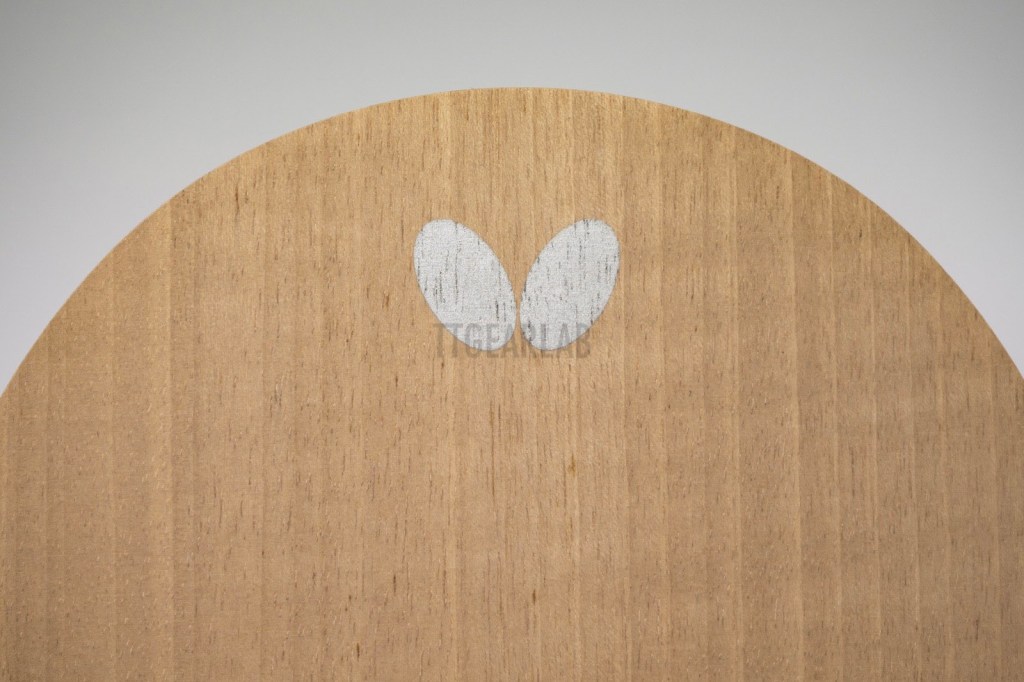
Butterfly logo is printed at the top of the foreside of head.
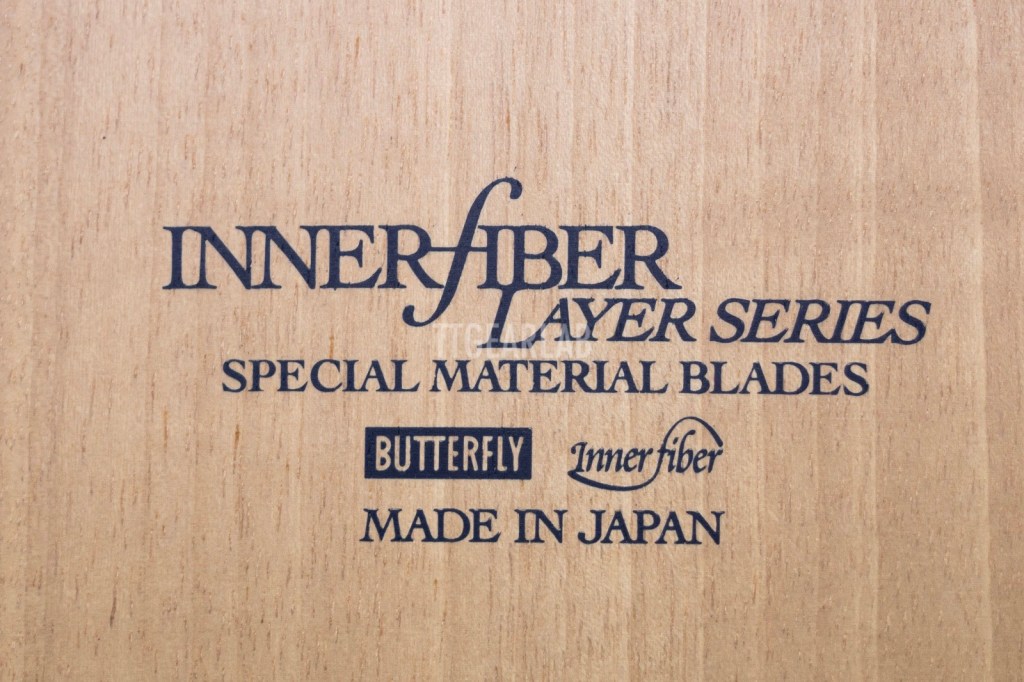
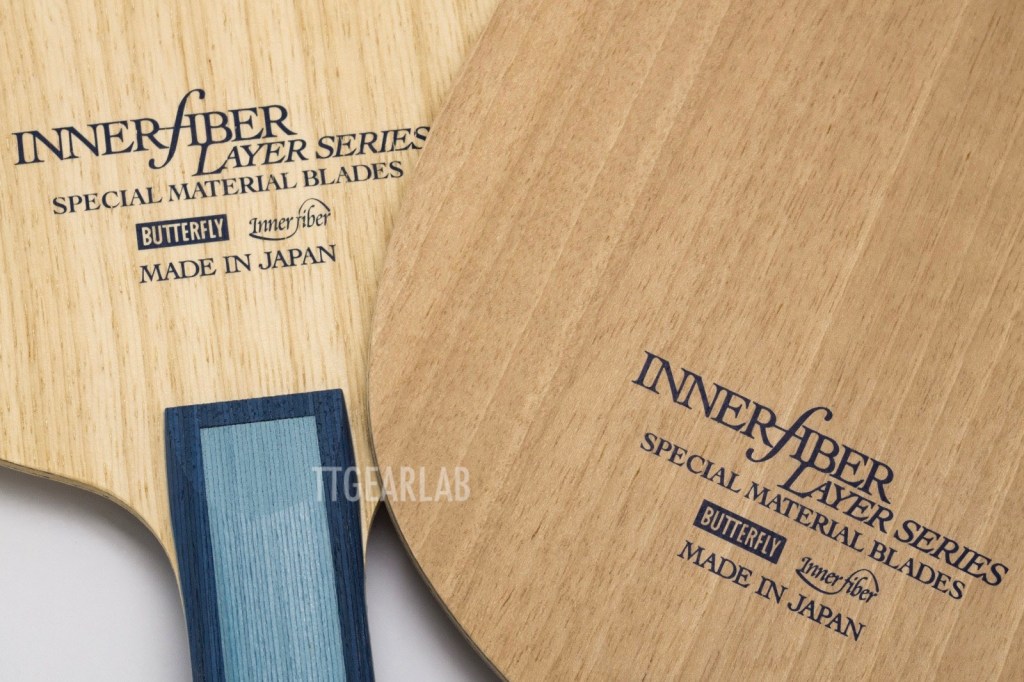
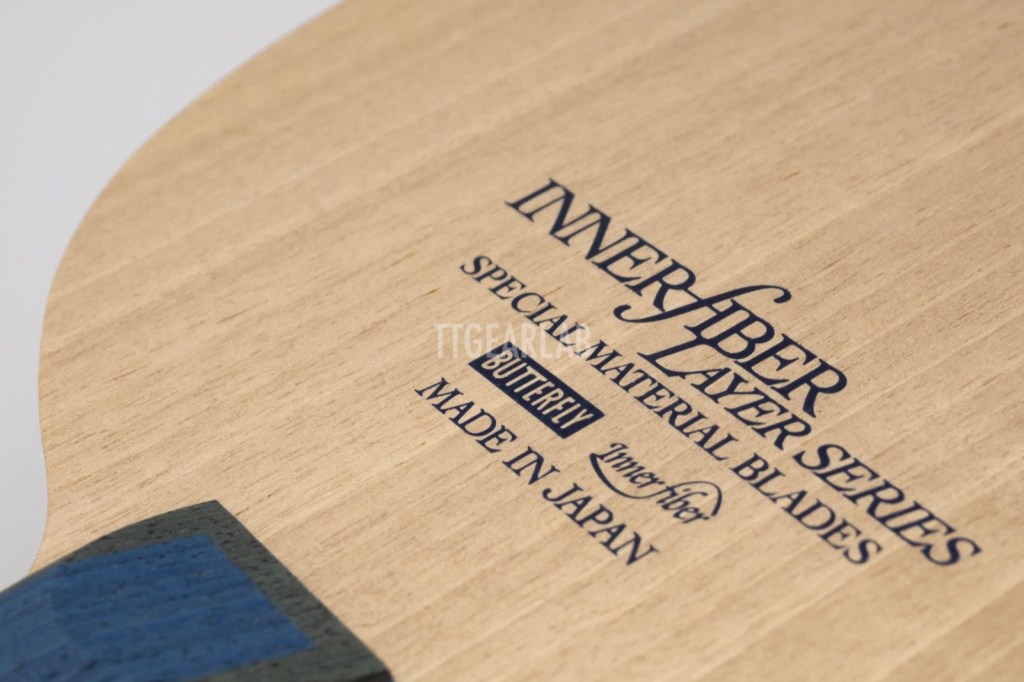
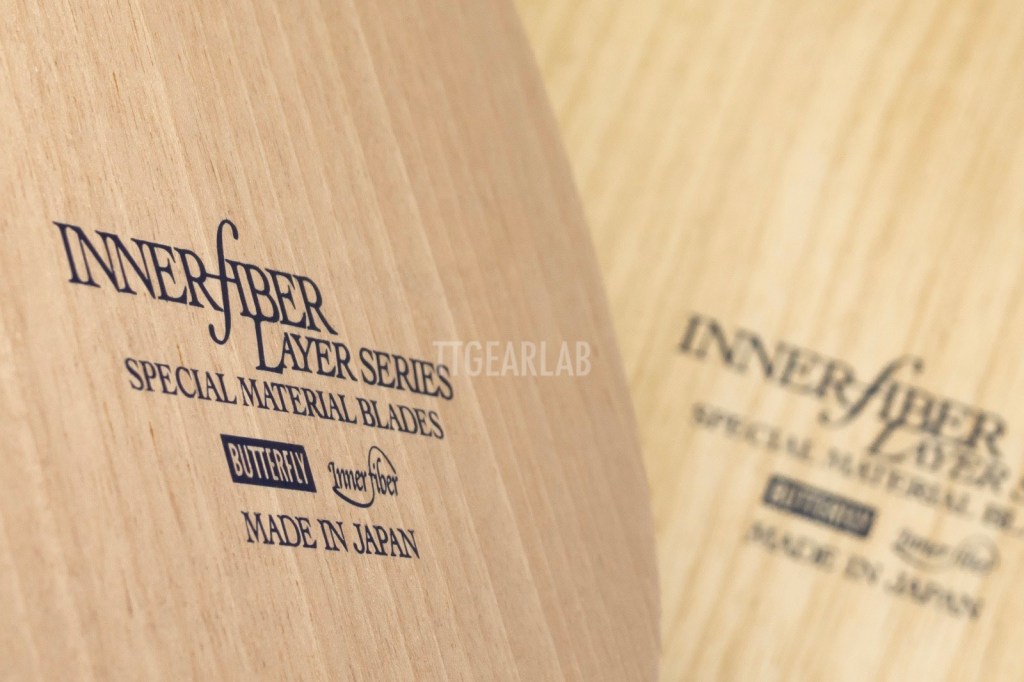
Another printing is applied at lower side of the foreside of head. Interestingly, it doesn’t include the name of product or the name of artificial material. And, it isn’t written as ‘InnerForce Layer series’ but as ‘InnerFiber Layer series’.
Butterfly logo is printed at the top of the foreside of head.
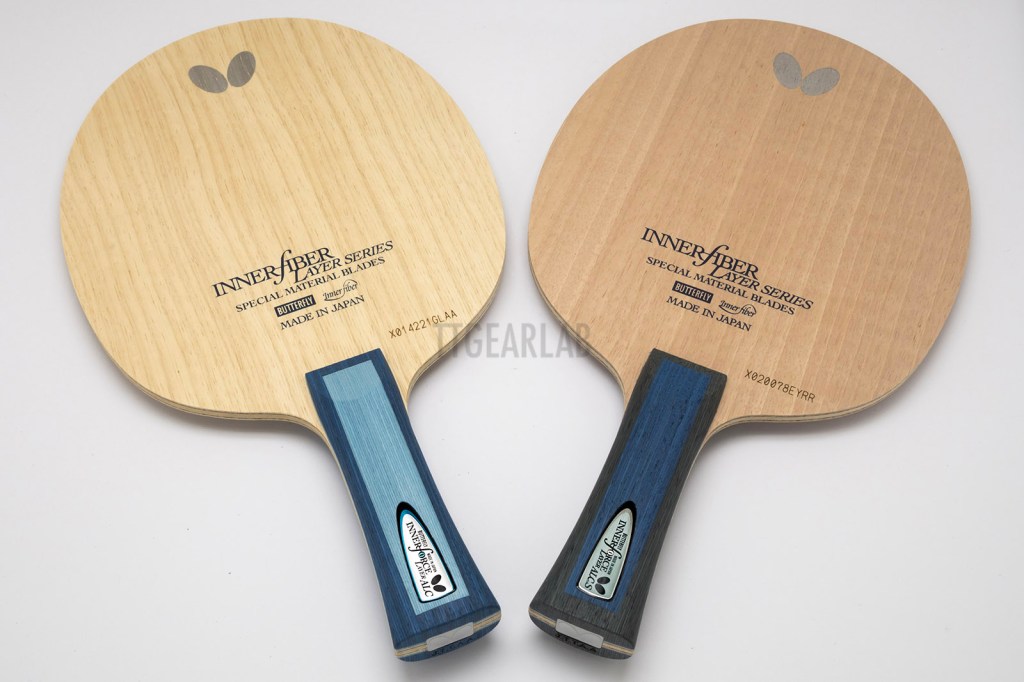
‘InnerForce Layer ALC’ (left) and ‘InnerForce Layer ALC.S’ (right). Each blade is distinguished by the color of handle and the color of the top layer.
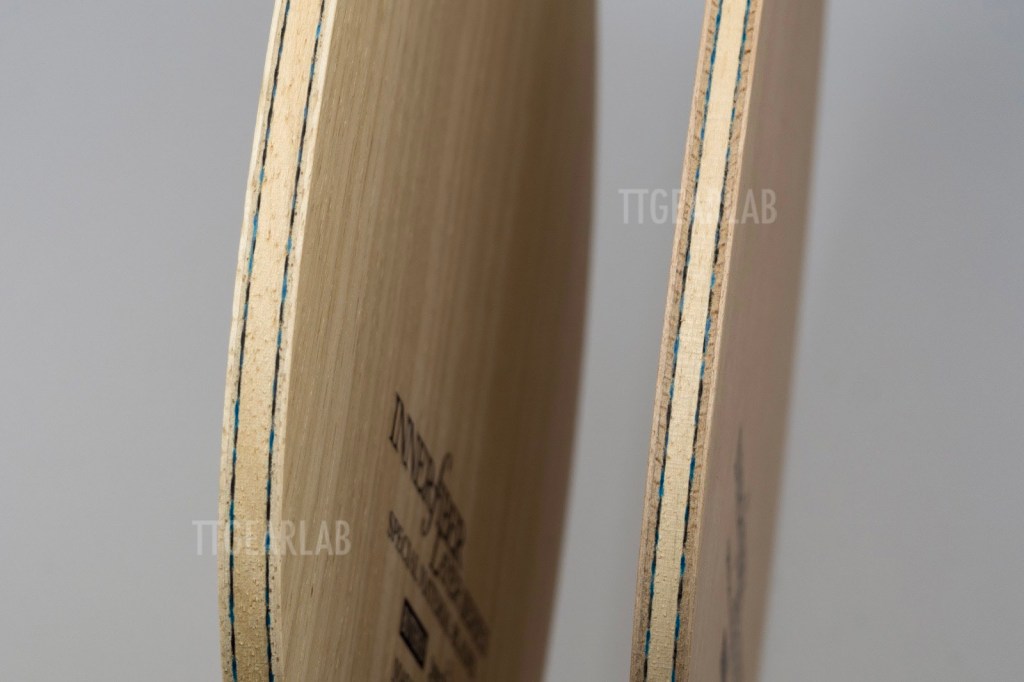
‘InnerForce Layer ALC’ (left) and ‘InnerForce Layer ALC.S’ (right). We can see that the center layer of ‘InnerForce Layer ALC.S’ (right) is thinner than that of ‘InnerForce Layer ALC’ (left). We can also see the difference in middle layer.
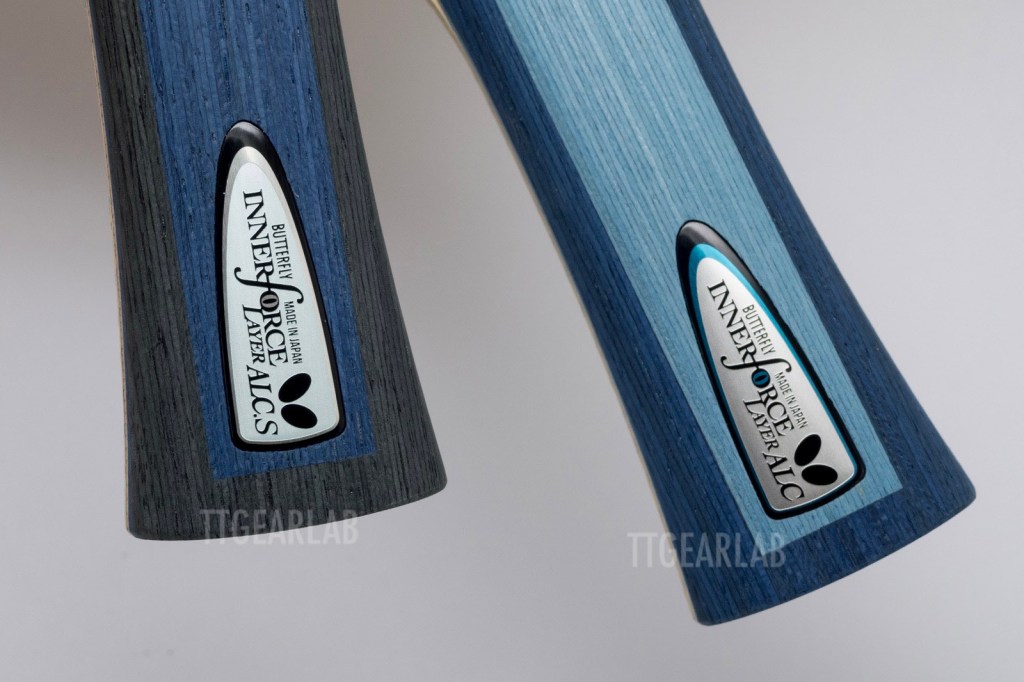
‘InnerForce Layer ALC’ (left) and ‘InnerForce Layer ALC.S’ (right).
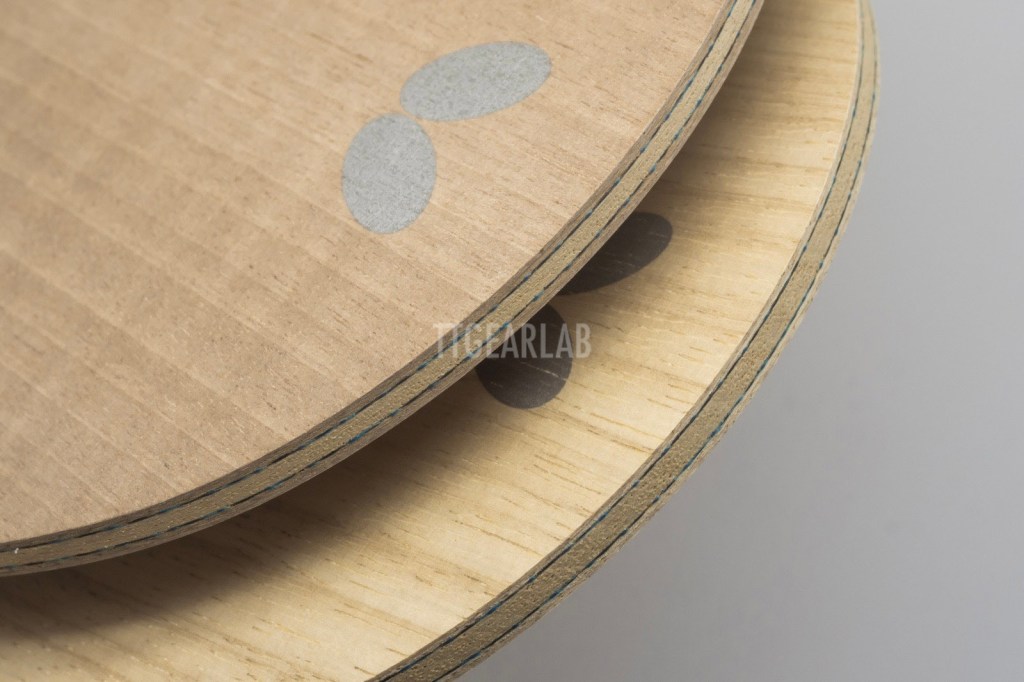
‘InnerForce Layer ALC’ (bottom) and ‘InnerForce Layer ALC.S’ (top). We can observe the difference in top layer. And, from this angle, we can clearly see that the top layer of ‘InnerForce Layer ALC.S’ isn’t Spruce.
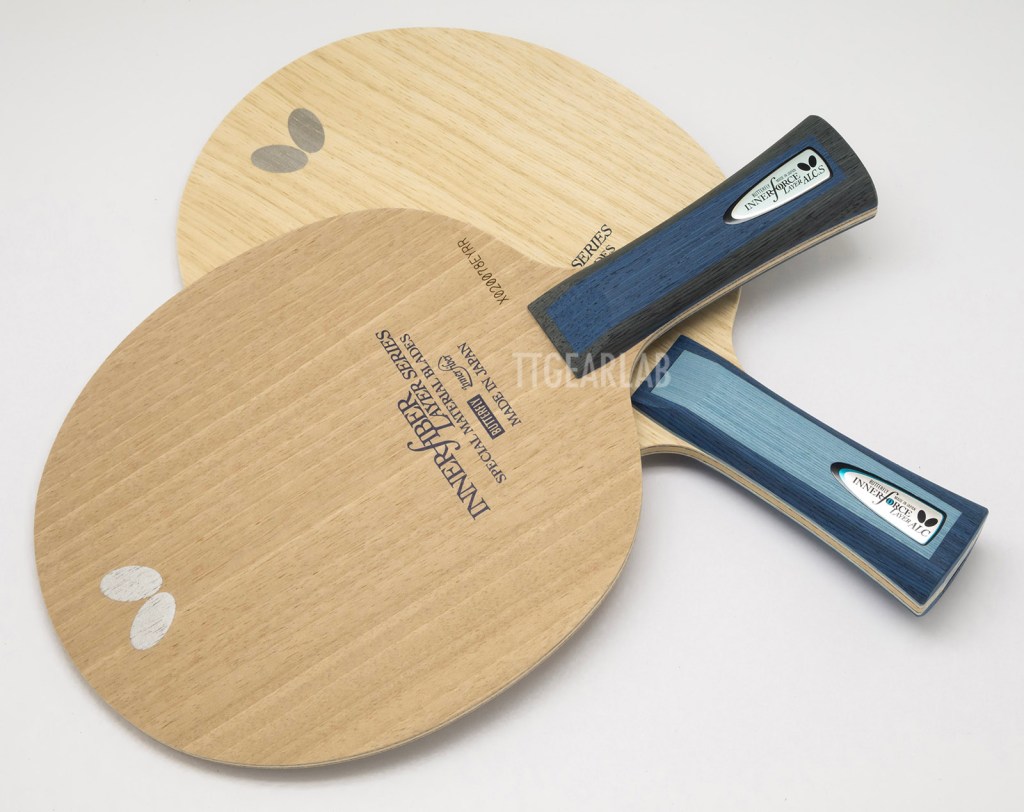
‘InnerForce Layer ALC.S’ is recommended for the players who aims at earlier timing at more close-to-table area, while ‘InnerForce Layer ALC’ is recommended as standard offensive blade.
Following are the performance indices of Butterfly InnerForce Layer ALC.S (avg.weight = 88.0g) :
– Ep = 1.48
– Ec = 1.33 (Ec/Ep = 0.90)
– Vp = 1.10
– Vl = 1.13 (Vl/Vp = 1.03)
Please note that above are average values and can be updated by further measurement.
Unauthorized use and/or duplication of this material without express and written permission from this website’s author and/or owner is strictly prohibited. Excerpts and links may be used, provided that full and clear credit is given to TTGearLab with appropriate and specific direction to the original content.
 TTGearLab
Hello! Please do a review on innerforce zlf. Is it true that he holds the ball very deep, as everyone says?
LikeLike
Currently I don’t have sample of IF Layer ZLF. But, I have data of old InnerForce ZLF.
(It is different from InnerForce Layer ZLF. <== I forgot to mention this.)
InnerForce ZLF (5.6~5.7mm)
avg.weight = 89.1g
Ep = 1.73
Ec = 1.61 (Ec/Ep = 0.93)
Vp = 1.20
Vl = 1.13 (Vl/Vp = 0.94)
LikeLike
Thanks for the answer!
With respect, but it looks like a mistake. According to the Butterfly specification, this blade is slower than innerforce alc and even slower than alc.s. and korbel. In addition, it is thin 5.3 and has no carbon fiber. Therefore, it physically cannot give such indicators. This needs to be rechecked, otherwise I will be skeptical about these Ep values as well.
LikeLike
The data isn’t wrong. But, my answer is wrong. 🙂 The data of InnerForce ZLF can’t be the reference for you because IF ZLF is different from IF Layer ZLF. (I forgot to mention it, and I have just added that comment to original reply.)
Original InnerForce ZLF is much thicker than current InnerForce Layer ZLF (5.6mm vs 5.3mm), and even the top layer and middle layer are different. So InnerForce ZLF is much harder and faster than InnerForce Layer ZLF. InnerForce Layer ZLF is something like InnerForce ZLF.S.
I think that I have to get samples of InnerForce Layer ZLF and measure it.
LikeLike
Hello! Thanks for the answer! Thank you for your work! I will be waiting for the measurements of the new blade! Sincerely yours!
LikeLike
I think that it will not take long. 🙂
LikeLike
Hi I’ve seen the DHS 506x and perhaps the 506A in some reviews as a comparison. Will you make a detailed review about them too?
LikeLike
Thank you for posting. I’ve just got the sample of 506A. And, I’ll soon measure it and take pictures. Also I’m considering to compare it with 506X.
LikeLike
Hello!
I was wondering if you could review the Sanwei 75 PBO inner and outer blades. They’re an affordable ZLC blades and I’d like to know how they compare to flagship ZLC blades.
LikeLike
Thank you for posting. But, I don’t have any Sanwei blade. I’ll take the blade you mentioned in consideration.
LikeLike
Hello,
Thanks for posting this, it’s really helpful because there is little information ou there on the ALC.S
So looks like the ALC.S has a similar Ec/Ep ratio as the ALC, and a similar Vl/Vp.
Just a bit softer and slower than the “bigger brother”.
Interesting
LikeLike
Thank you for comment. I’m considering to write a new article that compares three Butterfly Inner ALC blades. 🙂
LikeLiked by 1 person
I think that would be really cool!
LikeLike
Thank you. If possible I will post it within February.
LikeLike
The outer layer of the two blades, ALC and ALC.S, seems to have a different grain. Is it possible that the one on the ALC.S is anigre?
LikeLike
The top layer of InnerForce Layer ALC is Limba.
But, that of InnerForce ALC.S is different. (I have already mentioned it in the article.) At the beginning I thought that it is Anigre, but it seems tha it is also different from Anigre. (Butterfly hasn’t announce the kind of that wood.)
LikeLike
how about it throw angle compare to viscaria?
LikeLike
It depends on how the player uses the blade. But, in general, this blade will make higher and shorter trajectory.
LikeLike