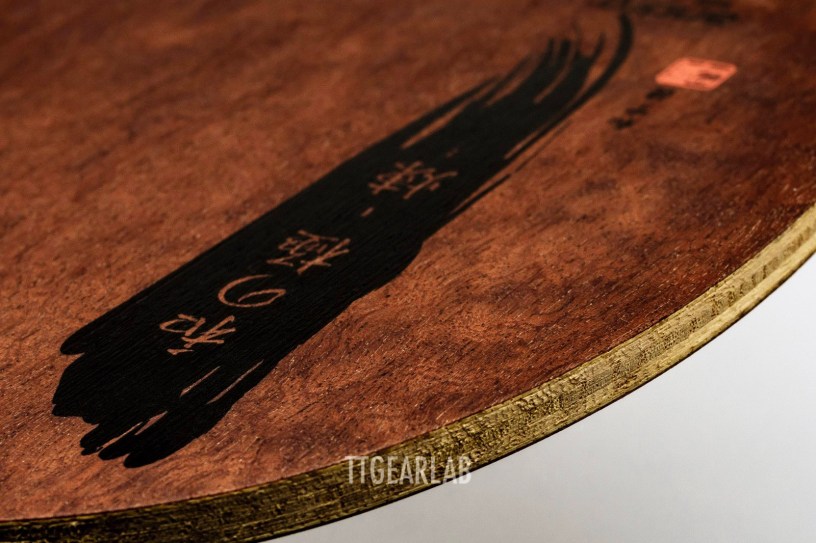
andro ‘Wanokiwami’ series is a very special pure wood blade family that is produced at Yamanoki which is a Japanese wood processing company by wood craftsmen who have won many awards in various skill competitions. ‘Wanokiwami’ series has been improved and completed through repeated testing by top players and coaches active in German professional table tennis league. ‘Wanokiwami’ series includes three models – ‘Wanokiwami Ren’ which is a 7-ply wood offensive blade, ‘Wanokiwami Ao’ which is a 5-ply wood offensive blade, and ‘Wanokiwami Midori’ which is a defensive blade.
Among those three, ‘Wanokiwami Ren’ is a 7-ply wood blade that makes fast ball while providing outstanding ball feel and unique feedback. Very attractive special wood of top layer gives mysterious, premium appearance.
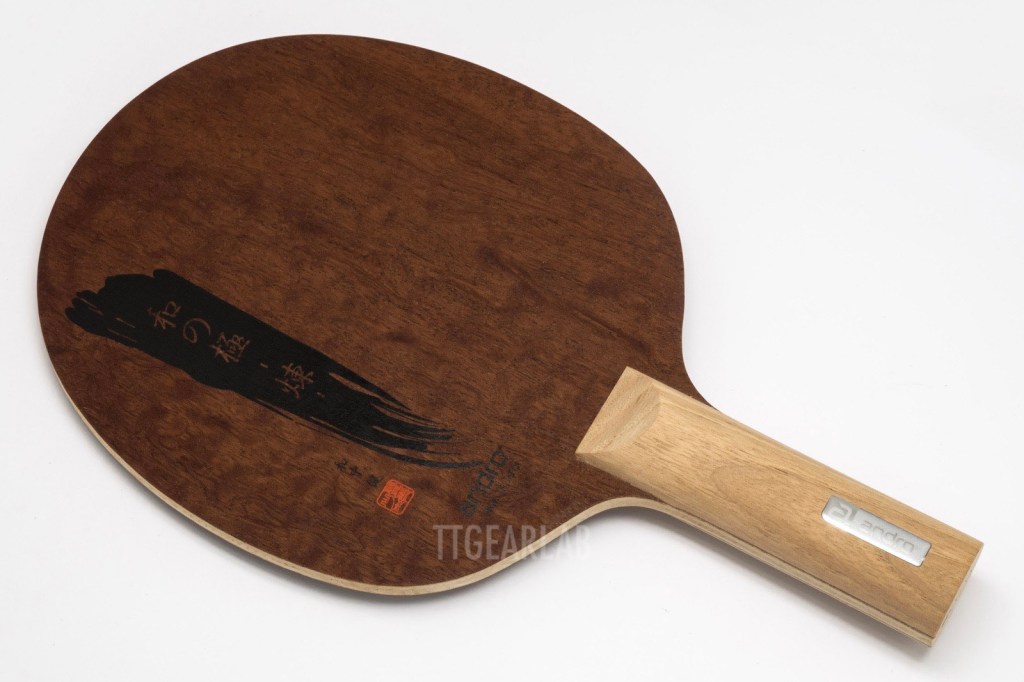
andro ‘Wanokiwami Ren’ is a top-quality 7-ply wood blade made with Yamanoki’s wood processing knowledge and technology.
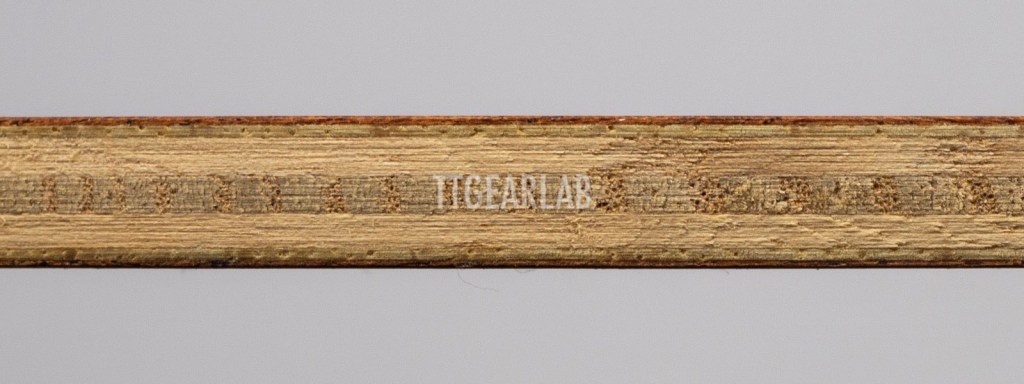
‘Wanokiwami Ren’ is a 7-ply wood blade. The top layer is Sapele which isn’t usually seen from other blades. The second layer under the top layer is Limba. The three layers at center are unknown. Overall thickness is around 6.5mm. (Official thickness written on andro home page is 6.7mm.)
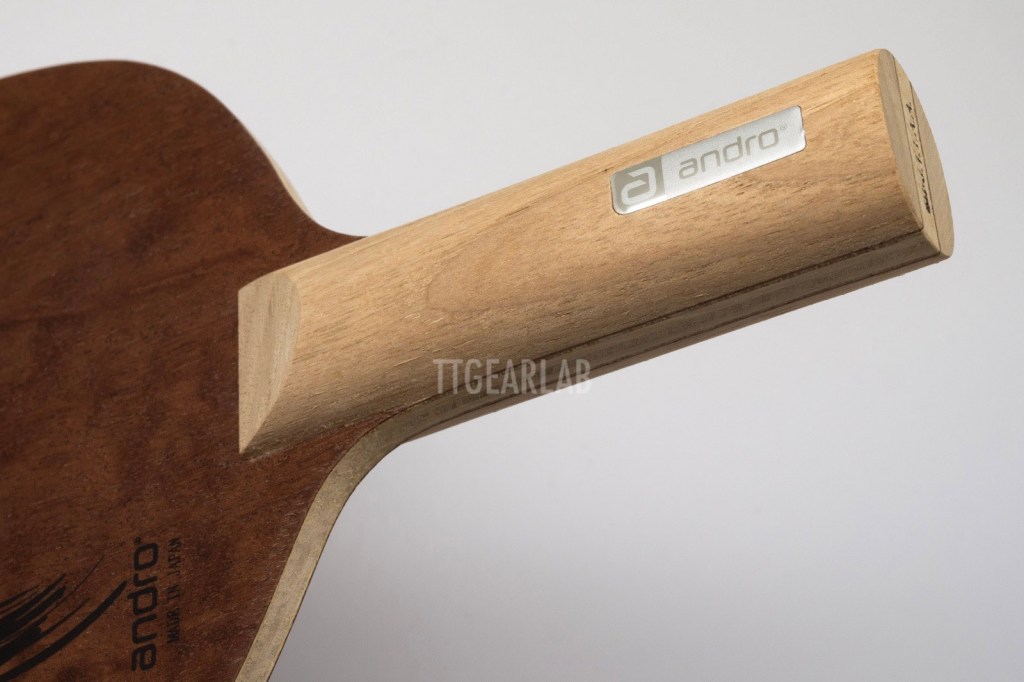
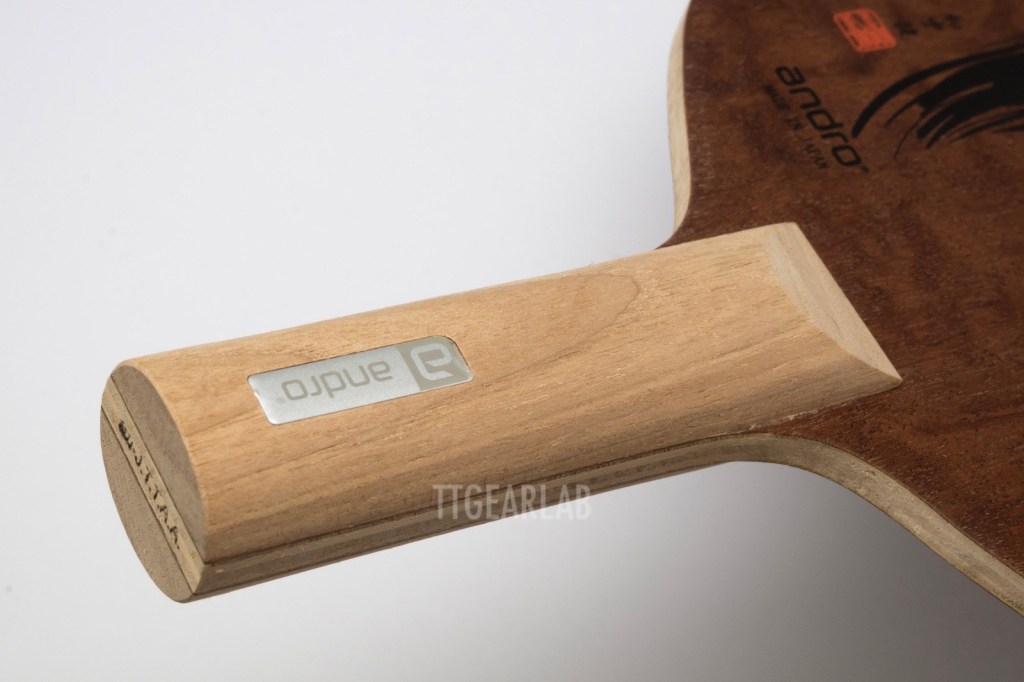
The handle of ‘Wanokiwami Ren’ is carved from solid wood, and therefore has a very classic look. The size of ST (straight) handle shown in above picture is around 29mm (width) x around 24.5mm (thickness).
The width of FL (flared) handle which isn’t shown in the picture is around 23mm (at head side) ~ 27mm (at bulge) ~ 26mm (at the middle of handle) ~ 32mm (at the end), and the thickness of FL handle is around 23.5mm (at thumb) ~ 24.5mm (at the end).

At foreside of handle squared logo panel is applied. This logo panel is the common one that is applied to most of andro blades.
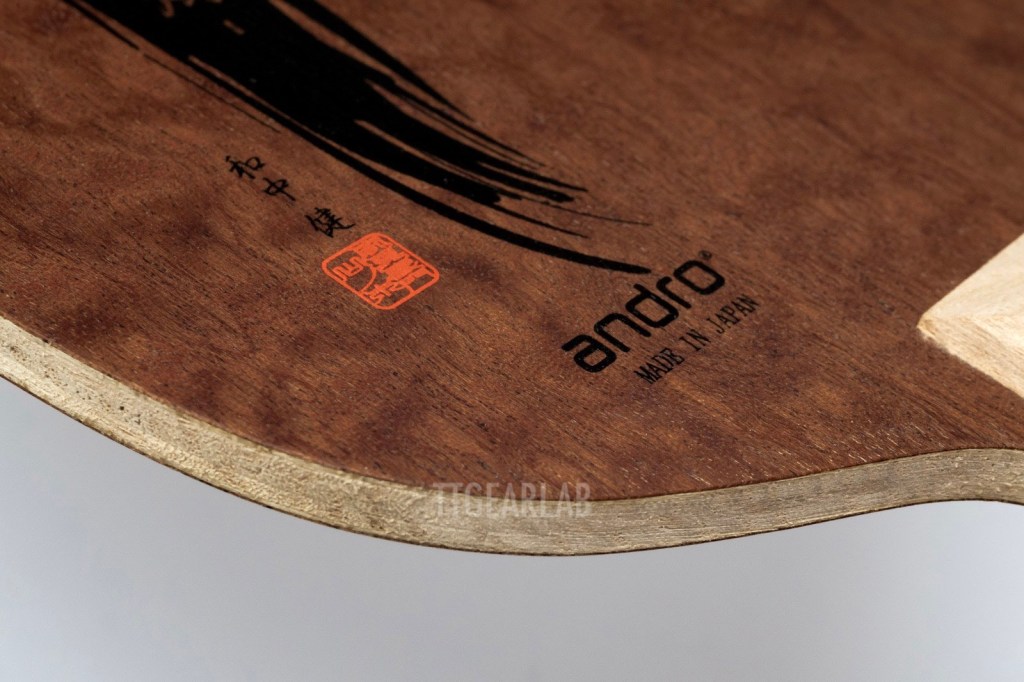
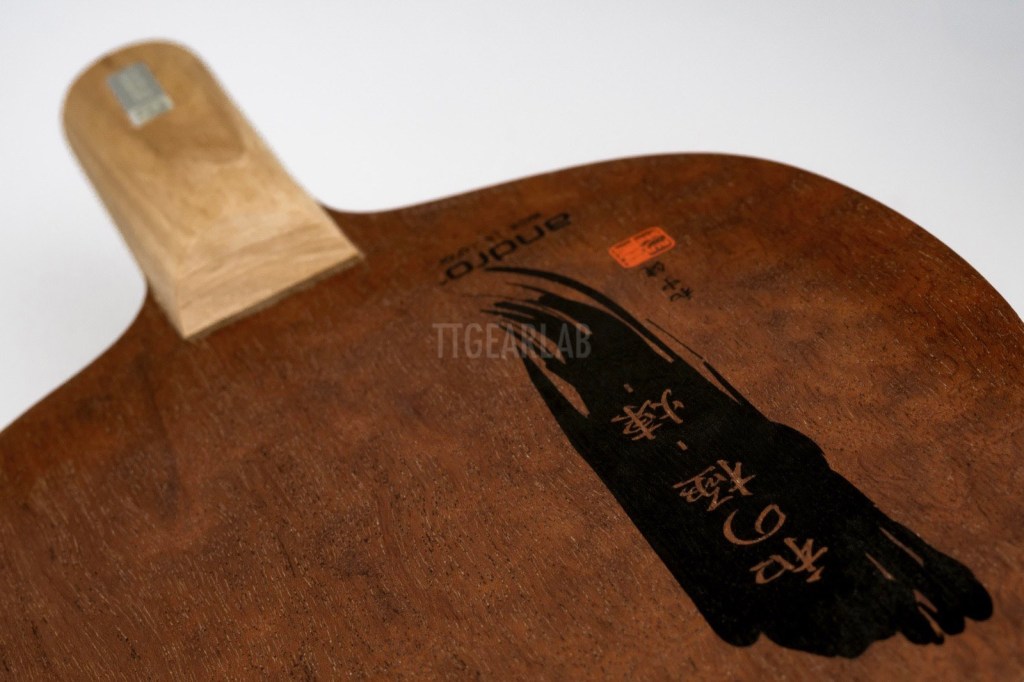
At the low left corner of the foreside of head, the blade is stamped with the stamp of Mr. Takeshi Wanaka who is the representative of Yamanoki Co. Ltd., who is the manufacturer of ‘Wanokiwami’ series, and supervises the produced products.
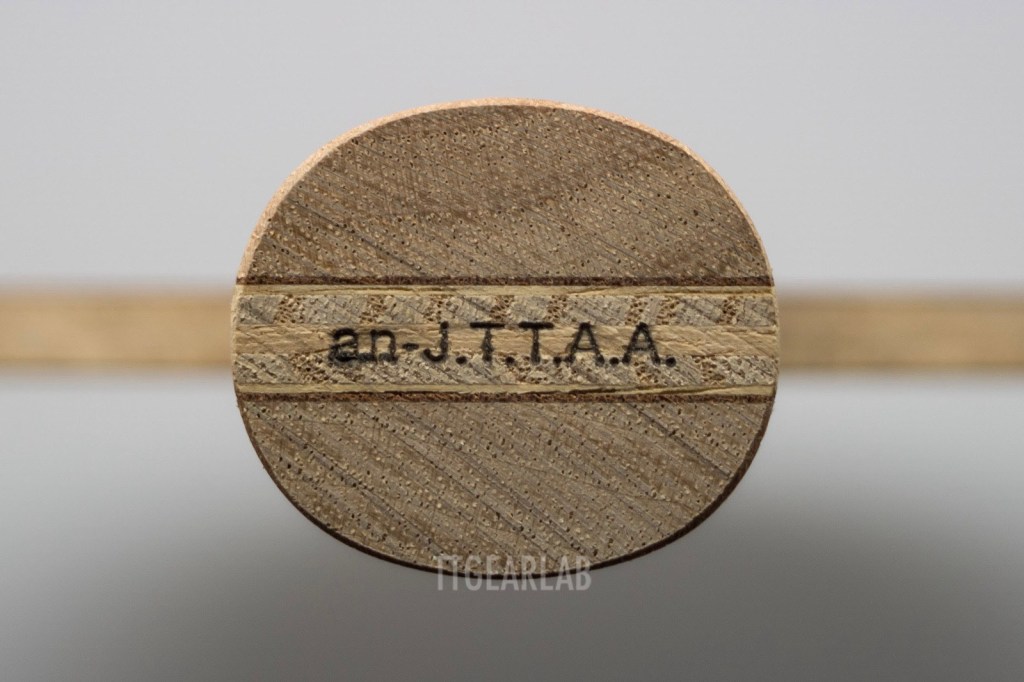
There isn’t metal plate or plastic lens at the end of handle.
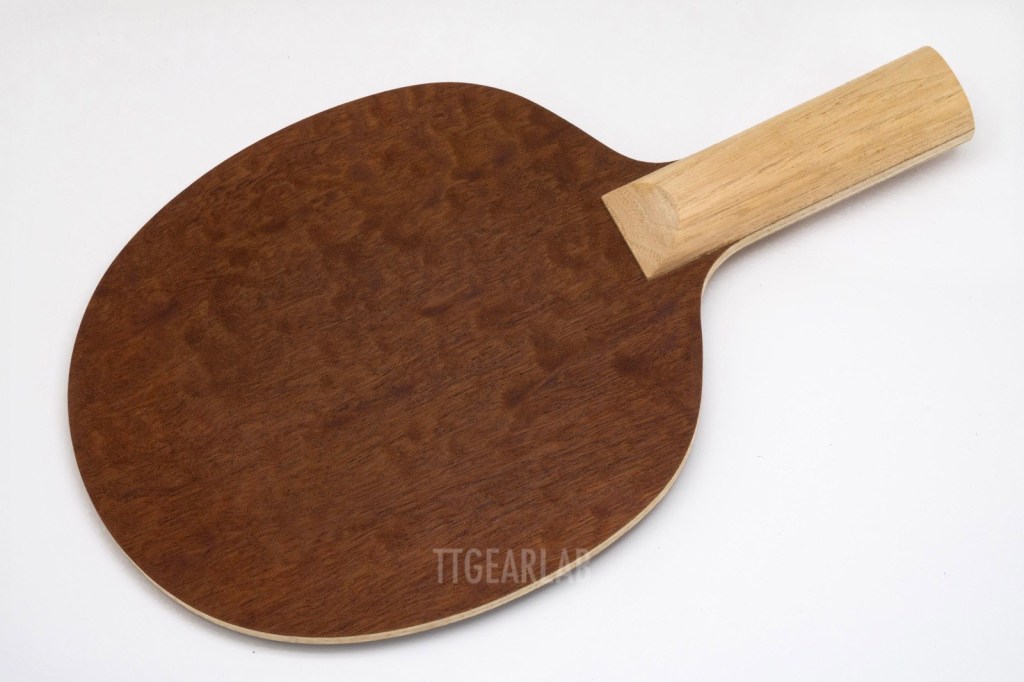
Printing or lens isn’t applied at the backside of head.
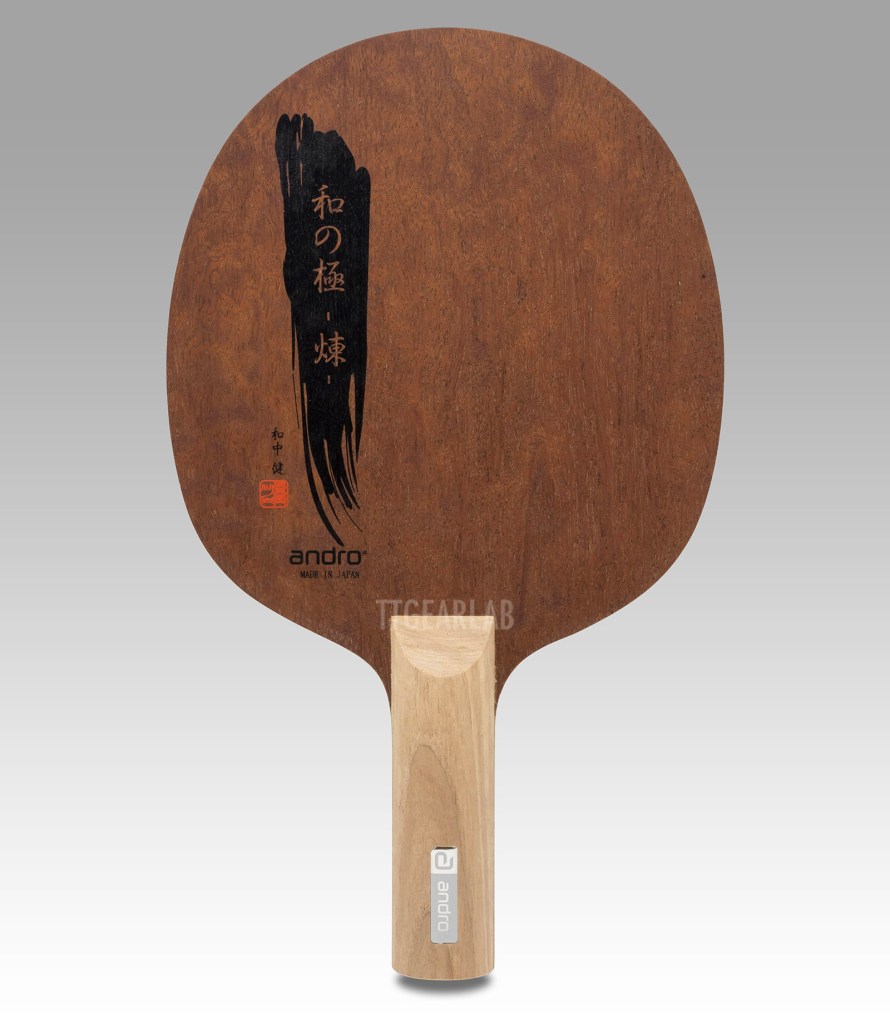
The size of the head of ‘Wanokiwami Ren’ is around 157mm x 150mm.
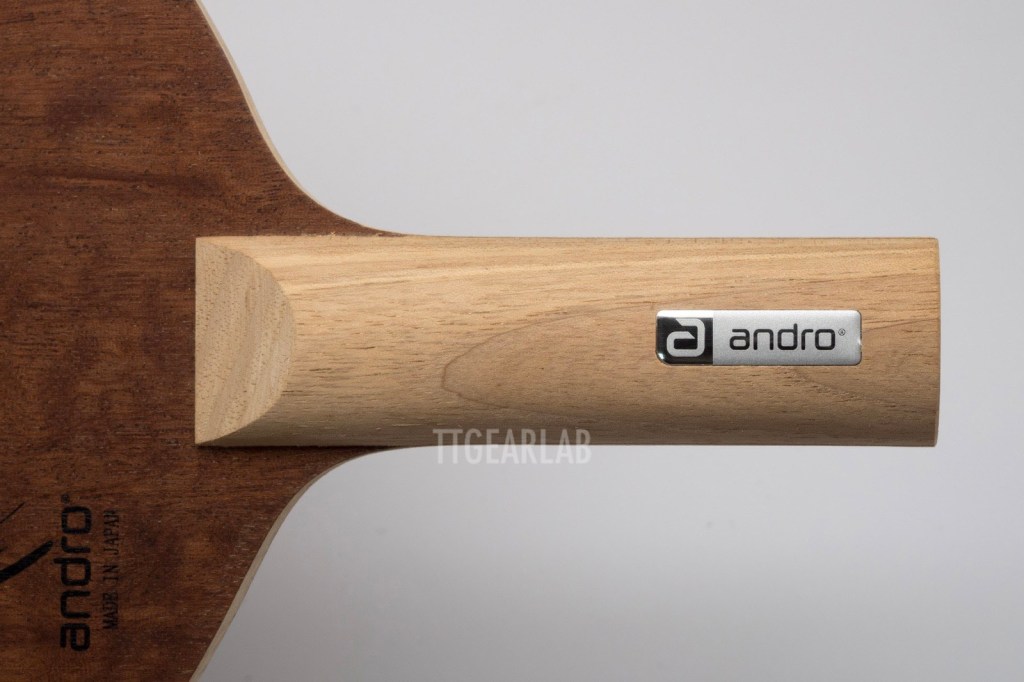
Not only the material but also the shape of handle gives classic feel. What is particularly unique is that the area where the thumb rests is not flat but is inwardly curved.
Following are the performance indices of andro Wanokiwami Ren (avg.weight = 85.0) :
– Ep = 1.48
– Ec = 1.36 (Ec/Ep = 0.92)
– Vp = 1.14
– Vl = 1.30 (Vl/Vp = 1.14)
Please note that above are average values and can be updated by further measurement.
Unauthorized use and/or duplication of this material without express and written permission from this website’s author and/or owner is strictly prohibited. Excerpts and links may be used, provided that full and clear credit is given to TTGearLab with appropriate and specific direction to the original content.
 TTGearLab
Bonjour. Tout d’abord merci pour vos analyses. Excellent.
D’après ANDRO, les plis extérieurs seraient en acajou (1+7), les plis intermédiaires seraient en limba (2÷6) alors que le reste des plis centraux seraient en kiri (3+4+5). Le manche serait constitué de noyer.
LikeLike
https://paddlepalace.answerbase.com/4151142/Andro-Wanokiwami-Ren-OFF-what-is-the-wood-layer-specific-composition-What-type-of-wood-layers-are-used-in-this-blade
LikeLiked by 1 person
Thank you for comment.
By the way, I have just ask andro about the material of Wanokiwami Ren. And, the official answer is that it is not Mahogani. According to andro, the kind of top layer hasn’t been announced yet.
Further, the handle doesn’t look like Walnut. The color of handle is too bright. And, walnut can be used just a part of handle because it is too heavy.
I will also ask Paddle Palace to correct the information.
Please give me that kind of information at any time. That kind of information is sometimes right and sometimes wrong. And, sometimes my information is wrong, and in that case I will be able to correct my article. 🙂 Your comment can be great help for TTGearLab.
LikeLike
Hi Jeremy!
The top ply for Ren should be Sapele.
-rokphish
LikeLike
Thank you for really good information. I didn’t noticed it because the pattern is different from what I have applied for samples. But, I noticed that what I have applied for samples is Sapele (Quartersawn) and the one for Wanokiwami Ren is Sapele (Pommle).
I will add the information of top layer. Thank you a lot agian.
LikeLike